
David Ignatius
Author of Body of Lies
About the Author
David Ignatius was born in Cambridge, Massachusetts on May 26, 1950. He received a B.A. from Harvard University in 1963 and a diploma in economics from Kings College, Cambridge, England, in 1975. He has worked as a reporter for the Wall Street Journal, the New York Times Magazine, and the show more Washington Post, where he is an associate editor. In 1985, he received the Edward Weintal Prize for diplomatic reporting from the Institute for the Study of Diplomacy. He is the author of several novels including Agents of Innocence, Siro, The Bank of Fear, A Firing Offense, Body of Lies, The Increment, and The Director. (Bowker Author Biography) show less
Image credit: David Ignatius at the 2018 U.S. National Book Festival By Fuzheado - Own work, CC BY-SA 4.0, https://commons.wikimedia.org/w/index.php?curid=72308570
Works by David Ignatius
Tagged
Common Knowledge
- Birthdate
- 1950-05-26
- Gender
- male
- Education
- Harvard College
University of Cambridge (King's College) - Occupations
- journalist
- Organizations
- Washington Monthly
The Washington Post
The Wall Street Journal - Nationality
- USA
- Birthplace
- Cambridge, Massachusetts, USA
- Places of residence
- Washington, D.C., USA
- Associated Place (for map)
- USA
Members
Reviews
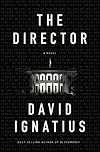
Graham Weber is the newly appointed director of the CIA. He's mostly an outsider to the world of intelligence, coming from corporate leadership. He's still adjusting to the new job when he faces his first crisis: A young Swiss hacker walks into the American consulate in Hamburg and demands a face-to-face meeting with the director; he needs to explain to Weber, he says, how the computer systems of American intelligence have been seriously compromised. Weber is forced to improvise his way show more through this situation. He doesn't really know the other major players within the government, and is by nature suspicious of them all.
Ignatius has published a dozen spy thrillers, and damned if I can figure out who's reading them, because this one is dreadful. The prose clomps awkwardly across the page; the plotting is barely coherent; and none of the characters have a consistent personality, shifting from brilliant to clueless from chapter to chapter. And Ignatius is unduly fond of the chapter-ending rug pull, letting us know that the character we had thought was a good guy is not to be trusted or vice versa. To be sure, espionage thrillers call for a certain amount of moral ambiguity, but when character X has gone from hero to villain and back again six times already, it's hard to be too shocked, or to give a damn, when he's revealed to be the bad guy after all in the final pages.
I am also wary of putting much trust in the accuracy of anything Ignatius tells us about how things work within government, espionage, hacking, or international finance. I don't know much about those things, so whatever errors he has made would likely slip by me, but I do know a fair amount about music, and Ignatius makes two glaring errors in that field. (The Motown group was never known as "Smokey and the Miracles;" the Philip Glass opera The Making of the Representative for Planet 8 was never commercially recorded.) Neither is at all relevant to the story -- they're minor character traits -- but if Ignatius is that careless about the little things, I can't trust him on the big things, either. show less
Ignatius has published a dozen spy thrillers, and damned if I can figure out who's reading them, because this one is dreadful. The prose clomps awkwardly across the page; the plotting is barely coherent; and none of the characters have a consistent personality, shifting from brilliant to clueless from chapter to chapter. And Ignatius is unduly fond of the chapter-ending rug pull, letting us know that the character we had thought was a good guy is not to be trusted or vice versa. To be sure, espionage thrillers call for a certain amount of moral ambiguity, but when character X has gone from hero to villain and back again six times already, it's hard to be too shocked, or to give a damn, when he's revealed to be the bad guy after all in the final pages.
I am also wary of putting much trust in the accuracy of anything Ignatius tells us about how things work within government, espionage, hacking, or international finance. I don't know much about those things, so whatever errors he has made would likely slip by me, but I do know a fair amount about music, and Ignatius makes two glaring errors in that field. (The Motown group was never known as "Smokey and the Miracles;" the Philip Glass opera The Making of the Representative for Planet 8 was never commercially recorded.) Neither is at all relevant to the story -- they're minor character traits -- but if Ignatius is that careless about the little things, I can't trust him on the big things, either. show less

David Ignatius creates and builds upon an engagingly textured environment of spies and third world nuclear threat to create a realistic and fun espionage thriller. While I'd give Ignatius' effort three starts for the intricacies of the fiction as literature, I'd move it to a solid four stars for the well-woven and well-paced plot.
The story revolves around a young Iranian scientist who sends the CIA a subtly coded message exposing Iran's efforts in developing nuclear weapons. His mode of show more communication is the "contact us" link available on the CIA's public website. Ignatius writes, "...occasionally the strange people who sent anonymous messages to the CIA were for real. They knew secrets; they were angry at their government, or the security service, or maybe just at the boss down the hall." In this case, the message was very real, and this communication becomes the launching point for Ignatius' tautly written novel.
The story bounces between CIA headquarters outside of Washington, D.C., Iran, London and other points in the Middles East. It's in London where we learn the meaning behind the novel's title. The Increment is the informal and off-the-books British force that's pulled into only the highest of security missions, and the only forces that truly have James Bond's legendary 'license to kill'.
The plot hums along, and the characters, while sometimes clichéd, are believable. The main threads of the story follow an aging America CIA agent in charge of operations in Iran. He's grizzled and jaded, and the most morally consistent and clear of all characters in the story. An old friend and colleague is a senior officer in the British spy agency who's brought in to help with the operation as it moves to Tehran. The Iranian scientist is sincere and sad. While not terrifically deep, Ignatius crafts this character strongly enough that the reader will actually care and root for his success and safety. Few characters are exclusively what they seem. They're a little good, and a little bad. Characteristics lean towards one side or the other based on whose side they appear to support. But as the plot develops, it becomes clear that some larger chess pieces are orbiting around the primary characters.
I don't read particularly quickly, but this story I knocked off in only 3 days. At times "The Increment" is more mystery than adventure, and the thrill is in the creation, build up and execution of Ignatius' well though-through plan. He smoothly slams home a twisty, curvy conclusion that I wasn't expecting. All in all this was a satisfying read for what it is: a fun thriller with a very old-school spy vibe. I definitely recommend this read. show less
The story revolves around a young Iranian scientist who sends the CIA a subtly coded message exposing Iran's efforts in developing nuclear weapons. His mode of show more communication is the "contact us" link available on the CIA's public website. Ignatius writes, "...occasionally the strange people who sent anonymous messages to the CIA were for real. They knew secrets; they were angry at their government, or the security service, or maybe just at the boss down the hall." In this case, the message was very real, and this communication becomes the launching point for Ignatius' tautly written novel.
The story bounces between CIA headquarters outside of Washington, D.C., Iran, London and other points in the Middles East. It's in London where we learn the meaning behind the novel's title. The Increment is the informal and off-the-books British force that's pulled into only the highest of security missions, and the only forces that truly have James Bond's legendary 'license to kill'.
The plot hums along, and the characters, while sometimes clichéd, are believable. The main threads of the story follow an aging America CIA agent in charge of operations in Iran. He's grizzled and jaded, and the most morally consistent and clear of all characters in the story. An old friend and colleague is a senior officer in the British spy agency who's brought in to help with the operation as it moves to Tehran. The Iranian scientist is sincere and sad. While not terrifically deep, Ignatius crafts this character strongly enough that the reader will actually care and root for his success and safety. Few characters are exclusively what they seem. They're a little good, and a little bad. Characteristics lean towards one side or the other based on whose side they appear to support. But as the plot develops, it becomes clear that some larger chess pieces are orbiting around the primary characters.
I don't read particularly quickly, but this story I knocked off in only 3 days. At times "The Increment" is more mystery than adventure, and the thrill is in the creation, build up and execution of Ignatius' well though-through plan. He smoothly slams home a twisty, curvy conclusion that I wasn't expecting. All in all this was a satisfying read for what it is: a fun thriller with a very old-school spy vibe. I definitely recommend this read. show less

I think that this novel would have been much better if not for the dissonance created by actual events not matching up with the story. As it is, the 'facts' in the book don't match up with reality, and just left me confused. Had I read this in mid 1990s, it would have probably been a much more enjoyable read. However, as real events diverge so significantly from the story in the book, this went from being a story of intrigue and suspense to a (not great) alternate history. I guess that that show more is the problem with writing speculative fiction about near future events -- the book quickly becomes dated.
In addition, having a 'new' 486 laptop in the early 2000s, with a 'high speed' 9600 BPS modem (actually, the book referred to a 9800 baud modem, but I'll let that go) being used for network connection, was ludicrous. In 1994, sure -- the 486 was still in use then, and a 9600 BPS modem would have been reasonable, although the V.34 and 28.8K modems were in use by then. However, by 2001, laptops would've been powered by a Pentium 4, a far speedier chip. A 'computer guru' would definitely not be using a 486 laptop. In addition, if she HAD to use a modem in the early 2000s, it would've been a 56K modem.
It's really a shame, too -- the story itself was fun and interesting, and the writing overall was good. But, I just couldn't get into the story because I knew how incorrect the background story was. show less
In addition, having a 'new' 486 laptop in the early 2000s, with a 'high speed' 9600 BPS modem (actually, the book referred to a 9800 baud modem, but I'll let that go) being used for network connection, was ludicrous. In 1994, sure -- the 486 was still in use then, and a 9600 BPS modem would have been reasonable, although the V.34 and 28.8K modems were in use by then. However, by 2001, laptops would've been powered by a Pentium 4, a far speedier chip. A 'computer guru' would definitely not be using a 486 laptop. In addition, if she HAD to use a modem in the early 2000s, it would've been a 56K modem.
It's really a shame, too -- the story itself was fun and interesting, and the writing overall was good. But, I just couldn't get into the story because I knew how incorrect the background story was. show less
 This review was written for LibraryThing Early Reviewers.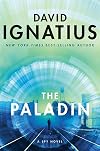
Author David Ignatius writes a vivid and unsettling story in his latest novel, The Paladin, in which the good guys aren't so good and the bad guys aren't so bad. What they all are is very smart and very cyber-literate, and, oh by the way, greedy.
They twist news and news images into stories designed to inflame either the alt-right or the socialist-left. Same story, same images but flipped to appeal to different target groups.
The work these very smart, very cyber-literate people do can't show more easily be detected. This isn't photoshop; this is one neural net creating a fake image and a different neural net checking the image for tell-tale signs of anomalies. Once detected, the anomalies are fed back to the first net, where they are fixed, and then fed back to the second neural net. This keeps going on - fake, detect, fix; fake, detect, fix- until the image is so good that it's undetectable.
That's right: Customized algorithms in a neutral network that play against themselves to improve results. Very dangerous stuff.
In this way, while the Russians, Americans, and Chinese are looking for enemies from outside their states, their most dangerous enemies are within twisting the truth to suit themselves and their greedy impulses. Watch as empires crumble; watch as the stock market falls precipitously.
Now, don't be put off by all the computer engineering whiz-bang embedded in this novel. I got it and I'm hardly a computer hacker. The story is about now and its scary as hell. show less
They twist news and news images into stories designed to inflame either the alt-right or the socialist-left. Same story, same images but flipped to appeal to different target groups.
The work these very smart, very cyber-literate people do can't show more easily be detected. This isn't photoshop; this is one neural net creating a fake image and a different neural net checking the image for tell-tale signs of anomalies. Once detected, the anomalies are fed back to the first net, where they are fixed, and then fed back to the second neural net. This keeps going on - fake, detect, fix; fake, detect, fix- until the image is so good that it's undetectable.
That's right: Customized algorithms in a neutral network that play against themselves to improve results. Very dangerous stuff.
In this way, while the Russians, Americans, and Chinese are looking for enemies from outside their states, their most dangerous enemies are within twisting the truth to suit themselves and their greedy impulses. Watch as empires crumble; watch as the stock market falls precipitously.
Now, don't be put off by all the computer engineering whiz-bang embedded in this novel. I got it and I'm hardly a computer hacker. The story is about now and its scary as hell. show less
Lists
Awards


You May Also Like


Associated Authors
Statistics
- Works
- 19
- Members
- 3,224
- Popularity
- #7,937
- Rating
- 3.6
- Reviews
- 135
- ISBNs
- 222
- Languages
- 11
- Favorited
- 7

