
Natalie Zina Walschots
Author of Hench
About the Author
Disambiguation Notice:
According to her social media, Natalie Zina Walscholts is non-binary and uses she/her pronouns.
Series
Works by Natalie Zina Walschots
filling Station Issue 42 1 copy
Sbires 1 copy
Associated Works
Tagged
Common Knowledge
- Birthdate
- 1983
- Gender
- non-binary
- Education
- University of Calgary (MA)
- Agent
- Ron Eckel (Cooke McDermid Literary)
- Nationality
- Canada
- Places of residence
- Calgary, Alberta, Canada
Toronto, Ontario, Canada - Map Location
- Canada
- Disambiguation notice
- According to her social media, Natalie Zina Walscholts is non-binary and uses she/her pronouns.
Members
Reviews
Real Rating: 4.75* of five
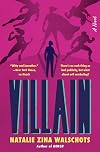
The Publisher Says: The Boys meets Starter Villain and Assistant to the Villain in Natalie Zina Walschots’s electrifying, sharp, violent, and hilarious sequel to the highly acclaimed novel, Hench, in which the Auditor must confront the near-impossible in order to right the many wrongs in the superhuman industry…or cause more of them. She’s not picky.
Anna, better known to superheroes as the Auditor, has carved out a name for herself. Any hero unlucky enough to show more cross her path knows her potential and powers. Surely, success should taste she has an incredible job with lots of perks, and her boss will literally annihilate anyone who crosses her, and her greatest enemy, the former hero Supercollider, has been utterly defeated and literally ground to a pulp.
But Anna still has her sights set on a greater destroying the Draft, the organization that makes, trains, and manages the world’s most powerful superheroes. These “heroes” have shown time and time again that they do more harm than good, and now is the time to stop the damage at its source.
Yet all is not well for the Auditor and her fellow evildoers. Her employer, Leviathan—the world’s most feared supervillain—is not coping well with Supercollider’s defeat at someone else’s hands. Moreover, her unlikely ally and unexpected friend, Quantum Entanglement, has vanished without a trace, leaving Anna to examine all the ways they deceived each other. Tension and uncertainty fill the air, and fear that this moment of triumph is about to crumble looms over all of them.
Anna soon finds herself facing down an opponent unlike any she’s taken on before—not another superhero, but someone like her…someone much more the Draft’s Chief Marketing Officer. This isn’t a test of physical prowess, but ideas, and as the fight spirals deeper and deeper, with new foes popping up every day—she’ll need more than just her superpower—data research—to keep ascending through the supervillain ranks.
It’s guerrilla ad warfare, and the Auditor might have finally met her match.
I RECEIVED A DRC FROM THE PUBLISHER VIA NETGALLEY. THANK YOU.
My Review: It took five years, but the sequel I've quietly pined for has arrived. I downloaded the DRC in February, started reading it in late March, and finished a final pre-review skim last night. I treated this read as a reward, an experience to be savored, because Hench was such a completely fresh experience that it made me rethink the messaging of superhero crap, made me consider how subversion can in fact look like participation or even celebration. I liked The Boys because it's taken that idea to its logical end-point; but it came after Hench had prepared me psychologically for its storytelling mode.
The Department of Superheroic Affairs, aka "the Draft," is the organization that's responsible for everything involving superheroes. They do the recruiting, training, and funding...who ever stops to think about the accounting and expenditures that enable superheroes to blow apart entire city blocks? can you even imagine the insurance bills?!...and they create the most compelling backstories for them that they can. It means only certain tropes survive time-testing as superheroes wreak havoc in order to "save" people from supervillains.
Who also have an organizational structure centered around Leviathan, for whom our dear Anna...formerly Electric Eel's hench, now known as the supervillain "The Auditor" (if that yclepture doesn't provoke horripilation you've never filled out an accounting reimbursement justification)...serves as right-hand person. Leviathan, after the end of Hench sees the biggest rival he has (Supercollider) fall to richly deserved intimate betrayal orchestrated by Anna/The Auditor, is too depressed by the newly unchallenging world he lives in to be effective in supervillainy. Anna/The Auditor needs to snap him out of it but, in a truly tropey twist, The Draft hires a new marketing manager. One who is Anna/The Auditor's equal or possibly superior in data analytics and statistical modeling...the secret superpowers that brought Supercollider down. Now Supercollider is permanently damaged, and dies as the Draft's medics are trying to "untangle him from himself," and the Draft's new marketer finds enough dirt to plausibly, if inaccurately, pin responsibility for his death on Leviathan.
Hijinks ensue.
To look into this only-slightly-distorted mirror world is to see 2026 explained without didactic shouting, blaming, and finger-pointing. It's all here, all the guilty parties are lined up for our scorn and contumely to be unloaded on them, and exactly like real life they are everywhere not just on one side. False dichotomies like hero-v-villain aren't allowed to stand; the acts perpetrated are equally awful, are not discernably different in their results. They're not different in their motivations, either; each "side" is only out to do down the other side and then justify the carnage for everyone else later.
It is here that I come fully into my love of Author Natalie's storytelling. The battling sides are not contesting opposing ideas, arguing through competing society-wide organizational plans, they're solely and entirely focused on hurting each other in increasingly horrifying ways. What that means for non-combatants is (yet again) not part of the calculus except insofar as the optics can be used against the other side.
As Leviathan re-awakens to his supervillainous purpose, Anna/The Auditor and her scoobygroup are stretched on practical and emotional levels to achieve Leviathan's purpose and counteract the Draft's new, high-powered team that uses Anna/The Auditor's innovative techniques against them. As in Hench, the emotional costs of violence, loss, betrayal, and fanaticism are personalized while the impersonal systems grind on propelled by the suffering people behind the major players.
I think Author Natalie took her time...I understand she re-wrote this book four times...to very good effect. I got invested again immediately despite the long interval between reads. I was deftly reminded of things necessary to remember instead of infodumped on; I was also shown how time has passed in the storyverse and the changes that has wrought on significant relationships. It's a fine achievement in storytelling craft. The ending is not A Conclusion. There is openness in its action to either another sequel (yes please!) or simply room for you-the-reader to headcanon something you'd like for the characters. It works for soap operas and comic book series, why not for a supervillain's difficult choices and incomplete emotional development?
I recommend the read; it's not utterly necessary to read Hench first, but why wouldn't you want to? It's a series with a lot to say about the world we live in, and what it says I agree with, so I'm recommending it to all y'all, even the superhero/comic book averse.
After all, that described me before this series came my way. show less
The Publisher Says: The Boys meets Starter Villain and Assistant to the Villain in Natalie Zina Walschots’s electrifying, sharp, violent, and hilarious sequel to the highly acclaimed novel, Hench, in which the Auditor must confront the near-impossible in order to right the many wrongs in the superhuman industry…or cause more of them. She’s not picky.
Anna, better known to superheroes as the Auditor, has carved out a name for herself. Any hero unlucky enough to show more cross her path knows her potential and powers. Surely, success should taste she has an incredible job with lots of perks, and her boss will literally annihilate anyone who crosses her, and her greatest enemy, the former hero Supercollider, has been utterly defeated and literally ground to a pulp.
But Anna still has her sights set on a greater destroying the Draft, the organization that makes, trains, and manages the world’s most powerful superheroes. These “heroes” have shown time and time again that they do more harm than good, and now is the time to stop the damage at its source.
Yet all is not well for the Auditor and her fellow evildoers. Her employer, Leviathan—the world’s most feared supervillain—is not coping well with Supercollider’s defeat at someone else’s hands. Moreover, her unlikely ally and unexpected friend, Quantum Entanglement, has vanished without a trace, leaving Anna to examine all the ways they deceived each other. Tension and uncertainty fill the air, and fear that this moment of triumph is about to crumble looms over all of them.
Anna soon finds herself facing down an opponent unlike any she’s taken on before—not another superhero, but someone like her…someone much more the Draft’s Chief Marketing Officer. This isn’t a test of physical prowess, but ideas, and as the fight spirals deeper and deeper, with new foes popping up every day—she’ll need more than just her superpower—data research—to keep ascending through the supervillain ranks.
It’s guerrilla ad warfare, and the Auditor might have finally met her match.
I RECEIVED A DRC FROM THE PUBLISHER VIA NETGALLEY. THANK YOU.
My Review: It took five years, but the sequel I've quietly pined for has arrived. I downloaded the DRC in February, started reading it in late March, and finished a final pre-review skim last night. I treated this read as a reward, an experience to be savored, because Hench was such a completely fresh experience that it made me rethink the messaging of superhero crap, made me consider how subversion can in fact look like participation or even celebration. I liked The Boys because it's taken that idea to its logical end-point; but it came after Hench had prepared me psychologically for its storytelling mode.
The Department of Superheroic Affairs, aka "the Draft," is the organization that's responsible for everything involving superheroes. They do the recruiting, training, and funding...who ever stops to think about the accounting and expenditures that enable superheroes to blow apart entire city blocks? can you even imagine the insurance bills?!...and they create the most compelling backstories for them that they can. It means only certain tropes survive time-testing as superheroes wreak havoc in order to "save" people from supervillains.
Who also have an organizational structure centered around Leviathan, for whom our dear Anna...formerly Electric Eel's hench, now known as the supervillain "The Auditor" (if that yclepture doesn't provoke horripilation you've never filled out an accounting reimbursement justification)...serves as right-hand person. Leviathan, after the end of Hench sees the biggest rival he has (Supercollider) fall to richly deserved intimate betrayal orchestrated by Anna/The Auditor, is too depressed by the newly unchallenging world he lives in to be effective in supervillainy. Anna/The Auditor needs to snap him out of it but, in a truly tropey twist, The Draft hires a new marketing manager. One who is Anna/The Auditor's equal or possibly superior in data analytics and statistical modeling...the secret superpowers that brought Supercollider down. Now Supercollider is permanently damaged, and dies as the Draft's medics are trying to "untangle him from himself," and the Draft's new marketer finds enough dirt to plausibly, if inaccurately, pin responsibility for his death on Leviathan.
Hijinks ensue.
To look into this only-slightly-distorted mirror world is to see 2026 explained without didactic shouting, blaming, and finger-pointing. It's all here, all the guilty parties are lined up for our scorn and contumely to be unloaded on them, and exactly like real life they are everywhere not just on one side. False dichotomies like hero-v-villain aren't allowed to stand; the acts perpetrated are equally awful, are not discernably different in their results. They're not different in their motivations, either; each "side" is only out to do down the other side and then justify the carnage for everyone else later.
It is here that I come fully into my love of Author Natalie's storytelling. The battling sides are not contesting opposing ideas, arguing through competing society-wide organizational plans, they're solely and entirely focused on hurting each other in increasingly horrifying ways. What that means for non-combatants is (yet again) not part of the calculus except insofar as the optics can be used against the other side.
As Leviathan re-awakens to his supervillainous purpose, Anna/The Auditor and her scoobygroup are stretched on practical and emotional levels to achieve Leviathan's purpose and counteract the Draft's new, high-powered team that uses Anna/The Auditor's innovative techniques against them. As in Hench, the emotional costs of violence, loss, betrayal, and fanaticism are personalized while the impersonal systems grind on propelled by the suffering people behind the major players.
I think Author Natalie took her time...I understand she re-wrote this book four times...to very good effect. I got invested again immediately despite the long interval between reads. I was deftly reminded of things necessary to remember instead of infodumped on; I was also shown how time has passed in the storyverse and the changes that has wrought on significant relationships. It's a fine achievement in storytelling craft. The ending is not A Conclusion. There is openness in its action to either another sequel (yes please!) or simply room for you-the-reader to headcanon something you'd like for the characters. It works for soap operas and comic book series, why not for a supervillain's difficult choices and incomplete emotional development?
I recommend the read; it's not utterly necessary to read Hench first, but why wouldn't you want to? It's a series with a lot to say about the world we live in, and what it says I agree with, so I'm recommending it to all y'all, even the superhero/comic book averse.
After all, that described me before this series came my way. show less

It's an anti-redemption arc. It's whatever the opposite of a redemption arc is. A perdition arc? But we're not sad or anything, everyone is totally into it.
In some ways, this book was very easy reading—lots of action, excitement, cool heroes and villains, and some very uncomfortable (or maybe very titillating, I don't know what you're into) sex scenes. But in other ways this was a really challenging and difficult book, even more than its predecessor, Hench. In both books, because you're show more reading everything from the perspective of Anna/The Auditor, her descent/ascent on the slope to villainy is at least really easy to follow, but in this sequel it's much less easy to countenance (or maybe not, once again, I don't know what you're into) as she makes choices that are ultimately very rational and in keeping with her values, but that even she finds pretty horrifying on another level.
While the blurb makes comparisons to other media, I really think Natalie Zina Walschots has dug down and created something totally unique, complicated, truly fascinating. show less
In some ways, this book was very easy reading—lots of action, excitement, cool heroes and villains, and some very uncomfortable (or maybe very titillating, I don't know what you're into) sex scenes. But in other ways this was a really challenging and difficult book, even more than its predecessor, Hench. In both books, because you're show more reading everything from the perspective of Anna/The Auditor, her descent/ascent on the slope to villainy is at least really easy to follow, but in this sequel it's much less easy to countenance (or maybe not, once again, I don't know what you're into) as she makes choices that are ultimately very rational and in keeping with her values, but that even she finds pretty horrifying on another level.
While the blurb makes comparisons to other media, I really think Natalie Zina Walschots has dug down and created something totally unique, complicated, truly fascinating. show less
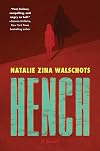
Anna is working as a temp hench, largely doing analysis for a supervillain. When she goes out in the field for the first time, she's injured by a superhero who pushed her out of the way while going after her boss. Now Anna is obsessed with how much damage superheroes do while purportedly saving people and begins doing the math. Her work catches the eye of one of the biggest supervillains in the business, pulling Anna into a conflict that has the possibility of changing how everyone views show more superheroes.
Such a compelling read and one where I was never quite sure where it was going next. Walschots engages thoughtfully with the thin line between hero and villain and how often the only thing differentiating them is public narrative. She also creates a central character who isn't interested in being a major villain but just wants to do her work and is slowly transformed by it. Obviously this will have greatest appeal to readers who enjoy superhero narratives but readers who aren't into the genre will find plenty to appreciate here. show less
Such a compelling read and one where I was never quite sure where it was going next. Walschots engages thoughtfully with the thin line between hero and villain and how often the only thing differentiating them is public narrative. She also creates a central character who isn't interested in being a major villain but just wants to do her work and is slowly transformed by it. Obviously this will have greatest appeal to readers who enjoy superhero narratives but readers who aren't into the genre will find plenty to appreciate here. show less

{Stand alone? Urban fantasy, superheroes, contemporary} (2020)
What if superheroing were run like a business and so, therefore, would supervillaining also be. And, to help them in their dastardly deeds, what if supervillains and other calibres of villains, employed people - known as henches (supplying brain power) or Meat (likewise for brawn) in their companies? Our heroine ... er ... villainess, Anna, is one such hench.
(Her surname is always being mangled and, yes, her dating life fails to launch. Don’t expect romance here - though she fancies a few people - but there are some good friendships.)
Initially she survives from temp job to job analysing data and working remotely but when she takes her first step to working in the office of a minor villain, she ends up being caught in the crossfire, so to speak, when a team of superheroes (including Supercollider, the most famous hero) foils one of his schemes. While recuperating, she idly starts calculating the cost of the damage of that incident which she then extends to other superhero rescues and starts a blog which brings her to the attention of Leviathan, The supervillain, who offers her a permanent job. Then she can really bring her talents to bear against superheroes.
I must say, the incidental damage that occurs in superhero films always makes me wince, imagining what that kind of destruction would cause and cost in a normal person's life.
Walschots expands that idea to henches - people who may be on the bad guys' team but are only there to earn a living and who are considered expendable by the villains they work for and by the heroes who disregard them as collateral damage.
She also casts a pejorative eye at the bureaucracy, in her world (where everyone is tested in school for superpowers and heroes, villains, sidekicks and henches may be cybernetically enhanced), that creates and supports superheroes.
(um - she really doesn't like Supercollider, who caused her lifelong injuries)
Granted this story is told from the point of support staff to villains, so you do have to suspend your moral judgment (I assume you have one?); having done which, there are some very amusing moments. (The one that startled me into laughing out loud is too spoilerish to quote here, unfortunately.) I did find some moments a little bit ... squicky, especially towards the end (so a quarter star off for overenthusiastic vindictiveness. Even if it is 'for the greater good').
Walschots pokes fun at several superhero tropes such as superhero/ villain speeches
or Quantum Entanglement, the Maori superhero Anna admires the most (or, even, at all) having to relocate to the USA from New Zealand. Because all superheroes live and work in the USA.
I did like the way ladies are portrayed and one, especially 'whom he'd kept under his thumb for the better part of twelve years', really finds her feet.
Despite the story being about supervillains/ superheroes, I can't see it appealing to kids given that it centres around working in an office, running spreadsheets and, to some extent, office culture. And (my parent-mode is going down still fighting) there is a lot of casual swearing.
This was an unusual idea (for me, anyway), grippingly told. This felt like this told Anna's story and is complete in itself ... but I do wonder which of her options she's going to choose to explore next. There was a really good idea mentioned near the end and I'd be interested in that story.
June 2021
4.75 stars
just noting some quotes, before my Overdrive book expires:
She raised a perfect, threaded eyebrow. The Meat eating the sandwich unconsciously let his arm waver, and a tomato slid out from between the bread and hit the floor. Shirtless grabbed a tea towel and tried to hide his naked chest behind it.
I cleared my throat. It seemed to snap them out of their shock enough to hustle out, Shirtless still demurely trying to hide behind the tiny square of cotton towel. show less
What if superheroing were run like a business and so, therefore, would supervillaining also be. And, to help them in their dastardly deeds, what if supervillains and other calibres of villains, employed people - known as henches (supplying brain power) or Meat (likewise for brawn) in their companies? Our heroine ... er ... villainess, Anna, is one such hench.
“Anna Tromedlov,” I croaked.show more
“Am I speaking with . . . the
Palindrome?”
(Her surname is always being mangled and, yes, her dating life fails to launch. Don’t expect romance here - though she fancies a few people - but there are some good friendships.)
Initially she survives from temp job to job analysing data and working remotely but when she takes her first step to working in the office of a minor villain, she ends up being caught in the crossfire, so to speak, when a team of superheroes (including Supercollider, the most famous hero) foils one of his schemes. While recuperating, she idly starts calculating the cost of the damage of that incident which she then extends to other superhero rescues and starts a blog which brings her to the attention of Leviathan, The supervillain, who offers her a permanent job. Then she can really bring her talents to bear against superheroes.
I must say, the incidental damage that occurs in superhero films always makes me wince, imagining what that kind of destruction would cause and cost in a normal person's life.
A budding restaurateur whose business was physically demolished by an errant eye laser. A makeup artist blinded by psionics. A parade of mortified flesh: burned, crushed, frozen, liquified. Buildings people saved years or decades to afford reduced to rubble by a hero blundering through. The endless reams of psychological damage. A litany of heroes leaving trauma blossoming in their wake.
Walschots expands that idea to henches - people who may be on the bad guys' team but are only there to earn a living and who are considered expendable by the villains they work for and by the heroes who disregard them as collateral damage.
'My point is just, if we're willing to tolerate that, who is going to care about a temp worker's spiral fracture?'
Or a photographer's spinal injury. I let that unspoken sentence hang. The journalist's experience had been similar to mine; Supercollider had learned so much of his manner and affect and approach from his old hero. Proton was vaguely apologetic, but once he was satisfied that the young photographer he had catastrophically injured wasn't a threat (with no aspirations to villainy), the hero forgot about McKinnon entirely.
She also casts a pejorative eye at the bureaucracy, in her world (where everyone is tested in school for superpowers and heroes, villains, sidekicks and henches may be cybernetically enhanced), that creates and supports superheroes.
Supercollider had a great deal in common with a diamond: aesthetically tacky; value artificially ascribed by corporate greed; cultural significance vastly overinflated; and incredibly hard to damage.
(um - she really doesn't like Supercollider, who caused her lifelong injuries)
Granted this story is told from the point of support staff to villains, so you do have to suspend your moral judgment (I assume you have one?); having done which, there are some very amusing moments. (The one that startled me into laughing out loud is too spoilerish to quote here, unfortunately.) I did find some moments a little bit ... squicky, especially towards the end (so a quarter star off for overenthusiastic vindictiveness. Even if it is 'for the greater good').
Walschots pokes fun at several superhero tropes such as superhero/ villain speeches
'Have you ever met him, Quantum?'
She looked utterly startled. 'Of course! We've fought -'
'No. Like when you were not trying to kill each other. Has he ever actually exchanged words with you.' She opened her mouth to speak. 'Delivering a monologue in the third person does not count, nor do general threats.'
'Oh. No.' She pressed her lips together and frowned, furrowing her brow and trying to think. 'We've never - no. I don't think so.'
or Quantum Entanglement, the Maori superhero Anna admires the most (or, even, at all) having to relocate to the USA from New Zealand. Because all superheroes live and work in the USA.
I did like the way ladies are portrayed and one, especially 'whom he'd kept under his thumb for the better part of twelve years', really finds her feet.
Despite the story being about supervillains/ superheroes, I can't see it appealing to kids given that it centres around working in an office, running spreadsheets and, to some extent, office culture. And (my parent-mode is going down still fighting) there is a lot of casual swearing.
This was an unusual idea (for me, anyway), grippingly told. This felt like this told Anna's story and is complete in itself ... but I do wonder which of her options she's going to choose to explore next. There was a really good idea mentioned near the end and I'd be interested in that story.
June 2021
4.75 stars
just noting some quotes, before my Overdrive book expires:
She raised a perfect, threaded eyebrow. The Meat eating the sandwich unconsciously let his arm waver, and a tomato slid out from between the bread and hit the floor. Shirtless grabbed a tea towel and tried to hide his naked chest behind it.
I cleared my throat. It seemed to snap them out of their shock enough to hustle out, Shirtless still demurely trying to hide behind the tiny square of cotton towel. show less
Lists
Awards


You May Also Like


Associated Authors
Statistics
- Works
- 6
- Also by
- 3
- Members
- 1,407
- Popularity
- #18,263
- Rating
- 4.0
- Reviews
- 95
- ISBNs
- 17
- Favorited
- 1