
About the Author
Joseph Loconte is associate professor of history at The Kings College in New York City. He is the author of The Searchers: A Quest for Faith in the Valley of Doubt and the editor of The End of Illusions: Religious Leaders Confront Hitlers Gathering Storm.
Image credit: Joseph Loconte
Works by Joseph Loconte
A Hobbit, a Wardrobe, and a Great War: How J.R.R. Tolkien and C.S. Lewis Rediscovered Faith, Friendship, and Heroism in the Cataclysm of 1914–1918 (2015) 755 copies, 15 reviews
The War for Middle-earth: J.R.R. Tolkien and C.S. Lewis Confront the Gathering Storm, 1933–1945 (2025) 72 copies, 1 review
Tagged
Common Knowledge
- Birthdate
- 1961
- Gender
- male
- Organizations
- The King’s College
- Nationality
- USA
- Birthplace
- Brooklyn, New York, USA
- Places of residence
- Brooklyn, New York, USA
- Associated Place (for map)
- Brooklyn, New York, USA
Members
Reviews
A hobbit, a wardrobe, and a great war : how J.R.R. Tolkien and C.S. Lewis rediscovered faith, friendship, and heroism in the cataclysm of 1914-1918 by Joseph Loconte
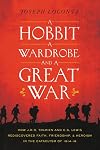
This book is definitely worth reading, for anyone who has enjoyed either of the books, or any books, by the authors referenced in the title. Loconte has many insights into the Great War of 1914-18 and how surviving it was a formative experience for Tolkien and Lewis. Just one example: I've read many books that (possibly cribbing from each other) assert that Mordor was influenced, primarily, by the industrialization of England in the early 20th century, which never seemed an adequate show more explanation. Loconte draws the parallel, which one immediately sees as true, with the wasteland of France and Flanders during the War. Of course. The Shire in its new-and-improved Sarumaniac glory was the place influenced by industrialization, but Mordor was clearly the horrifying poisoned pits of bombed Flanders. There are many, many other ways in which the War and the experience of battle are expressed in many of Lewis's and Tolkien's books. A hobbit, a wardrobe and a Great War is a book to reread.
Fortunately I was able to buy my own copy to facilitate rereading! show less
Fortunately I was able to buy my own copy to facilitate rereading! show less
A Hobbit, a Wardrobe, and a Great War: How J.R.R. Tolkien and C.S. Lewis Rediscovered Faith, Friendship, and Heroism in the Cataclysm of 1914-1918 by Joseph Loconte
Summary: A study of why Lewis and Tolkien, contrary to a disillusioned post-war generation, went deeper into their faith and allowed both war experience and that faith to shape their greatest works.
In one sense, Joseph Loconte covers ground that others have covered in exploring the lives and work of C.S. Lewis and J.R.R. Tolkien. What Loconte uniquely does are two things. For one, he explores why Lewis and Tolkien defied the trajectory into disillusionment of so many in the post-World War I show more generation, and went on to embrace and espouse a vibrant Christian faith. As for the second, Loconte reads the works of these two men, exploring how war experiences shaped the imaginary worlds of Narnia, the Space Trilogy, and Middle Earth. He articulates his particular theses as follows:
"Indeed, it was the experience of war that provided much of the raw material for the characters and themes of their imaginative works. In a talk called 'Learning in War Time,' Lewis explained how war exposes the folly in placing our happiness in utopian schemes to transform society. 'If we thought we were building up a heaven on earth, if we looked for something that would turn the present world from a place of pilgrimage into a permanent city satisfying the soul of man, we are disillusioned, and not a moment too soon.' As we'll see, unlike the disillusionment that overwhelmed much of his generation, Lewis would use the experience of war--its horror as well as its nobility--as a guidepost to moral clarity."
For Loconte then, the beginning point is to discuss the "Myth of Progress" that preceded the war as it viewed humans, society, and technology evolving to ever more enlightened forms by which humanity would cast off the darkness of ignorance that had contributed to so much suffering in the past. With the onset of the war and the horrors of the trench warfare (perhaps Tolkien's inspiration for his vision of Mordor), these illusions were shattered for many. Both were casualties of war through illness or wounds. In Lewis' case, a journey through the country to a hospital to convalesce may have sparked a vision of Narnia. It was during Lewis's war years that he came across George McDonald's Phantastes, that certainly contributed to the conversion of his imagination.
War's end brought the massive disillusionment of much of the intellectual class. While Tolkien devoted himself to work and to his Catholic faith, and began to sketch the outlines of the great myth that would be the foundation of Lord of the Rings, Lewis struggled with doubt. Lewis and Tolkien first met in 1926, recognizing their common interest in languages. But they had a profound disagreement about myth that culminated in a long conversation between Lewis, Tolkien, and Hugo Dyson in which Lewis recognized the story of Christ dying and rising to be a true myth, a crucial step for Lewis in coming to Christian faith. In the years ahead, they would collaborate as two key figures in a larger group knowing as the Inklings in a host of writing projects that birthed the Space Trilogy, the Chronicles of Narnia, and The Lord of the Rings, as well as many of Lewis's apologetic works. Through the mutual encouragement they gave each other and their vibrant faith, they provide a counter for the outpouring of disillusioned, despairing writing of the post-war period.
What is more, they envisioned in their work, shaped by their experience of a brutally efficient technology unhinged from a larger theological framework, the ways bureaucracy and technology might interweave to obliterate the human image in books like That Hideous Strength, or in the idea of a Ring of Power that could subject all manner of beings to its owner's bidding. Seeing the machines of war in their own experience, and the more sinister regimes of Hitler and Stalin, they could write of the evil power that, as Screwtape desires, would devour the other.
Yet Loconte shows how this bracing grasp of the nature of evil did not discourage them. Their works were infused with Christian hope--an Aslan that rises, a hobbit who, against all hopes, fulfills his mission with the help of tragic Gollum, the crowning of Aragorn as the long-awaited great king, and the Christ-like figure of Ransom, who summons both Merlin and the angels to subvert the villainies of the N.I.C.E. Like the foot soldiers in the war, many of the most significant turns of events come from the actions of children and hobbits doing their duty.
This, as I said, is not a book that covers new ground, but I found myself as I read making new connections, the "I hadn't thought of it that way" moments when you see something you know in a new way. Loconte concludes the book with a tribute to grandfather, Michele Loconte, who fought with the American forces, and only after the war became a U.S. citizen. Loconte says his research helped him understand more how the war had an impact on so many ordinary families including his own. Fitting that an Inklings scholar should make this connection between his own history and that of the Inklings! show less
In one sense, Joseph Loconte covers ground that others have covered in exploring the lives and work of C.S. Lewis and J.R.R. Tolkien. What Loconte uniquely does are two things. For one, he explores why Lewis and Tolkien defied the trajectory into disillusionment of so many in the post-World War I show more generation, and went on to embrace and espouse a vibrant Christian faith. As for the second, Loconte reads the works of these two men, exploring how war experiences shaped the imaginary worlds of Narnia, the Space Trilogy, and Middle Earth. He articulates his particular theses as follows:
"Indeed, it was the experience of war that provided much of the raw material for the characters and themes of their imaginative works. In a talk called 'Learning in War Time,' Lewis explained how war exposes the folly in placing our happiness in utopian schemes to transform society. 'If we thought we were building up a heaven on earth, if we looked for something that would turn the present world from a place of pilgrimage into a permanent city satisfying the soul of man, we are disillusioned, and not a moment too soon.' As we'll see, unlike the disillusionment that overwhelmed much of his generation, Lewis would use the experience of war--its horror as well as its nobility--as a guidepost to moral clarity."
For Loconte then, the beginning point is to discuss the "Myth of Progress" that preceded the war as it viewed humans, society, and technology evolving to ever more enlightened forms by which humanity would cast off the darkness of ignorance that had contributed to so much suffering in the past. With the onset of the war and the horrors of the trench warfare (perhaps Tolkien's inspiration for his vision of Mordor), these illusions were shattered for many. Both were casualties of war through illness or wounds. In Lewis' case, a journey through the country to a hospital to convalesce may have sparked a vision of Narnia. It was during Lewis's war years that he came across George McDonald's Phantastes, that certainly contributed to the conversion of his imagination.
War's end brought the massive disillusionment of much of the intellectual class. While Tolkien devoted himself to work and to his Catholic faith, and began to sketch the outlines of the great myth that would be the foundation of Lord of the Rings, Lewis struggled with doubt. Lewis and Tolkien first met in 1926, recognizing their common interest in languages. But they had a profound disagreement about myth that culminated in a long conversation between Lewis, Tolkien, and Hugo Dyson in which Lewis recognized the story of Christ dying and rising to be a true myth, a crucial step for Lewis in coming to Christian faith. In the years ahead, they would collaborate as two key figures in a larger group knowing as the Inklings in a host of writing projects that birthed the Space Trilogy, the Chronicles of Narnia, and The Lord of the Rings, as well as many of Lewis's apologetic works. Through the mutual encouragement they gave each other and their vibrant faith, they provide a counter for the outpouring of disillusioned, despairing writing of the post-war period.
What is more, they envisioned in their work, shaped by their experience of a brutally efficient technology unhinged from a larger theological framework, the ways bureaucracy and technology might interweave to obliterate the human image in books like That Hideous Strength, or in the idea of a Ring of Power that could subject all manner of beings to its owner's bidding. Seeing the machines of war in their own experience, and the more sinister regimes of Hitler and Stalin, they could write of the evil power that, as Screwtape desires, would devour the other.
Yet Loconte shows how this bracing grasp of the nature of evil did not discourage them. Their works were infused with Christian hope--an Aslan that rises, a hobbit who, against all hopes, fulfills his mission with the help of tragic Gollum, the crowning of Aragorn as the long-awaited great king, and the Christ-like figure of Ransom, who summons both Merlin and the angels to subvert the villainies of the N.I.C.E. Like the foot soldiers in the war, many of the most significant turns of events come from the actions of children and hobbits doing their duty.
This, as I said, is not a book that covers new ground, but I found myself as I read making new connections, the "I hadn't thought of it that way" moments when you see something you know in a new way. Loconte concludes the book with a tribute to grandfather, Michele Loconte, who fought with the American forces, and only after the war became a U.S. citizen. Loconte says his research helped him understand more how the war had an impact on so many ordinary families including his own. Fitting that an Inklings scholar should make this connection between his own history and that of the Inklings! show less
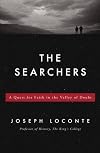
Who is this Walking Man?: a book review.
By matichuk
The Searchers: A Quest For Faith in the Valley of Doubt by Joseph Loconte
We live in a world where people are bewildered, doubtful and despairing and feel let down by religious leaders, institutions and dogma. Sometimes it seems as though, God himself has turned his back on us, and we doubt who Jesus is. Is he God? Is he the Messiah? Was he even a real person (as a recent book by Bart Ehrman asks)?
In The Searchers, historian and journalist show more Joseph Loconte puts his finger on the pulse of our culture and our hunger for faith, hope and purpose. Loconte brings his readers into conversation with the story of Jesus’ encounter with the two disciples on the road to Emmaus (Luke 24:13-35). This was shortly after Jesus’ crucifixion and resurrection (a handful of women had brought back reports of an empty tomb). These two disciples are on their way out of Jerusalem when Jesus meets them on their way, though they do not recognize him. He walks with them and explains to them from the Hebrew Bible the truth about the Messiah. When they reach their destination, they invite Jesus to stay the night with them. As they sat down to eat the evening meal, they recognize Jesus as he says the table grace. He disappears from their sight and they say to one another, “Did not our hearts burn when he talked to us on the road and opened the scripture to us?”
Each of Loconte’s chapters probe this story and its connection to our current cultural search for Jesus. The Emmaus story is broken down into sections which stand as epigraphs at the beginning of each chapter which Loconte uses as a scaffolding to hang his reflections. He explores how Jesus’ presence on the road calls us to look beyond the hopelessness of our world, confronts our grief, exposes the poisons of religion (it was the religious establishment which demanded Jesus’ death), challenges our illusions, and gives us reason to hope that God is alive and at work behind the scenes in very real, supernatural, and surprising ways.
There are few stories in the Bible that hit me at an emotional level the way the road to Emmaus episode does. There is something really touching about how Jesus meets two disciples stuck in the depths of grief, doubt and disillusionment and nurses their fragile faith back to life. I think Loconte does a great job of inhabiting the space these disciples are in and showing how we, in our culture, are also infected with doubts and disillusionment but hunger for something beyond our grasp.
This is the perfect book to read with a seeker (or as a seeker). Loconte’s use of films, novels, history and cultural analysis brings the gospel into lively interaction with a world in need of Jesus. But this isn’t just a book for evangelists and Christian apologists and those on the hunt for God. As someone firm in my convictions about who Jesus is,Loconte’s book invited me into deeper reflection of all Jesus is and does. We who believe also need to walk the Emmaus road and encounter Jesus afresh.
I happen to like this book because it is thoughtful and beautifully written. Loconte probes the resurrection and brings it into conversation with examples of conspiracy theories, contemporary obsession with angels, and analysis of of the biblical concept resurrection against ancient myths. Making for a highly entertaining and engaging read.
Thank you to Thomas Nelson for providing me with a copy of this book in exchange for this review. show less
By matichuk
The Searchers: A Quest For Faith in the Valley of Doubt by Joseph Loconte
We live in a world where people are bewildered, doubtful and despairing and feel let down by religious leaders, institutions and dogma. Sometimes it seems as though, God himself has turned his back on us, and we doubt who Jesus is. Is he God? Is he the Messiah? Was he even a real person (as a recent book by Bart Ehrman asks)?
In The Searchers, historian and journalist show more Joseph Loconte puts his finger on the pulse of our culture and our hunger for faith, hope and purpose. Loconte brings his readers into conversation with the story of Jesus’ encounter with the two disciples on the road to Emmaus (Luke 24:13-35). This was shortly after Jesus’ crucifixion and resurrection (a handful of women had brought back reports of an empty tomb). These two disciples are on their way out of Jerusalem when Jesus meets them on their way, though they do not recognize him. He walks with them and explains to them from the Hebrew Bible the truth about the Messiah. When they reach their destination, they invite Jesus to stay the night with them. As they sat down to eat the evening meal, they recognize Jesus as he says the table grace. He disappears from their sight and they say to one another, “Did not our hearts burn when he talked to us on the road and opened the scripture to us?”
Each of Loconte’s chapters probe this story and its connection to our current cultural search for Jesus. The Emmaus story is broken down into sections which stand as epigraphs at the beginning of each chapter which Loconte uses as a scaffolding to hang his reflections. He explores how Jesus’ presence on the road calls us to look beyond the hopelessness of our world, confronts our grief, exposes the poisons of religion (it was the religious establishment which demanded Jesus’ death), challenges our illusions, and gives us reason to hope that God is alive and at work behind the scenes in very real, supernatural, and surprising ways.
There are few stories in the Bible that hit me at an emotional level the way the road to Emmaus episode does. There is something really touching about how Jesus meets two disciples stuck in the depths of grief, doubt and disillusionment and nurses their fragile faith back to life. I think Loconte does a great job of inhabiting the space these disciples are in and showing how we, in our culture, are also infected with doubts and disillusionment but hunger for something beyond our grasp.
This is the perfect book to read with a seeker (or as a seeker). Loconte’s use of films, novels, history and cultural analysis brings the gospel into lively interaction with a world in need of Jesus. But this isn’t just a book for evangelists and Christian apologists and those on the hunt for God. As someone firm in my convictions about who Jesus is,Loconte’s book invited me into deeper reflection of all Jesus is and does. We who believe also need to walk the Emmaus road and encounter Jesus afresh.
I happen to like this book because it is thoughtful and beautifully written. Loconte probes the resurrection and brings it into conversation with examples of conspiracy theories, contemporary obsession with angels, and analysis of of the biblical concept resurrection against ancient myths. Making for a highly entertaining and engaging read.
Thank you to Thomas Nelson for providing me with a copy of this book in exchange for this review. show less
A hobbit, a wardrobe, and a great war : how J.R.R. Tolkien and C.S. Lewis rediscovered faith, friendship, and heroism in the cataclysm of 1914-1918 by Joseph Loconte
This is the work of a credentialed, conservative historian whose objective appears to be encouraging his audience to read and value the works of J.R.R Tolkien and C,S. Lewis. His idea is that the experience of these authors in the Great War exerted tremendous influence over the fantasies that they wrote, specifically [The Lord of the Rings] and [The Chronicles of Narnia]. Current readers will benefit from understanding that “the chivalrous ideal” will provide needed armor in the show more individual’s resistance to the darker beliefs and impulses of humanity. It is the human decision, the choice made to follow the good, that matters.
Dr. Loconte documents the depth of disillusionment felt by those who survived that war. He believes that the strength of character and the virtue shown by the fictional characters appearing in the novels should be emulated and embraced. He suggests that by reading the novels, today’s readers will be better equipped to face the realities of life.
A critical quote (pg 156) reads “Tolkien’s story reminds us that evil is a sleepless force in human lives, and that the war against it demands constant vigilance.” Further on, the author writes: “Rejecting equally the moods of militarism and pacifism, these authors charted a middle course: a partial return to the chivalrous ideal. Only a society that upheld this ideal—in its art, literature, and its institutions—could hope to resist the dark and hungry forces arrayed against it. The serene and pacific Rivendell is a vision, perhaps, of the world as it ought to be, but not as we actually find it.”
Recommended primarily to the general reader rather than the expert. show less
Dr. Loconte documents the depth of disillusionment felt by those who survived that war. He believes that the strength of character and the virtue shown by the fictional characters appearing in the novels should be emulated and embraced. He suggests that by reading the novels, today’s readers will be better equipped to face the realities of life.
A critical quote (pg 156) reads “Tolkien’s story reminds us that evil is a sleepless force in human lives, and that the war against it demands constant vigilance.” Further on, the author writes: “Rejecting equally the moods of militarism and pacifism, these authors charted a middle course: a partial return to the chivalrous ideal. Only a society that upheld this ideal—in its art, literature, and its institutions—could hope to resist the dark and hungry forces arrayed against it. The serene and pacific Rivendell is a vision, perhaps, of the world as it ought to be, but not as we actually find it.”
Recommended primarily to the general reader rather than the expert. show less
Lists
You May Also Like


Statistics
- Works
- 8
- Members
- 920
- Popularity
- #27,886
- Rating
- 4.0
- Reviews
- 18
- ISBNs
- 27
- Languages
- 1