
Kate Mascarenhas
Author of The Psychology of Time Travel
Works by Kate Mascarenhas
Tagged
Common Knowledge
- Birthdate
- 1980
- Gender
- female
- Education
- University of Oxford (English)
University of Derby (Applied Psychology)
University of Worcester (PhD) - Occupations
- advertising copywriter
bookbinder
doll's house maker
Chartered Psychologist - Nationality
- UK
- Places of residence
- Oldham, Lancashire, England, UK
- Associated Place (for map)
- England, UK
Members
Reviews
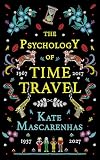
Rating: 4.5* of five
The Publisher Says: In 1967, four female scientists worked together to build the world’s first time machine. But just as they are about to debut their creation, one of them suffers a breakdown, putting the whole project—and future of time travel—in jeopardy. To protect their invention, one member is exiled from the team—erasing her contributions from history.
Fifty years later, time travel is a big business. Twenty-something Ruby Rebello knows her beloved show more grandmother, Granny Bee, was one of the pioneers, though no one will tell her more. But when Bee receives a mysterious newspaper clipping from the future reporting the murder of an unidentified woman, Ruby becomes obsessed: could it be Bee? Who would want her dead? And most importantly of all: can her murder be stopped?
Traversing the decades and told from alternating perspectives, The Psychology of Time Travel introduces a fabulous new voice in fiction and a new must-read for fans of speculative fiction and women’s fiction alike.
THE PUBLISHER APPROVED A DRC OF THIS TITLE VIA NETGALLEY. THANK YOU.
My Review: Okay. This is hard. I can't explain why I didn't give this fascinating, layered, reality-twisting novel of ideas less than five full stars without spoilering the hell out of the ending.
Let me approach this from the side. I remember a few details from the past, when there was one digit in my age. I don't claim, at this late date, that they are factual and accurate; way too much time has passed, way too many things look completely different to my grandfatherly self than they *could* have to my kid self. So is that The Past, my version of the past, a fantastical creation of my imagination, some combination of these (and other) angles of view? Is something new created, something old altered, is there any way imaginable that this paradox could be resolved with technological time travel? Or would that just make things a lot worse?
Reader, this novel does not answer those questions. It does not approach your experience of its story universe from the position of *giving* you answers; it demands of you that you spend significant mental energy creating answers for yourself, using the story's elements (note I did not call them facts) to sort out who actually intended to be good and create happiness for the greatest number of souls.
The answer is not the one you expect it to be. Or it wasn't the one I expected it to be. So I think you're likely to be led down the strange and winding thread of the screw bolting the monster's head to their body, directly into a concrete slab, and left there to wonder just what exactly happened while you thought you were reading a fun little entertainment about women empowering themselves in the world of 1967.
And you'll like it. show less
The Publisher Says: In 1967, four female scientists worked together to build the world’s first time machine. But just as they are about to debut their creation, one of them suffers a breakdown, putting the whole project—and future of time travel—in jeopardy. To protect their invention, one member is exiled from the team—erasing her contributions from history.
Fifty years later, time travel is a big business. Twenty-something Ruby Rebello knows her beloved show more grandmother, Granny Bee, was one of the pioneers, though no one will tell her more. But when Bee receives a mysterious newspaper clipping from the future reporting the murder of an unidentified woman, Ruby becomes obsessed: could it be Bee? Who would want her dead? And most importantly of all: can her murder be stopped?
Traversing the decades and told from alternating perspectives, The Psychology of Time Travel introduces a fabulous new voice in fiction and a new must-read for fans of speculative fiction and women’s fiction alike.
THE PUBLISHER APPROVED A DRC OF THIS TITLE VIA NETGALLEY. THANK YOU.
My Review: Okay. This is hard. I can't explain why I didn't give this fascinating, layered, reality-twisting novel of ideas less than five full stars without spoilering the hell out of the ending.
Let me approach this from the side. I remember a few details from the past, when there was one digit in my age. I don't claim, at this late date, that they are factual and accurate; way too much time has passed, way too many things look completely different to my grandfatherly self than they *could* have to my kid self. So is that The Past, my version of the past, a fantastical creation of my imagination, some combination of these (and other) angles of view? Is something new created, something old altered, is there any way imaginable that this paradox could be resolved with technological time travel? Or would that just make things a lot worse?
Reader, this novel does not answer those questions. It does not approach your experience of its story universe from the position of *giving* you answers; it demands of you that you spend significant mental energy creating answers for yourself, using the story's elements (note I did not call them facts) to sort out who actually intended to be good and create happiness for the greatest number of souls.
The answer is not the one you expect it to be. Or it wasn't the one I expected it to be. So I think you're likely to be led down the strange and winding thread of the screw bolting the monster's head to their body, directly into a concrete slab, and left there to wonder just what exactly happened while you thought you were reading a fun little entertainment about women empowering themselves in the world of 1967.
And you'll like it. show less
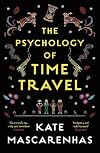
“When you’re a time traveller, the people you love die, and you carry on seeing them… The only death that will ever change things is your own.”
This is a really original, female-focused slant on time travel, with a strong emphasis on mental health, plus a locked-room murder mystery. It zips along in short chapters, each titled by the year and name(s) of the main character(s), all in plain language.
It’s good fun, with some interesting ideas, but I found the heavy-handed exposition show more and handling of Issues (gender, racism, bullying, psychological problems) increasingly annoying, exacerbated by plot holes and inconsistencies. It’s generally a bit YA for my taste.
Plot - no spoilers
Four British women invent a time-travel machine in 1967. The organisation they create, The Conclave, gets military funding, but is secretive and self-policing - literally: there are separate legal and currency systems for time travellers. It employs a few hundred within two years! But early on, one of the four, Barbara, has a breakdown on live TV. Margaret kicks her out of The Conclave, and thereafter, the mental health of time travellers is an issue. The main plot drivers are Barbara’s desire to travel time again, and a university student, Odette, who finds a body and becomes obsessed with wanting to know who and why.
Image: Diorama from the author’s website (Source.)
Ask yourself
• Do you want to know your future? (The enduring popularity of fortune-telling suggests many do.)
• Would you want to spend Christmas with several versions of yourself (different ages, on the same timeline)? Or invite several of you to your wedding?
• Would you visit your dying future self?
• Is it surprising that one of the time travellers is a churchgoer who believes in the afterlife?
Mechanics and consequences
• You can’t travel back to before the machine’s invention.
• You can’t travel forward more than 300 years after the time machine’s invention. If the specific reason was given, I missed it.
• Time travel can trigger psychological problems: disruptions to body clock; the stress of cognitive recall when timelines and memories are non-chronological; the emotional burden of knowing the future (yours, and those you love); monogamy isn’t a very meaningful concept; obsession with death, and although neutering feelings, can help cope, it can also lead to bullying and nasty pranks to trigger emotions in others, and experience them vicariously.
• “Time travellers’ relationships feel prearranged… They know the outcome before they necessarily know the person.” And unless both partners are time travellers, there’s an imbalance of knowledge that few couples can manage.
• Time travellers can spend more of their lives in the past or future than their purported home timeline.
• You can meet yourself - multiple selves from different times of your life - simultaneously (and having sex with yourself is common enough there’s a word for it in the time travellers’ glossary).
• You can’t change anything in the past. Except for the things you can, which do of course change things. It doesn’t really stack up.
Creative
One of the founding time travellers, Grace, is also a successful conceptual artist, including a self-portrait painted in reverse: the travelled 24 hours into the future to see the finished picture. Then back one hour (only 23 hours ahead of her “present”) to paint the preceding brushstrokes. She repeated this until faced with a blank canvas on which she painted the first line, “with a fresh, directly experienced memory of how the final painting would look.”
Diversity
I welcome diversity, especially in sci-fi, but here, you’re constantly reminded that every main character is female (mostly women in STEM), several are non-white and made to feel aware of it, some are lesbian or bi, one is a single mother, and many have mental health issues (PTSD, bipolar, OCD, death anxiety, anorexia, self-harm). The only fleeting mention of Margaret’s secretary was to indicate that he was a man. It just needed some physical disabilities for the hat-trick.
On the other hand, immediately before this, I read This Is How You Lose the Time War (see my review HERE), whose queer feminist slant was almost too understated to make the point. I prefer subtlety to sledgehammers.
Other annoyances - no major plot spoilers
There are quite a lot, though a few are trivial. I’ve hidden them because I want to remember what they are, but don’t want to spoil other people’s enjoyment.
Image: Not (quite) appearing in this book (Source.)
Implausibility and inconsistencies
Ruby’s favourite book as a child was The Box of Delights by John Masefield, a fantasy novel about a magic box that enables its holder to travel time and space. It plays a small but significant role in this book, though I don’t think I lost out by not having read it.
What irked me was its parallel, the Candybox: a miniature time travel device. The Conclave briefly sold them as toys: put a piece of candy in, it would vanish, and appear a minute later. As we’re often told the fuel for time machines is terribly expensive and used up quickly, this doesn’t seem a good form of fundraising. But worse, the Candybox is really a deus ex, rather like The Doctor and his Sonic Screwdriver.
I cannot believe that for 50 years, no one else manages time travel, even given The Conclave’s monopoly on the fuel. It’s too powerful a tool. Spies (commercial or foreign governments) would go to extraordinary lengths to get their hands on it, and probably succeed, especially as they could legitimately buy and disassemble Candyboxes.
Apparently, “most time travel legislation derives from the twenty fourth-century, which is pretty bloodthirsty”, but how does anyone know, given the stated impossibility of travel beyond 2267?
Odette is a main character: a Cambridge graduate, but often seeming to lack intelligence. She met a time traveller in her childhood, so why doesn’t she immediately wonder if time travel could be a factor in the locked-room murder? Another time, she is thinking of all sorts of complex tech ways to get secret information to a journalist. A man she has met, and could meet again.
Mental health
The mental health of time travellers is a big deal, but why is their physical health never mentioned? This is especially relevant because most time travellers are women. How does it affect their menstrual cycles, and what happens if a woman travels while pregnant?
The glossary is of time travel jargon is fun - though it doesn’t include all the terms used in the story. The 30 pages of psychometric questions to weed out potential time travellers who have mental health issues are an amusing idea, but way more than necessary. But maybe it’s more appealing to listicle-obsessed YAs who might want to check if they’d be suitable candidates. The idea that such tests would be used again and again with the same time travellers didn’t seem very plausible though.
For a book by a chartered psychologist, and one that champions mental health and equality, I was surprised to read “manic depression” twice (instead of “bipolar”) and even “air hostess”.
Writing and editing
Mascarenhas does a lot of telling when she could be showing, especially of people’s thoughts and motives. “Ginger didn’t lack self-awareness...” Those words should not be necessary. The Conclave entrance exam question, “How can time travel help us prevent a crime?” is a good one, but it’s used for didactic explanation. And towards the end, Ruby gives an out-loud psych assessment of and to an opponent, just in case readers haven’t joined the dots. Very Blofeld.
I don’t proofread novels, but I did notice a couple of egregios typos, including one where the wrong character’s name was used (confusing!), and mention of “a Terence Malik film” that manages to misspell both his names, and wasn’t really relevant anyway!
Another unnecessary aside is being able to have strap-on wings in 2075 (cute) - that you can use for inter-continental flights!! What about oxygen, temperature, staying awake...? (Unless flying to Cuba was a joke, but it didn’t read that way.)
This is a really original, female-focused slant on time travel, with a strong emphasis on mental health, plus a locked-room murder mystery. It zips along in short chapters, each titled by the year and name(s) of the main character(s), all in plain language.
It’s good fun, with some interesting ideas, but I found the heavy-handed exposition show more and handling of Issues (gender, racism, bullying, psychological problems) increasingly annoying, exacerbated by plot holes and inconsistencies. It’s generally a bit YA for my taste.
Plot - no spoilers
Four British women invent a time-travel machine in 1967. The organisation they create, The Conclave, gets military funding, but is secretive and self-policing - literally: there are separate legal and currency systems for time travellers. It employs a few hundred within two years! But early on, one of the four, Barbara, has a breakdown on live TV. Margaret kicks her out of The Conclave, and thereafter, the mental health of time travellers is an issue. The main plot drivers are Barbara’s desire to travel time again, and a university student, Odette, who finds a body and becomes obsessed with wanting to know who and why.
Image: Diorama from the author’s website (Source.)
Ask yourself
• Do you want to know your future? (The enduring popularity of fortune-telling suggests many do.)
• Would you want to spend Christmas with several versions of yourself (different ages, on the same timeline)? Or invite several of you to your wedding?
• Would you visit your dying future self?
• Is it surprising that one of the time travellers is a churchgoer who believes in the afterlife?
Mechanics and consequences
• You can’t travel back to before the machine’s invention.
• You can’t travel forward more than 300 years after the time machine’s invention. If the specific reason was given, I missed it.
• Time travel can trigger psychological problems: disruptions to body clock; the stress of cognitive recall when timelines and memories are non-chronological; the emotional burden of knowing the future (yours, and those you love); monogamy isn’t a very meaningful concept; obsession with death, and although neutering feelings, can help cope, it can also lead to bullying and nasty pranks to trigger emotions in others, and experience them vicariously.
• “Time travellers’ relationships feel prearranged… They know the outcome before they necessarily know the person.” And unless both partners are time travellers, there’s an imbalance of knowledge that few couples can manage.
• Time travellers can spend more of their lives in the past or future than their purported home timeline.
• You can meet yourself - multiple selves from different times of your life - simultaneously (and having sex with yourself is common enough there’s a word for it in the time travellers’ glossary).
• You can’t change anything in the past. Except for the things you can, which do of course change things. It doesn’t really stack up.
Creative
One of the founding time travellers, Grace, is also a successful conceptual artist, including a self-portrait painted in reverse: the travelled 24 hours into the future to see the finished picture. Then back one hour (only 23 hours ahead of her “present”) to paint the preceding brushstrokes. She repeated this until faced with a blank canvas on which she painted the first line, “with a fresh, directly experienced memory of how the final painting would look.”
Diversity
I welcome diversity, especially in sci-fi, but here, you’re constantly reminded that every main character is female (mostly women in STEM), several are non-white and made to feel aware of it, some are lesbian or bi, one is a single mother, and many have mental health issues (PTSD, bipolar, OCD, death anxiety, anorexia, self-harm). The only fleeting mention of Margaret’s secretary was to indicate that he was a man. It just needed some physical disabilities for the hat-trick.
On the other hand, immediately before this, I read This Is How You Lose the Time War (see my review HERE), whose queer feminist slant was almost too understated to make the point. I prefer subtlety to sledgehammers.
Other annoyances - no major plot spoilers
There are quite a lot, though a few are trivial. I’ve hidden them because I want to remember what they are, but don’t want to spoil other people’s enjoyment.
Image: Not (quite) appearing in this book (Source.)
Implausibility and inconsistencies
Ruby’s favourite book as a child was The Box of Delights by John Masefield, a fantasy novel about a magic box that enables its holder to travel time and space. It plays a small but significant role in this book, though I don’t think I lost out by not having read it.
What irked me was its parallel, the Candybox: a miniature time travel device. The Conclave briefly sold them as toys: put a piece of candy in, it would vanish, and appear a minute later. As we’re often told the fuel for time machines is terribly expensive and used up quickly, this doesn’t seem a good form of fundraising. But worse, the Candybox is really a deus ex, rather like The Doctor and his Sonic Screwdriver.
I cannot believe that for 50 years, no one else manages time travel, even given The Conclave’s monopoly on the fuel. It’s too powerful a tool. Spies (commercial or foreign governments) would go to extraordinary lengths to get their hands on it, and probably succeed, especially as they could legitimately buy and disassemble Candyboxes.
Apparently, “most time travel legislation derives from the twenty fourth-century, which is pretty bloodthirsty”, but how does anyone know, given the stated impossibility of travel beyond 2267?
Odette is a main character: a Cambridge graduate, but often seeming to lack intelligence. She met a time traveller in her childhood, so why doesn’t she immediately wonder if time travel could be a factor in the locked-room murder? Another time, she is thinking of all sorts of complex tech ways to get secret information to a journalist. A man she has met, and could meet again.
Mental health
The mental health of time travellers is a big deal, but why is their physical health never mentioned? This is especially relevant because most time travellers are women. How does it affect their menstrual cycles, and what happens if a woman travels while pregnant?
The glossary is of time travel jargon is fun - though it doesn’t include all the terms used in the story. The 30 pages of psychometric questions to weed out potential time travellers who have mental health issues are an amusing idea, but way more than necessary. But maybe it’s more appealing to listicle-obsessed YAs who might want to check if they’d be suitable candidates. The idea that such tests would be used again and again with the same time travellers didn’t seem very plausible though.
For a book by a chartered psychologist, and one that champions mental health and equality, I was surprised to read “manic depression” twice (instead of “bipolar”) and even “air hostess”.
Writing and editing
Mascarenhas does a lot of telling when she could be showing, especially of people’s thoughts and motives. “Ginger didn’t lack self-awareness...” Those words should not be necessary. The Conclave entrance exam question, “How can time travel help us prevent a crime?” is a good one, but it’s used for didactic explanation. And towards the end, Ruby gives an out-loud psych assessment of and to an opponent, just in case readers haven’t joined the dots. Very Blofeld.
I don’t proofread novels, but I did notice a couple of egregios typos, including one where the wrong character’s name was used (confusing!), and mention of “a Terence Malik film” that manages to misspell both his names, and wasn’t really relevant anyway!
Another unnecessary aside is being able to have strap-on wings in 2075 (cute) - that you can use for inter-continental flights!! What about oxygen, temperature, staying awake...? (Unless flying to Cuba was a joke, but it didn’t read that way.)
A Locked-Door Murder Mystery in a Poorly Conceived Alternate History
The Psychology of Time Travel provides the reader with an alternate history in which four women scientists develop time-travel technology in 1967. Fifty years later, a fifth woman discovers an unidentified body inside a locked room and becomes obsessed with solving the case, while a sixth woman worries that the dead woman is her grandmother and launches her own investigation. While this seems considerable grist for a tense, show more suspenseful mystery, the book falls somewhat short of that goal. Part of the reason is suggested in the two-sentence summary above – there are a lot of characters (more than just these six). Additionally, the chapters are short, moving among these individuals and across time periods in an unpredictable sequence of flash forwards and backs, making the story feel choppy. And finally, the mystery isn’t maintained. By the midpoint of the book, the victim is known and at three-fourths, the perpetrator. The rest is tying up loose ends, which is rather dry.
In general, character development is good but with as many people as there are, some are included only to be victims. Romance between some of the women helps with development, although as is often the case in thrillers and mysteries, the sex is superfluous to the plot and often seems like a means to kill time (pun intended). The villain was particularly loathe-worthy, as she descends into unbridled narcissism and cruelty. There are also the usual thought-provoking paradoxes in the concept of time travel. So, even though in this version of the capability, history cannot be changed, wouldn’t the mere presence of items from the future change its course?
The primary weakness of the book is its alternate version of history. Time travel would be the most revolutionary and dangerous technology devised by humanity in 1967. And yet, when the scientists extensively self-experiment (which is improbable to start with) and one develops a mental disturbance that’s caught on camera for the world to see, there is no outcry, no public health group demanding a moratorium on testing. Rather, the group’s leader ostracizes her, which also fails to generate negative press for her callous treatment of the mentally disturbed, and the technology is commercialized. Now, with everything from new, life-saving technologies to advanced weaponry just an easy trip into the future, what’s brought back to 2018? Not much beyond some new types of candy and a few plants that were about to become extinct. Psychology still uses paper-and-pencil tests and dream interpretation. The British government doesn’t declare time travel essential to national security, despite the immense threat it poses, leaving the three women to manage it. There are no foreign spies trying to steal it, no industrial espionage, not even much use of it for personal gain (beyond sex). The only control against proliferation and misuse is the exorbitant cost of the fuel – 500,000 British pounds for a single piece. And yet, one of the few commercial uses of the tech is as a child’s toy; it makes a piece of candy disappear by sending it a minute into the future. With the cost of fuel, it would be a gift that gives new meaning to the phrase, ‘batteries not included’.
Overall, The Psychology of Time Travel provides the reader a decent, if not exceptionally suspenseful mystery. It’s unfortunate that its alternate history involves inexplicable changes in human perception and significant lapses in public policy, as well as time travel.
I obtained an advance copy of this story from NetGalley without obligation. I choose to review the book. show less
The Psychology of Time Travel provides the reader with an alternate history in which four women scientists develop time-travel technology in 1967. Fifty years later, a fifth woman discovers an unidentified body inside a locked room and becomes obsessed with solving the case, while a sixth woman worries that the dead woman is her grandmother and launches her own investigation. While this seems considerable grist for a tense, show more suspenseful mystery, the book falls somewhat short of that goal. Part of the reason is suggested in the two-sentence summary above – there are a lot of characters (more than just these six). Additionally, the chapters are short, moving among these individuals and across time periods in an unpredictable sequence of flash forwards and backs, making the story feel choppy. And finally, the mystery isn’t maintained. By the midpoint of the book, the victim is known and at three-fourths, the perpetrator. The rest is tying up loose ends, which is rather dry.
In general, character development is good but with as many people as there are, some are included only to be victims. Romance between some of the women helps with development, although as is often the case in thrillers and mysteries, the sex is superfluous to the plot and often seems like a means to kill time (pun intended). The villain was particularly loathe-worthy, as she descends into unbridled narcissism and cruelty. There are also the usual thought-provoking paradoxes in the concept of time travel. So, even though in this version of the capability, history cannot be changed, wouldn’t the mere presence of items from the future change its course?
The primary weakness of the book is its alternate version of history. Time travel would be the most revolutionary and dangerous technology devised by humanity in 1967. And yet, when the scientists extensively self-experiment (which is improbable to start with) and one develops a mental disturbance that’s caught on camera for the world to see, there is no outcry, no public health group demanding a moratorium on testing. Rather, the group’s leader ostracizes her, which also fails to generate negative press for her callous treatment of the mentally disturbed, and the technology is commercialized. Now, with everything from new, life-saving technologies to advanced weaponry just an easy trip into the future, what’s brought back to 2018? Not much beyond some new types of candy and a few plants that were about to become extinct. Psychology still uses paper-and-pencil tests and dream interpretation. The British government doesn’t declare time travel essential to national security, despite the immense threat it poses, leaving the three women to manage it. There are no foreign spies trying to steal it, no industrial espionage, not even much use of it for personal gain (beyond sex). The only control against proliferation and misuse is the exorbitant cost of the fuel – 500,000 British pounds for a single piece. And yet, one of the few commercial uses of the tech is as a child’s toy; it makes a piece of candy disappear by sending it a minute into the future. With the cost of fuel, it would be a gift that gives new meaning to the phrase, ‘batteries not included’.
Overall, The Psychology of Time Travel provides the reader a decent, if not exceptionally suspenseful mystery. It’s unfortunate that its alternate history involves inexplicable changes in human perception and significant lapses in public policy, as well as time travel.
I obtained an advance copy of this story from NetGalley without obligation. I choose to review the book. show less
A haunting contemplation on love, death, and destiny.
(Full disclosure: I received a free e-ARC for review through Edelweiss. Trigger warning for allusions to rape and mental health issues.)
"The funny thing is, the other time travelers—I’m thinking of Teddy Avedon in particular, he’s been showing me the ropes—they keep telling me that it’s green to be so excited. They mean I’m being gauche. Teddy says I’ll get used to seeing dead people. But I think he’s wrong. Whenever I show more visit my father, the trees in his garden are young again, and so is he. I will never take that for granted."
"Two women, who’d already witnessed each other’s deaths, married on the first day of spring. [...]
"Entertainments followed: fifty-five Angharads danced a ballet."
It's 1967 and time travel is about to become a reality - thanks to four brilliant young women.
"The laboratory, in Cumbria, was home to four young scientists. Margaret was a baroness turned cosmologist. Lucille had come from the Toxteth slums to make radio waves travel faster than light. Grace—who never gave the same account of her history twice—was an expert in the behavior of matter. And the last was Barbara: the baby of the group, hair so fair it was nearly white, ruddy-cheeked and naively wholesome. She specialized in nuclear fission.
Among other things, their invention will make it more difficult for society to deny them their accomplishments:
"And because time travellers appear again and again as the years go by—long past their natural lifespan—it would be harder to write these women out of history. They would be visible, for all to see."
Yet, shortly after traveling forward an hour into the future (time travel being possible only between points in which the infrastructure exists which, for the purpose of this story, is between 1967 and 2267 ... mysterious!), Barbara - Bee for short - suffers a breakdown on live TV and is promptly institutionalized. It's later theorized that the disruptions in daylight triggered a bipolar episode in Bee, who was already predisposed. Nevertheless, Bee is ostracized from the burgeoning Time Travel Enclave, largely at funder Margaret's behest.
Fast forward fifty-plus years. Bee marries, has a child, is widowed, has a grandchild. She shies away from the spotlight and largely abandons her scientific pursuits. She lives a cozy, contented life in a cottage by the sea, kept company by her garden, her doggos, and her granddaughter Ruby. She is, in a way, written out of history (despicably, by another woman).
That is, until the day she finds an origami rabbit on her front step. Inside is in inquest notice, dated five months in the future, into the death of an unidentified woman in her 80s. Afraid that Bee will soon be murdered - multiple gunshot wounds, her body discovered in the locked basement boiler room of a toy museum by a volunteer - Ruby launches a covert investigation into the Conclave's other three founders. Meanwhile, Bee tries to get back into the Conclave's good graces.
The Psychology of Time Travel jumps back and forth in time - from the invention of time travel in 1967; to last half of 2018, in the months leading up to the murder; to the crime's fallout, in 2019 - and is told through multiple perspectives: Bee, Margaret, Grace, Lucille, and Ruby, naturally; Odette, the young graduate student who makes the gruesome discovery; Ginger, Ruby's sometimes-lover; Angharad, an astronaut who joins the Conclave after Bee's ousting; and Siobhan, a psychologist from the 22nd century. Every. Single. Narrator. is a woman, which is such a refreshing and surprising delight, I can't even.
Sometimes stories told in this way can prove difficult to follow but, once I got used to the rhythm, I became lost in the tale. It's a little bit mystery, a lot of geeky good science fiction, and - perhaps above all else - a surprisingly philosophical exploration of how time travel might affect us: the travelers specifically, and society more generally. Mascarenhas's vision might surprise you.
This is an exceptionally difficult book for me to review, but probably not for the reasons you might think. I read it while one of my beloved puppers - fifteen years young! - was dying...though I did not realize it at the time. She'd been struggling with dementia for about ten months, which was difficult to watch; but I thought we had at least a few more months together. Sadly, O-Ren was euthanized at home five days after I finished The Psychology of Time Travel: she was refusing to eat or drink, and her nighttime pacing became more frantic, even as her energy waned and she could no longer do laps around the house without falling, repeatedly. Most likely she also had a brain tumor, like her friend Mags, who passed away just four months before - on Thanksgiving, no less. One of my final memories of Rennie will be pacing around the house with her while reading The Psychology of Time Travel on my Kindle. Needless to say, this review was written in tears.
Point being, it's been a rough few years for me. In just under six years, I lost six dogs, a grandmother, and my husband. I had to sell my house and move back home. My last remaining doggo is thirteen-and-a-half and I'm waiting on a neurology consult to see if Finnick might have a brain tumor as well. I don't know what I'm going to do when he leaves me, too. Some days these dogs are the only thing that keeps me going. In this context, I found The Psychology of Time Travel's meditations on death especially appealing.
This book is called The PSYCHOLOGY of Time Travel for a reason: turns out that time travel can really fuck a person up.
"When you’re a time traveler, the people you love die, and you carry on seeing them, so their death stops making a difference to you. The only death that will ever change things is your own."
This idea is both amazing and terrifying. To think that your loved one will forever exist during a certain period in time, even if they do not exist at this particular moment, and that you can visit them at the drop of a hat, is...wonderful. Magnificent. Liberating. I would give anything to be able to do that. To bump crooked noses with Peedee, or smell Ralphie's musk, or rub Kaylee's piggy belly. To talk to Shane or go on a hike with Mags. To once again toss a tennis ball around with little puppy Rennie.
Yet, as we soon learn, this mutability of death is a double-edged sword. Time travelers become cruel. Hardened. Some of this is in the management, sure, but even the "good" ones struggle with doing what's right - why not, when you can put that weight on your silver self's shoulders?
The Psychology of Time Travel is a thoughtful contemplation on love, loss, and - yes - destiny. Another pitfall of already knowing the future? Subjugating your will in order to choose the path that you think your life is "supposed" to take: seeing the future makes it so. But who's to say the future cannot be changed?
So, yes, time travel is a magical experience - but took much knowledge can become a prison of its own.
The time travel also lends itself well to all sorts of neat little details, from the slang ("For instance—intercourse with one’s future self was called forecasting. Intercourse with one’s past self was a legacy fuck.") to the scenes featuring multiple versions of the same character (see also: slang). You never know just when or how some characters' lives will intersect, and the guessing makes for a really enjoyable experience.
http://www.easyvegan.info/2019/04/26/the-psychology-of-time-travel-by-kate-masca... show less
(Full disclosure: I received a free e-ARC for review through Edelweiss. Trigger warning for allusions to rape and mental health issues.)
"The funny thing is, the other time travelers—I’m thinking of Teddy Avedon in particular, he’s been showing me the ropes—they keep telling me that it’s green to be so excited. They mean I’m being gauche. Teddy says I’ll get used to seeing dead people. But I think he’s wrong. Whenever I show more visit my father, the trees in his garden are young again, and so is he. I will never take that for granted."
"Two women, who’d already witnessed each other’s deaths, married on the first day of spring. [...]
"Entertainments followed: fifty-five Angharads danced a ballet."
It's 1967 and time travel is about to become a reality - thanks to four brilliant young women.
"The laboratory, in Cumbria, was home to four young scientists. Margaret was a baroness turned cosmologist. Lucille had come from the Toxteth slums to make radio waves travel faster than light. Grace—who never gave the same account of her history twice—was an expert in the behavior of matter. And the last was Barbara: the baby of the group, hair so fair it was nearly white, ruddy-cheeked and naively wholesome. She specialized in nuclear fission.
Among other things, their invention will make it more difficult for society to deny them their accomplishments:
"And because time travellers appear again and again as the years go by—long past their natural lifespan—it would be harder to write these women out of history. They would be visible, for all to see."
Yet, shortly after traveling forward an hour into the future (time travel being possible only between points in which the infrastructure exists which, for the purpose of this story, is between 1967 and 2267 ... mysterious!), Barbara - Bee for short - suffers a breakdown on live TV and is promptly institutionalized. It's later theorized that the disruptions in daylight triggered a bipolar episode in Bee, who was already predisposed. Nevertheless, Bee is ostracized from the burgeoning Time Travel Enclave, largely at funder Margaret's behest.
Fast forward fifty-plus years. Bee marries, has a child, is widowed, has a grandchild. She shies away from the spotlight and largely abandons her scientific pursuits. She lives a cozy, contented life in a cottage by the sea, kept company by her garden, her doggos, and her granddaughter Ruby. She is, in a way, written out of history (despicably, by another woman).
That is, until the day she finds an origami rabbit on her front step. Inside is in inquest notice, dated five months in the future, into the death of an unidentified woman in her 80s. Afraid that Bee will soon be murdered - multiple gunshot wounds, her body discovered in the locked basement boiler room of a toy museum by a volunteer - Ruby launches a covert investigation into the Conclave's other three founders. Meanwhile, Bee tries to get back into the Conclave's good graces.
The Psychology of Time Travel jumps back and forth in time - from the invention of time travel in 1967; to last half of 2018, in the months leading up to the murder; to the crime's fallout, in 2019 - and is told through multiple perspectives: Bee, Margaret, Grace, Lucille, and Ruby, naturally; Odette, the young graduate student who makes the gruesome discovery; Ginger, Ruby's sometimes-lover; Angharad, an astronaut who joins the Conclave after Bee's ousting; and Siobhan, a psychologist from the 22nd century. Every. Single. Narrator. is a woman, which is such a refreshing and surprising delight, I can't even.
Sometimes stories told in this way can prove difficult to follow but, once I got used to the rhythm, I became lost in the tale. It's a little bit mystery, a lot of geeky good science fiction, and - perhaps above all else - a surprisingly philosophical exploration of how time travel might affect us: the travelers specifically, and society more generally. Mascarenhas's vision might surprise you.
This is an exceptionally difficult book for me to review, but probably not for the reasons you might think. I read it while one of my beloved puppers - fifteen years young! - was dying...though I did not realize it at the time. She'd been struggling with dementia for about ten months, which was difficult to watch; but I thought we had at least a few more months together. Sadly, O-Ren was euthanized at home five days after I finished The Psychology of Time Travel: she was refusing to eat or drink, and her nighttime pacing became more frantic, even as her energy waned and she could no longer do laps around the house without falling, repeatedly. Most likely she also had a brain tumor, like her friend Mags, who passed away just four months before - on Thanksgiving, no less. One of my final memories of Rennie will be pacing around the house with her while reading The Psychology of Time Travel on my Kindle. Needless to say, this review was written in tears.
Point being, it's been a rough few years for me. In just under six years, I lost six dogs, a grandmother, and my husband. I had to sell my house and move back home. My last remaining doggo is thirteen-and-a-half and I'm waiting on a neurology consult to see if Finnick might have a brain tumor as well. I don't know what I'm going to do when he leaves me, too. Some days these dogs are the only thing that keeps me going. In this context, I found The Psychology of Time Travel's meditations on death especially appealing.
This book is called The PSYCHOLOGY of Time Travel for a reason: turns out that time travel can really fuck a person up.
"When you’re a time traveler, the people you love die, and you carry on seeing them, so their death stops making a difference to you. The only death that will ever change things is your own."
This idea is both amazing and terrifying. To think that your loved one will forever exist during a certain period in time, even if they do not exist at this particular moment, and that you can visit them at the drop of a hat, is...wonderful. Magnificent. Liberating. I would give anything to be able to do that. To bump crooked noses with Peedee, or smell Ralphie's musk, or rub Kaylee's piggy belly. To talk to Shane or go on a hike with Mags. To once again toss a tennis ball around with little puppy Rennie.
Yet, as we soon learn, this mutability of death is a double-edged sword. Time travelers become cruel. Hardened. Some of this is in the management, sure, but even the "good" ones struggle with doing what's right - why not, when you can put that weight on your silver self's shoulders?
The Psychology of Time Travel is a thoughtful contemplation on love, loss, and - yes - destiny. Another pitfall of already knowing the future? Subjugating your will in order to choose the path that you think your life is "supposed" to take: seeing the future makes it so. But who's to say the future cannot be changed?
So, yes, time travel is a magical experience - but took much knowledge can become a prison of its own.
The time travel also lends itself well to all sorts of neat little details, from the slang ("For instance—intercourse with one’s future self was called forecasting. Intercourse with one’s past self was a legacy fuck.") to the scenes featuring multiple versions of the same character (see also: slang). You never know just when or how some characters' lives will intersect, and the guessing makes for a really enjoyable experience.
http://www.easyvegan.info/2019/04/26/the-psychology-of-time-travel-by-kate-masca... show less
Lists
Female Author (1)
2010s (1)
Awards

You May Also Like


Associated Authors
Statistics
- Works
- 3
- Members
- 1,017
- Popularity
- #25,335
- Rating
- 3.5
- Reviews
- 59
- ISBNs
- 31
- Languages
- 1
- Favorited
- 1