
Natasha Pulley
Author of The Watchmaker of Filigree Street
About the Author
Series
Works by Natasha Pulley
Associated Works
The Haunting Season: Ghostly Tales for Long Winter Nights (2021) — Contributor — 321 copies, 9 reviews
Tagged
Common Knowledge
- Birthdate
- 1988-12-04
- Gender
- female
- Education
- University of Oxford
University of East Anglia (MA|Creative Writing) - Occupations
- author
- Awards and honors
- Betty Trask Award in 2016
- Agent
- Jenny Savill
- Short biography
- Natasha has lived in Japan as a Daiwa Scholar, as well as China and Peru. She was a 2016 Glastone Writer in Residence, and she teaches on Bath Spa University’s Creative Writing BA, alongside short courses at the Cambridge Institute of Continuing Education.
- Nationality
- UK
- Birthplace
- Cambridge, Cambridgeshire, England, UK
- Places of residence
- Cambridgeshire, England, UK
- Map Location
- England, UK
- Associated Place (for map)
- Cambridgeshire, England, UK
Members
Discussions
Group read: The watchmaker of Filigree Street in The Green Dragon (February 2016)
Reviews
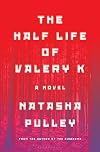
Real Rating: 4.75* of five, rounded up because there's no real reason not to
The Publisher Says: In 1963, in a Siberian gulag, former nuclear specialist Valery Kolkhanov has mastered what it takes to survive: the right connections to the guards for access to food and cigarettes, the right pair of warm boots to avoid frostbite, and the right attitude toward the small pleasures of life so he won’t go insane. But on one ordinary day, all that changes: Valery’s university mentor steps in and show more sweeps Valery from the frozen prison camp to a mysterious unnamed town that houses a set of nuclear reactors and is surrounded by a forest so damaged it looks like the trees have rusted from within.
In City 40, Valery is Dr. Kolkhanov once more, and he’s expected to serve out his prison term studying the effect of radiation on local animals. But as Valery begins his work, he is struck by the questions his research raises: why is there so much radiation in this area? What, exactly, is being hidden from the thousands who live in the town? And if he keeps looking for answers, will he live to serve out his sentence?
Based on real events in a surreal Soviet city, and told with bestselling author Natasha Pulley’s inimitable style, The Half Life of Valery K is a sweeping new adventure for readers of Stuart Turton and Sarah Gailey.
I RECEIVED A DRC FROM THE PUBLISHER VIA NETGALLEY. THANK YOU.
My Review: There is nothing one Earth more appalling to me than the attitude "My ignorance is better than your education, training, and expertise." It's not just wrong-headed. It is dangerous. It leads to very, very deleterious results for the people who have no say in...often no awareness of...the risks they are being subjected to by the wilfully ignorant. The Yucca Flats, Nevada, nuclear-bomb testing disaster that People magazine broke the story of in 1980...the 1956 filming of The Conqueror ring any bells, fellow oldsters?...wasn't the only such official-denial event in the world. In the USSR, there was the Ozyorsk disaster, outed to the world in the New Scientist magazine in 1976 by a brave scientist called Medvedev. (I have to say that Siberia has a very unlucky past. This disaster occurred in 1957; the Tunguska event in 1908 was a holocaust; and sixty miles away from Ozyorsk is Chelyabinsk, of 2013 meteorite explosion fame!)
The story of the many "closed cities" in the USSR, and in today's Russia, is similarly grim, similarly marked by denial and obfuscation and outright lying. The Chernobyl disaster in 1986 was going to be treated that way, only it was far too big to tamp down and deny. So, Author Pulley has me by the nose-hairs again. Again! I am putty in this wicked writer's hands. She tells stories that make my ears perk up, the hair on the back of my neck do its wolfman imitation, and my breathing to become labored in eagerness.
Valery K. the nuclear scientist, exiled to a colder and less hospitable part of Siberia than City 40/Ozyorsk is in, is suddenly ripped from his wretched routine without explanation or preparation. He's in the gulag...this is terrifying. But his worst fears...interrogation? execution?...aren't realized. He's sent to this comparative demi-Paradise of a place to study field mice. To assess them for effects of radiation exposure.
So, all is explained. He's a criminal, but also a thorough scientist trained in matters nuclear. Trained, talented, expendable.
What follows is a litany of nuclear-waste exposure nightmares. The effects on people, on the environment, are grisly. In the one plot strand I am absolutely sure is fiction (it says here) the authorities conduct radiation-exposure experiments on the people of City 40. The other plot strands, the environmental disaster, the carelessness and mismanagement that led to and characterized the ongoing handling of the disaster, are real. (Follow the links!) And gosh golly gee, wowee zowie, those sorts of things don't *ever* happen now. Especially the official lying and misleading! That could never happen in any authoritarian state in the twenty-first century, we have satellites and technology to sniff out problems, and scientists who would *never* lie to us here in the West.
So, the timing of the title's publication is now explained.
As one expects from Author Pulley, there are two men falling in love with each other amid the chaos and carnage that they are powerless to stop. Also as one would expect, there are events that occur that cause them trouble personally and interpersonally. I've said it before, the curse of adulthood is one never, ever has an unmixed emotion. Valery tries, in his what-got-him-gulaged way, to force officialdom to face up to the scale of the disaster. He wants to help people, to save them. Shenkov, his belovèd, is a married father, is in the game because it's the way to get ahead. And stay out of the gulag. The story, in other words, of generations of gay and bisexual men. Hide! They won't kill you if they don't have to notice your deviance.
But like calls to like. Valery knows that Shenkov loves him; he knows he loves Shenkov; things won't go well for City 40, but can things go well for them as men, as people, as...a couple? Fortune, as always, favors the brave. There must always be blood sacrificed before one gets one's rewards.
Morally grey characters, men past pretty on life's curve, the necessity of moving the world's blockages to make room for your authentic life: boxes all checked. The life you want, well...what do you know about how much it will cost, about what it will extract from you. You'll find out, if you're lucky. Or maybe unlucky. Most likely both. Consider, after reading the book, the title and its layers of meaning.
The right kind of read for me, right now, and it went down like the oldest, smoothest, most deceptively sweet tequila there is. show less
The Publisher Says: In 1963, in a Siberian gulag, former nuclear specialist Valery Kolkhanov has mastered what it takes to survive: the right connections to the guards for access to food and cigarettes, the right pair of warm boots to avoid frostbite, and the right attitude toward the small pleasures of life so he won’t go insane. But on one ordinary day, all that changes: Valery’s university mentor steps in and show more sweeps Valery from the frozen prison camp to a mysterious unnamed town that houses a set of nuclear reactors and is surrounded by a forest so damaged it looks like the trees have rusted from within.
In City 40, Valery is Dr. Kolkhanov once more, and he’s expected to serve out his prison term studying the effect of radiation on local animals. But as Valery begins his work, he is struck by the questions his research raises: why is there so much radiation in this area? What, exactly, is being hidden from the thousands who live in the town? And if he keeps looking for answers, will he live to serve out his sentence?
Based on real events in a surreal Soviet city, and told with bestselling author Natasha Pulley’s inimitable style, The Half Life of Valery K is a sweeping new adventure for readers of Stuart Turton and Sarah Gailey.
I RECEIVED A DRC FROM THE PUBLISHER VIA NETGALLEY. THANK YOU.
My Review: There is nothing one Earth more appalling to me than the attitude "My ignorance is better than your education, training, and expertise." It's not just wrong-headed. It is dangerous. It leads to very, very deleterious results for the people who have no say in...often no awareness of...the risks they are being subjected to by the wilfully ignorant. The Yucca Flats, Nevada, nuclear-bomb testing disaster that People magazine broke the story of in 1980...the 1956 filming of The Conqueror ring any bells, fellow oldsters?...wasn't the only such official-denial event in the world. In the USSR, there was the Ozyorsk disaster, outed to the world in the New Scientist magazine in 1976 by a brave scientist called Medvedev. (I have to say that Siberia has a very unlucky past. This disaster occurred in 1957; the Tunguska event in 1908 was a holocaust; and sixty miles away from Ozyorsk is Chelyabinsk, of 2013 meteorite explosion fame!)
The story of the many "closed cities" in the USSR, and in today's Russia, is similarly grim, similarly marked by denial and obfuscation and outright lying. The Chernobyl disaster in 1986 was going to be treated that way, only it was far too big to tamp down and deny. So, Author Pulley has me by the nose-hairs again. Again! I am putty in this wicked writer's hands. She tells stories that make my ears perk up, the hair on the back of my neck do its wolfman imitation, and my breathing to become labored in eagerness.
Valery K. the nuclear scientist, exiled to a colder and less hospitable part of Siberia than City 40/Ozyorsk is in, is suddenly ripped from his wretched routine without explanation or preparation. He's in the gulag...this is terrifying. But his worst fears...interrogation? execution?...aren't realized. He's sent to this comparative demi-Paradise of a place to study field mice. To assess them for effects of radiation exposure.
So, all is explained. He's a criminal, but also a thorough scientist trained in matters nuclear. Trained, talented, expendable.
What follows is a litany of nuclear-waste exposure nightmares. The effects on people, on the environment, are grisly. In the one plot strand I am absolutely sure is fiction (it says here) the authorities conduct radiation-exposure experiments on the people of City 40. The other plot strands, the environmental disaster, the carelessness and mismanagement that led to and characterized the ongoing handling of the disaster, are real. (Follow the links!) And gosh golly gee, wowee zowie, those sorts of things don't *ever* happen now. Especially the official lying and misleading! That could never happen in any authoritarian state in the twenty-first century, we have satellites and technology to sniff out problems, and scientists who would *never* lie to us here in the West.
So, the timing of the title's publication is now explained.
As one expects from Author Pulley, there are two men falling in love with each other amid the chaos and carnage that they are powerless to stop. Also as one would expect, there are events that occur that cause them trouble personally and interpersonally. I've said it before, the curse of adulthood is one never, ever has an unmixed emotion. Valery tries, in his what-got-him-gulaged way, to force officialdom to face up to the scale of the disaster. He wants to help people, to save them. Shenkov, his belovèd, is a married father, is in the game because it's the way to get ahead. And stay out of the gulag. The story, in other words, of generations of gay and bisexual men. Hide! They won't kill you if they don't have to notice your deviance.
But like calls to like. Valery knows that Shenkov loves him; he knows he loves Shenkov; things won't go well for City 40, but can things go well for them as men, as people, as...a couple? Fortune, as always, favors the brave. There must always be blood sacrificed before one gets one's rewards.
Morally grey characters, men past pretty on life's curve, the necessity of moving the world's blockages to make room for your authentic life: boxes all checked. The life you want, well...what do you know about how much it will cost, about what it will extract from you. You'll find out, if you're lucky. Or maybe unlucky. Most likely both. Consider, after reading the book, the title and its layers of meaning.
The right kind of read for me, right now, and it went down like the oldest, smoothest, most deceptively sweet tequila there is. show less
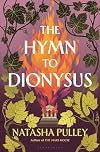
Rating: 4.5* of five
The Publisher Says: A timely and timeless reimagining of the story of Dionysus, Greek God of ecstasy and madness, revelry and ruin, for readers of The Song of Achilles and Elektra.
Raised in a Greek legion, Phaidros has been taught to fight for the homeland he’s never seen and to follow his commander’s orders at all costs. But when he rescues a baby from a fire at Thebes’s palace, his commander’s orders cease to make sense: Phaidros is forced to abandon the show more blue-eyed boy at a temple, and to keep the baby’s existence a secret.
Years later, after a strange encounter that led to the death of his battalion, Phaidros has become a training master for young soldiers. He struggles with panic attacks and flashbacks, and he is not the only one: all around him, his fellow veterans are losing their minds.
Phaidros’s risk of madness is not his only problem: his life has become entangled with Thebes’s young crown prince, who wishes to escape the marriage his mother, the Queen, has chosen for him. When the prince vanishes, Phaidros is drawn into the search for him—a search that leads him to a blue-eyed witch named Dionysus, whose guidance is as wise as the events that surround him are strange. In Dionysus’s company, Phaidros witnesses sudden outbursts of riots and unrest, and everywhere Dionysus goes, rumors follow about a new god, one sired by Zeus but lost in a fire.
In The Hymn to Dionysus, bestselling author Natasha Pulley transports us to an ancient empire on the edge of ruin to tell an utterly captivating story about a man needing a god to remind him how to be a human.
I RECEIVED A DRC FROM THE PUBLISHER VIA NETGALLEY. THANK YOU.
My Review: Phaidros saves an infant god, fights in an unjust war, gets PTSD from it, and...in later years...gives his skills thus acquired to saving his home city of Thebes (the one in Greece, not the one the Egyptians now call Luxor) and calls in his massive debt from Dionysus the god to...address things.
Now go buy one. Seriously...you've heard the good bits. It's Natasha Pulley's latest book (notably and annoyingly not the apparently-written sequel to The Half-Life of Valery K.)! What more do you need to know?
Plot? Already told you. Action? Read the blurb!
Fine. Spoiled brats. This is not a myth retelling. It's the story of two men a generation apart who truly fall in love, after the whole "he's so dreamy phase ends, and embark on that scariest of things to do, a mature relationship. One's a badly fucked up veteran, the other's...um...maybe divine, certainly an old soul. It bears a solid resemblance to Phaedrus, in that it is a solid and thorough examination of love in its guises, morality, and the intersection of emotion and morality that is Greek spirituality's idea of reincarnation. (Their word for it freaks people in the US right out, so I'm skipping it.) Phaidros is not partcularly like the historical Phaedrus, an Athenian aristocrat who did naughty things against the Mysteries...y'all don't much care, I get it, so the important part of using his name for our Theban hero is his name: It means "Shining" or "Brightening" as in to shine light on or brighten a room.
Greek names are so cool. They MEAN stuff. Like Plato..."flatface" or, as the Mexicans I knew in childhood used the same idea, "Chato." No big arching nose on you, sir, so you must be lower class! Yet that put-down is the most famous name in Greek philosophy. And Phaidros! Well, no one loves the one who rips the wizard's curtain down, do they? Dionysus the...god? demigod?...beautiful wild creature does, because he is also a force of opposing chaos. Nature is all shadows and shades and spectra. Dionysus is the perfect foil to light-shining Phaidros.
As a reimagining of Bacchae by Euripides, it's a loose one. It's also, tonally, a bit off. Why do these men speak to each other as modern middle-class Brits? The spark that illuminated Glorious Exploits as it used Dublin-Irish English for ancient Syracusan Greek came from its sly, side-eye commentary on the role of Ireland-v-England as replicated in the colonial war waged by Athens on Syracuse. The characters in this book do not have any comment to make on Thebes by their use of British vernacular, at least not one I can suss out. (That was deliberate.) So off came that half-star.
Still and all, as a fantastical meditation on Love, love, and their intersection points with morality, responsibility, and the eternal human desire to connect to others, I liked the story a lot. Pulley's trademark men-who-love subplot is again, and expectedly, rendered with all the grace a writer can bring, and deepened by the careful and unobtrusive use of the reincarnation-like connective tissue.
I hope, though, that this will remain her foray into Classical mundane-meets-magical worlds. It's better left in The Watchmaker of Filigree Street stories. This iteration is just that indefinable bit...off. show less
The Publisher Says: A timely and timeless reimagining of the story of Dionysus, Greek God of ecstasy and madness, revelry and ruin, for readers of The Song of Achilles and Elektra.
Raised in a Greek legion, Phaidros has been taught to fight for the homeland he’s never seen and to follow his commander’s orders at all costs. But when he rescues a baby from a fire at Thebes’s palace, his commander’s orders cease to make sense: Phaidros is forced to abandon the show more blue-eyed boy at a temple, and to keep the baby’s existence a secret.
Years later, after a strange encounter that led to the death of his battalion, Phaidros has become a training master for young soldiers. He struggles with panic attacks and flashbacks, and he is not the only one: all around him, his fellow veterans are losing their minds.
Phaidros’s risk of madness is not his only problem: his life has become entangled with Thebes’s young crown prince, who wishes to escape the marriage his mother, the Queen, has chosen for him. When the prince vanishes, Phaidros is drawn into the search for him—a search that leads him to a blue-eyed witch named Dionysus, whose guidance is as wise as the events that surround him are strange. In Dionysus’s company, Phaidros witnesses sudden outbursts of riots and unrest, and everywhere Dionysus goes, rumors follow about a new god, one sired by Zeus but lost in a fire.
In The Hymn to Dionysus, bestselling author Natasha Pulley transports us to an ancient empire on the edge of ruin to tell an utterly captivating story about a man needing a god to remind him how to be a human.
I RECEIVED A DRC FROM THE PUBLISHER VIA NETGALLEY. THANK YOU.
My Review: Phaidros saves an infant god, fights in an unjust war, gets PTSD from it, and...in later years...gives his skills thus acquired to saving his home city of Thebes (the one in Greece, not the one the Egyptians now call Luxor) and calls in his massive debt from Dionysus the god to...address things.
Now go buy one. Seriously...you've heard the good bits. It's Natasha Pulley's latest book (notably and annoyingly not the apparently-written sequel to The Half-Life of Valery K.)! What more do you need to know?
Plot? Already told you. Action? Read the blurb!
Fine. Spoiled brats. This is not a myth retelling. It's the story of two men a generation apart who truly fall in love, after the whole "he's so dreamy phase ends, and embark on that scariest of things to do, a mature relationship. One's a badly fucked up veteran, the other's...um...maybe divine, certainly an old soul. It bears a solid resemblance to Phaedrus, in that it is a solid and thorough examination of love in its guises, morality, and the intersection of emotion and morality that is Greek spirituality's idea of reincarnation. (Their word for it freaks people in the US right out, so I'm skipping it.) Phaidros is not partcularly like the historical Phaedrus, an Athenian aristocrat who did naughty things against the Mysteries...y'all don't much care, I get it, so the important part of using his name for our Theban hero is his name: It means "Shining" or "Brightening" as in to shine light on or brighten a room.
Greek names are so cool. They MEAN stuff. Like Plato..."flatface" or, as the Mexicans I knew in childhood used the same idea, "Chato." No big arching nose on you, sir, so you must be lower class! Yet that put-down is the most famous name in Greek philosophy. And Phaidros! Well, no one loves the one who rips the wizard's curtain down, do they? Dionysus the...god? demigod?...beautiful wild creature does, because he is also a force of opposing chaos. Nature is all shadows and shades and spectra. Dionysus is the perfect foil to light-shining Phaidros.
As a reimagining of Bacchae by Euripides, it's a loose one. It's also, tonally, a bit off. Why do these men speak to each other as modern middle-class Brits? The spark that illuminated Glorious Exploits as it used Dublin-Irish English for ancient Syracusan Greek came from its sly, side-eye commentary on the role of Ireland-v-England as replicated in the colonial war waged by Athens on Syracuse. The characters in this book do not have any comment to make on Thebes by their use of British vernacular, at least not one I can suss out. (That was deliberate.) So off came that half-star.
Still and all, as a fantastical meditation on Love, love, and their intersection points with morality, responsibility, and the eternal human desire to connect to others, I liked the story a lot. Pulley's trademark men-who-love subplot is again, and expectedly, rendered with all the grace a writer can bring, and deepened by the careful and unobtrusive use of the reincarnation-like connective tissue.
I hope, though, that this will remain her foray into Classical mundane-meets-magical worlds. It's better left in The Watchmaker of Filigree Street stories. This iteration is just that indefinable bit...off. show less

Valery was sent to the gulag six years ago. As an academic under Stalin's regime, it was to be expected. Now, he is removed from the camp, given a suit of civilian clothes, and taken to City 40, a mysterious closed city near the Ural mountains. There, he is Dr. Kolkhanov once again, working on research into the effects of radiation on local wildlife -- oh, because City 40 and the surrounding region was irradiated in an unreported disaster a few years ago. Valery is pretty sure that local show more levels of radiation are a good deal higher than his supervisors are saying, but if he starts asking questions, he may not live to discover the answers...
So, before I read this book, I could have told you about the two disasters ranked 7, the highest number on the International Nuclear and Radiological Events Scale -- Chernobyl and Fukushima, of course. But I'd never heard of the third most serious, the only nuclear event to rate a 6 on that scale: the Kyshtym Disaster, which happened in the Soviet Union in 1957, but was virtually unknown both inside and outside of Russia until 1990. An improperly maintained storage tank of nuclear waste ruptured, irradiating thousands of square miles in what is now known as the Eastern Ural Radioactive Trace, and contributing to nearby Lake Karachay's status as "the most contaminated place on Earth---
Oh, the book? You want me to review the book? It's gripping and compelling. There's an octopus, and a very delicately handled romance, and a lot of people who mean one thing and say something else. Pulley really gets the mentality of that time and place, when you know you can't even trust the people you like, and you have to watch every word out of your mouth and theirs. If any of this intrigues you, I recommend it. show less
So, before I read this book, I could have told you about the two disasters ranked 7, the highest number on the International Nuclear and Radiological Events Scale -- Chernobyl and Fukushima, of course. But I'd never heard of the third most serious, the only nuclear event to rate a 6 on that scale: the Kyshtym Disaster, which happened in the Soviet Union in 1957, but was virtually unknown both inside and outside of Russia until 1990. An improperly maintained storage tank of nuclear waste ruptured, irradiating thousands of square miles in what is now known as the Eastern Ural Radioactive Trace, and contributing to nearby Lake Karachay's status as "the most contaminated place on Earth---
Oh, the book? You want me to review the book? It's gripping and compelling. There's an octopus, and a very delicately handled romance, and a lot of people who mean one thing and say something else. Pulley really gets the mentality of that time and place, when you know you can't even trust the people you like, and you have to watch every word out of your mouth and theirs. If any of this intrigues you, I recommend it. show less

Just before a bomb destroys Scotland Yard, Thaniel Steepleton's watch gives off an alarm, which saves his life. The watch appeared mysteriously in his apartment months before, and Thaniel, deciding that these events require more scrutiny, traces the watch to its maker, Keita Mori. Mori is a Japanese expat of incredible skill with clockwork. He has a room to let over his shop, and at the urging of a Scotland Yard friend, Thaniel takes the room, promising to keep an eye out and see if he can show more find any evidence that Mori is the maker of the bomb. There's certainly something strange about Mori, but Thaniel also finds him kind, brilliant, and solitary. But who did make the bomb?
I enjoyed this book almost as much as The Mars House, and Pulley is definitely an author I'll be reading more of. This book has a delicious steampunk vibe (there's a clockwork octopus!), and I'll admit to a teensy literary crush on Keita Mori. I was a little bit disappointed in Grace's storyline (ha! I didn't even get to Grace in the description above), but all in all this was a satisfying and delightful read. show less
I enjoyed this book almost as much as The Mars House, and Pulley is definitely an author I'll be reading more of. This book has a delicious steampunk vibe (there's a clockwork octopus!), and I'll admit to a teensy literary crush on Keita Mori. I was a little bit disappointed in Grace's storyline (ha! I didn't even get to Grace in the description above), but all in all this was a satisfying and delightful read. show less
Lists
First Novels (1)
2016 reads (1)
2010s (1)
Gaslamp Fantasy (1)
Poly Sci Fi (1)
Female Author (2)
READ in 2023 (2)
Five star books (2)
Europe (1)
1960s (1)
READ IN 2022 (1)
Which house? (1)
Awards


You May Also Like


Associated Authors
Statistics
- Works
- 9
- Also by
- 3
- Members
- 5,051
- Popularity
- #4,955
- Rating
- 3.9
- Reviews
- 248
- ISBNs
- 109
- Languages
- 6
- Favorited
- 12
