
Robin Pulver
Author of Punctuation Takes a Vacation
About the Author
Image credit: Facebook
Series
Works by Robin Pulver
Mrs. Toggle's Zipper 1 copy
mrs toogle 1 copy
Tagged
Common Knowledge
- Gender
- female
Members
Reviews
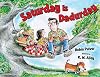
I thought this was going to be another one of those saccharine mommy (or in this case daddy) love books and avoided it for some time. I should have realized that Robin Pulver's conventional but cheery stories and Alley's endearing pen and ink style would not let me down.
Mimi loves her special days with her dad. Every Saturday is Dadurday and together they plan wonderful adventures, from making pancakes to going to the library. But what will happen to Dadurday when Dad's work schedule show more changes?
Pulver and Alley have created a story that's sweet without being saccharine. Kids and parents will easily recognize their own feelings of disappointment and frustration when things don't work out. I loved that the author portrayed so clearly a child's devastation when a tradition that they've come to expect ends and the frustration with grown-up concerns that don't make sense in their world. There's no happily-ever-after where Dad's schedule gets changed back and everything comes right, but Mimi manages her own happy ending, growing up a little as she learns to be flexible and see things from another perspective.
There's plenty of solid cheeriness in Alley's illustrations showing the mischievous dog, tired Dad, and exhausted Mom, not to mention the twins, but the real genius of the pictures is the simple delight the reader sees in the bond between father and daughter as they celebrate Dadurday together in many different ways.
Verdict: Of course this will be a popular choice around Father's Day, but it makes a sweet father-daughter read any time of the year. The best storytime audience will need to be a little older, say kindergarten to pick up all the details of the story and empathize with Mimi's feelings and actions.
ISBN: 9780802786913; Published 2013 by Walker Books/Bloomsbury; Borrowed from another library in my consortium; Added to the library's order list show less
Mimi loves her special days with her dad. Every Saturday is Dadurday and together they plan wonderful adventures, from making pancakes to going to the library. But what will happen to Dadurday when Dad's work schedule show more changes?
Pulver and Alley have created a story that's sweet without being saccharine. Kids and parents will easily recognize their own feelings of disappointment and frustration when things don't work out. I loved that the author portrayed so clearly a child's devastation when a tradition that they've come to expect ends and the frustration with grown-up concerns that don't make sense in their world. There's no happily-ever-after where Dad's schedule gets changed back and everything comes right, but Mimi manages her own happy ending, growing up a little as she learns to be flexible and see things from another perspective.
There's plenty of solid cheeriness in Alley's illustrations showing the mischievous dog, tired Dad, and exhausted Mom, not to mention the twins, but the real genius of the pictures is the simple delight the reader sees in the bond between father and daughter as they celebrate Dadurday together in many different ways.
Verdict: Of course this will be a popular choice around Father's Day, but it makes a sweet father-daughter read any time of the year. The best storytime audience will need to be a little older, say kindergarten to pick up all the details of the story and empathize with Mimi's feelings and actions.
ISBN: 9780802786913; Published 2013 by Walker Books/Bloomsbury; Borrowed from another library in my consortium; Added to the library's order list show less
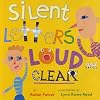
I think that this is a great book to use to teach children about silent letters. Unlike other informational books, this book tells a story about silent letters feeling unwanted and striking because of it. It is funny for children because the letters play a trick on the class by removing themselves from a letter that they write about why they do not think silent letters are necessary. The illustrator and author exemplify this by showing the letter with the use of silent letters and then show more without the silent letters, showing kids that silent letters truly do matter. The language in the book is easy for children to understand, and it puts a rather difficult concept into simple terms. For example, the author writes, “Silent letters are seen, not heard. They follow no rules when they appear in words.” Each page has certain examples of how silent letters fit into words, including everything from a silent final ‘e’ to the ‘k’ in knee. The author also highlighted every silent letter used in the text throughout the book, so children can see just how prominent they are. I particularly like the fact that the author wrote, “Remember, a mistake or two doesn’t mean you’re a bad speller. It means you’ve almost spelled the word right!” This gives children encouragement rather than discouraging them every time they miss this rather difficult rule. The book really comes full circle, giving students a purpose for learning and using silent letters in writing. The big idea of this book is to teach children about silent letters. show less
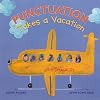
Robin Pulver attempts to address punctuation in a “fun” picture book for kids, but it all comes across as a bit gimmicky to me and is far less humorous and instructive than Lynn Truss’s delightful trilogy ( Eats, Shoots & Leaves; The Girl’s Like Spaghetti; Twenty-Odd Ducks). In Pulver’s book, Mr. Wright, an elementary school teacher, decides on a hot, sticky day to give punctuation—which he’s apparently been arduously teaching—a “vacation” . . . literally. Upon hearing show more this announcement, the kids cheer and rush out for recess while the baffled personified punctuation marks make statements entirely in keeping with their use. For example the question mark asks: “Is this the thanks we get?” while the exclamation point enthuses: “Great!” It is the period that suggests a vacation. If the marks leave, he points out, the kids will soon realize how needed punctuation is . . . as, of course they do. This is where the narrative gets lame. Mr. Wright can’t perform the afternoon read-aloud. Nothing makes sense.
When the class receives a bundle of postcards from their punctuation pals, the students have to borrow unruly, uncooperative punctuation from another class—Mr. Rongo’s—in order to write a response begging the originals to return from their vacation on the lake.
I know some teachers have been delighted by this book. I’m not one of them. There is enough humour in incorrect use of punctuation without a silly story to be required. Furthermore, because the (drawings of the) postcards from the vacationing punctuation people are quite small (and hard for a larger group of listeners to see), the book doesn’t make for an easy, intimate read-aloud. A document projector would need to be used for a class of kids to see the punctuation being used, and, in my opinion, that kind of wrecks things.
This isn’t a dreadful book, but it’s not a great one either. I’d stick with Truss. show less
When the class receives a bundle of postcards from their punctuation pals, the students have to borrow unruly, uncooperative punctuation from another class—Mr. Rongo’s—in order to write a response begging the originals to return from their vacation on the lake.
I know some teachers have been delighted by this book. I’m not one of them. There is enough humour in incorrect use of punctuation without a silly story to be required. Furthermore, because the (drawings of the) postcards from the vacationing punctuation people are quite small (and hard for a larger group of listeners to see), the book doesn’t make for an easy, intimate read-aloud. A document projector would need to be used for a class of kids to see the punctuation being used, and, in my opinion, that kind of wrecks things.
This isn’t a dreadful book, but it’s not a great one either. I’d stick with Truss. show less

A young kitten finds himself abandoned in the cold and snowy woods in this sweet Christmas story from author Robin Pulver and illustrator Layne Johnson. Putting the stalking skills he has learned from his mother to good use, he does his best to survive, but longs for the warmth of his old home. When he sees a group of people in the woods, chopping down a tree, he hitches a ride in their car, and sneaks into their home. Chased under the sofa by the family dog, the kitten hides, until a jolly show more nighttime visitor discovers him, and decides to give him a home...
There's something about cats at Christmas that really speaks to me, whether they're participating in the Nativity, as in Robert Westall's The Witness or Michael Foreman's Cat in the Manger; being driven to distraction by all the fuss, as in Judith Kerr's Mog's Christmas or Matthew Sturgis' Tosca's Christmas; or finding a home, as here in Christmas for a Kitten, or in Efner Tudor Holmes' The Christmas Cat. Perhaps my love of cats, and desire for their well-being, when taken together with my beliefs about the meaning of Christmas, and the importance of kindness and generosity during this season, produce an irresistible combination? In any case, although there was never much doubt in my mind that the kitten here would find a home, I was surprised to discover with whom he would be living! Yay for Santa having a cat! - a theme also explored in Sue Stainton's Santa's Snow Cat and Santa's Snow Kitten. The beautiful artwork, done in oil, captures the dark feeling in the beginning of the story, as the kitten must find his way through the wintry world, as well as the joy-filled feeling at the end, as the kitten is borne off by Santa.
All in all, this was a heartwarming Christmas tale, one I would recommend especially to young animal and cat lovers at the holidays! show less
There's something about cats at Christmas that really speaks to me, whether they're participating in the Nativity, as in Robert Westall's The Witness or Michael Foreman's Cat in the Manger; being driven to distraction by all the fuss, as in Judith Kerr's Mog's Christmas or Matthew Sturgis' Tosca's Christmas; or finding a home, as here in Christmas for a Kitten, or in Efner Tudor Holmes' The Christmas Cat. Perhaps my love of cats, and desire for their well-being, when taken together with my beliefs about the meaning of Christmas, and the importance of kindness and generosity during this season, produce an irresistible combination? In any case, although there was never much doubt in my mind that the kitten here would find a home, I was surprised to discover with whom he would be living! Yay for Santa having a cat! - a theme also explored in Sue Stainton's Santa's Snow Cat and Santa's Snow Kitten. The beautiful artwork, done in oil, captures the dark feeling in the beginning of the story, as the kitten must find his way through the wintry world, as well as the joy-filled feeling at the end, as the kitten is borne off by Santa.
All in all, this was a heartwarming Christmas tale, one I would recommend especially to young animal and cat lovers at the holidays! show less
Lists
Awards


You May Also Like


Associated Authors
Statistics
- Works
- 28
- Members
- 7,422
- Popularity
- #3,295
- Rating
- 4.0
- Reviews
- 126
- ISBNs
- 117
- Favorited
- 1
