
Diana Evans (1) (1972–)
Author of 26a
For other authors named Diana Evans, see the disambiguation page.
Works by Diana Evans
Associated Works
New Daughters of Africa: An International Anthology of Writing by Women of African Descent (2019) — Contributor — 115 copies, 1 review
The Good Journal, Issue 4 — Contributor — 1 copy
Tagged
Common Knowledge
- Birthdate
- 1972
- Gender
- female
- Nationality
- United Kingdom
- Birthplace
- Neasden, London, England, UK
Members
Reviews
We never really get away from our parents
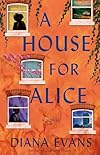
from A House for Alice by Diana Evans
Just before his 100th birthday, a man dies in a fire. He has been estranged from most of the family, his wife Alice having long moved out. One daughter has been caring for him, but all the daughters carry the trauma of his alcoholic abuse.
For years, he had been sending money to Nigeria to build Alice a house there. Alice knows the time is soon coming when she will be tired, of life, and of life in London and ready show more to return to her homeland to live her last years there.
Her daughters don’t all agree with her. With their messy lives, divorces, and problem children, they want their mother near. To care for her. To be their center.
A House for Alice touches on so many themes: a dysfunctional family and family trauma, the challenges of marriage and its failure, racism, the refugee experience, the love for a child, failing a child, failing oneself, the view from old age.
I loved how the author took me into these character’s messy lives, the poignant insights into their struggles. I marveled at descriptive passages of such beauty. The chapter describing the morning divorced parents take their son to the hospital for surgery was so beautiful, so real, the experience transforming for the parents. With this combination of insight, gorgeous writing, and social commentary it’s a must read.
Thanks to the publisher for a free book. show less
from A House for Alice by Diana Evans
Just before his 100th birthday, a man dies in a fire. He has been estranged from most of the family, his wife Alice having long moved out. One daughter has been caring for him, but all the daughters carry the trauma of his alcoholic abuse.
For years, he had been sending money to Nigeria to build Alice a house there. Alice knows the time is soon coming when she will be tired, of life, and of life in London and ready show more to return to her homeland to live her last years there.
Her daughters don’t all agree with her. With their messy lives, divorces, and problem children, they want their mother near. To care for her. To be their center.
A House for Alice touches on so many themes: a dysfunctional family and family trauma, the challenges of marriage and its failure, racism, the refugee experience, the love for a child, failing a child, failing oneself, the view from old age.
I loved how the author took me into these character’s messy lives, the poignant insights into their struggles. I marveled at descriptive passages of such beauty. The chapter describing the morning divorced parents take their son to the hospital for surgery was so beautiful, so real, the experience transforming for the parents. With this combination of insight, gorgeous writing, and social commentary it’s a must read.
Thanks to the publisher for a free book. show less
There was a lot of very skilled writing in this book - particularly the middle sections, when the twins were in their teens - I particularly loved the forced 'coolness' of the two suitors Errol and Dean ('What ya sayin'' !!!), and the evocation of Nigeria was masterly. I also admired the way the author very subtly showed the differences between the twins - hardly any at first, and gradually widening to a gulf. They were set within a believable family - their father Aubrey 'had come to show more realise that there was a part of him that was a stranger to the world and everything in it, and was therefore supremely incapable of succeeding as a human being'. Brilliant - I sympathised utterly.
The author signals from an early stage the likely outcome of the novel, but in such a way that you aren't entirely sure how it will pan out and want to read on.
Things I didn't like as much - the early chapters where the twins were very young. A personal thing, really, child's-view whimsy ('Girls with umbrellas skipped across the wallpaper and Georgia and Bessi could hear them laughing') tend to have me reaching for the sick bag. The last chapter.....some elements of it were great (JP and his acquisitive whiskers were a particular highlight), but given that most of the novel is rooted firmly in the real world, elements of this final part required the reader to take a step sideways into the metaphysical which I wasn't sure I was ready for. The last chapter also sets out on a headlong rush of events which seems odd given the evidence of the reader's own eye - there are hardly any pages left!
Trying to decide what the overall theme of the novel is - growing up, multi-culturalism, being twins - I have to conclude that it is being twins, though the twins' Nigerian heritage, and the folklore of that country, is an important element of the story. In a way, this made it a little less enjoyable for me as its twinny themes are less relevant to the majority of us who are not twins.
I almost defied the blurb on the back - by reaching the very end without shedding a tear. Almost, but not quite. show less
The author signals from an early stage the likely outcome of the novel, but in such a way that you aren't entirely sure how it will pan out and want to read on.
Things I didn't like as much - the early chapters where the twins were very young. A personal thing, really, child's-view whimsy ('Girls with umbrellas skipped across the wallpaper and Georgia and Bessi could hear them laughing') tend to have me reaching for the sick bag. The last chapter.....some elements of it were great (JP and his acquisitive whiskers were a particular highlight), but given that most of the novel is rooted firmly in the real world, elements of this final part required the reader to take a step sideways into the metaphysical which I wasn't sure I was ready for. The last chapter also sets out on a headlong rush of events which seems odd given the evidence of the reader's own eye - there are hardly any pages left!
Trying to decide what the overall theme of the novel is - growing up, multi-culturalism, being twins - I have to conclude that it is being twins, though the twins' Nigerian heritage, and the folklore of that country, is an important element of the story. In a way, this made it a little less enjoyable for me as its twinny themes are less relevant to the majority of us who are not twins.
I almost defied the blurb on the back - by reaching the very end without shedding a tear. Almost, but not quite. show less
26a by Diana Evans
Evans skilfully weaves the narrative of diasporic identity through two main themes: blackness and twinness. Black skin and black hair are the first layer of diasporic
The discourse on blackness in the book traces its roots to Nigeria, which Ida runs away from to escape marriage. However, she is not able to shake off her roots, which she carries into London via her relationship with food and magic. Ida’s strange eating habits, such as wanting to warm up everything she eats, highlight her difficulty in acclimatising to the cold climate of England. Ida brings with her traces of magic from Nigeria: the carving of an old spirit woman which she places opposite the mirror in her home “…so that you could see it if you saw yourself…”, underlining the British-Nigerian identities of herself and her family members. Despite these evident struggles in adapting to life in diaspora, Ida is able to build a home of sorts in London: “…home had a way of shifting…Home was homeless. It could exist anywhere, because its only substance was familiarity”. It is not only Ida for whom blackness becomes a struggle. Her daughters, with their natural black hair, run into difficulties at hairdressers, who simply do not know how to handle afros, and whose “torrential grief” causes Bel to become a chemical-free hairdresser dealing specifically with black hair. The hairdresser incident is a microcosm of a larger issue, of the English being reluctant to co-exist with ‘other’ people. Thus, in Bel’s career choice we see another instance of the characters navigating their agency in the face of the problems posed by their blackness, and building a “home” for themselves.
One is immediately captivated by the character of the twins, Bessie and Georgia, but Evans has managed to deepen and problematise ‘twinness’ as we understand it, by linking it to diasporic identity. Initially, the twins are seen as two parts of one whole, but an event in Nigeria changes the trajectory of their “twoness in oneness”. Georgia is sexually harassed by a servant at their house in Nigeria, a fact that traumatises her and changes the entire trajectory of her life, sending her spiralling into depression, and eventually, suicide. She hides this fact from her twin: “It was the first time ever, in this land of twoness in oneness, that something had seemed unsayable”. She loses her childhood in one evening “There was something lost. The nowness of things”, and spends the rest of her life dealing with the consequences of that evening. She begins to think of herself and Bessie as opposites: “You are light, I am shade”. I believe it is this kind of thinking which eventually leads Georgia to taking her own life. Bessie is split in two ways – in terms of her Nigerian-British identity, as well as by embodying a half-Bessie-half-Georgia identity in an almost otherworldly manner hearkening back to the magical story Ida’s Baba told of the twins Ode and Onia. Bessie’s becoming one contains elements of diasporic identity, too. Living in diaspora requires some of the doubling that occurs, to be curbed and incorporated into one, which Evans has expertly shown through the character of twinness (Bessie-Georgia) becoming oneness (Bessie).

Melissa and Michael are the perfect couple. Attractive and well-matched, they are the couple their friends would say is the most likely to be together forever. They have two lovely children and they've just moved into a house of their own. But the new house, far in the outer reaches of London's suburbs, means that Michael has a long commute each day and returns home in the evening tired, and Melissa is finding that caring for two small children isn't something she's managing well on her own. show more She'd thought she'd be able to do some freelance work during nap time, but nap time isn't guaranteed and even when the baby agrees to a nap, Melissa has trouble getting work done in the limited time. And the house doesn't feel welcoming. There's mold in odd corners and her daughter's skin always seems dry.
Their good friends, Damien and Stephanie are also entering into a year of disquiet. Damien's estranged father has died and while he is sure he feels nothing, he is far more affected than he believes he is. And his own unsettled feelings are causing him to feel stifled by Stephanie's devotion to family life. Which is not something she has any patience for.
Shortlisted for the Women's Prize, Diana Evans's novel explores the marriages of two black couples living in London in the year that was marked by the election of Barack Obama and the death of Michael Jackson. Evans allows her characters to inhabit marriages as stressed and imperfect as those in any of the many, many novels about white British couples, she's not interested in writing about anyone behaving in an exemplary fashion. There's a lot of substance here, but I was left more interested in the marriage that received far less attention. Evans definitely nails the different ways two people living in the same place can manage to not talk to each other. I was left feeling as though I never really understood any of the characters, but the blame for that is certainly not entirely the author's. show less
Their good friends, Damien and Stephanie are also entering into a year of disquiet. Damien's estranged father has died and while he is sure he feels nothing, he is far more affected than he believes he is. And his own unsettled feelings are causing him to feel stifled by Stephanie's devotion to family life. Which is not something she has any patience for.
Shortlisted for the Women's Prize, Diana Evans's novel explores the marriages of two black couples living in London in the year that was marked by the election of Barack Obama and the death of Michael Jackson. Evans allows her characters to inhabit marriages as stressed and imperfect as those in any of the many, many novels about white British couples, she's not interested in writing about anyone behaving in an exemplary fashion. There's a lot of substance here, but I was left more interested in the marriage that received far less attention. Evans definitely nails the different ways two people living in the same place can manage to not talk to each other. I was left feeling as though I never really understood any of the characters, but the blame for that is certainly not entirely the author's. show less
Lists
Awards


You May Also Like


Associated Authors
Statistics
- Works
- 5
- Also by
- 2
- Members
- 950
- Popularity
- #27,087
- Rating
- 3.5
- Reviews
- 29
- ISBNs
- 85
- Languages
- 9