
Danielle Trussoni
Author of Angelology
About the Author
Image credit: Danielle Trussoni - Photograph taken during the 26th edition of the Comédie du Livre of Montpellier in France by Yves Tennevin
Series
Works by Danielle Trussoni
Ingenium 2 copies
Untitled (Angelology, #3) 1 copy
Associated Works
Tagged
Common Knowledge
- Canonical name
- Trussoni, Danielle
- Legal name
- Trussoni, Danielle
- Birthdate
- 1973-11-09
- Gender
- female
- Education
- University of Wisconsin–Madison
University of Iowa (Iowa Writers' Workshop) - Occupations
- writer
- Relationships
- Grozni, Nikolai (husband)
- Short biography
- Trussoni was born November 9, 1973 in La Crosse, Wisconsin, and was named after her father Daniel Trussoni. She is one of four children (she has a younger sister, a younger brother and an older sister who was adopted out in 1970, before Danielle was born). Danielle met her older sister for the first time as an adult. After her parents divorced, she lived for a brief time with her father. She graduated from the University of Wisconsin–Madison summa cum laude with a BA in History and English in 1996; and from the Iowa Writers' Workshop, where she received an MFA in Fiction Writing in 2002.
- Nationality
- USA
- Birthplace
- La Crosse, Wisconsin, USA
- Associated Place (for map)
- Wisconsin, USA
Members
Discussions
An Author Interview with Danielle Trussoni in Talk about LibraryThing (October 2024)
Reviews
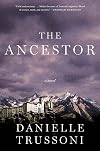
I received this book for free free as part of an Instagram tour (TLC Book Tours specifically) I did to promote the book.
Wow. This was one of the most fascinating novels I have read in a long time.
First off, I love that the book description does not give away too much. You get to discover the truth about Bert’s family on your own.
It’s really hard to describe this book because it is so unique and I don’t want to spoil anything. There’s some gothic suspense, but also some family show more tragedy. Then underneath that there is the element of genetics. It just makes an intriguing combination.
The book is also so beautifully written and encapsulates the creepy gothic vibe perfectly. The author is an amazing storyteller.
Lastly, the book has some wonderful descriptions of books and reading. One of the characters states, “These books are like living creatures to me. Caring for them takes a great deal of time. I repair damaged spines…No one ever thinks that books need tenderness, but they do, quite a lot, in fact” (pg. 117). At another point the main character states, “Stories became a place of respite, a refuge from the thoughts that swirled through my mind like acid in a stomach. I clung to these books with the same obsessive need that I had felt for the genepy, reading them with an addictive greed…Had it not been for my time in bed, I might never have come to love books as I had, or developed the desire to write about my own tragic life” (pg 226).
Overall, this is a book you have to read for yourself. I know there will be some people who read it and won’t like it and that’s totally okay. But others will just devour it. It’s a very different book so the only way to know is to read it for yourself. show less
Wow. This was one of the most fascinating novels I have read in a long time.
First off, I love that the book description does not give away too much. You get to discover the truth about Bert’s family on your own.
It’s really hard to describe this book because it is so unique and I don’t want to spoil anything. There’s some gothic suspense, but also some family show more tragedy. Then underneath that there is the element of genetics. It just makes an intriguing combination.
The book is also so beautifully written and encapsulates the creepy gothic vibe perfectly. The author is an amazing storyteller.
Lastly, the book has some wonderful descriptions of books and reading. One of the characters states, “These books are like living creatures to me. Caring for them takes a great deal of time. I repair damaged spines…No one ever thinks that books need tenderness, but they do, quite a lot, in fact” (pg. 117). At another point the main character states, “Stories became a place of respite, a refuge from the thoughts that swirled through my mind like acid in a stomach. I clung to these books with the same obsessive need that I had felt for the genepy, reading them with an addictive greed…Had it not been for my time in bed, I might never have come to love books as I had, or developed the desire to write about my own tragic life” (pg 226).
Overall, this is a book you have to read for yourself. I know there will be some people who read it and won’t like it and that’s totally okay. But others will just devour it. It’s a very different book so the only way to know is to read it for yourself. show less
I admit to feeling a little angry after finishing this book.
The publicists clearly knew what they were doing when they marketed it: American learns she is the last surviving member of a dynasty and inherits an estate! Family secrets! Gothic castle high in the Italian Alps! This makes it sound like the type of book that is often my guilty pleasure. But all this has almost ZERO to do with what the book ends up being about. It's just a setup to attract readers.
Major spoilers ahead: The last show more half of the book devolves into some weird Dances with Wolves type situation that I just can't get my head around. It turns out the family "secret" is that back in the 19th century, an ancestor sired children with an indigenous woman from a tribe of simian cave people. The book constantly implies that indigenous people can't survive without white people's know-how and technology, that it's okay to steal their children because it's for their own good (shades of the Carlisle Indian Academy?), that physical disability is inherently bad or shameful, and that mixed-race marriages cause infertility and birth defects. Um, okay. The more I write about this, the angrier I get.
Add to all of this a lack of emotional connection with the main character, plot holes, inconsistencies, and weak writing. I'm glad that I didn't waste my money on this book. The library copy I borrowed showed evidence that some prior reader had abandoned it around the 75-page mark, and I wish I had done so as well. show less
The publicists clearly knew what they were doing when they marketed it: American learns she is the last surviving member of a dynasty and inherits an estate! Family secrets! Gothic castle high in the Italian Alps! This makes it sound like the type of book that is often my guilty pleasure. But all this has almost ZERO to do with what the book ends up being about. It's just a setup to attract readers.
Major spoilers ahead: The last show more half of the book devolves into some weird Dances with Wolves type situation that I just can't get my head around. It turns out the family "secret" is that back in the 19th century, an ancestor sired children with an indigenous woman from a tribe of simian cave people. The book constantly implies that indigenous people can't survive without white people's know-how and technology, that it's okay to steal their children because it's for their own good (shades of the Carlisle Indian Academy?), that physical disability is inherently bad or shameful, and that mixed-race marriages cause infertility and birth defects. Um, okay. The more I write about this, the angrier I get.
Add to all of this a lack of emotional connection with the main character, plot holes, inconsistencies, and weak writing. I'm glad that I didn't waste my money on this book. The library copy I borrowed showed evidence that some prior reader had abandoned it around the 75-page mark, and I wish I had done so as well. show less
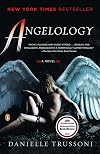
If you're expecting The DaVinci Code, please move on - this is not the book for you. If you're looking for richly imagined and beautifully written literary fantasy read Angelology.
Let me first say that I'm not Christian and I'm also not particularly interested in angels except where they appear in various kinds of literature. I remember the time when angels were all the rage, everyone was discovering their guardian angels and putting up posters and generally being very New Agey about a very show more old (and dangerous) thing. I much prefer the angels that took over hell (Duma and Remiel) in Neil Gaiman's Season of Mists. I also adore Gaiman's portrayal of Lucifer - a glorious combination of David Bowie crossed with John Milton.
This is a wonderful book filled with history, with shifting viewpoints, with art and literature, with adventure. Ms. Trussoni has shades of many writers encompassed within her own unique style, but Angelology reminds me most of Elizabeth Hand's book Waking the Moon. The comparison comes not from the subject matter (Trussoni's angels are much different from Hand's Benandati), but from the way both writers take familiar bits of myth and theology and create something unique and beautiful from them.
I thoroughly enjoyed this book - so much so that I suspect it'll be difficult to find a satisfying next read. show less
Let me first say that I'm not Christian and I'm also not particularly interested in angels except where they appear in various kinds of literature. I remember the time when angels were all the rage, everyone was discovering their guardian angels and putting up posters and generally being very New Agey about a very show more old (and dangerous) thing. I much prefer the angels that took over hell (Duma and Remiel) in Neil Gaiman's Season of Mists. I also adore Gaiman's portrayal of Lucifer - a glorious combination of David Bowie crossed with John Milton.
This is a wonderful book filled with history, with shifting viewpoints, with art and literature, with adventure. Ms. Trussoni has shades of many writers encompassed within her own unique style, but Angelology reminds me most of Elizabeth Hand's book Waking the Moon. The comparison comes not from the subject matter (Trussoni's angels are much different from Hand's Benandati), but from the way both writers take familiar bits of myth and theology and create something unique and beautiful from them.
I thoroughly enjoyed this book - so much so that I suspect it'll be difficult to find a satisfying next read. show less
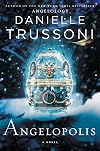
Note: There are some very small spoilers for both books in this series, the first one being Angelology.
Angelology begins in Milton, NY at St. Rose Convent. Sister Evangeline is 23; she has been living there since she was 12, and took her vows at age 18. She works in the library, handling the correspondence. Her days have been fairly routine until now, but on the day the book opens, December 23, 1999, she receives a letter from a V.A. Verlaine, inquiring about a possible connection between a show more prior abbess of the convent and Abigail Aldrich Rockefeller, the famous (real-life) philanthropist of the arts.
We quickly get enmeshed in a Dan Brown-sort of thriller, featuring theological mysteries that are derived from angelology, the study of angels and their presence on earth throughout history. We are reminded that the presence on earth of “Nephilim,” or half-angels, half-humans, was described at the beginning of the Bible, in Genesis 6:
"The sons of God saw the daughters of men that they were fair; and they took them wives of all which they chose,” and when “they bare children to them, the same became mighty men which were of old, men of renown.”
As the story progresses we learn how the history of the Nephilim became interwoven with the myth of Orpheus, among other myths; all of these stories are purported in the book to have had a basis in fact.
Since the publishers tell you on the blurbs and by virtue of the cover picture itself that the Nephilim exist, it won’t be spoilery to reveal that Evangeline and Vervaine get involved in a life-or-death struggle with these creatures, who are not interested in having their secrets uncovered. In fact, it is the Nephilim, so the angelologists contend, who promulgated atheism, so that people will not suspect the extent to which humans are not, in fact, free of the nefarious intervention of Nephilim into their affairs.
This trope works well enough for most of the book, since there is enough similarity to the real world to make the story seem clever and entertaining. Toward the end though, a few sharks get jumped, in part, one supposes, to spur the reader on to read the next installment.
The second book, Angelopolis, picks up ten years after the first has finished. Book Two takes us to Siberia, in Russia, to a secret installation where many different types of angels are in residence, willingly or no. Once again, there is a life-and-death race to recover artistic artifacts that have a bearing on the survival of the Nephilim versus human beings.
Discussion: I like how the author interweaves history, art, myth, and music into her stories. How can you not be fascinated by the history of Faberge Eggs?
Trussoni even throws in some Velikovsky-like scientific theories, including the quite recent studies by Ryan and Pittman, that have argued for geological evidence substantiating the events in the Bible.
It was also interesting to see how Trussoni based the plot on an extremely literal and anthropomorphic interpretation of the Bible. Of course, there are probably more competing interpretations of the Bible than there are actual people in the world. Nevertheless, when you opt for the Vengeful God and Evil Angels version of the Bible, it seems to me that you need to have your characters also account for divergence from metaphysical doctrines such as omnipotence (clearly not a Divine attribute in this series), forgiveness, redemption, and maybe the whole Sermon on the Mount. (Jesus and associated ethics of love and morality generally do not play a role in these two books. The author supplements mostly Old Testament passages with some from the Apocrypha and other non-canonical works, such as the Book of Enoch.)
I do think Trussoni does a nice job with the theological arguments she does tackle, and the thriller aspect of the book is well-done.
I have some small quibbles with the books, however. The ending of the first, meant to be an irresistible spur to read the second, contains a sort of “diabolus ex machina” (i.e., the opposite of a “deus ex machina”) that didn’t seem entirely consistent with what we had been told previously.
In the second book, the author has major “As You Know Bob” problems. [This is a popular name for a poor execution of the trope by which a writer uses exposition to fill in background for the readers, also known as an "infodump". In this case, the author is trying to let us know what happened in Book One. The “As You Know Bob” fallacy takes the form of one character explaining to another something that they both already know, but the readers don’t. Since they do both already know it, long explanations about it can seem ridiculous, if not insulting to the character on the receiving end of the monologue.]
Also, the very end of the Second Book, like the end of the first, was just not consistent with everything else we had been led to believe. Once again, it seemed more like a bomb dropping out of nowhere to keep us eager for the next book, rather than like something we might expect from the action preceding it. Writing a good cliff-hanger ending is an art, to be sure, but undermining the premises preceding it does not usually go down well with readers.
Finally, I think in the second book the author got a little too “cute” with her revelations of all the historical figures who were actually Nephilim.
Evaluation: These small quibbles that I had should not deter you from enjoying these fast-paced, intellectually-stimulating thrillers. Seven publishing houses vied for the rights to the first book, and two motion picture companies bid for the film rights. show less
Angelology begins in Milton, NY at St. Rose Convent. Sister Evangeline is 23; she has been living there since she was 12, and took her vows at age 18. She works in the library, handling the correspondence. Her days have been fairly routine until now, but on the day the book opens, December 23, 1999, she receives a letter from a V.A. Verlaine, inquiring about a possible connection between a show more prior abbess of the convent and Abigail Aldrich Rockefeller, the famous (real-life) philanthropist of the arts.
We quickly get enmeshed in a Dan Brown-sort of thriller, featuring theological mysteries that are derived from angelology, the study of angels and their presence on earth throughout history. We are reminded that the presence on earth of “Nephilim,” or half-angels, half-humans, was described at the beginning of the Bible, in Genesis 6:
"The sons of God saw the daughters of men that they were fair; and they took them wives of all which they chose,” and when “they bare children to them, the same became mighty men which were of old, men of renown.”
As the story progresses we learn how the history of the Nephilim became interwoven with the myth of Orpheus, among other myths; all of these stories are purported in the book to have had a basis in fact.
Since the publishers tell you on the blurbs and by virtue of the cover picture itself that the Nephilim exist, it won’t be spoilery to reveal that Evangeline and Vervaine get involved in a life-or-death struggle with these creatures, who are not interested in having their secrets uncovered. In fact, it is the Nephilim, so the angelologists contend, who promulgated atheism, so that people will not suspect the extent to which humans are not, in fact, free of the nefarious intervention of Nephilim into their affairs.
This trope works well enough for most of the book, since there is enough similarity to the real world to make the story seem clever and entertaining. Toward the end though, a few sharks get jumped, in part, one supposes, to spur the reader on to read the next installment.
The second book, Angelopolis, picks up ten years after the first has finished. Book Two takes us to Siberia, in Russia, to a secret installation where many different types of angels are in residence, willingly or no. Once again, there is a life-and-death race to recover artistic artifacts that have a bearing on the survival of the Nephilim versus human beings.
Discussion: I like how the author interweaves history, art, myth, and music into her stories. How can you not be fascinated by the history of Faberge Eggs?
Trussoni even throws in some Velikovsky-like scientific theories, including the quite recent studies by Ryan and Pittman, that have argued for geological evidence substantiating the events in the Bible.
It was also interesting to see how Trussoni based the plot on an extremely literal and anthropomorphic interpretation of the Bible. Of course, there are probably more competing interpretations of the Bible than there are actual people in the world. Nevertheless, when you opt for the Vengeful God and Evil Angels version of the Bible, it seems to me that you need to have your characters also account for divergence from metaphysical doctrines such as omnipotence (clearly not a Divine attribute in this series), forgiveness, redemption, and maybe the whole Sermon on the Mount. (Jesus and associated ethics of love and morality generally do not play a role in these two books. The author supplements mostly Old Testament passages with some from the Apocrypha and other non-canonical works, such as the Book of Enoch.)
I do think Trussoni does a nice job with the theological arguments she does tackle, and the thriller aspect of the book is well-done.
I have some small quibbles with the books, however. The ending of the first, meant to be an irresistible spur to read the second, contains a sort of “diabolus ex machina” (i.e., the opposite of a “deus ex machina”) that didn’t seem entirely consistent with what we had been told previously.
In the second book, the author has major “As You Know Bob” problems. [This is a popular name for a poor execution of the trope by which a writer uses exposition to fill in background for the readers, also known as an "infodump". In this case, the author is trying to let us know what happened in Book One. The “As You Know Bob” fallacy takes the form of one character explaining to another something that they both already know, but the readers don’t. Since they do both already know it, long explanations about it can seem ridiculous, if not insulting to the character on the receiving end of the monologue.]
Also, the very end of the Second Book, like the end of the first, was just not consistent with everything else we had been led to believe. Once again, it seemed more like a bomb dropping out of nowhere to keep us eager for the next book, rather than like something we might expect from the action preceding it. Writing a good cliff-hanger ending is an art, to be sure, but undermining the premises preceding it does not usually go down well with readers.
Finally, I think in the second book the author got a little too “cute” with her revelations of all the historical figures who were actually Nephilim.
Evaluation: These small quibbles that I had should not deter you from enjoying these fast-paced, intellectually-stimulating thrillers. Seven publishing houses vied for the rights to the first book, and two motion picture companies bid for the film rights. show less
Lists
Awards


You May Also Like


Associated Authors
Statistics
- Works
- 13
- Also by
- 2
- Members
- 3,581
- Popularity
- #7,075
- Rating
- 3.4
- Reviews
- 227
- ISBNs
- 122
- Languages
- 16
- Favorited
- 5
