
About the Author
Works by Robert Lanza
Biocentrism: How Life and Consciousness are the Keys to Understanding the True Nature of the Universe (2009) 420 copies, 5 reviews
Beyond Biocentrism: Rethinking Time, Space, Consciousness, and the Illusion of Death (2016) 120 copies, 7 reviews
Natural justice 1 copy
Oltre il biocentrismo 1 copy
Tagged
Common Knowledge
- Gender
- male
- Birthplace
- Boston, Massachusetts, USA
- Associated Place (for map)
- Massachusetts, USA
Members
Discussions
Recommend books similar to Beyond Biocentrism in Philosophy and Theory (November 2017)
Reviews
Beyond Biocentrism: Rethinking Time, Space, Consciousness, and the Illusion of Death by Robert Lanza
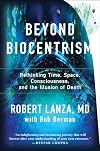
I received a review copy of this from the publisher through BookSirens. I requested it because it was listed under the Science category (more on that later, too), and the description told me it ran counter to my understanding of, well, everything... The world is clearly much simpler if one only reads what fits one’s confirmation bias, but also narrower. I will read Coulter, Beck, Tolle, various New Age,... once... to offer me a different perspective, though I often have to take mental show more showers afterwards. Plus one shouldn’t diss without actual knowledge, right? Well... I am not Lanza and Berman's target audience...
These types of books present challenges. They sound like they make sense. They’re cleverly bathed in real science. That does pose those challenges...”Is the science the authors pose as contrasts correct?” For this book, the answer is, well, yes and no; and sometimes it is misrepresented, whether deliberately or genuinely misunderstood is another challenge to unravel. I'm leaning toward the former, given the misinterpretations are too fitting of the "theory". As to theory, and I see this more as the hypothesis rather than a scientific theory, for in this case, no scientific theory is presented (just a lot of untestable statements.) Robert Anton Wilson’s Quantum Psychology comes to mind. Anything by Deepak Chopra. And the logic? Clever. But flawed.
Now...I have to address something that is a huge problem I have with this book: the authors make a lot of statements as fact (a lot), yet provide not one reference or citation - mentioning “In 2011, researchers published a study in Nature suggesting quantum behavior extends into the everyday realm.” Omitting the actual reference to check is lazy, potentially deceptive, and near worthless. I can only assume that they want the reader to take what they say, in, on faith. And that is maddeningly frustrating. Though the burden of proof is on the claimant, they provide essentially none, so it’s up to the reader to try to track down support or refutation. Or not. I have to keep jumping out, try to track down a credible source for whatever they are saying and read enough for four or five more books in order to confirm what they are saying does have a source, whether they’ve presented it correctly, interpreted it correctly (meaning how it is commonly accepted and understood), and then research whether their counter claims have any merit. (And offering a hint at a study suggesting quantum interactions at a macro level is not the same as demonstrating that quantum interactions occur at a macro level. )
Anyway, up front is the Introduction epigraph, a quote by Cicero. Me being me, I tried to find the source. I could find none. Cicero is easily searched, and said some similar things (in Latin, of course), but I could not find any credible source. This book and quotes from it showed up, so those don’t count. Not a good way to start a book.
I have 73 highlights and notes; 73 because I decided enough was enough. I spent far too much time tracking down their non-existent references. And I don't want to spend any more time to sort out and compile those notes of mine into the response I would normally give a book such as this because I have other reading to do and I expect my time more wasted than not. When the authors make statements like "After all, we can take the known proteins, minerals, water, and everything else that an animal body contains and whirl it in a blender till the cows come home and still not have life." We see that as a derivative misrepresentation - it didn’t happen like that and they know it. Lanza certainly should, given his pedigree. They think there is "something fishy about the universe popping out of nothingness." I suggest they read Lawrence Krauss’s A Universe from Nothing. It could happen. And it did. They drip snark throughout, using derivative terms like "magic" in a derogatory way, and follow the previous quoted statement with "And not just because in everyday experience we do not observe kittens or lawn furniture magically materializing." Curious, they later in the book extrapolate an extremely short-lived experiment in which microscopic diamonds were entangled (no reference, had to look that up too) throughout extremely specific conditions that could hardly occur in nature to such happening on a macro scale throughout the universe. Per the article in Nature, "All the necessary conditions are satisfied only very rarely during the experiment. 'They have to perform an astronomical number of attempts to get a very finite number of desired outcomes,' says [Andrew] Cleland" [a specialist in the quantum behaviour of nanometre-scale objects at the University of California, Santa Barbara, who thought the experiment "clever and convincing".] Neither the kittens popping or that extrapolation of large-scale entanglement should be taken seriously.
On quantum theory, the authors say "It’s amazing that this breakaway from classical physics is still relatively unknown by the public, even if most people do equate quantum theory with strangeness."
Here’s a problem with their extrapolation: classical physics describes quite well a significant part of the universe. Relativistic physics describes classical physics well when under high speed in accelerated frames. Quantum theory is not a breakaway from either on macro levels, but describes quantum level behaviors where classical physics cannot apply and relativistic physics breaks down. Different equations for different conditions; classical physics is close enough for everyday life.
The authors mention people looking to Eastern religions for answer science supposedly does not provide: "But the quest itself was noble. If a person seeks knowledge of reality and one’s nature and one’s place in the universe, what if she has no spiritual calling? What if she solely demands fact-based evidence? Can these deep issues be tackled decisively by science alone?" It is intuitively obvious to the most casual observer that out "place" is on this planet, and yes science has all of the answers ... I'll thank James Morrow for "we just don’t have all the science."
Zeno's paradoxes make a return (I didn't and won't read the first book, but I understand they repeated much) and they offer this head-scratcher: "The paradoxes can actually be solved by biocentrism. By seeing that time and space are not actual commodities like coconuts, biocentrism says they cannot be divided in half again and again to produce such conundrums." How? Never mind. They never say. But I ask...They do realize that calculus solves them, right?
On the universe
More on the universe
These types of books present challenges. They sound like they make sense. They’re cleverly bathed in real science. That does pose those challenges...”Is the science the authors pose as contrasts correct?” For this book, the answer is, well, yes and no; and sometimes it is misrepresented, whether deliberately or genuinely misunderstood is another challenge to unravel. I'm leaning toward the former, given the misinterpretations are too fitting of the "theory". As to theory, and I see this more as the hypothesis rather than a scientific theory, for in this case, no scientific theory is presented (just a lot of untestable statements.) Robert Anton Wilson’s Quantum Psychology comes to mind. Anything by Deepak Chopra. And the logic? Clever. But flawed.
Now...I have to address something that is a huge problem I have with this book: the authors make a lot of statements as fact (a lot), yet provide not one reference or citation - mentioning “In 2011, researchers published a study in Nature suggesting quantum behavior extends into the everyday realm.” Omitting the actual reference to check is lazy, potentially deceptive, and near worthless. I can only assume that they want the reader to take what they say, in, on faith. And that is maddeningly frustrating. Though the burden of proof is on the claimant, they provide essentially none, so it’s up to the reader to try to track down support or refutation. Or not. I have to keep jumping out, try to track down a credible source for whatever they are saying and read enough for four or five more books in order to confirm what they are saying does have a source, whether they’ve presented it correctly, interpreted it correctly (meaning how it is commonly accepted and understood), and then research whether their counter claims have any merit. (And offering a hint at a study suggesting quantum interactions at a macro level is not the same as demonstrating that quantum interactions occur at a macro level. )
Anyway, up front is the Introduction epigraph, a quote by Cicero. Me being me, I tried to find the source. I could find none. Cicero is easily searched, and said some similar things (in Latin, of course), but I could not find any credible source. This book and quotes from it showed up, so those don’t count. Not a good way to start a book.
I have 73 highlights and notes; 73 because I decided enough was enough. I spent far too much time tracking down their non-existent references. And I don't want to spend any more time to sort out and compile those notes of mine into the response I would normally give a book such as this because I have other reading to do and I expect my time more wasted than not. When the authors make statements like "After all, we can take the known proteins, minerals, water, and everything else that an animal body contains and whirl it in a blender till the cows come home and still not have life." We see that as a derivative misrepresentation - it didn’t happen like that and they know it. Lanza certainly should, given his pedigree. They think there is "something fishy about the universe popping out of nothingness." I suggest they read Lawrence Krauss’s A Universe from Nothing. It could happen. And it did. They drip snark throughout, using derivative terms like "magic" in a derogatory way, and follow the previous quoted statement with "And not just because in everyday experience we do not observe kittens or lawn furniture magically materializing." Curious, they later in the book extrapolate an extremely short-lived experiment in which microscopic diamonds were entangled (no reference, had to look that up too) throughout extremely specific conditions that could hardly occur in nature to such happening on a macro scale throughout the universe. Per the article in Nature, "All the necessary conditions are satisfied only very rarely during the experiment. 'They have to perform an astronomical number of attempts to get a very finite number of desired outcomes,' says [Andrew] Cleland" [a specialist in the quantum behaviour of nanometre-scale objects at the University of California, Santa Barbara, who thought the experiment "clever and convincing".] Neither the kittens popping or that extrapolation of large-scale entanglement should be taken seriously.
On quantum theory, the authors say "It’s amazing that this breakaway from classical physics is still relatively unknown by the public, even if most people do equate quantum theory with strangeness."
Here’s a problem with their extrapolation: classical physics describes quite well a significant part of the universe. Relativistic physics describes classical physics well when under high speed in accelerated frames. Quantum theory is not a breakaway from either on macro levels, but describes quantum level behaviors where classical physics cannot apply and relativistic physics breaks down. Different equations for different conditions; classical physics is close enough for everyday life.
The authors mention people looking to Eastern religions for answer science supposedly does not provide: "But the quest itself was noble. If a person seeks knowledge of reality and one’s nature and one’s place in the universe, what if she has no spiritual calling? What if she solely demands fact-based evidence? Can these deep issues be tackled decisively by science alone?" It is intuitively obvious to the most casual observer that out "place" is on this planet, and yes science has all of the answers ... I'll thank James Morrow for "we just don’t have all the science."
Zeno's paradoxes make a return (I didn't and won't read the first book, but I understand they repeated much) and they offer this head-scratcher: "The paradoxes can actually be solved by biocentrism. By seeing that time and space are not actual commodities like coconuts, biocentrism says they cannot be divided in half again and again to produce such conundrums." How? Never mind. They never say. But I ask...They do realize that calculus solves them, right?
On the universe
Finally, in trying to answer the old questions about the size of the universe—now known to include consciousness and to be correlative with ourselves—we can only experience futility in any effort to “picture” an entity with no fixed dimensions. So in addition to the cosmos existing outside of time, and having no death or birth, and seeing that space is a word that symbolizes nothing meaningful, we have arrived at yet another revelation: The universe is sizeless.Only for those without imagination or sufficient math. The universe is not sizeless. If you have a hard time wrapping your head around “space” because of an old definition, the stop calling it space...call it “universe”. The universe will have a death ... when all the fuel is used and the distances are so great due to the expansion, there will be "dead" matter.. And science has evidence of its “birth”. It does not exist outside of time, rather with time. Time may not have existed prior to the Big Bang...whether it did or not is immaterial as we cannot go outside the universe or our timestream...neither of which the authors say exist, because biocentrism.
More on the universe
This is an extremely unlikely universe. So unlikely that even the most die-hard classical, randomness-believing, atheism-proselytizing physicists concede that the cosmos is insanely improbable in terms of life-friendliness. The combined existence of all the life-friendly values of all its physical constants and values defy the odds of one in several hundred million,>/blockquote>This is a failed argument and easily dismissed. Just because something is improbable, doesn’t mean it is impossible, obviously, because it happened!! There is a lot of that in this book. The authors don't consider that there may be trillions or more universes in which none of these factors align, or align in such a way as to bring about life different than we understand.show less
On evolutionNatural selection works because some random mutation conferred an advantage that let the animal better survive to procreate. But an eye—any eye, even the earliest ones—required not just a single mutation that created a light-sensitive cell, but also a nerve system or some other modality to carry such sensations to a brain or brain precursor, so the information could be utilized in some way, such as locomotion toward or away from the light source. Sight also requires a “perceiving” cell structure in which to form an image, even if it’s just a crude sensation of brightness. In short, even primitive vision involves far more than a single genetic mutation. No matter if the earliest eyes lacked the sophisticated elements of current animal vision, with their marvelous supporting cast of muscles for focus and adjustable pupil diameter; various types of color-sensing retina cells; lens; optic nerve; and an amphitheater of billions of specialized neurons and synapses to actually create image perception. It’s quite an elaborate architecture that today’s animals enjoy. But even the first, crudest version would require some structure to be the least bit useful. A single mutation would accomplish nothing. It would confer no benefit, and thus there'd be nothing advantageous to pass on to the kids. And what are the chances for a profusion of simultaneous, independent, but interdependently necessary mutations occuring in a single animal?This is a specious dismissal. An argument of something not making sense to them so it couldn’t have happened is the logical fallacy Argument from Incredulity, perhaps even Argumentum ex Silentio, and Hoyle’s Fallacy for sure.
They argue long about perceptions along lines of "Colors are created by us." No, colors are named by us. They exist because of our evolved visual system translates the various frequencies into the spectra. Some people have fewer cones, and some animals have none. The characteristics of the radiation do not change. And on the eye, "Despite acknowledging the direction that light travels, nearly everyone thinks that they look 'at' things, that their visual world coincides spatially with an external realm!" Semantics. And cheap theater. Can one not “look up” to someone shorter? Please, gentlemen.
The authors sayAs Nobel-winning physicist Richard Feynman once remarked, “I think it is safe to say that no one understands quantum mechanics . . . Do not keep saying to yourself, if you can possibly avoid it, ‘But how can it be like that?’ because you will go ‘down the drain’ into a blind alley from which nobody has yet escaped.” But biocentrism makes sense of it all for the first time, because the mind is not secondary to a material universe. Rather, it is one with it. We are more than our individual bodies, eternal even when we die. This is the indispensable prelude to immortality.I almost stopped right there. This “biocentrism makes sense of it all for the first time” is the definition of crank. Feynman may have a start of a point, but QT can’t address relativistic matter; it doesn’t address gravity (but that’s okay...gravity wouldn’t exist according to the authors unless I observe it, right?) They quote Feynman a few times, but they leave off one important quote:Now I’m going to discuss how we would look for a new law. In general, we look for a new law by the following process. First, we guess it (audience laughter), no, don’t laugh, that’s the truth. Then we compute the consequences of the guess, to see what, if this is right, if this law we guess is right, to see what it would imply and then we compare the computation results to nature or we say compare to experiment or experience, compare it directly with observations to see if it works.The "biocentrism explains" is the guess. But there is no experiment. (Sidebar: several times I observed that the authors use the word "inarguable" a lot, but I would argue that most of the time their conclusions are quite arguable!)
If it disagrees with experiment, it’s wrong. In that simple statement is the key to science. It doesn’t make any difference how beautiful your guess is, it doesn’t matter how smart you are who made the guess, or what his name is … If it disagrees with experiment, it’s wrong. That’s all there is to it.
So the bottom line appears to be that the universe never existed until humans evolved enough of a consciousness to interpret the perceptions. Hmmm. This is not biocentric, rather anthropocentric and akin to religion.
This is a book with a label of “science“. For the most part, that is true, because there is a lot of science in this book. And, for the largest part, the authors convey that well. (That gives them an extra star.) They do, however, have a generous interpretation to fit their guess. And yes, theirs is a guess. Perhaps this book was never intended to explain anything about their conjecture, but then its value in supporting that conjecture is quite limited. It does have value for some science history.
I’ve concluded that “Beyond” something means that this book doesn’t present the theory, whatever it is. As such, saying “biocentrism explains” something without actually explaining how is meaningless - its a God of the Gaps argument. Any theory that does not provide precise predictions that can be tested and validated... falsified ... is useless as a theory. And not scientific. The authors mention biocentrism 42 times in the body text, which as the Answer to the Ultimate Question of Life, the Universe, and Everything is a convenient (if just contrived by me) coincidence to a theory that if I understand anything they’ve not said, is the basis for everything. "Because we said so" is ... as unsatisfying as when your parent said it.
Biocentrism: How Life and Consciousness Are the Keys to Understanding the True Nature of the Universe by Robert Lanza
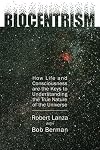
On the fringes of modern thought, Biocentrism: How Life and Consciousness are the Keys to the True Nature of the Universe by Robert Lanza and Bob Berman is a journey into cosmic possibilities. Though unconventional, it’s the kind of book that excites me—a place where new theories stretch the boundaries of what we think we know. As I turned each page, my mind wavered between intrigue and bewilderment, always left with questions, always searching for pieces to incorporate into my own view show more of the universe.
Lanza and Berman challenge the reader to see life and consciousness as not mere byproducts of the universe, but the very fabric through which the cosmos unfolds. Could biocentrism explain the mathematics that suggest the existence of other dimensions? Might it hold the answer to the deepest mysteries—what is consciousness, and what does it all mean?
While I’m not fully convinced, the very act of entertaining such ideas feels like an expansion of the mind. The book doesn’t demand acceptance; it invites curiosity, letting you step into a realm where life is not just an observer of the universe, but its creator, shaping the reality we see and feel.
The theories presented are bold, perhaps even radical, but that’s what makes them captivating. For the open-minded, this book may not provide all the answers, but it offers a fresh lens to view our place in the universe—an intersection of biology and physics, where the known and unknown dance in a cosmic waltz. And even if biocentrism doesn’t hold the ultimate truth, the questions it leaves behind are more than enough to keep the mind wandering through the stars.
If you’re willing to explore new perspectives and challenge the very foundations of reality, Biocentrism offers an intriguing, if speculative, roadmap to a universe where life itself may be the key to everything. show less
Lanza and Berman challenge the reader to see life and consciousness as not mere byproducts of the universe, but the very fabric through which the cosmos unfolds. Could biocentrism explain the mathematics that suggest the existence of other dimensions? Might it hold the answer to the deepest mysteries—what is consciousness, and what does it all mean?
While I’m not fully convinced, the very act of entertaining such ideas feels like an expansion of the mind. The book doesn’t demand acceptance; it invites curiosity, letting you step into a realm where life is not just an observer of the universe, but its creator, shaping the reality we see and feel.
The theories presented are bold, perhaps even radical, but that’s what makes them captivating. For the open-minded, this book may not provide all the answers, but it offers a fresh lens to view our place in the universe—an intersection of biology and physics, where the known and unknown dance in a cosmic waltz. And even if biocentrism doesn’t hold the ultimate truth, the questions it leaves behind are more than enough to keep the mind wandering through the stars.
If you’re willing to explore new perspectives and challenge the very foundations of reality, Biocentrism offers an intriguing, if speculative, roadmap to a universe where life itself may be the key to everything. show less
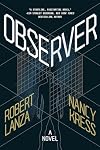
Mind-bending science fiction that blends physics and biology into an incredible tale of what could be the future.
Or, should I say, what I wish would be the future. This novel was completely absorbing, and it took me longer than usual to read because it required a lot of thinking as I tried to make sense of the science and the concept that is called, in the book, The Primacy of the Observer. This theory focuses on the suggestion that "instead of matter and evolution giving rise to show more consciousness, the truth is the other way around." Yeah, this is deep and heavy stuff, but the authors did an incredible job turning all this into a story that is relatable and easier to understand.
When Dr. Caroline Soames-Watkins is forced from her job as a neurosurgeon after she reports an incidence of sexual harassment to the hospital board, she's invited to work for a distant relative she has never met -- the famous Nobel Prize winning scientist, Dr. Samuel Watkins, her great uncle. He and two other brilliant men have set up a medical compound in the Cayman Islands where they are doing groundbreaking research and experiments that involve deep brain stimulation. Their goal is to discover the nature of consciousness, reality, and possibly, life after death.
Read this if you want to expand your mind and if you enjoy entertaining science fiction that seems plausible. I liked the characters, the science, the writing style, and the story itself. I only wish that new discoveries and inventions were not deemed so scary that they invite the attention of hate groups or the cancel culture. This would make a great film.
Thank you to NetGalley and The Story Plant for this e-book ARC to read, review, and recommend. show less
Or, should I say, what I wish would be the future. This novel was completely absorbing, and it took me longer than usual to read because it required a lot of thinking as I tried to make sense of the science and the concept that is called, in the book, The Primacy of the Observer. This theory focuses on the suggestion that "instead of matter and evolution giving rise to show more consciousness, the truth is the other way around." Yeah, this is deep and heavy stuff, but the authors did an incredible job turning all this into a story that is relatable and easier to understand.
When Dr. Caroline Soames-Watkins is forced from her job as a neurosurgeon after she reports an incidence of sexual harassment to the hospital board, she's invited to work for a distant relative she has never met -- the famous Nobel Prize winning scientist, Dr. Samuel Watkins, her great uncle. He and two other brilliant men have set up a medical compound in the Cayman Islands where they are doing groundbreaking research and experiments that involve deep brain stimulation. Their goal is to discover the nature of consciousness, reality, and possibly, life after death.
Read this if you want to expand your mind and if you enjoy entertaining science fiction that seems plausible. I liked the characters, the science, the writing style, and the story itself. I only wish that new discoveries and inventions were not deemed so scary that they invite the attention of hate groups or the cancel culture. This would make a great film.
Thank you to NetGalley and The Story Plant for this e-book ARC to read, review, and recommend. show less
Beyond Biocentrism: Rethinking Time, Space, Consciousness, and the Illusion of Death by Robert Lanza
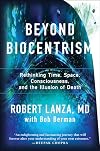
When my mind wandered as a kid, it would occasionally go to a near-glimpse of eternity, of infinity, and that glimpse would fill me with wonder and take away my breath for the micro-moment that it lasted. Reading this book let me get near those glimpses again, and for intervals that weren’t as fleeting.
It’s a review of classical physics, an update on quantum physics and a hypothesis on quantum theory that suggests space and time -- indeed, everything we consider to be reality -- is never show more physically real at all, but rather exists solely in the observations and meanings made by our mind’s consciousness. For example, those flowers aren't there except as light and energy -- which is interpreted in our brain as color, aroma and texture.
A provocative book. I liked it, but it seems a little loose and with a “look at me!” feeling from the author. It does make me want to finish Gary Zukav’s The Dancing Wu-Li Masters, which I put aside at least 10 years ago when its new-age-y take on quantum physics was slammed.
(Review based on an advance reading copy provided by the publisher.) show less
It’s a review of classical physics, an update on quantum physics and a hypothesis on quantum theory that suggests space and time -- indeed, everything we consider to be reality -- is never show more physically real at all, but rather exists solely in the observations and meanings made by our mind’s consciousness. For example, those flowers aren't there except as light and energy -- which is interpreted in our brain as color, aroma and texture.
A provocative book. I liked it, but it seems a little loose and with a “look at me!” feeling from the author. It does make me want to finish Gary Zukav’s The Dancing Wu-Li Masters, which I put aside at least 10 years ago when its new-age-y take on quantum physics was slammed.
(Review based on an advance reading copy provided by the publisher.) show less
Lists
You May Also Like


Statistics
- Works
- 22
- Members
- 856
- Popularity
- #29,895
- Rating
- 3.6
- Reviews
- 18
- ISBNs
- 68
- Languages
- 5