
Rupert Sheldrake
Author of Dogs That Know When Their Owners Are Coming Home: And Other Unexplained Powers of Animals
About the Author
Rupert Sheldrake is the former director of studies in biochemistry and cell biology at Cambridge University. He lives in London.
Works by Rupert Sheldrake
Dogs That Know When Their Owners Are Coming Home: And Other Unexplained Powers of Animals (1999) 599 copies, 12 reviews
Seven Experiments That Could Change the World: A Do-It-Yourself Guide to Revolutionary Science (2002) 246 copies, 7 reviews
The Physics of Angels: Exploring the Realm Where Science and Spirit Meet (1996) 151 copies, 3 reviews
Natural Grace: Dialogues on creation, darkness, and the soul in spirituality and science (1996) 149 copies
Science and Spiritual Practices: Transformative Experiences and Their Effects on Our Bodies, Brains, and Health (2017) 117 copies
La mémoire de l'univers - Une hypothèse révolutionnaire qui pourrait remettre en cause notre vision (2022) 2 copies, 1 review
A mente ampliada 1 copy
Váš pes to ví : jak psi poznají, kdy se jejich pán vrací domů a další neobjasněné schopnosti zvířat (2003) 1 copy
Honnan tudják a kutyák, mikor jön haza a gazdi? ...és az állatok más rejtélyes képességei (2012) 1 copy
Επτά πειράματα που θα αλλάξουν τον κόσμο: Όταν οι άγνωστες δυνάμεις του νου πυροδοτούν μία… (2003) 1 copy
Associated Works
What Is Your Dangerous Idea? Today's Leading Thinkers on the Unthinkable (2007) — Contributor — 669 copies, 8 reviews
A Glorious Accident: Understanding Our Place in the Cosmic Puzzle (1993) — Contributor — 237 copies, 7 reviews
Conversations on the Edge of the Apocalypse: Contemplating the Future with Noam Chomsky, George Carlin, Deepak Chopra, Rupert Sheldrake, and Others (2005) — Contributor — 76 copies
Science and Psychic Phenomena: The Fall of the House of Skeptics (2012) — Foreword — 41 copies, 1 review
Twilight of the Clockwork God: Conversations on Science and Spirituality at the End of an Age (1999) 28 copies, 1 review
Fortean Times 98 — Contributor — 2 copies
Tagged
Common Knowledge
- Legal name
- Sheldrake, Alfred Rupert
- Birthdate
- 1942-06-28
- Gender
- male
- Education
- Clare College, University of Cambridge (PhD, biochemistry, 1967)
Harvard University (philosophy and history of science) - Occupations
- biologist
biochemist
plant physiologist
parapsychology researcher - Organizations
- Institute of Noetic Sciences
Schumacher College. Devon, England
Temenos Academy, London
International Crops Research Institute for the Semi-Arid Tropics, Hyderabad, India - Awards and honors
- Frank Smart Prize for Botany (1962)
Bridgebuilder Award (2014)
Lucia Torri Cianci prize for innovative thinking (2015) - Relationships
- Purce, Jill (wife)
Sheldrake, Merlin (son)
Sheldrake, Cosmo (son) - Short biography
- Rupert Sheldrake è un biologo e saggista britannico, noto soprattutto per la sua discussa teoria della "risonanza morfica", che implica un universo non meccanicistico, governato da leggi che sono esse stesse soggette a cambiamenti.
- Nationality
- UK
- Birthplace
- Newark-on-Trent, Nottinghamshire, England, UK
- Places of residence
- Tamil Nadu, India
Dartington, Devon, UK
London, England, UK - Associated Place (for map)
- UK
Members
Reviews
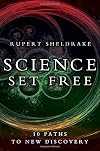
Essential, for me, anyway: a scientist who outs reductive materialism in the sciences as an ideology, rather than a testable hypothesis, and suggests ways to test it. I was raised an atheist, and continue to feel that organized religion is basically superstition used as a form of social control. But as issues of ecology and the survival of natural systems began to seem more crucial to me, I began to wonder, is it really possible for people to fight with all their strength to "save" something show more that they don't believe is alive in the same way they believe themselves to be alive? That they don't really believe is as essential to their survival as their own body? If matter at the smallest level is dead, and the cosmos at the grandest scale is dead, and only humans are conscious, and that consciousness is reducible to a set of chemical and electrical impulses that could be replicated by a machine, so its vividness is basically an illusion, well, what meaning does "alive" have in a world like that? Not much. But many of us accept those hypotheses even though they contradict our own experience of ourselves and our world.
So I needed a scientist to say, there may be a way out of this trap, and you don't need to abandon science and retreat into some kind of untestable, irrational fantasy world in order to find it. And I'm extremely grateful. It's given me more hope than anything I can remember reading. show less
So I needed a scientist to say, there may be a way out of this trap, and you don't need to abandon science and retreat into some kind of untestable, irrational fantasy world in order to find it. And I'm extremely grateful. It's given me more hope than anything I can remember reading. show less
Seven Experiments That Could Change the World: A Do-It-Yourself Guide to Revolutionary Science (2nd Edition with Update on Results) by Rupert Sheldrake
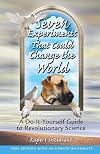
Bit like the Curate's egg - good in places. I enjoyed the more 'down to earth' chapters on pigeon homing for example. Not so keen on the mathematical discourses into Plank's Constant and the like though I appreciate that he talks frankly about open minded detachment not really being how things are done in science.
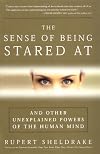
If you write a book about the afterlife or psychic abilities or anything considered "suspect" by a majority of scientists, you have to walk a narrow line. Either you end up being too scientific and overly dry or you write a nice piece of light reading that's mostly fluff. Sheldrake fails all around. The science is lousy and it's the most boring book you could ever read about telepathy. It's basically "I asked 50 people if they had ever felt like someone was looking at them from behind and 35 show more of them responded in the affirmative. As I mentioned in Chapter 2, one woman was sitting in class and felt that her boyfriend had entered the room and was looking in her direction. She turned around and he was." And so on and so on for page after page. I hate to review a book that I could only get through half of, but sometimes you just don't need to plow through a whole field of crap to know that your plow is in crap. show less

Sheldrake reminds us that much of what is taken for granted in popular scientific theory (the mechanical universe, the fixed laws of nature, materialism, the mind/body connection) is insightful but speculative. He asks some interesting questions, berates dogmatics, and finds some unexpected antecedents for his own theories, but fails to recognize that his key idea—‘morphic resonance’—is also speculative. Oops.
Lists
You May Also Like


Associated Authors
Statistics
- Works
- 41
- Also by
- 9
- Members
- 3,769
- Popularity
- #6,723
- Rating
- 3.6
- Reviews
- 64
- ISBNs
- 210
- Languages
- 15
- Favorited
- 6
