
Pratapaditya Pal
Author of The sensuous immortals: A selection of sculptures from the Pan-Asian collection
About the Author
Pratapaditya Pal is Fellow for Research at the Norton Simon Museum of Art in Pasadena, California and General Editor of Marg Publications in Mumbai (Bombay), India.
Image credit: Dr. Pratapaditya Pal. Distinguished scholar of South Asian and Himalayan Art. Image from South Asian Studies Association.
Series
Works by Pratapaditya Pal
The sensuous immortals: A selection of sculptures from the Pan-Asian collection (1977) 73 copies, 1 review
Islamic art: The Nasli M. Heeramaneck Collection, gift of Joan Palevsky (1973) — Author — 63 copies, 2 reviews
Art of Tibet: Catalogue of the Los Angeles County Museum of Art Collection (1983) — Author — 54 copies
Desire and Devotion: Art from India, Nepal, and Tibet : In the John and Berthe Ford Collection (2001) — Author — 30 copies
The classical tradition in Rajput painting : from the Paul F. Walter Collection (1978) — Author — 17 copies
The joy of collecting : Far Eastern art from the Lidow Collection, Los Angeles County Museum of Art, September 13, 1979-January 6, 1980 (1979) — Foreword — 15 copies
Asian Art at the Norton Simon Museum Volume 3: Art from Sri Lanka and Southeast Asia (2004) 15 copies
Asian Art at the Norton Simon Museum: Volume 1: Art from the Indian Subcontinent (2003) 14 copies, 1 review
Asian Art at the Norton Simon Museum: Volume 2: Art from the Himalayas and China (Asian Art at the Norton Simon Museum Vol. 2) (v. 2) (2004) 13 copies
Puja and Piety: Hindu, Jain, and Buddhist Art from the Indian Subcontinent (2016) — Editor and Author — 12 copies
The Holy Cow and Other Animals: A Selection of Indian Paintings from the Art Institute of Chicago (2002) 12 copies
Krishna: The Cowherd King (Los Angeles County Museum of Art. Monograph series, no. 1) (1972) 12 copies
Icons of Piety, Images of Whimsy: Asian Terra Cottas from the Walter Grounds Collection (1987) 11 copies
Pleasure Gardens of the Mind: Indian Paintings from the Jane Greenough Green Collection (1993) 11 copies
The divine presence: Asian sculptures from the collection of Mr. and Mrs. Harry Lenart (1978) 9 copies
Aspects of Indian art. Papers presented in a symposium at the Los Angeles County Museum of Art, October, 1970 (1972) — Editor — 7 copies
Norton Simon Museum: North Indian Buddhist Art - North Indian Hindu Sculpture - South Indian Art - Himalayan Art - Southeast Asian Art (1988) 5 copies
The Elegant Image: Bronzes from the Indian Subcontinent in the Siddharth K. Bhansali Collection (2011) 5 copies
The Flute and the Brush: Indian Paintings from the William Theo Brown and Paul Wonner Collection (1976) 4 copies
Ocean Of Wisdom, Embodiment Of Compassion Glimpses of Tibetan Buddhist Art. A Selection from the Pritzker Collection (2008) 1 copy
Marg, Vol. 47 No. 2 1 copy
Boston Museum of Fine Arts 1 copy
The flute and the brush Indian paintings from the William Theo Brown and Paul Wonner Collection 1 copy
Architecture in Nepal 1 copy
Norton Simon Museum 1 copy
Associated Works
The sensuous line : Indian drawings from the Paul F. Walter Collection (1976) — some editions — 4 copies
Mystics and mandalas : bronzes and paintings of Tibet and Nepal (1974) — Foreword, some editions — 3 copies
Tagged
Common Knowledge
- Birthdate
- 1935
- Gender
- male
- Education
- University of Calcutta (PhD | Fine Arts and History)
- Occupations
- art historian
curator - Organizations
- Los Angeles Museum of Art
- Awards and honors
- Padmashree (2010)
SASA Academic Excellence Award (2008) - Nationality
- Bangladesh (birth)
USA - Places of residence
- Bangladesh (birth)
Calcutta, India - Associated Place (for map)
- Calcutta, India
Members
Reviews

This is a wonderful catalogue of an exhibition shown in the Asia House Gallery in the fall of 1975, which I was very happy to pick up for $1 at a library book sale. :) It’s got 97 pieces of Buddhist and Brahmanical bronzes and paintings, including images of the Buddha, Bodhisattvas, Shiva, Vishnu, and various tantric and related deities, ranging from the 7th century to the 19th. While the watercolors didn’t resonate with me (too flat), there is such grace and compassion evident in the show more figures that the spirit of these religions really comes through.
I confess it’s hard to keep track of all the deities and their relations to one another, though Pratapaditya Pal does a pretty good job explaining it in an introduction and in the notes on each piece, and he does so in a way that both a scholar and a novice will get something out of it. One of the recurring themes is tolerance; there is a fusion of Nepalese, Indian, and Tibetan cultures here, with various beliefs coexisting peacefully. Another is playfulness and youth; the Gods dance and in one of the descriptions of Vishnu, “the devotee is constantly reminded of the god’s radiance, bright as the sun’s rays or a thousand moons; of his smooth complexion, like a water-laden cloud or the dark autumn cloud; or of his serene appearance, as fresh as the morning dew.” Only when facing evil to the gods become angry, and as Pal says, “in the divine drama, death overtakes only the evildoers, while the gods and goddesses, personifying good, remain ‘immortal adolescents.’” Lastly, there is also an acknowledgment of the sensual, with physical desire and spiritual grace going hand in hand on one’s quest for enlightenment. It’s quite refreshing, and beautiful. show less
I confess it’s hard to keep track of all the deities and their relations to one another, though Pratapaditya Pal does a pretty good job explaining it in an introduction and in the notes on each piece, and he does so in a way that both a scholar and a novice will get something out of it. One of the recurring themes is tolerance; there is a fusion of Nepalese, Indian, and Tibetan cultures here, with various beliefs coexisting peacefully. Another is playfulness and youth; the Gods dance and in one of the descriptions of Vishnu, “the devotee is constantly reminded of the god’s radiance, bright as the sun’s rays or a thousand moons; of his smooth complexion, like a water-laden cloud or the dark autumn cloud; or of his serene appearance, as fresh as the morning dew.” Only when facing evil to the gods become angry, and as Pal says, “in the divine drama, death overtakes only the evildoers, while the gods and goddesses, personifying good, remain ‘immortal adolescents.’” Lastly, there is also an acknowledgment of the sensual, with physical desire and spiritual grace going hand in hand on one’s quest for enlightenment. It’s quite refreshing, and beautiful. show less
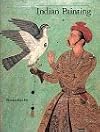
Very nice collection of paintings and calligraphy including Eastern Indian Buddhist, Jain, Hindu, Islamic (pre-Mughal), Mughal, and Decanni paintings. Nearly all of it fits within our time frame - with Decanni ending in 1700. Has a great, well-rounded look at the various art styles, although the Mughal is still the most copious.

232 pages. Los Angeles County Museum of Art Catalog of Collection. Full of pictures of Persian, Egyptian, Indian, and Turkish ceramics, manuscripts, metal work, sculpture, glassware, and textiles. It has many pictures of things not seen elsewhere! Lovely.
You May Also Like


Associated Authors
Statistics
- Works
- 95
- Also by
- 3
- Members
- 1,156
- Popularity
- #22,230
- Rating
- 4.5
- Reviews
- 7
- ISBNs
- 106
- Languages
- 1