
Lawrence LeShan
Author of How to Meditate: A Guide to Self-Discovery
About the Author
Lawrence LeShan, Ph.D., is author of the best-selling How to Meditate and many other books on psychotherapy, cancer treatment, and mysticism. He has appeared on the Today show and Good Morning America.
Image credit: Healing Cancer
Works by Lawrence LeShan
The Medium, the Mystic, and the Physicist: Toward a General Theory of the Paranormal (1974) 110 copies
Cancer As a Turning Point: A Handbook for People with Cancer, Their Families, and Health Professionals (1989) 87 copies, 1 review
The Figure 4 copies
Invaders of Earth 3 copies
Trip One 2 copies
Giants Unleashed 2 copies
Crisis [short story] 2 copies
Went wit alle Engel waren 1 copy
Świat jasnowidzących 1 copy
Mística e Ciência 1 copy
Meditação transcendental 1 copy
Associated Works
Tagged
Common Knowledge
- Other names
- Grendon, Edward (pen name for science fiction)
- Birthdate
- 1920-09-06
- Gender
- male
- Education
- University of Chicago (PhD ∙ Human Development)
College of William and Mary (BA)
University of Nebraska (MS) - Occupations
- psychologist
- Organizations
- US Army
American Society for Psychical Research
Association for Humanistic Psychology
Federation of American Scientists
Parapsychology Association
American Psychological Association - Relationships
- LeShan, Eda (wife)
- Short biography
- Lawrence LeShan published his first professional paper in 1942. Since then he has authored over 150 papers and 20 books, which have been translated into 19 languages. He holds a PhD in Human development from the University of Chicago, has taught at various universities and has lectured and given seminars widely in this country, Europe and elsewhere. He has worked as a research psychologist for over 60 years including six years as a psychologist in the U.S. Army.
- Nationality
- USA
- Birthplace
- New York, New York, USA
- Places of residence
- New York, New York, USA
- Associated Place (for map)
- New York, New York, USA
Members
Reviews

This little volume, evidently written as a practical textbook on its topic for the Human Potential movement, had been through 20 printings by 1988, and the jacket copy makes the false claim that its contents allow the reader "to bring meditation effortlessly into your life" (emphasis added)--a claim that the text itself firmly disavows. The title How to Meditate really applies to only chapters 8-10 of the dozen in LeShan's book. The rest are concerned to motivate potential meditators, to show more provide a typology of meditative practices, and to discuss the interface of meditation with psychology and parapsychology. Chapters 3 and 11 are sufficiently peripheral to the main business of the book that the author actually suggests to readers that they can profitably skip those chapters.
The actual instructions for meditative practice in chapter 8 are adequate, and cover a respectably diverse set of techniques. Chapter 9 consists entirely of negative advice, i.e. traps to avoid, and much of it is useful. I especially liked the passage warning against "'Vibrations,' 'Energy,' and Other Cheap Explanations of Things." (83-88) But in the subsequent section, LeShan cavalierly dismisses all theories of occult correspondence, appreciating neither their value as conventions in communicating ideas, nor the ways in which they reflect systems of congruence. (A better instruction reads, "...so also is the triad Osiris, Isis, Horus like that of a horse, mare, foal, and of red, blue, purple. And this is the foundation of Correspondences. But it were false to say 'Horus is a foal' or 'Horus is purple'. One may say: 'Horus resembles a foal in this respect, that he is the offspring of two complementary beings'."--Liber 175, point 32)
A repeated refrain throughout the book is the author's contempt and derision for those who would presume to acquire mystical experience by psychopharmaceutical means. He presents drugs and meditation as exclusive alternatives, never considering the possibility--indeed the likelihood suggested by traditions around the world and throughout history--that the two may complement and assist one another: psychedelic drugs being enhanced by the mental discipline of meditation, and meditation being potentiated by the breakthrough experiences of "heroic" drug use (to use the terminology of Terrence McKenna, a theorist with a much better handle on this conundrum). In a typical piece of anti-drug rhetoric, LeShan insists that "meditation (as opposed to ... drugs) does not produce bad trips" (25); but later he concedes that meditation has its own hazards, including "depressions and bad trips." (64)
The basic typology offered here corresponds to the yogas: jnana yoga ("The Path Through the Intellect"), bhakti yoga ("The Path Through the Emotions"), hatha yoga ("The Path Through the Body") and karma yoga ("The Path Through Action"). But there are a good range of examples from other cultures and traditions, rather than a fixation on the Indian forms. Curiously, given the set selected, there is no type equivalent to raja yoga. This omission is all the more surprising in light of the goofy definition and etymology that he provides for "mystic" as "training in closing off all those artificial factors which ordinarily keep us from this knowledge, this birthright we have lost." (7)
Since the author is a psychologist, the overall approach is predictably secularist, and although he does go to some lengths to discuss various religious contexts for meditation, he does so on the basis of universalist assumptions. In fact, he goes beyond religious universalism to a metaphysical universalism that comprehends traditional mysticisms, parapsychology, and modern physics, in what would shortly after his writing of this book become a staple of the New Age worldview. An afterword praising LeShan is provided by a clergyman-psychologist.
LeShan is ideologically opposed to initiatory secrecy--which has little enough to do with meditation per se, but is often found in traditional contexts that facilitate or encourage meditation. LeShan does not see the value of such secrecy, only its potential for abuse. He writes, "Can you imagine a Socrates, a Jesus, a Buddha, telling his disciples that his wisdom was to be kept secret?" (102) Not only can I imagine it, I don't have to. Mark 4:10-12 is a perfectly canonical instance.
As someone with some background and experience in the topic of this primer, I may not be the best judge of its appeal for those to whom it was directed. Reading it was good for me, though, inspiring me to revisit some practices that have served me well in the past, but have become a little dusty in my recent work. show less
The actual instructions for meditative practice in chapter 8 are adequate, and cover a respectably diverse set of techniques. Chapter 9 consists entirely of negative advice, i.e. traps to avoid, and much of it is useful. I especially liked the passage warning against "'Vibrations,' 'Energy,' and Other Cheap Explanations of Things." (83-88) But in the subsequent section, LeShan cavalierly dismisses all theories of occult correspondence, appreciating neither their value as conventions in communicating ideas, nor the ways in which they reflect systems of congruence. (A better instruction reads, "...so also is the triad Osiris, Isis, Horus like that of a horse, mare, foal, and of red, blue, purple. And this is the foundation of Correspondences. But it were false to say 'Horus is a foal' or 'Horus is purple'. One may say: 'Horus resembles a foal in this respect, that he is the offspring of two complementary beings'."--Liber 175, point 32)
A repeated refrain throughout the book is the author's contempt and derision for those who would presume to acquire mystical experience by psychopharmaceutical means. He presents drugs and meditation as exclusive alternatives, never considering the possibility--indeed the likelihood suggested by traditions around the world and throughout history--that the two may complement and assist one another: psychedelic drugs being enhanced by the mental discipline of meditation, and meditation being potentiated by the breakthrough experiences of "heroic" drug use (to use the terminology of Terrence McKenna, a theorist with a much better handle on this conundrum). In a typical piece of anti-drug rhetoric, LeShan insists that "meditation (as opposed to ... drugs) does not produce bad trips" (25); but later he concedes that meditation has its own hazards, including "depressions and bad trips." (64)
The basic typology offered here corresponds to the yogas: jnana yoga ("The Path Through the Intellect"), bhakti yoga ("The Path Through the Emotions"), hatha yoga ("The Path Through the Body") and karma yoga ("The Path Through Action"). But there are a good range of examples from other cultures and traditions, rather than a fixation on the Indian forms. Curiously, given the set selected, there is no type equivalent to raja yoga. This omission is all the more surprising in light of the goofy definition and etymology that he provides for "mystic" as "training in closing off all those artificial factors which ordinarily keep us from this knowledge, this birthright we have lost." (7)
Since the author is a psychologist, the overall approach is predictably secularist, and although he does go to some lengths to discuss various religious contexts for meditation, he does so on the basis of universalist assumptions. In fact, he goes beyond religious universalism to a metaphysical universalism that comprehends traditional mysticisms, parapsychology, and modern physics, in what would shortly after his writing of this book become a staple of the New Age worldview. An afterword praising LeShan is provided by a clergyman-psychologist.
LeShan is ideologically opposed to initiatory secrecy--which has little enough to do with meditation per se, but is often found in traditional contexts that facilitate or encourage meditation. LeShan does not see the value of such secrecy, only its potential for abuse. He writes, "Can you imagine a Socrates, a Jesus, a Buddha, telling his disciples that his wisdom was to be kept secret?" (102) Not only can I imagine it, I don't have to. Mark 4:10-12 is a perfectly canonical instance.
As someone with some background and experience in the topic of this primer, I may not be the best judge of its appeal for those to whom it was directed. Reading it was good for me, though, inspiring me to revisit some practices that have served me well in the past, but have become a little dusty in my recent work. show less

If you are looking for a short introduction to meditation without a particular religious bias this is the book for you. Organized into twelve chapters each of which discuss a basic issue regarding meditation, the book is as practical as one can be when discussing this concept.
Why do we meditate? LeShan suggests on the opening page of the book that "We meditate to find, to recover, to come back to something of ourselves we once dimly and unknowingly had and have lost without knowing what it show more was or where or when we lost it." (p 1) There are many names for what this means in reality and LeShan discusses these. I found the sections on how to and what the effects of meditation are to be especially informative. While suggesting that paranormal feelings and events should be excluded from the process of meditation he does not deny that they exist. He follows up with a chapter on the "traps" of mysticism that is convincingly effective. While he encourages those interested in meditation to seek out others who share that interest he definitely believes that this is a practice that may be done alone and he provides suggestions for those who choose this approach.
Finally, the afterword by Edgar N. Jackson provides a summing up and places LeShan's book in the context of the history of spiritual thought. With the inclusion of referential footnotes this text is an impressive short presentation of meditation for the the thoughtful reader. show less
Why do we meditate? LeShan suggests on the opening page of the book that "We meditate to find, to recover, to come back to something of ourselves we once dimly and unknowingly had and have lost without knowing what it show more was or where or when we lost it." (p 1) There are many names for what this means in reality and LeShan discusses these. I found the sections on how to and what the effects of meditation are to be especially informative. While suggesting that paranormal feelings and events should be excluded from the process of meditation he does not deny that they exist. He follows up with a chapter on the "traps" of mysticism that is convincingly effective. While he encourages those interested in meditation to seek out others who share that interest he definitely believes that this is a practice that may be done alone and he provides suggestions for those who choose this approach.
Finally, the afterword by Edgar N. Jackson provides a summing up and places LeShan's book in the context of the history of spiritual thought. With the inclusion of referential footnotes this text is an impressive short presentation of meditation for the the thoughtful reader. show less
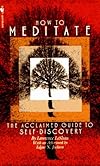
With his simple, straightforward approach, Lawrence LeShandemystifies meditation. No matter what you do or how busy you are, his brief, realistic guide lets you explore the many apths to meditation. His specific programs and exercises provide practical tools for you to begin your own journey.
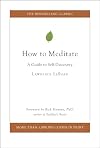
Whether you are an absolute novice or a seasoned meditator, this old book is a treasure. It's like having access to a western style doctor who is also an expert in meditation.
Lists
You May Also Like


Associated Authors
Statistics
- Works
- 39
- Also by
- 6
- Members
- 1,454
- Popularity
- #17,672
- Rating
- 3.6
- Reviews
- 12
- ISBNs
- 92
- Languages
- 7