
Paul Zindel (1936–2003)
Author of The Pigman
About the Author
Paul Zindel Born on Staten Island, New York, Zindel was raised by a single mother who pursued a variety of odd and mostly unsuccessful jobs and took in terminally ill patients to supplement the family income. Due to her eccentricity and restlessness, the mother moved the family from one apartment show more to another, making it difficult for Zindel to form lasting friendships. As a consequence, the boy lived in the world of his imagination, developing interests in both science and writing. Zindel majored in chemistry at Wagner College on Staten Island, completing both bachelors and masters degrees. During this period he also took a creative-writing course offered by the playwright Edward Albee. After college he worked briefly as a technical writer for a chemical company and then discovered a more fulfilling vocation as a teacher of chemistry and physics at a Staten Island high school. It was during this period in the early 1960s that Zindel was able to develop his potential as a playwright by drawing on his own background as well as the experiences of his young students. The Effect of Gamma Rays on Man-in-the-Moon Marigolds premiered at the Alley Theater in Houston in 1965, was presented in a condensed version on television the following year, and finally opened off-Broadway at the Mercer-O'Casey Theater in 1970. Because of a fire in the theater, the play was moved, with a new cast, to the New Theater on Broadway, where it ran for a total of 819 performances. In addition to being enormously popular, Gamma Rays earned in 1970 an Obie Award as the best play of the season, the New York Drama Critics Circle Award as the best American play, and the Vernon Rice Drama Desk Award for most promising playwright. In 1971 the play was awarded the Pulitzer Prize in Drama. Gamma Rays is the story of an embittered, half-mad widow, Beatrice Hunsdorfer; her teenaged daughters, Ruth and Tillie; and Nanny, a decrepit old woman who boards with them. The family lives in chaos, with Beatrice dealing out petty vengeance to everyone. Nanny has been abandoned by her daughter. Ruth is wanton, untidy, and subject to seizures. Tillie, however, has become interested in science and enters her marigold experiment in the science fair; by exposing the marigold seeds to radiation, she shows that some produce normal plants, others produce mutations with beautiful double blooms, while still others die. The metaphor, of course, is that Tillie has emerged from her chaotic environment as a beautiful and whole person, a human "double bloom." Zindel's other plays include And Miss Reardon Drinks a Little (1971), The Secret Affairs of Mildred Wild(1973), Let Me Hear You Whisper (1973), and Ladies at the Alamo(1975). While these plays continue to show Zindel's skill in writing excellent roles for women, none of them have matched the critical and popular success of Gamma Rays. Since the late 1960s, Zindel has also written several novels for young adults. The Pigman (1968), which is about a lonely widower and two destructive teenagers, has sold more than 1 million copies. His other novels include My Darling, My Hamburger (1969), I Never Loved Your Mind (1970), Pardon Me, You're Stepping on My Eyeball (1976), Confessions of a Teenage Baboon (1977), and The Undertaker's Gone Bananas (1978). As in Gamma Rays, these works display not only a penchant for grotesque humor but an uncanny awareness of the problems of teenagers. Zindel's works, which also include several screenplays, explore the themes of loneliness, escapism, and eccentricity. His best works are humorous, perceptive, and warm; they present an affirmation of life emerging from desperate and grotesque circumstances. He is especially noted for his excellent women's roles, which has helped sustain him as a best-selling playwright for school and community groups. (Bowker Author Biography) show less
Image credit: Paul Zindel (1936-2003) from Life in Legacy
Series
Works by Paul Zindel
The Effect of Gamma Rays on Man-in-the-Moon Marigolds, A Drama in Two Acts (1964) 865 copies, 12 reviews
The Pigman with Connections 2 copies
Die Horrorparty. Pausenclub Irre Infos. Illustriert von Hanno Rink. Deutsch von Bettina Olbrecht. (2001) 1 copy
The Ladies Should Be in Bed 1 copy
The Pigman - Teacher copy 1 copy
Associated Works
Places I Never Meant to Be : Original Stories by Censored Writers (1999) — Contributor — 337 copies, 7 reviews
The Actor's Book of Contemporary Stage Monologues: More Than 150 Monologues from More Than 70 Playwrights (1987) — Contributor — 195 copies
Six Science Fiction Plays (Pocket Books Sci-Fi No. 48766) (1975) — Contributor — 62 copies, 2 reviews
Tagged
Common Knowledge
- Birthdate
- 1936-05-15
- Date of death
- 2003-03-27
- Gender
- male
- Education
- Wagner College
- Awards and honors
- Margaret A. Edwards Award (2002)
- Relationships
- Zindel, Lizabeth (daughter)
- Nationality
- USA
- Birthplace
- Staten Island, New York, New York, USA
- Places of residence
- Staten Island, New York, New York, USA
- Place of death
- New York, New York, USA
- Burial location
- Moravian Cemetery, Staten Island, New York, New York, USA
- Associated Place (for map)
- Staten Island, New York, New York, USA
Members
Reviews

Just read this for the third time. I first read it back in the late 70s. Then again around 2010. And I read it again today. Oddly, it seemed even more cruel this time around.
It's a powerful story. Moves me every time. Makes me cringe every time, too. In some ways I see myself and my mother and maybe my grandmother, although not specifically or nearly as dramatically. But I can recognize the adult folly, how a mother often carries her own life's disappointments and some of her own mother's show more disappointments long into adulthood, affecting the next generation. Seeing ourselves is the power of the play. We can relate to the best and worst of our own selves both as mothers and as daughters.
That might be why I've read and re-read it: it's the sometimes tragic Mother-Daughter metaphor that could be made based on the effects of radiation on bright yellow marigolds. show less
It's a powerful story. Moves me every time. Makes me cringe every time, too. In some ways I see myself and my mother and maybe my grandmother, although not specifically or nearly as dramatically. But I can recognize the adult folly, how a mother often carries her own life's disappointments and some of her own mother's show more disappointments long into adulthood, affecting the next generation. Seeing ourselves is the power of the play. We can relate to the best and worst of our own selves both as mothers and as daughters.
That might be why I've read and re-read it: it's the sometimes tragic Mother-Daughter metaphor that could be made based on the effects of radiation on bright yellow marigolds. show less
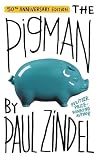
I read this for Banned Book Week not knowing what to expect and whoa man did I love love love it. It's like Catcher in the Rye only with a girl and less self-obsessed (go figure). It's been challenged because the kids in it drink and smoke and hate school and have awful parents and swear (although the swearing is mostly like "@#$%").
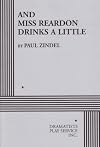
A difficult work, full of angst and anger. Three sisters, all working in the same school system, come together to try to resolve the problem that rose with the break down of the youngest. The story develops well, and introduces a strange and unpleasant couple who stop by to pay their respects (mostly to get a look at the "nut") and end up in a tell-all session that exposes the peculiarities of even those with seemingly normal lives. Zindel rips the facade off to let us look underneath into show more the simmering, festering witches brew of family life; the result can be painful. Zindel never fails to push buttons. show less
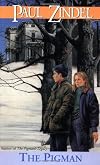
It's amazing how this book manages to be so dark without having any murders or anything in it. The characters were very real to me, especially Mr. Pignati -- I could feel his grief and his loneliness like it was my own. The climax seemed inevitable (which takes a lot more skill than you'd think) and, even more impressive, the book was very timeless. It was written in the 1960s but, except for a few minor details, it could have taken place yesterday. No wonder this is a youth classic.
Lists
Awards


You May Also Like


Associated Authors
Statistics
- Works
- 72
- Also by
- 10
- Members
- 9,285
- Popularity
- #2,595
- Rating
- 3.5
- Reviews
- 172
- ISBNs
- 540
- Languages
- 9
- Favorited
- 9