
About the Author
Peter S. Wells is professor of anthropology at the University of Minnesota
Works by Peter S. Wells
The Battle That Stopped Rome: Emperor Augustus, Arminius, and the Slaughter of the Legions in the Teutoburg Forest (2003) — Author — 477 copies, 11 reviews
How Ancient Europeans Saw the World: Vision, Patterns, and the Shaping of the Mind in Prehistoric Times (2012) 46 copies
Associated Works
Tagged
Common Knowledge
- Birthdate
- 1948-10-09
- Gender
- male
- Education
- Harvard University (PhD)
- Occupations
- anthropologist
archaeologist
university professor - Organizations
- Harvard University
University of Minnesota - Nationality
- USA
- Birthplace
- Boston, Massachusetts, USA
- Associated Place (for map)
- Massachusetts, USA
Members
Reviews
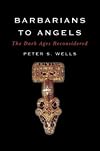
Wells uses archaeological evidence to argue that the Dark Ages weren't so dark after all, and that a vibrant culture of nobles and merchants, ruling over newly productive agriculturalists, thrived between 400 and 800 C.E. For the average worker living in the cities of the Rhine basin, the Baltic Sea, or London, there wouldn't have been much change from year to year as Rome weakened. New forms of art around finely crafted gold brooches and animal designs represent a shift away from show more Mediterranean culture to local cultures.
It's a compelling argument, and the included images of gold artifacts are quite beautiful. This book is aimed quite clearly at college freshmen and the casual archaeologist, who'd be scared off by footnotes or inline citations. Normally, I'd give this book three stars as in introduction to the topic with an ax to grind, but I'm knocking off a star for oddities in included images, such as talking at length about Childeric's unique signet ring without showing it, and including several pictures of the author's European vacation rather than site maps. show less
It's a compelling argument, and the included images of gold artifacts are quite beautiful. This book is aimed quite clearly at college freshmen and the casual archaeologist, who'd be scared off by footnotes or inline citations. Normally, I'd give this book three stars as in introduction to the topic with an ax to grind, but I'm knocking off a star for oddities in included images, such as talking at length about Childeric's unique signet ring without showing it, and including several pictures of the author's European vacation rather than site maps. show less
The Battle That Stopped Rome: Emperor Augustus, Arminius, and the Slaughter of the Legions in the Teutoburg Forest by Peter S. Wells
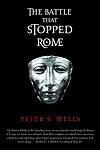
I luurve me some Roman history, but oddly, one of my favorite Roman history books is this one, in which three entire Roman legions (i.e. about 20,000 men) get their asses handed to them by Germanic guerilla forces. For all their chest-puffed-out militaristic grandstanding, Rome's finest warriors were about as formidable as a collection of delicate porcelain figurines in the Battle of Teutoburg Forest (9 A.D.).
History buffs can still visit the site of the fighting, where artifacts from the show more conflict continue to be discovered.
The battle [of Teutoburg Forest] is one of those things you never hear about in your public school education, but then when you stumble on it years later in your adult life, you think to yourself "This is huge... how is it that I've never heard about this until now?"
Take a look at a map of Europe.
In the West, you have Spain, France, England, Italy, and Switzerland... all countries profoundly influenced by their years of Latin occupation. Ancient Rome can be seen in these countries in everything from the language to the architecture. But then look at Germany... the change is abrupt. Once you cross eastwards over the Rhine River, some Roman influence still exists, but not nearly to the same degree. The Romans made forays into German territory, and held various German lands on and off all the way up to Cologne (where there is a fantastic museum about the Romans in Germany) but most of Germany, most of the time, lived free of Roman rule. As a result, the indigenous German language remained intact, and modern German does not belong to the family of Latin-based "Romance languages".
So what happened? Romans conquered territories as far away as Persia; why not Germany? It would be misleading to give a simple answer to that question, but one piece of the puzzle is the Battle of Teutoburg Forest, which was (psychologically, if not materially) the most devistating defeat Roman forces ever suffered in the history of their empire.
"How'd the Germans do it?' you might ask. Oh! High drama my friends! A traitor in the Roman ranks led them into a history-altering ambush. I won't spoil the details, but let me just say: this story would make a fucking fantastic movie, if done properly (i.e. no marquis-name Hollywood prettyboys prancing around in pristine shining armor, and no 300-esque experiments with surreal CGI comic bookery; just legions and legions of lowtech badass soldiers fighting each other to the death in a hand-to-hand pugilistic bloodfest). Guerilla warriors, under the leadership of Armin (whom the Romans called Arminius), fought with valor to prevent their people from falling slave to the Roman juggernaut. The Latins, arrogant from past success, traveled through the forest loudly and slowly- intentionally inviting attack from the primitive Huns. Roman generals, thinking more of their political careers than sound military strategy, were looking for a few minor battles to provide them with prioners of war they could parade down the Appian Way, to garner votes and appointments to high office.
Their guides, captured Germans who were felt to be loyal to Rome, had other ideas. The Romans were led into a mountain valley which narrows to a stricture so tight it would stretch the legions out to practically single-file formation. This was a doubly vulnerable position, because it not only increased each soldier's exposure, but it prevented reinforcements or supplies from reaching areas under attack. Meanwhile, a German coalition army lay in wait in the dense overgrowth of the steep hills on either side of the pass. When the Romans were exactly midway through, a signal was sounded, and the ambush began, which included repeated volleys of flaming arrows, giant boulders rolling down the hills, charges with giant spears, and wave after wave of armed infantry in overwhelming numbers. The Romans never stood a chance.
Even as routs go, the result was an astounding success: Roman casualties upwards of 90%, while German losses were negligible. As one might imagine, the horror of it all grew with each retelling by Roman survivors- giving the Germans a massive long-term psychological victory, in addition to their impressive material gains. Even generations later, assignment to Germany was regarded by Roman soldiers in a similar manner as assignment to the Russian front was seen by Nazi soldiers in World War II: a likely death sentence. Roman morale in the Teutonic theatre never really recovered from the blow.
Imagine how different European history might have been if the Romans succeeded in conquering Germany and presumably then sweeping up into Russia and Scandinavia. It's too complex for me to guess at, but I think (speculative history and fantasy author) [author:Harry Turtledove|29479] might come up with something interesting (Romans fighting Vikings? the [book:Vinland Sagas|103106] recast with Roman Centurions?)
The historical implications are huge, but another reason to read this book is that it is a heartening David-and-Goliath story of small indigenous peoples standing up and defending themselves against the great Empire of their day. It kind of reminds me of another Hollywood film. show less
History buffs can still visit the site of the fighting, where artifacts from the show more conflict continue to be discovered.
The battle [of Teutoburg Forest] is one of those things you never hear about in your public school education, but then when you stumble on it years later in your adult life, you think to yourself "This is huge... how is it that I've never heard about this until now?"
Take a look at a map of Europe.
In the West, you have Spain, France, England, Italy, and Switzerland... all countries profoundly influenced by their years of Latin occupation. Ancient Rome can be seen in these countries in everything from the language to the architecture. But then look at Germany... the change is abrupt. Once you cross eastwards over the Rhine River, some Roman influence still exists, but not nearly to the same degree. The Romans made forays into German territory, and held various German lands on and off all the way up to Cologne (where there is a fantastic museum about the Romans in Germany) but most of Germany, most of the time, lived free of Roman rule. As a result, the indigenous German language remained intact, and modern German does not belong to the family of Latin-based "Romance languages".
So what happened? Romans conquered territories as far away as Persia; why not Germany? It would be misleading to give a simple answer to that question, but one piece of the puzzle is the Battle of Teutoburg Forest, which was (psychologically, if not materially) the most devistating defeat Roman forces ever suffered in the history of their empire.
"How'd the Germans do it?' you might ask. Oh! High drama my friends! A traitor in the Roman ranks led them into a history-altering ambush. I won't spoil the details, but let me just say: this story would make a fucking fantastic movie, if done properly (i.e. no marquis-name Hollywood prettyboys prancing around in pristine shining armor, and no 300-esque experiments with surreal CGI comic bookery; just legions and legions of lowtech badass soldiers fighting each other to the death in a hand-to-hand pugilistic bloodfest). Guerilla warriors, under the leadership of Armin (whom the Romans called Arminius), fought with valor to prevent their people from falling slave to the Roman juggernaut. The Latins, arrogant from past success, traveled through the forest loudly and slowly- intentionally inviting attack from the primitive Huns. Roman generals, thinking more of their political careers than sound military strategy, were looking for a few minor battles to provide them with prioners of war they could parade down the Appian Way, to garner votes and appointments to high office.
Their guides, captured Germans who were felt to be loyal to Rome, had other ideas. The Romans were led into a mountain valley which narrows to a stricture so tight it would stretch the legions out to practically single-file formation. This was a doubly vulnerable position, because it not only increased each soldier's exposure, but it prevented reinforcements or supplies from reaching areas under attack. Meanwhile, a German coalition army lay in wait in the dense overgrowth of the steep hills on either side of the pass. When the Romans were exactly midway through, a signal was sounded, and the ambush began, which included repeated volleys of flaming arrows, giant boulders rolling down the hills, charges with giant spears, and wave after wave of armed infantry in overwhelming numbers. The Romans never stood a chance.
Even as routs go, the result was an astounding success: Roman casualties upwards of 90%, while German losses were negligible. As one might imagine, the horror of it all grew with each retelling by Roman survivors- giving the Germans a massive long-term psychological victory, in addition to their impressive material gains. Even generations later, assignment to Germany was regarded by Roman soldiers in a similar manner as assignment to the Russian front was seen by Nazi soldiers in World War II: a likely death sentence. Roman morale in the Teutonic theatre never really recovered from the blow.
Imagine how different European history might have been if the Romans succeeded in conquering Germany and presumably then sweeping up into Russia and Scandinavia. It's too complex for me to guess at, but I think (speculative history and fantasy author) [author:Harry Turtledove|29479] might come up with something interesting (Romans fighting Vikings? the [book:Vinland Sagas|103106] recast with Roman Centurions?)
The historical implications are huge, but another reason to read this book is that it is a heartening David-and-Goliath story of small indigenous peoples standing up and defending themselves against the great Empire of their day. It kind of reminds me of another Hollywood film. show less
Too long to do what it does, establish that Europe was not a depopulated wasteland between the Fall of Rome and the rise of Charlemagne. Too short to do more to explore what really was happening. Interesting but left me wanting more detail--other than paragraphs describing artistic styles that I can see and evaluate for myself.
I always enjoy this sort of history -- not a simple linear retelling of the facts, but a good argument. Wells has an interesting perspective on European history.
I'm not sure I agree with him in all his points, but basically his argument is that the physical record shows no evidence of a major breakdown in European civilization as Rome declined; he believes that much of the traditional view of Rome's successor states as barbarian kingdoms is due to the Roman-centric views of the historians, show more and the fact that these northern-European societies didn't leave written histories. Further, the preferred narrative of the church stressed that lands were barbaric until they became Christianized.
Wells also argues that the Dark Ages laid the ground for the high middle ages and even the Renaissance. I suppose that must be literally true, but he doesn't consider the effects of Greco-Roman learning being restored to Western Europe as the Byzantine Empire was pushed back, nor the influx of learning from the Islamic world. Also, despite his statements to the contrary, he's not entirely persuasive that the material culture of Northern Europe was simply equivalent to, if different from, that of the Roman culture which preceded it. show less
I'm not sure I agree with him in all his points, but basically his argument is that the physical record shows no evidence of a major breakdown in European civilization as Rome declined; he believes that much of the traditional view of Rome's successor states as barbarian kingdoms is due to the Roman-centric views of the historians, show more and the fact that these northern-European societies didn't leave written histories. Further, the preferred narrative of the church stressed that lands were barbaric until they became Christianized.
Wells also argues that the Dark Ages laid the ground for the high middle ages and even the Renaissance. I suppose that must be literally true, but he doesn't consider the effects of Greco-Roman learning being restored to Western Europe as the Byzantine Empire was pushed back, nor the influx of learning from the Islamic world. Also, despite his statements to the contrary, he's not entirely persuasive that the material culture of Northern Europe was simply equivalent to, if different from, that of the Roman culture which preceded it. show less
Lists
Awards

You May Also Like


Associated Authors
Statistics
- Works
- 12
- Also by
- 5
- Members
- 1,196
- Popularity
- #21,486
- Rating
- 3.6
- Reviews
- 25
- ISBNs
- 35
- Languages
- 4
- Favorited
- 2