
Yigael Yadin (1917–1984)
Author of Masada: Herod's Fortress and the Zealots' Last Stand
About the Author
Disambiguation Notice:
Hebrew: יגאל ידין, born Yigal Sukenik (Hebrew: יגאל סוקניק)
Works by Yigael Yadin
Bar-Kokhba : The rediscovery of the legendary hero of the last Jewish revolt against imperial Rome (1971) 247 copies, 4 reviews
Jerusalem Revealed: Archaeology in the Holy City, 1968-1974 (English and Hebrew Edition) (1976) 83 copies
Masada I: The Yigael Yadin Excavations 1963-1965 Final Reports: The Aramaic and Hebrew Ostraca and Jar Inscriptions (1989) 13 copies
Hazor III-IV : an account of the third and fourth seasons of excavation, 1957-1958 (plates) (1989) 8 copies
Masada VI : the Yigael Yadin excavations 1963-1965 final reports : Hebrew fragments from Masada (1999) 7 copies
The Documents from the Bar Kokhba period in the Cave of Letters : Hebrew, Aramaic, and Nabatean-Aramaic Papyri (2002) 5 copies
מצדה : בימים ההם - בזמן הזה 3 copies
The Ben Sira scroll from Masada : @ ... Introduction, emendations and commentary by Yigael Yadin (1965) 3 copies
The Temple Scroll : Volume One 3 copies
Los rollos del mar muerto 2 copies
Tefillin from Qumran (XQ Phyl 1-4) 2 copies
חצור 1 copy
Megilat ha-Mikdash 1 copy
Masada Revisited 1 copy
מצדה בימים ההם - בזמן הזה 1 copy
Associated Works
Judaism in Stone: Archaeology of Ancient Synagogues (1979) — Foreword, some editions — 58 copies, 1 review
Tagged
Common Knowledge
- Legal name
- Sukenik, Yigael
- Other names
- Jadin, Jigael
- Birthdate
- 1917-03-20
- Date of death
- 1984-06-28
- Gender
- male
- Education
- Hebrew University of Jerusalem (MA ∙ History and Archaeology ∙ 1945)
Hebrew University of Jerusalem (Ph.D. ∙ History and Archaeology ∙ 1955) - Occupations
- officer (Israeli Army)
archaeologist
politician - Organizations
- Israel Defense Forces
Dead Sea Scrolls Editorial Team
Democratic Movement for Change (DASH) - Relationships
- Sukenik, Eleazar Lipa (father)
- Short biography
- Yigael Yadin was a soldier in the Israeli army who rose to become Chief of Staff. He left the military at age 35 and devoted himself to archeology. He excavated some of the most important sites in the region, including Masada, the Qumran Caves in which the Dead Sea Scrolls were hidden, Hazor, Tel Megiddo, and Tel Gezer.
- Nationality
- Ottoman Empire
Mandatory Palestine (1920-1948)
Israel - Birthplace
- Jerusalem, Ottoman Empire
- Map Location
- Israel
- Disambiguation notice
- Hebrew: יגאל ידין, born Yigal Sukenik (Hebrew: יגאל סוקניק)
Members
Reviews

Masada : Herod's fortress and the Zealots' last stand by Yigael Yadin (1966, 256 pages, read Oct 13-16)
translated from Hebrew by Moshe Pearlman
It was entertaining to read this and right afterward read a book that trashes it. It's something of a classic as the excavation of Masada was apparently second only the King Tut in hoopla, or whatever the right word is. Also this is a fun read full of terrific pictures, even if they are now almost 60 years old.
So, why is it trashed? Because the show more interpretation a purely imaginative - I can't call it Yadin's imagination, he simply confirmed the popular Masada myth. But he had no evidence to do so. In Yadin's version we have a story of Jews who did everything they could to stand up to Rome, and here made their last stand, finally committing mass suicide, thereby depriving Rome of a real victory and making of themselves heroes of legend. His evidence is Josephus and his archeology. The story was very inspiring to all concerned with Israel's creation, especially those fighting, who felt they could relate to the suffering on Masada. The site of Masada is now an almost mandatory destination of tourists, and used heavily in Israeli military ceremony.
But...well..see Josephus doesn't talk about Zealots on Masada. In his story they were murderous loons called the Sicari who freely killed other Jews and anyone else to get at supplies they might need. Josephus notes the hundreds of woman and children they massacred at a nearby community in Ein Gedi. Their mass suicide may have been a sign of their inability to fight, and hence a sort of giving up. They could have fought to the death instead... Of course Josephus was a Jewish traitor, who joined the Romans, so maybe he's not all that reliable. But, he's the only source. And Yadin praises his accuracy!
And..well...there is a ruined palace on Masada (supposed built by King Herod as an escape, if necessary) and there is a Roman siege wall, and ramp and the Roman camps are still there. But there isn't much evidence about the Sicari or Zealots or whoever they were. Someone was up there and the Romans got them...but there isn't really any archeological evidence about who they were. (A few scraps of scrolls were recovered by Yadin, and these are of biblical writing.)
The last critical complaint is that this book was Yadin's only major publication on his findings here. His complete findings were never published during his lifetime. That's weird and unprofessional.
But, still, the myth and artifacts together are quite entertaining, even if we don't quite know what any of this means.
Posted on my 2013 LT thread here: http://www.librarything.com/topic/160515#4354974 show less
translated from Hebrew by Moshe Pearlman
It was entertaining to read this and right afterward read a book that trashes it. It's something of a classic as the excavation of Masada was apparently second only the King Tut in hoopla, or whatever the right word is. Also this is a fun read full of terrific pictures, even if they are now almost 60 years old.
So, why is it trashed? Because the show more interpretation a purely imaginative - I can't call it Yadin's imagination, he simply confirmed the popular Masada myth. But he had no evidence to do so. In Yadin's version we have a story of Jews who did everything they could to stand up to Rome, and here made their last stand, finally committing mass suicide, thereby depriving Rome of a real victory and making of themselves heroes of legend. His evidence is Josephus and his archeology. The story was very inspiring to all concerned with Israel's creation, especially those fighting, who felt they could relate to the suffering on Masada. The site of Masada is now an almost mandatory destination of tourists, and used heavily in Israeli military ceremony.
But...well..see Josephus doesn't talk about Zealots on Masada. In his story they were murderous loons called the Sicari who freely killed other Jews and anyone else to get at supplies they might need. Josephus notes the hundreds of woman and children they massacred at a nearby community in Ein Gedi. Their mass suicide may have been a sign of their inability to fight, and hence a sort of giving up. They could have fought to the death instead... Of course Josephus was a Jewish traitor, who joined the Romans, so maybe he's not all that reliable. But, he's the only source. And Yadin praises his accuracy!
And..well...there is a ruined palace on Masada (supposed built by King Herod as an escape, if necessary) and there is a Roman siege wall, and ramp and the Roman camps are still there. But there isn't much evidence about the Sicari or Zealots or whoever they were. Someone was up there and the Romans got them...but there isn't really any archeological evidence about who they were. (A few scraps of scrolls were recovered by Yadin, and these are of biblical writing.)
The last critical complaint is that this book was Yadin's only major publication on his findings here. His complete findings were never published during his lifetime. That's weird and unprofessional.
But, still, the myth and artifacts together are quite entertaining, even if we don't quite know what any of this means.
Posted on my 2013 LT thread here: http://www.librarything.com/topic/160515#4354974 show less

An outstanding description of one of Israel's most important archaeological digs. There is a detailed description of the archaeological procedures, the volunteers, the site itself, its historical implications, and pictures of artifacts. I was able to visit Masada with this book in hand which contributed a great deal to the experience.
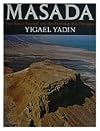
This is another book on Masada for young readers maybe middle school. Although I will say that this book is basically a small textbook which is about the archaeological dig they did several decades ago which allowed them to piece to piece together the history of Masada and that includes what happened to the Jews inside (and how they died). I think this is an interesting way to get kids into archaeology as well as it's much more interesting as it also says what it is like to be on a dig. If show more anyone has a book for adults on Masada, please let me know! show less

This book was recommended by a friend while on a visit to Masada in Israel. I added the book to my list and finally checked it out from the library, a year after my trip. I'm not sure what I was expecting, but this read and looked like a textbook, detailing the initial archeological dig of Masada several decades ago. There are many fantastic photos, and all major discoveries of the dig are highlighted, such as scrolls, coins, building structures, etc. It was also very interesting to read of show more the experiences of the excavators, all of whom were unpaid volunteers, very few with archeology experience. While this book was very informative, I would only recommend it to several specific groups of people - archeology enthusiasts, those interested in Biblical or Jewish history, and those traveling to Masada. The book is out of print and a little tough to find, so check with your local library first. show less
Lists
THE WAR ROOM (1)
Awards

You May Also Like


Associated Authors
Statistics
- Works
- 52
- Also by
- 5
- Members
- 1,681
- Popularity
- #15,291
- Rating
- 3.9
- Reviews
- 17
- ISBNs
- 45
- Languages
- 5