
Hershel Shanks (1930–2021)
Author of Understanding the Dead Sea Scrolls: A Reader from the Biblical Archaeology Review
About the Author
Hershel Shanks is the founder and editor-in-chief of Biblical Archaeology Review, Bible Review, and Archaeology Odyssey.
Image credit: Courtesy of the Biblical Archaeology Society
Series
Works by Hershel Shanks
Understanding the Dead Sea Scrolls: A Reader from the Biblical Archaeology Review (1992) — Editor — 737 copies, 6 reviews
The Dead Sea Scrolls After Forty Years: Symposium at the Smithsonian Institution, October 27, 1990 (1991) 705 copies, 5 reviews
Ancient Israel: From Abraham to the Roman Destruction of the Temple (1988) — Editor — 446 copies, 1 review
The Brother of Jesus: The Dramatic Story & Meaning of the First Archaeological Link to Jesus & His Family (2003) — Author — 391 copies, 1 review
Christianity and Rabbinic Judaism: A Parallel History of Their Origins and Early Development (1992) — Editor — 244 copies, 1 review
The Rise of Ancient Israel: Symposium at the Smithsonian Institution October 26, 1991 (1992) 76 copies
Archaeology and the Bible, Volume Two: Archaeology in the World of Herod, Jesus and Paul , The Best of BAR (Biblical Archaeology Review) (1990) 32 copies
Archaeology and the Bible, Volume One: Early Israel: The Best of BAR (Biblical Archaeology Review) (1990) 22 copies, 1 review
Aspects of Monotheism: How God Is One : Symposium at the Smithsonian Institution, October 19, 1996 (1997) — Editor — 19 copies
40 by 40: Forty Groundbreaking Articles from Forty Years of Biblical Archaeology Review (2015) 18 copies
Cancel My Subscription: The Best of Queries and Comments from Letters to Biblical Archaeology Review (1995) 8 copies, 1 review
Archaeology and the Bible: The Best of Bar. Volume one: Early Israel. Volume two: Archaeology in the World of Herod, Jesus and Paul (1990) 7 copies
BAR 19:05 (Sep/Oct 1993) 6 copies
BAR 19:04 (July/Aug 1993) 6 copies
BAR 17:03 (May/June 1991) 6 copies
BAR 23:05 (Sep/Oct 1997) 6 copies
BAR 12:05 (Sep/Oct 1986) 5 copies
BAR 15:03 (May/June 1989) 5 copies
BAR 12:04 (July/Aug 1986) 5 copies
BAR 12:06 (Nov/Dec 1986) 5 copies
BAR 06:02 (March/April 1980) 5 copies
BAR 14:02 (March/April 1988) 5 copies
BAR 14:06 (Nov/Dec 1988) 5 copies
BAR 18:05 (Sep/Oct 1992) 5 copies
BAR 14:03 (May/June 1988) 5 copies
BAR 17:06 (Nov/Dec 1991) 5 copies
BAR 20:05 (Sep/Oct 1994) 5 copies
BAR 17:05 (Sep/Oct 1991) 5 copies
BAR 20:03 (May/June 1994) 5 copies
BAR 22:02 (March/April 1996) 5 copies
BAR 31:06 (Nov/Dec 2005) 5 copies
BAR 31:01 (Jan/Feb 2005) 5 copies
BAR 29:06 (Nov/Dec 2003) 5 copies
BAR 29:03 (May/June 2003) 5 copies
BAR 29:02 (March/April 2003) 5 copies
BAR 18:02 (March/April 1992) 5 copies
BAR 20:01 (Jan/Feb 1994) 5 copies
BAR 27:04 (July/Aug 2001) 5 copies
BAR 24:05 (Sep/Oct 1998) 5 copies
BAR 23:04 (July/Aug 1997) 5 copies
BAR 23:03 (May/June 1997) 5 copies
BAR 21:02 (March/April 1995) 5 copies
BAR 19:03 (May/June 1993) 5 copies
BAR 18:04 (July/Aug 1992) 5 copies
BAR 18:03 (May/June 1992) 5 copies
BAR 16:04 (July/Aug 1990) 5 copies
BAR 18:06 (Nov/Dec 1992) 5 copies
BAR 22:01 (Jan/Feb 1996) 5 copies
BAR 19:02 (March/April 1993) 5 copies
BAR 29:04 (July/Aug 2003) 5 copies
BAR 23:06 (Nov/Dec 1997) 4 copies
BAR 09:02 (March/April 1983) 4 copies
BAR 27:01 (Jan/Feb 2001) 4 copies
BAR 26:02 (March/April 2000) 4 copies
BAR 09:06 (Nov/Dec 1983) 4 copies
BAR 10:01 (Jan/Feb 1984) 4 copies
BAR 24:06 (Nov/Dec 1998) 4 copies
BAR 24:04 (July/Aug 1998) 4 copies
BAR 11:03 (May/June 1985) 4 copies
BAR 11:05 (Sep/Oct 1985) 4 copies
BAR 24:03 (May/June 1998) 4 copies
BAR 12:01 (Jan/Feb 1986) 4 copies
BAR 12:02 (March/April 1986) 4 copies
BAR 12:03 (May/June 1986) 4 copies
BAR 21:01 (Jan/Feb 1995) 4 copies
BAR 16:02 (March/April 1990) 4 copies
BAR 15:06 (Nov/Dec 1989) 4 copies
BAR 15:04 (July/Aug 1989) 4 copies
BAR 17:04 (July/Aug 1991) 4 copies
BAR 20:04 (July/Aug 1994) 4 copies
BAR 13:01 (Jan/Feb 1987) 4 copies
BAR 22:05 (Sep/Oct 1996) 4 copies
BAR 13:06 (Nov/Dec 1987) 4 copies
BAR 13:04 (July/Aug 1987) 4 copies
BAR 13:03 (May/June 1987) 4 copies
BAR 13:02 (March/April 1987) 4 copies
BAR 08:06 (Nov/Dec 1982) 4 copies
BAR 22:06 (Nov/Dec 1996) 4 copies
BAR 30:04 (July/Aug 2004) 4 copies
BAR 15:05 (Sep/Oct 1989) 4 copies
BAR 21:06 (Nov/Dec 1995) 4 copies
BAR 17:01 (Jan/Feb 1991) 4 copies
BAR 23:01 (Jan/Feb 1997) 4 copies
BAR 21:03 (May/June 1995) 4 copies
BAR 20:02 (March/April 1994) 4 copies
BAS Feminist Approaches to the Bible 4 copies
BAR 31:05 (Sep/Oct 2005) 4 copies
BAR 31:02 (March/April 2005) 4 copies
BAR 22:03 (May/June 1996) 4 copies
BAR 29:01 (Jan/Feb 2003) 4 copies
BAR 30:03 (May/June 2004) 3 copies
Biblical Archaeology Review March / April 2007 Volume 33, No.2 Why Moses' Serpent was Destroyed (2007) 3 copies
BAR 20:06 (Nov/Dec 1994) 3 copies
Jerusalem Forgery Conference 3 copies
BAR 28:04 (July/Aug 2002) 3 copies
BAR 28:01 (Jan/Feb 2002) 3 copies
BAR 26:01 (Jan/Feb 2000) 3 copies
BAR 30:01 (Jan/Feb 2004) 3 copies
BAR 30:06 (Nov/Dec 2004) 3 copies
BAR 25:05 (Sep/Oct 1999) 3 copies
BAR 25:04 (July/Aug 1999) 3 copies
BAR 25:01 (Jan/Feb 1999) 3 copies
BAR 30:02 (March/April 2004) 3 copies
BAR 26:03 (May/June 2000) 3 copies
BAR 29:05 (Sep/Oct 2003) 3 copies
BAR 28:05 (Sep/Oct 2002) 3 copies
BAR 27:02 (March/April 2001) 3 copies
BAR 27:03 (May/June 2001) 3 copies
BAR 24:01 (Jan/Feb 1998) 3 copies
BAR 27:05 (Sep/Oct 2001) 3 copies
BAR 28:06 (Nov/Dec 2002) 3 copies
BAR 28:02 (March/April 2002) 3 copies
BAR 06:01 (Jan/Feb 1980) 3 copies
BAR 07:05 (Sep/Oct 1981) 3 copies
BAR 09:04 (July/Aug 1983) 3 copies
BAR 03:04 (December 1977) 3 copies
BAR 04:01 (March 1978) 3 copies
BAR 09:03 (May/June 1983) 3 copies
BAR 09:01 (Jan/Feb 1983) 3 copies
BAR 08:05 (Sep/Oct 1982) 3 copies
BAR 04:02 (June 1978) 3 copies
BAR 08:04 (July/Aug 1982) 3 copies
BAR 08:03 (May/June 1982) 3 copies
BAR 08:02 (March/April 1982) 3 copies
Archaeology Odyssey 01:01r 3 copies
BAR 07:06 (Nov/Dec 1981) 3 copies
BAR 07:04 (July/Aug 1981) 3 copies
BAR 10:02 (March/April 1984) 3 copies
BAR 07:03 (May/June 1981) 3 copies
BAR 07:02 (March/April 1981) 3 copies
BAR 04:03 (Sep/Oct 1978) 3 copies
BAR 07:01 (Jan/Feb 1981) 3 copies
BAR 04:04 (Nov/Dec 1978) 3 copies
BAR 06:06 (Nov/Dec 1980) 3 copies
BAR 06:05 (Sep/Oct 1980) 3 copies
BAR 06:04 (July/Aug 1980) 3 copies
BAR 06:03 (May/June 1980) 3 copies
BAR 05:01 (Jan/Feb 1979) 3 copies
BAR 05:02 (March/April 1979) 3 copies
BAR 05:03 (May/June 1979) 3 copies
BAR 05:04 (July/Aug 1979) 3 copies
BAR 05:05 (Sep/Oct 1979) 3 copies
BAR 09:05 (Sep/Oct 1983) 3 copies
BAR 10:03 (May/June 1984) 3 copies
BAR 02:04 (December 1976) 3 copies
BAR 16:01 (Jan/Feb 1990) 3 copies
BAR 01:01 (March 1975) 3 copies
BAR 01:02 (June 1975) 3 copies
BAR 01:03 (September 1975) 3 copies
BAR 10:04 (July/Aug 1984) 3 copies
BAR 02:01 (March 1976) 3 copies
BAR 02:02 (June 1976) 3 copies
BAR 02:03 (September 1976) 3 copies
BAR 01:04 (December 1975) 3 copies
BAR 03:01 (March 1977) 3 copies
BAR 11:06 (Nov/Dec 1985) 3 copies
BAR 10:05 (Sep/Oct 1984) 3 copies
BAR 03:03 (September 1977) 3 copies
BAR 03:02 (June 1977) 3 copies
BAR 05:06 (Nov/Dec 1979) 3 copies
BAR 10:06 (Nov/Dec 1984) 3 copies
BAR 11:01 (Jan/Feb 1985) 3 copies
BAR 11:02 (March/April 1985) 3 copies
Archaeology odyssey. May/June 2004 2 copies
Archaeology odyssey. July/Aug. 2004 2 copies
BAR 25:03 (May/June 1999) 2 copies
Archaeology odyssey. Jan./Feb. 2004 2 copies
Archaeology odyssey. Nov./Dec. 2003 2 copies
Archaeology odyssey. Fall 1998 2 copies
BAR 30:05 (Sep/Oct 2004) 2 copies
Archaeology odyssey. Winter 1999 2 copies
Archaeology odyssey. Sept./Oct. 2004 2 copies
BR : Bible review. Dec. 2000 1 copy
Biblical Archaeology Review -- 8 issues (Vol Vi No. 4; Vol X No. 5;Vol 20 No 6; Vol 21 Nos 1-5 1 copy
BR : Bible review. Dec. 1998 1 copy
BR : Bible review. June 2000 1 copy
BR : Bible review. Dec. 2003 1 copy
BR : Bible review. Oct. 1999 1 copy
BR 19:06 1 copy
Eric The Little Echidna 1 copy
Biblical Archaeology Review, May/June 1979 (The Prophets As Revolutionaries), Volume V, Number 3 (1979) 1 copy
BR : Bible review. Aug. 2000 1 copy
Bible Review February 1994 1 copy
Bible Review August 1996 1 copy
Archaeology Odyssey 1 copy
Bible Review December 1997 1 copy
Bible Review October 1997 1 copy
Bible Review August 1997 1 copy
Bible Review June 1997 1 copy
Bible Review April 1997 1 copy
Bible Review February 1997 1 copy
Bible Review December 1996 1 copy
Bible Review October 1996 1 copy
Bible Review June 1996 1 copy
Bible Review April 1996 1 copy
Bible Review February 1996 1 copy
Bible Review December 1995 1 copy
Bible Review June 1995 1 copy
Bible Review April 1995 1 copy
Bible Review February 1995 1 copy
Bible Review October 1994 1 copy
Bible Review December 1994 1 copy
Bible Review August 1994 1 copy
Bible Review June 1994 1 copy
Bible Review April 1994 1 copy
Dead Sea Scrolls 1 copy
Biblical Archaeology Review, November/December 2012, Volume 38, Number 6 (Male or Female At Kuntillet 'Ajrud?) (2012) 1 copy
Biblical Archaeology Review, July/August 2012, Volume 38, Number 4 (Brother of Jesus Inscription is Authentic!) (2012) 1 copy
Review of Study Bibles 1 copy
The Book Of Numbers 1 copy
Tagged
Common Knowledge
- Canonical name
- Shanks, Hershel
- Other names
- Mikaya, Adam
- Birthdate
- 1930-03-08
- Date of death
- 2021-02-05
- Gender
- male
- Education
- Harvard Law School (LL.B|1956)
Columbia University (MA|1953)
Haverford College (BA|1952) - Occupations
- archaeologist
editor
lawyer - Organizations
- Biblical Archaeology Society
Biblical Archaeology Review
United States Department of Justice, Civil Division
Glassie, Pewett, Dudley, Beebe and Shanks - Relationships
- Alexander, Elizabeth Shanks (daughter)
- Cause of death
- COVID-19 (complications)
- Nationality
- USA
- Birthplace
- Sharon, Pennsylvania, USA
- Places of residence
- Washington, D.C., USA
- Place of death
- Washington, D.C., USA
- Associated Place (for map)
- USA
Members
Reviews
The Brother of Jesus: The Dramatic Story And Significance Of The First Archaeological Link To Jesus And His Family by Hershel Shanks
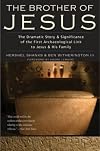
This is really two books in one, and both are excellent. Hershel Shanks (editor of my favorite mag, Biblical Archaeology Review) tells the story of the discovery of the James ossuary, and Ben Witherington describes the person both scholars believe this limestone burial box belonged to: James, the brother of Jesus. I’ve been following Shanks’ arguments in BAR over the years, so I already know he’s a proponent of the ossuary’s authenticity.
The box itself is inscribed “James, son of show more Joseph, brother of Jesus.” The Bible agrees: Jesus’ father was Joseph and one brother was James. The box was discovered in the collection of a private collector, who had no recollection of its origin … and no idea of its potentially incredible value. It’s dated pretty accurately to the first century, so while we cannot say with any certainty that it’s authentic to THE Jesus, both authors are convinced it’s an authentic first-century bone box.
This practice of removing the bones from the tomb and burying them again in a small box was practiced only for a short time, from about 20 BC to 70 AD. This, too, points to the period of Jesus. But what are the odds that this box once held the bones of the brother of Jesus? All three of these names—Jesus (Yeshua), James (Ya’akov), and Joseph (Yosef)—were quite common back then, but it’s still possible to estimate the odds. One estimate is that about 20 such James’s (with the indicated brother and father) would have lived in that period; another estimate is between 2 and 4. But how many would have a brother so famous that his brother’s name would be indicated on his ossuary? That would be a rarity. If this is the brother of the “real” Jesus, then, as Shanks posits, this little box may be “the most astonishing find in the history of archaeology.”
Then Witherington takes over halfway through the book to tell us about James, the brother of Jesus. Who he was, what he taught, how he died. While Peter and Paul may have become the most famous apostles, James was in reality probably the most important after the death of Jesus. He was appointed as the head of the Jerusalem church, the mother church.
Among other things, Witherington goes head to head with the Catholic doctrine of Mary’s perpetual virginity. While the Bible lists several brothers of Jesus, Catholics maintain that Mary remained a virgin after Jesus was born, and many believe the listed “brothers” are really just cousins. This idea was promoted by St. Jerome. Witherington quotes John P. Meier, a leading Catholic New Testament scholar, as saying that if the James ossuary is authentic, it is probably the last nail in the coffin of Jerome’s view of the brothers of Jesus being cousins.
I’ve always enjoyed the writings of both these authors, and this book doesn’t disappoint. show less
The box itself is inscribed “James, son of show more Joseph, brother of Jesus.” The Bible agrees: Jesus’ father was Joseph and one brother was James. The box was discovered in the collection of a private collector, who had no recollection of its origin … and no idea of its potentially incredible value. It’s dated pretty accurately to the first century, so while we cannot say with any certainty that it’s authentic to THE Jesus, both authors are convinced it’s an authentic first-century bone box.
This practice of removing the bones from the tomb and burying them again in a small box was practiced only for a short time, from about 20 BC to 70 AD. This, too, points to the period of Jesus. But what are the odds that this box once held the bones of the brother of Jesus? All three of these names—Jesus (Yeshua), James (Ya’akov), and Joseph (Yosef)—were quite common back then, but it’s still possible to estimate the odds. One estimate is that about 20 such James’s (with the indicated brother and father) would have lived in that period; another estimate is between 2 and 4. But how many would have a brother so famous that his brother’s name would be indicated on his ossuary? That would be a rarity. If this is the brother of the “real” Jesus, then, as Shanks posits, this little box may be “the most astonishing find in the history of archaeology.”
Then Witherington takes over halfway through the book to tell us about James, the brother of Jesus. Who he was, what he taught, how he died. While Peter and Paul may have become the most famous apostles, James was in reality probably the most important after the death of Jesus. He was appointed as the head of the Jerusalem church, the mother church.
Among other things, Witherington goes head to head with the Catholic doctrine of Mary’s perpetual virginity. While the Bible lists several brothers of Jesus, Catholics maintain that Mary remained a virgin after Jesus was born, and many believe the listed “brothers” are really just cousins. This idea was promoted by St. Jerome. Witherington quotes John P. Meier, a leading Catholic New Testament scholar, as saying that if the James ossuary is authentic, it is probably the last nail in the coffin of Jerome’s view of the brothers of Jesus being cousins.
I’ve always enjoyed the writings of both these authors, and this book doesn’t disappoint. show less
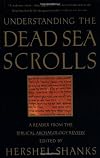
A good collection of articles from the magazines which lobbied for the full publication of the Dead Sea Scrolls. (Scholars dragged their feet not out of any religious cabal but to carve out little exclusive professional fiefdoms for themselves and their favored students: anyone who wanted to examine these texts had petition them and thus they could set themselves up as arbiters and experts. Very professionally (and historically) selfish.)
The scrolls have now been fully published in the show more Discoveries in the Judean Desert series, in microfilm, in at least 2 competing CD-ROM versions, and are fully represented in current translations. Anyone may read them and see there is nothing inimical to Christianity (unless you were is not aware that 'messiah' was a Jewish concept that came before Christianity...)
Nearly all of the scrolls pre-date the lifetime of Jesus. They are not Christian but Jewish (although exactly what sort of Judaism is fiercely debated.)
This collection of articles by prominent scholars and specialists follows some of the debates about the scrolls and their era. It is a popular book but archeologists and scholars turn to Shanks' magazines for the 'short versions' of their colleagues' works and discoveries. (For contrast, pick up a magazine like "Near Eastern Archaeology" which has the full, technical versions of similar work.)
Although a bit of a time capsule, this book is a good introduction to the world of Dead Sea Scroll scholarship which dates to shortly after their full publication (1991, if memory serves.)
-Kushana show less
The scrolls have now been fully published in the show more Discoveries in the Judean Desert series, in microfilm, in at least 2 competing CD-ROM versions, and are fully represented in current translations. Anyone may read them and see there is nothing inimical to Christianity (unless you were is not aware that 'messiah' was a Jewish concept that came before Christianity...)
Nearly all of the scrolls pre-date the lifetime of Jesus. They are not Christian but Jewish (although exactly what sort of Judaism is fiercely debated.)
This collection of articles by prominent scholars and specialists follows some of the debates about the scrolls and their era. It is a popular book but archeologists and scholars turn to Shanks' magazines for the 'short versions' of their colleagues' works and discoveries. (For contrast, pick up a magazine like "Near Eastern Archaeology" which has the full, technical versions of similar work.)
Although a bit of a time capsule, this book is a good introduction to the world of Dead Sea Scroll scholarship which dates to shortly after their full publication (1991, if memory serves.)
-Kushana show less
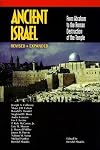
A concise overview of the modern scholastic understanding of Israel's history. Introduces a lot of the major arguments along with their evidences and reasons that bring history, bible, and scholarship alive. Many helpful and useful notes and references. Entertaining, educational, and thought-provoking. Written in easy-to-understand language. Ideal for anyone just getting their feet wet or who really want to dig in. The one drawback is the liberal slant that permeates the text and dubiously show more colors some of the conclusions. show less
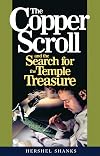
NCLA Review - Hershel Shanks, editor of Biblical Archaeology Review, tells the story of the only one of the Dead Sea Scrolls written on copper. This Copper Scroll purports to describe what happened to all the silver, gold, and other treasures removed from the Temple in Jerusalem prior to its destruction in the year 70. These treasures, according to the Scroll, are buried in 64 different locations in the general vicinity of Jerusalem. Is this for real or is this an interesting piece of show more folklore? Shanks says that the majority of Dead Sea Scrolls experts, he included, take it seriously. This small, copiously-illustrated book tells about the discovery, translation, and attempts—so far unsuccessful—to find this hidden treasure. If your library already contains a translation of all the scrolls—those by Garcia Martinez, Vermes, or Wise et al. for example—you may wish to add The Copper Scroll. It may make you grab your pick and shovel and head for Israel! Rating: 2—RO show less
Awards

You May Also Like


Associated Authors
Statistics
- Works
- 366
- Members
- 4,723
- Popularity
- #5,333
- Rating
- 3.6
- Reviews
- 24
- ISBNs
- 81
- Languages
- 5