

Ann Zwinger (1925–2014)
Author of Run, River, Run: A Naturalist's Journey Down One of the Great Rivers of the West
About the Author
Naturalist, travel writer and artist Ann Zwinger has produced such books as The Nearsighted Naturalist, Women in the Wilderness (co-authored with her daughter, Susan), and Downcanyon: A Naturalist Explores the Colorado River Through the Grand Canyon (which won the Western States Book Award for show more Creative Nonfiction). (Bowker Author Biography) show less
Image credit: Grand Canyon Field School
Works by Ann Zwinger
Downcanyon: A Naturalist Explores the Colorado River through the Grand Canyon (1995) 72 copies, 1 review
The Mysterious Lands: A Naturalist Explores the Four Great Deserts of the Southwest (1989) 66 copies
A Desert Country Near the Sea: A Natural History of the Cape Region of Baja California (1983) 33 copies
Colorado 3 copies
Associated Works
Sisters of the Earth: Women's Prose and Poetry About Nature (1991) — Contributor — 442 copies, 5 reviews
Tagged
Common Knowledge
- Legal name
- Zwinger, Ann Haymond
- Birthdate
- 1925-03-12
- Date of death
- 2014-08-30
- Gender
- female
- Education
- Wellesley College (BA|Art History|1946)
Indiana University (MA|Art History|1950) - Occupations
- natural history writer
Professor of Southwest Studies and English, Colorado College, Colorado Springs, Colorado, USA - Organizations
- Colorado Nature Conservancy (member emeritus)
The Orion Society (director)
John Burroughs Association - Awards and honors
- Western Literature Association's Distinguished Achievement Award (1991)
John Burroughs Medal, John Burroughs Association (1976) - Short biography
- Co-author with Edwin Way Teale of A Conscious Stillness: Two Naturalists on Thoreau's Rivers
- Nationality
- USA
- Birthplace
- Muncie, Indiana, USA
- Places of residence
- Muncie, Indiana, USA
Colorado Springs, Colorado, USA - Place of death
- Portland, Oregon, USA
- Associated Place (for map)
- USA
Members
Reviews
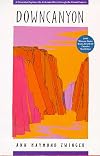
Downcanyon is a wonderfully illustrated down-the-river adventure, but I would suggest using it as more of a reference book or guide than a white-rapids read. The map is fascinating and it was certainly fun to read the travels along it. But, my favorite parts were the rest areas, the stopping for the night. Zwinger took that opportunity to focus on the flowers, the reptiles, and the animals and the rock formations. It is here that Zwinger zeros in on the very nature of things (the foraging show more and nesting of bumblebees, for example).
Another pleasing point to Downcanyon was the addition of quotes from other explorers before each chapter. It's as if Zwinger is giving a nod to those who went down the Colorado with far less in every sense. Less equipment, less experience, less education. Those who went before were more daring, more adventurous, and without a doubt, put themselves in far more danger. Downcanyon is the exploration of the Colorado River for Zwinger and Zwinger alone. show less
Another pleasing point to Downcanyon was the addition of quotes from other explorers before each chapter. It's as if Zwinger is giving a nod to those who went down the Colorado with far less in every sense. Less equipment, less experience, less education. Those who went before were more daring, more adventurous, and without a doubt, put themselves in far more danger. Downcanyon is the exploration of the Colorado River for Zwinger and Zwinger alone. show less
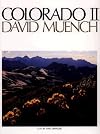
Colorado II by David Muench and Ann Zwinger.
BIBLIOGRAPHIC DETAILS:
* 10/1/1987; PUBLISHER: Graphic Arts Center Publishing Company; ISBN: 0932575315 [9780932575319]; PAGES: 160; Unabridged.)
Digital: No.
Audiobook: No.
Film or tv: No.
SERIES:
No
MAJOR CHARACTERS:
N/A
SUMMARY/ EVALUATION:
How I picked it: This book waved at me from a shelf in the Friends of the Library area of the Huntington Beach Public Library. I’d been hankering to read about Colorado, after such a hot and humid California summer, show more and was thrilled when I spied this --all the more thrilled to see David Muench in bold letters beneath the title!
What it’s about: Colorado’s landscape.
What I thought: David Muench is an excellent photographer! I can’t recall when I first encountered his images—Arizona Highways back in the '70's? How appropriate that he is from Santa Barbara, where I attended photography school (Brooks Institute of Photographic Arts and Sciences). I don’t think he was still there by the time I got there though--and I don't mean to imply he was ever at Brooks Institute. I think he learned photography elsewhere.
The text, by Ann Zwinger, is equally enthralling. She anthropomorphizes delightfully and has an extremely rich vocabulary.
AUTHOR:
David Muench:
From Wikipedia: “Muench was born on June 25, 1936 in Santa Barbara, California. A freelance photographer since the 1950s, his formal schooling includes the Rochester Institute of Technology, Rochester, New York, The University of California at Santa Barbara and the Art Center School of Design, Los Angeles.[2]
His first Arizona Highways cover was published in January 1955 at the age of 18,[3] and he has continued to work with the magazine since then.[4] In December 2015, to celebrate seven decades of collaboration, Arizona Highways dedicated an entire issue of the magazine to Muench, the first time they had done so for a single person.[5]
At the recommendation of Ansel Adams, more than 200 images by Muench are archived in the collection of the Center for Creative Photography.[6] Although he has done a few exhibits,[7] Muench chose the coffee table book as the main vehicle for his photography. He is the author of more than 60 books.[8][9]
In 1975, Muench was commissioned by the National Park Service to photograph 33 large murals on the Lewis and Clark Expedition for the Jefferson National Expansion Memorial
in St. Louis, Missouri, including 350 smaller photographs to accompany the murals.[10] In 2000, Muench received the National Parks Conservation Association's Robin W. Winks Award for Enhancing Public Understanding of National Parks.[11]”
Ann Zwinger:
From Wikipedia: “Ann Haymond Zwinger was born March 12, 1925, in Muncie, Indiana, the daughter of William and Ann Haymond. While young, she lived along the White River. She studied art history and was awarded two degrees, an A.B. in Arts in 1946 by Wellesley College with the designation "Wellesley College Scholar," now considered roughly equivalent to "cum laude," and an A.M. in Fine Arts by Indiana University in 1950. She married Herman H. Zwinger, a pilot, in 1952.[1][2]
In 1960, Zwinger moved to Colorado Springs with her husband and began to study Western ecology. In 1970, her first book was published, Beyond the Aspen Grove. She and co-author Beatrice Willard were finalists for the 1973 National Book Award in science for Land Above the Trees. Run, River, Run was another distinguished book published in 1975. It received glowing reviews by The New York Times, the John Burroughs Memorial Association Gold Medal for a distinguished contribution in natural history,[3][4] and the Friends of American Writers Award for non-fiction.[citation needed] Her more than 20 books on natural history often featured her own illustrations.[5]
She taught Southwest Studies and English at Colorado College.[1][2]
Zwinger died in Portland, Oregon on August 30, 2014.[1][2]”
NARRATOR:
N/A
GENRE:
Coffee table art
LOCATIONS:
Colorado State
TIME FRAME:
1980’s
SUBJECTS:
Colorado landscapes and seasons
SAMPLE QUOTATION:
“Evening walking in the San Juaquin Mountains, we have walked for hours. Now we rest, looking down into the valley from where we have come. Mists rise from the ground, drifting in from the east, leaning to the southeast, curling in from the west, a ballet line that swirls over the valley floor, splits, gathers again, and flounces center stage front. Every time the line splits again, it meets in upward helices. The diaphanous traces form, seethe, oppose, coalesce, in endless motion. As the evening darkens, mists settle, drift downward like motes of dust, wraiths of summer, losing definition in the dusk.
I lean back against my propped up backpack, food untouched in my lap. The clouds are so spectacular, so constantly changing that I can’t be bothered to eat. They form a bank with sweeping upward lines, the top cream and apricot, crowned with one great dome, lit from within, a shape that reminds me of the Greek omphalos at Delphi, the navel of the world. One cloud levels off at the top into a great anvil. Along the rising column, whisps of moisture tat lacey edges.”
RATING:
5 stars.
STARTED READING – FINISHED READING
8-22-2022 to 8-29-2022 show less
BIBLIOGRAPHIC DETAILS:
* 10/1/1987; PUBLISHER: Graphic Arts Center Publishing Company; ISBN: 0932575315 [9780932575319]; PAGES: 160; Unabridged.)
Digital: No.
Audiobook: No.
Film or tv: No.
SERIES:
No
MAJOR CHARACTERS:
N/A
SUMMARY/ EVALUATION:
How I picked it: This book waved at me from a shelf in the Friends of the Library area of the Huntington Beach Public Library. I’d been hankering to read about Colorado, after such a hot and humid California summer, show more and was thrilled when I spied this --all the more thrilled to see David Muench in bold letters beneath the title!
What it’s about: Colorado’s landscape.
What I thought: David Muench is an excellent photographer! I can’t recall when I first encountered his images—Arizona Highways back in the '70's? How appropriate that he is from Santa Barbara, where I attended photography school (Brooks Institute of Photographic Arts and Sciences). I don’t think he was still there by the time I got there though--and I don't mean to imply he was ever at Brooks Institute. I think he learned photography elsewhere.
The text, by Ann Zwinger, is equally enthralling. She anthropomorphizes delightfully and has an extremely rich vocabulary.
AUTHOR:
David Muench:
From Wikipedia: “Muench was born on June 25, 1936 in Santa Barbara, California. A freelance photographer since the 1950s, his formal schooling includes the Rochester Institute of Technology, Rochester, New York, The University of California at Santa Barbara and the Art Center School of Design, Los Angeles.[2]
His first Arizona Highways cover was published in January 1955 at the age of 18,[3] and he has continued to work with the magazine since then.[4] In December 2015, to celebrate seven decades of collaboration, Arizona Highways dedicated an entire issue of the magazine to Muench, the first time they had done so for a single person.[5]
At the recommendation of Ansel Adams, more than 200 images by Muench are archived in the collection of the Center for Creative Photography.[6] Although he has done a few exhibits,[7] Muench chose the coffee table book as the main vehicle for his photography. He is the author of more than 60 books.[8][9]
In 1975, Muench was commissioned by the National Park Service to photograph 33 large murals on the Lewis and Clark Expedition for the Jefferson National Expansion Memorial
in St. Louis, Missouri, including 350 smaller photographs to accompany the murals.[10] In 2000, Muench received the National Parks Conservation Association's Robin W. Winks Award for Enhancing Public Understanding of National Parks.[11]”
Ann Zwinger:
From Wikipedia: “Ann Haymond Zwinger was born March 12, 1925, in Muncie, Indiana, the daughter of William and Ann Haymond. While young, she lived along the White River. She studied art history and was awarded two degrees, an A.B. in Arts in 1946 by Wellesley College with the designation "Wellesley College Scholar," now considered roughly equivalent to "cum laude," and an A.M. in Fine Arts by Indiana University in 1950. She married Herman H. Zwinger, a pilot, in 1952.[1][2]
In 1960, Zwinger moved to Colorado Springs with her husband and began to study Western ecology. In 1970, her first book was published, Beyond the Aspen Grove. She and co-author Beatrice Willard were finalists for the 1973 National Book Award in science for Land Above the Trees. Run, River, Run was another distinguished book published in 1975. It received glowing reviews by The New York Times, the John Burroughs Memorial Association Gold Medal for a distinguished contribution in natural history,[3][4] and the Friends of American Writers Award for non-fiction.[citation needed] Her more than 20 books on natural history often featured her own illustrations.[5]
She taught Southwest Studies and English at Colorado College.[1][2]
Zwinger died in Portland, Oregon on August 30, 2014.[1][2]”
NARRATOR:
N/A
GENRE:
Coffee table art
LOCATIONS:
Colorado State
TIME FRAME:
1980’s
SUBJECTS:
Colorado landscapes and seasons
SAMPLE QUOTATION:
“Evening walking in the San Juaquin Mountains, we have walked for hours. Now we rest, looking down into the valley from where we have come. Mists rise from the ground, drifting in from the east, leaning to the southeast, curling in from the west, a ballet line that swirls over the valley floor, splits, gathers again, and flounces center stage front. Every time the line splits again, it meets in upward helices. The diaphanous traces form, seethe, oppose, coalesce, in endless motion. As the evening darkens, mists settle, drift downward like motes of dust, wraiths of summer, losing definition in the dusk.
I lean back against my propped up backpack, food untouched in my lap. The clouds are so spectacular, so constantly changing that I can’t be bothered to eat. They form a bank with sweeping upward lines, the top cream and apricot, crowned with one great dome, lit from within, a shape that reminds me of the Greek omphalos at Delphi, the navel of the world. One cloud levels off at the top into a great anvil. Along the rising column, whisps of moisture tat lacey edges.”
RATING:
5 stars.
STARTED READING – FINISHED READING
8-22-2022 to 8-29-2022 show less
Lists
Awards


You May Also Like


Associated Authors
Statistics
- Works
- 16
- Also by
- 5
- Members
- 607
- Popularity
- #41,416
- Rating
- 4.1
- Reviews
- 2
- ISBNs
- 39
- Favorited
- 4