
Brenda Peynado
Author of The Rock Eaters: Stories
Works by Brenda Peynado
Associated Works
Some of the Best from Tor.com: 2019 Edition: A Tor.com Original (2020) — Contributor — 157 copies, 3 reviews
Tagged
Common Knowledge
Members
Reviews
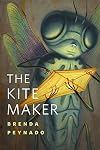
The Kite Maker by Dominican American writer Brenda Peynado is marketed as a novella, but at only 28 pages, I would call it a short story. Be that as it may. The story works as a metaphorical comment on racism and succinctly accomplishes what other stories have taken much longer to do. Our narrator makes old-fashioned kites that only alien refugees, called dragonflies, appreciate. The fragile, passive aliens are easy targets for abuse by humans. The story asks how you can make amends for show more wrongs the victims do not resent. The first few sentences establish the tone: “You’ve never seen a kite fly until you’ve seen an alien fly one. Dragonfly wings on their backs trembling with anticipation, these deep sighs from their purple mouths as they’re unrolling the spool. They run with their slow, spindly legs to let the kite pick up speed.” show less
4 Stars
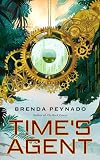
Truly original and truly steeped in speculative science.
Here, this is a future where small pockets of worlds exist, each with their own ecosystem and time dilation (either super slow or super fast compared to current reality). They represent every hope and opportunity to make life on earth better, learning about old civilizations, discovering new flora and fauna, and in turn, seizing a chance on renewable resources.
Following scientist Raquel, who is part of the venerated Institute show more that spearheads exploring these wondrous worlds, she makes one small mistake, setting off a chain reaction where every good intention goes horribly wrong.
In this alternate reality, Peynado unfurls a grim outlook on corporate greed and voracious negligent consumerism that is an endless cycle of depletion and enslavement to the big machine that keeps things turning. As Raquel tries to right her wrongs in a world that is hostile and hopeless, how Peynado brings forth Raquel’s enlightenment and ultimately, how she tries to resolve her issues was actually quite ingenious.
Overall, this story wasn’t an easy or happy read. It is seriously mired with tech, AI, scientific advancements, and unfathomable repercussions of all these small alternate realities that are readily accessible and exploitable. However, Peynado surprised me through Raquel’s grief and guilt as she offers her protagonist a miniscule chance of healing redemption through her drive for an unobtainable utopia, forcing her to make a grand sacrifice.
Again, this is far from a tidy HEA, but it made me think hard, and I only hope that Raquel’s offering was enough to keep a part of the universe whole and untainted.
Thank you to the author and Tordotcom via NetGalley for a copy in exchange for an honest review. show less
Truly original and truly steeped in speculative science.
Here, this is a future where small pockets of worlds exist, each with their own ecosystem and time dilation (either super slow or super fast compared to current reality). They represent every hope and opportunity to make life on earth better, learning about old civilizations, discovering new flora and fauna, and in turn, seizing a chance on renewable resources.
Following scientist Raquel, who is part of the venerated Institute show more that spearheads exploring these wondrous worlds, she makes one small mistake, setting off a chain reaction where every good intention goes horribly wrong.
In this alternate reality, Peynado unfurls a grim outlook on corporate greed and voracious negligent consumerism that is an endless cycle of depletion and enslavement to the big machine that keeps things turning. As Raquel tries to right her wrongs in a world that is hostile and hopeless, how Peynado brings forth Raquel’s enlightenment and ultimately, how she tries to resolve her issues was actually quite ingenious.
Overall, this story wasn’t an easy or happy read. It is seriously mired with tech, AI, scientific advancements, and unfathomable repercussions of all these small alternate realities that are readily accessible and exploitable. However, Peynado surprised me through Raquel’s grief and guilt as she offers her protagonist a miniscule chance of healing redemption through her drive for an unobtainable utopia, forcing her to make a grand sacrifice.
Again, this is far from a tidy HEA, but it made me think hard, and I only hope that Raquel’s offering was enough to keep a part of the universe whole and untainted.
Thank you to the author and Tordotcom via NetGalley for a copy in exchange for an honest review. show less

Pocket worlds exist alongside ours - it seems like they used to be part of our world but were somehow disconnected and the time in them works differently - some move much faster, some move much slower. Occasionally a door to another one is found and then the Institute sends its teams to secure it and to explore it. Just dropping into a world may be dangerous - in some cases hundreds of years can pass while only minutes pass for you inside (or you can spend decades inside one and then get out show more to find that only minutes passed while you lived your life elsewhere).
Raquel and Marlena are two of the agents on the Institute - an archeologist and a biologist, they complement each other both in life and in their work. They are married, raising their daughter and exploring the worlds - Raquel looking for signs of the missing Taínos (the story is set in a future version of the Dominican republic), Marlena looking at flora and fauna that had developed differently. But this is not when we first meet them.
The story starts after a 40 years gap - Raquel makes a mistake, enters a world she should not have had and reemerges 40 years later (only after a few objective minutes for her) in a much different world. The early idealism of the Institute is gone and the pocket worlds are taken over by the corporations which use them pretty much the same way they are using Earth - take as much as you can then abandon the mess for someone else. The vision of that future world is harrowing and is the best part of this story. Because once we catch up on Raquel's life pre-incident and learn what happened in the 40 years she missed, things start falling apart in the tale.
Marlena is there untouched (she happened to be in a pocket world which Raquel was wearing) although I am still not sure how her being there helped the story besides being the reason for Raquel to make bad choices. Their little girl is dead but her consciousness is still available and the media it is on is readable (after 40 years?) even if the technology for uploading it somewhere (which was just starting to emerge before the incident) is now forbidden. So Raquel decides that she will find a way to strike at the corporations while keeping her family alive (in a way). And if that was not enough, there are a few of her old colleagues who are exactly where she needs them. And then she finds the Taínos in a dreamlike sequence that ends up giving her a goal and a redemption plan. And somewhere around here, my opinion of the whole text plummeted.
I do not have issues with cliches and coincidences when handled properly. But this novella just lost its heart somewhere around the 75% mark and ended up in a jumble. I am not sure if this was the planned ending all along or if the author just had not clue how to connect all the dots at the end but it felt a bit juvenile - things just fall into place out of nowhere, Raquel (who made every possible bad decision you can think of) somehow gets her redemption and things just work out.
A wonderful premise which I hope the author revisits one day - as much as Raquel's story did not work for me, the world building was magnificent - that bleak look at corporate and human greed was very well done. But I wish this story was much better. show less
Raquel and Marlena are two of the agents on the Institute - an archeologist and a biologist, they complement each other both in life and in their work. They are married, raising their daughter and exploring the worlds - Raquel looking for signs of the missing Taínos (the story is set in a future version of the Dominican republic), Marlena looking at flora and fauna that had developed differently. But this is not when we first meet them.
The story starts after a 40 years gap - Raquel makes a mistake, enters a world she should not have had and reemerges 40 years later (only after a few objective minutes for her) in a much different world. The early idealism of the Institute is gone and the pocket worlds are taken over by the corporations which use them pretty much the same way they are using Earth - take as much as you can then abandon the mess for someone else. The vision of that future world is harrowing and is the best part of this story. Because once we catch up on Raquel's life pre-incident and learn what happened in the 40 years she missed, things start falling apart in the tale.
Marlena is there untouched (she happened to be in a pocket world which Raquel was wearing) although I am still not sure how her being there helped the story besides being the reason for Raquel to make bad choices. Their little girl is dead but her consciousness is still available and the media it is on is readable (after 40 years?) even if the technology for uploading it somewhere (which was just starting to emerge before the incident) is now forbidden. So Raquel decides that she will find a way to strike at the corporations while keeping her family alive (in a way). And if that was not enough, there are a few of her old colleagues who are exactly where she needs them. And then she finds the Taínos in a dreamlike sequence that ends up giving her a goal and a redemption plan. And somewhere around here, my opinion of the whole text plummeted.
I do not have issues with cliches and coincidences when handled properly. But this novella just lost its heart somewhere around the 75% mark and ended up in a jumble. I am not sure if this was the planned ending all along or if the author just had not clue how to connect all the dots at the end but it felt a bit juvenile - things just fall into place out of nowhere, Raquel (who made every possible bad decision you can think of) somehow gets her redemption and things just work out.
A wonderful premise which I hope the author revisits one day - as much as Raquel's story did not work for me, the world building was magnificent - that bleak look at corporate and human greed was very well done. But I wish this story was much better. show less
What a great concept - and the book itself doesn't disappoint!
This story reminded me why I love science-fiction.
It doesn't shy away from exploring hard themes (including colonialism, exploitation of nature, hardcore capitalism, and homophobia among others) that painted a painful yet sadly realistic portrait of what a heartbreaking future might look like if pocket worlds really existed.
The concept of pocket worlds was also well developed, the author clearly gave a lot of thought about what show more she could do with her concept and threw a lot at us, and, well, at Raquel and her other characters of course.
Raquel herself was far from perfect, but her role and thoughts really evolved with the book in a satisfying way and made her feel real and human. I liked the archaeology lens and felt worked really well for this story.
I wished the other characters like Marlena were more developed as well, and that the pacing at the beginning would be a bit slower - I guess I'd have liked this book to be longer even though I enjoyed the ability of the author to go to the point.
The ending was beautiful and didn't leave me hopeless or sad.
I want to thank NetGalley and Tor Publishing Group for gifting me a copy of this book in exchange for an honest review. show less
This story reminded me why I love science-fiction.
It doesn't shy away from exploring hard themes (including colonialism, exploitation of nature, hardcore capitalism, and homophobia among others) that painted a painful yet sadly realistic portrait of what a heartbreaking future might look like if pocket worlds really existed.
The concept of pocket worlds was also well developed, the author clearly gave a lot of thought about what show more she could do with her concept and threw a lot at us, and, well, at Raquel and her other characters of course.
Raquel herself was far from perfect, but her role and thoughts really evolved with the book in a satisfying way and made her feel real and human. I liked the archaeology lens and felt worked really well for this story.
I wished the other characters like Marlena were more developed as well, and that the pacing at the beginning would be a bit slower - I guess I'd have liked this book to be longer even though I enjoyed the ability of the author to go to the point.
The ending was beautiful and didn't leave me hopeless or sad.
I want to thank NetGalley and Tor Publishing Group for gifting me a copy of this book in exchange for an honest review. show less
Lists
Awards


You May Also Like
Associated Authors
Statistics
- Works
- 4
- Also by
- 8
- Members
- 239
- Popularity
- #94,924
- Rating
- 3.7
- Reviews
- 9
- ISBNs
- 8