
Arkady Ostrovsky
Author of The Invention of Russia: The Rise of Putin and the Age of Fake News
About the Author
Arkady Ostrovsky is a Russian-born, British journalist. He holds a PhD in English Literature from Cambridge University. His translation of Tom Stoppard's trilogy, The Coast of Utopia, has been published and staged in Russia. He is a regular guest on the BBC, Sky News, and NPR, covering Russia and show more the former Soviet Union. He was awarded the 2016 Orwell Prize for his book The Invention of Russia: From Gorbachev's Freedom to Putin's War. (Bowker Author Biography) show less
Image credit: Penguin Random House
Works by Arkady Ostrovsky
Associated Works
Tagged
Common Knowledge
- Gender
- male
- Education
- University of Cambridge (PhD|1998)
- Occupations
- Russia and Eastern Europe editor
- Organizations
- Financial Times
The Economist (from 2007) - Nationality
- Russia
- Places of residence
- London, England, UK
Members
Reviews
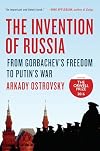
The Invention of Russia is severely misrepresented by its book jacket, probably intentionally. The book is primarily about political changes in Russia from 1980 to 2000 *as reflected in the Russian media landscape.* (A short chapter is added to the end that jumps forward to 2014 and the invasion of Crimea.) Gorbachev, Yeltsin and Putin all exist in the book, but their entourage is barely present except when they appear on TV. The angle is certainly a unique one, but it's hard not to feel show more like it makes the book somewhat superfluous. Certainly the media played a key role in both the collapse of the Soviet Union and the rise of Putin, but Ostrovsky makes it sound like it was the only factor and, conversely, that the loss of independent media was also the major loss for Russians under Putin. This seems to give outside importance to the media in both directions.
Ostrovsky also falls victim to a number of blind spots common to Western neo-liberals (Ostrovsky writes for The Economist) when writing about Russia. Gorbachev is well-intentioned but unprepared, the liberals under Yeltsin, however bad, are assumed to be the best chance Russia ever had at democracy, and Putin is a nefarious KGB agent who seeks control of the country almost as soon as he is handed the reins to power. It is not that these portrayals are wrong, exactly, but they exist largely unjustified by the content of the book itself. Why did Yeltsin become so unpopular so quickly? Why did Putin remain so popular if he is as authoritarian as the book claims? These facts are mentioned in the book but never explained beyond some very broad reasoning -- basically, control of the media amounts to control of public opinion. But this raises its own questions -- if Ostrovsky believes that people are so dim-witted and uncritical as to accept whatever the media puts in front of them, what does that say about prospects for democracy, in Russia or anywhere else? Was Russia chasing a mirage all along? show less
Ostrovsky also falls victim to a number of blind spots common to Western neo-liberals (Ostrovsky writes for The Economist) when writing about Russia. Gorbachev is well-intentioned but unprepared, the liberals under Yeltsin, however bad, are assumed to be the best chance Russia ever had at democracy, and Putin is a nefarious KGB agent who seeks control of the country almost as soon as he is handed the reins to power. It is not that these portrayals are wrong, exactly, but they exist largely unjustified by the content of the book itself. Why did Yeltsin become so unpopular so quickly? Why did Putin remain so popular if he is as authoritarian as the book claims? These facts are mentioned in the book but never explained beyond some very broad reasoning -- basically, control of the media amounts to control of public opinion. But this raises its own questions -- if Ostrovsky believes that people are so dim-witted and uncritical as to accept whatever the media puts in front of them, what does that say about prospects for democracy, in Russia or anywhere else? Was Russia chasing a mirage all along? show less
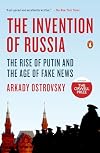
The Invention of Russia: The Rise of Putin and the Age of Fake News is an intellectual history that argues Russia's transformation from a post-Soviet democracy to an autocratic state under Vladimir Putin was largely engineered through the manipulation and weaponization of media and information. The book details how a small group of media figures and ideologues created narratives that ultimately shaped the country's destiny.
Key Themes
Media as the Core of Power: The central argument is that show more controlling mass media has been essential to holding power in post-Soviet Russia. Ostrovsky argues the media has had a greater impact on the country's fate than its politicians.
The Power of Narrative: The book traces how the narrative of Russia was continually "invented" and reinvented from the days of Gorbachev's glasnost to Putin's era. This process involved transitioning from the ideals of an open society to an imperialistic, nationalistic identity.
The Illusion of Truth: Putin's media strategy, the book explains, operates on the principle that there is no objective truth, only a reality manufactured by the Kremlin. This "age of fake news" involves creating a constant stream of alternative versions of reality to confuse and manipulate the public both domestically and internationally.
Hybrid Warfare: Ostrovsky details how Putin's administration refined the use of media manipulation and disinformation into a form of "hybrid warfare" that was deployed to influence events in neighboring countries (like Ukraine) and eventually Western politics, including the U.S. election.
Lost Opportunities for Democracy: The book presents a tragic account of the period after the Soviet Union's collapse, suggesting that the initial hopes for a Western-style democracy were undermined by a combination of oligarchic corruption, a cynical intellectual class, and the public's eventual embrace of state-promoted stability and nationalism over freedom. show less
Key Themes
Media as the Core of Power: The central argument is that show more controlling mass media has been essential to holding power in post-Soviet Russia. Ostrovsky argues the media has had a greater impact on the country's fate than its politicians.
The Power of Narrative: The book traces how the narrative of Russia was continually "invented" and reinvented from the days of Gorbachev's glasnost to Putin's era. This process involved transitioning from the ideals of an open society to an imperialistic, nationalistic identity.
The Illusion of Truth: Putin's media strategy, the book explains, operates on the principle that there is no objective truth, only a reality manufactured by the Kremlin. This "age of fake news" involves creating a constant stream of alternative versions of reality to confuse and manipulate the public both domestically and internationally.
Hybrid Warfare: Ostrovsky details how Putin's administration refined the use of media manipulation and disinformation into a form of "hybrid warfare" that was deployed to influence events in neighboring countries (like Ukraine) and eventually Western politics, including the U.S. election.
Lost Opportunities for Democracy: The book presents a tragic account of the period after the Soviet Union's collapse, suggesting that the initial hopes for a Western-style democracy were undermined by a combination of oligarchic corruption, a cynical intellectual class, and the public's eventual embrace of state-promoted stability and nationalism over freedom. show less
The Invention of Russia is a comprehensive and compelling look at the way that media played a role in the fall of the Soviet Union, the wild 90s, and the rise of Putin's New Russia. It's a very interesting look at matters that have suddenly become highly relevant, with the events of 2016. Begining with the Krushchev era, the book shows how intellectuals and the media both reflected public opinion and molded it. We also watch its awkward relationship with the government, sometimes in show more opposition, sometimes in its pocket. The author has a theory about generational change in Russian society that does seem to at least have a kernel of truth. Whether or not this will actually be able to stop Putin and his ideological allies remains to be seen. Russia is a mess, but the state puts on a strong front and distracts its citizens with glorious victory. Anything than have the people realize just how far behind they've fallen as they did in the 60s, 70s, and 80s. But while war can bring cohesion, it can only work for so long. Only time will tell what the future holds for Russia, its people, and its media.
Highly recommended for anyone with an interest in current events, Russian and/or Soviet history, or media studies. The book was actually originally published in 2015 with a different subtitle, but has been given a new preface for the 2017 paperback edition that ties in Putin's election manipulations and the rise of fake news to the books overall narrative about the relationship between Russians, their government, and their media. show less
Highly recommended for anyone with an interest in current events, Russian and/or Soviet history, or media studies. The book was actually originally published in 2015 with a different subtitle, but has been given a new preface for the 2017 paperback edition that ties in Putin's election manipulations and the rise of fake news to the books overall narrative about the relationship between Russians, their government, and their media. show less
Russia has always needed a new project, a novel undertaking, or a new war to divert the attention of the people from their economic misery, and to unite them under the aegis of their strongman leader. TV was there to provide the fake news to spark revanchism, nationalism, antisemitism, and hatred of the West.
Awards


You May Also Like


Associated Authors
Statistics
- Works
- 2
- Also by
- 1
- Members
- 295
- Popularity
- #79,434
- Rating
- 3.9
- Reviews
- 9
- ISBNs
- 16
- Languages
- 4