
Bettany Hughes
Author of Helen of Troy: Goddess, Princess, Whore
About the Author
Image credit: Bettany Hughes
Works by Bettany Hughes
Bettany Hughes and Michael Scott: Ancient Worlds: A Meeting of East and West – Intelligence Squared 1 copy
Divine Women BBC {2012} E3 1 copy
Britain's Secret Homes 1 copy
Eight Days That Made Rome [TV series] — Director — 1 copy
Bacchus Uncovered: Ancient God of Ecstasy [2018 film] — Director — 1 copy
Associated Works
The Nile: 5,000 years of History [2019 film] — Narrator — 2 copies
Tagged
Common Knowledge
- Other names
- 休斯, 贝塔妮
Хьюз, Беттани - Birthdate
- 1967-05
- Gender
- female
- Education
- University of Oxford (St Hilda's College)
Notting Hill and Ealing High School - Occupations
- historian
broadcaster
author - Relationships
- Hughes, Simon (brother)
- Nationality
- UK
- Birthplace
- London, England, UK
- Places of residence
- London, England, UK
- Associated Place (for map)
- London, England, UK
Members
Reviews
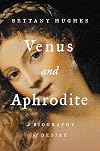
Bettany Hughes' history of the goddess of love and fertility includes not only the classical divinities named in the title but also their Mesopotamian, Egyptian, and Phoenician precursors. It is fascinating how these cultural icons, while superficially similar, varied between cultures and over time. The Semitic goddess Astarte and early Greek Aphrodite, for example, were seen as fierce goddesses of war and conflict, not just the gentle goddess of love and lust with whom we are familiar. The show more author goes on to show how Aphrodite/Venus influenced the Christian image of the Virgin Mary and continues to have an impact on popular culture. The text is accompanied by excellent illustrations. My only complaint about the book is its brevity--I would have liked more. show less
4.5
One of Athens's dearest held tenets was that free individuals in a democracy should, where possible, enjoy the freedom of expression. This was fine in theory, but in a tight-knit community, freedom of speech can quickly degenerate into gossip and slander. And slander is against the law. Athens was one of the first polities to allow freedom of speech – and immediately, it had to deal with the conundrum of who had the freedom to offend. (Page 179.)
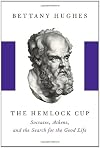
Writing a biography of Socrates is show more difficult. Socrates didn’t leave any writings and what sources exist are the work of his disciples (Plato and Xenophon) and detractor (Aristophanes). To fill in the gaps, historian Bethany Hughes attempts to create a “vivid sketch” by examining the period in which he lived.
Socrates was born in 469 BC, the son of a stonemason and a midwife. His life spanned Athens's pinnacle and decline. Hughes depicts Socrates as a stout, pug-nosed man who dressed modestly and spent his days roaming barefoot through the Agora (the meeting grounds and marketplace below the Acropolis), engaging in dialogue with any willing Athenian in the field of ethics and ethical pretensions. The majority of his students were among the young. She also describes Socrates as a brave and courageous soldier when he served in the Peloponnesian War.
Hughes is at her best when she portrays daily life in Athens. Her depiction of Athens in decline was heart-wrenching. I knew little about the two-year typhoid plague that engulfed Athens during the Peloponnesian War and was stunned by the vivid descriptions of the streets lined with dead bodies and the chaos and despair that came when people must suddenly face the possibility of losing everything. The rise of the demagogues and Civil War that led to the overthrow of democracy followed. According to Hughes, the eight-month rule of the Spartan-backed Thirty Tyrants led to a reign of terror where the oligarchs killed their personal and political enemies, and death squads roamed the streets.
Although the Athenians defeated the oligarchs among them and d restored democracy, Hughes claims, the Athenian populace was shaken, less confident, and less tolerant of a range of opinions and ideas. While Socrates was not directly involved with the oligarchy, several of his former students were among the Thirty Tyrants. Against this backdrop, Socrates was eventually brought to trial and charged with “disrespect for the cities gods, with introducing new divinities and with the corruption of the young.” Many Athenians were deeply religious and believed that their recent calamities were signs of the gods’ displeasure.
Hughes does not focus on Socrates's ideas. Instead, she sees Socrates as a scapegoat who a frustrated, frightened Athenian jury of 500 punished because they perceived his constant probing and challenge of the status quo as a threat. Silencing him became their solution to the “conundrum of who had the freedom to offend.”
I enjoyed reading the Hemlock Cup and learned much about Athenian history. However, I feel that I did not learn a great deal about Socrates, the man. Perhaps, this was due to the lack of available sources or the author’s lack of focus on the specifics of Socrates's philosophy. For me, Socrates remains the elusive quasi-mythical figure I learned about in my youth. Reading this has made me want to dig deeper and probe more. show less
One of Athens's dearest held tenets was that free individuals in a democracy should, where possible, enjoy the freedom of expression. This was fine in theory, but in a tight-knit community, freedom of speech can quickly degenerate into gossip and slander. And slander is against the law. Athens was one of the first polities to allow freedom of speech – and immediately, it had to deal with the conundrum of who had the freedom to offend. (Page 179.)
Writing a biography of Socrates is show more difficult. Socrates didn’t leave any writings and what sources exist are the work of his disciples (Plato and Xenophon) and detractor (Aristophanes). To fill in the gaps, historian Bethany Hughes attempts to create a “vivid sketch” by examining the period in which he lived.
Socrates was born in 469 BC, the son of a stonemason and a midwife. His life spanned Athens's pinnacle and decline. Hughes depicts Socrates as a stout, pug-nosed man who dressed modestly and spent his days roaming barefoot through the Agora (the meeting grounds and marketplace below the Acropolis), engaging in dialogue with any willing Athenian in the field of ethics and ethical pretensions. The majority of his students were among the young. She also describes Socrates as a brave and courageous soldier when he served in the Peloponnesian War.
Hughes is at her best when she portrays daily life in Athens. Her depiction of Athens in decline was heart-wrenching. I knew little about the two-year typhoid plague that engulfed Athens during the Peloponnesian War and was stunned by the vivid descriptions of the streets lined with dead bodies and the chaos and despair that came when people must suddenly face the possibility of losing everything. The rise of the demagogues and Civil War that led to the overthrow of democracy followed. According to Hughes, the eight-month rule of the Spartan-backed Thirty Tyrants led to a reign of terror where the oligarchs killed their personal and political enemies, and death squads roamed the streets.
Although the Athenians defeated the oligarchs among them and d restored democracy, Hughes claims, the Athenian populace was shaken, less confident, and less tolerant of a range of opinions and ideas. While Socrates was not directly involved with the oligarchy, several of his former students were among the Thirty Tyrants. Against this backdrop, Socrates was eventually brought to trial and charged with “disrespect for the cities gods, with introducing new divinities and with the corruption of the young.” Many Athenians were deeply religious and believed that their recent calamities were signs of the gods’ displeasure.
Hughes does not focus on Socrates's ideas. Instead, she sees Socrates as a scapegoat who a frustrated, frightened Athenian jury of 500 punished because they perceived his constant probing and challenge of the status quo as a threat. Silencing him became their solution to the “conundrum of who had the freedom to offend.”
I enjoyed reading the Hemlock Cup and learned much about Athenian history. However, I feel that I did not learn a great deal about Socrates, the man. Perhaps, this was due to the lack of available sources or the author’s lack of focus on the specifics of Socrates's philosophy. For me, Socrates remains the elusive quasi-mythical figure I learned about in my youth. Reading this has made me want to dig deeper and probe more. show less
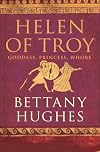
Ancient history has never been my thing, but if all ancient history books are like this one, then bring it on! Hughes paints an extraordinary picture of life in ancient Greece, focusing on the most famous name from her times - Helen of Troy. While never forgetting there is no evidence that Helen was an actual person, Hughes describes the life and times of princesses of that era and speculates persuasively on the possibility of Helen as a real person. This book, clearly written for a general show more audience, but never condescending or over-simplified, draws a continuous line from those ancients through history to our own times and I, for one, came away believing that a Helen of Troy certainly existed and swayed the politics and history of the eastern Mediterranean 3,500 years ago. show less
“But of course, the idea of Istanbul is exponentially bigger than her footprint.”
4.5 Stars
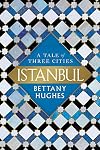
Coming in at 800 pages (although the last chunk is notes and the bibliography), this comprehensive history book may seem daunting, but it reads well and details so many fascinating things that it feels half as long. Bettany Hughes delves into the deep, rich history of Istanbul chronologically, mixing culture, religion, and war to create a vivid picture.
“In terms of both historical fact and show more written histories this place reminds us why we are compelled to connect, to communicate, to exchange. But also to change.”
I read books like this and realize how ignorant and little I know of the world and its history (and geography). Istanbul (nee Constantinople, nee Byzantium) took center stage many times over history:
“The Milion marks out distance, and it marks the moment when Byzantium truly becomes a topographical and cultural reference point shared by East and West.”
...
“And so the city of Constantinople was founded on dreams, faith and hope, but also on ambition and blood.”
...
“Istanbul is not where East meets West, but where East and West look hard and longingly at one another, sometimes nettled by what they see yet interested to learn that they share dreams, stories, and blood.”
I highlighted many portions of this monograph; it is so rich in information and much of it beautifully written (especially for nonfiction). This is definitely a book I’ll refer back to and re-skim.
“Istanbul is a settlement that, in her finest form, produces, promote and protects the vital, hopeful notion that, wherever and whoever we end up, we understand that although humanity has many faces we share one human heart- to know Istanbul is to know what it is to be cosmopolitan- this is a city that reminds us that we are, indeed, citizens of the world.” show less
4.5 Stars
Coming in at 800 pages (although the last chunk is notes and the bibliography), this comprehensive history book may seem daunting, but it reads well and details so many fascinating things that it feels half as long. Bettany Hughes delves into the deep, rich history of Istanbul chronologically, mixing culture, religion, and war to create a vivid picture.
“In terms of both historical fact and show more written histories this place reminds us why we are compelled to connect, to communicate, to exchange. But also to change.”
I read books like this and realize how ignorant and little I know of the world and its history (and geography). Istanbul (nee Constantinople, nee Byzantium) took center stage many times over history:
“The Milion marks out distance, and it marks the moment when Byzantium truly becomes a topographical and cultural reference point shared by East and West.”
...
“And so the city of Constantinople was founded on dreams, faith and hope, but also on ambition and blood.”
...
“Istanbul is not where East meets West, but where East and West look hard and longingly at one another, sometimes nettled by what they see yet interested to learn that they share dreams, stories, and blood.”
I highlighted many portions of this monograph; it is so rich in information and much of it beautifully written (especially for nonfiction). This is definitely a book I’ll refer back to and re-skim.
“Istanbul is a settlement that, in her finest form, produces, promote and protects the vital, hopeful notion that, wherever and whoever we end up, we understand that although humanity has many faces we share one human heart- to know Istanbul is to know what it is to be cosmopolitan- this is a city that reminds us that we are, indeed, citizens of the world.” show less
Lists
Awards


You May Also Like


Associated Authors
Statistics
- Works
- 22
- Also by
- 10
- Members
- 2,186
- Popularity
- #11,728
- Rating
- 3.9
- Reviews
- 46
- ISBNs
- 68
- Languages
- 10
- Favorited
- 2
