
Cecelia Watson
Author of Semicolon: The Past, Present, and Future of a Misunderstood Mark
About the Author
Cecelia Watson is a historian and philosopher of science, and a teacher of writing and the humanities. She is currently on Bard College's faculty in the Language and Thinking Program.
Image credit: From the Author's Website.
Works by Cecelia Watson
Associated Works
Tagged
Common Knowledge
- Gender
- female
- Occupations
- author
- Nationality
- USA
- Places of residence
- Tennessee, USA
New York, USA
London, England, UK - Associated Place (for map)
- USA
Members
Reviews
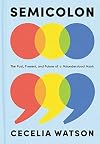
How should one go about writing a pop-scientific book that is solely about the semicolon? Is it best to be bone dry and scientific, as with most dictionaries, or bone dry and severely funny, as with Benjamin Dreyer's "Dreyer's English"?
Thankfully, Cecelia Watson approaches this nerdy subject with both clerical adroitness and humour, and she constructs all of this chronologically. From the start of her book:
Indeed, the beginning of the book is the beginnings—yes, plural—of grammar, and Watson pulls this off by being discreet and funny at the same time:
That story brings the semicolon (and how people perceive it) to life; Watson's view on linguistic rules is both sane and open:
Watson's use of examples, both in terms of style and real-life legal wrangles, are illuminating, informative, scary, and funny. Here's one magnificent example of legal issues due to a missing semicolon (or, begrudgingly agreed, a rewrite):
Watson goes through punctuation, grammar, and style by examining text and sayings by authors, for example, Irvine Welsh, Raymond Chandler, and Herman Melville.
Speaking of the latter, "Moby-Dick" contains around 210,000 words and 4000 semicolons; one for every 52 words, of which Watson notes that "[t]he semicolons are Moby-Dick’s joints, allowing the novel the freedom of movement it needed to tour such a large and disparate collection of themes."
There's a particularly wondrous dissing of David Foster Wallace, the author who is—by many white men—considered to be The Golden Child of the 21st century where language is concerned. Watson not only disses his "because"-form-of-logic stance on Standard written English, but also of his oft-failed grammar. It's fun to see, albeit a tad strange to see her rant go on for as long as it does.
All in all, this is a fun book to read. Watson has chosen to balance stories of grammatical rules and real-life examples of how the semicolon has been used (and abused), framing it all in neat paragraphs that stand out, simply because they're valuable. If this is a sign of things to come from this author, I will keep eyes peeled. show less
Thankfully, Cecelia Watson approaches this nerdy subject with both clerical adroitness and humour, and she constructs all of this chronologically. From the start of her book:
How did the semicolon, once regarded with admiration, come to seem so offensive, soshow more
unwieldy, to so many people? Asking this question might seem academic in all the worst ways: what practical value could there be in mulling punctuation, and in particular its history, when we have efficiently slim guidebooks like Strunk and White’s The Elements of Style and thick reference volumes like The Chicago Manual of Style to set straight our misplaced colons and commas? We have rules for this sort of thing! But rule-based punctuation guides are a relatively recent invention.
Indeed, the beginning of the book is the beginnings—yes, plural—of grammar, and Watson pulls this off by being discreet and funny at the same time:
Courts of law, too, were in a lather over how to deal with punctuation marks: a semicolon in an 1875 legal statute caused all of Boston to fly into a panic when courts opined that the semicolon meant that alcohol couldn’t be served past 11:00 P.M. (Bostonians, ever resourceful, devised some pretty clever ways to get drunk well into the wee hours until the statute was finally revised six years after it went into force.)
That story brings the semicolon (and how people perceive it) to life; Watson's view on linguistic rules is both sane and open:
I wouldn’t deny that there’s joy in knowing a set of grammar rules; there is always joy in mastery of some branch of knowledge. But there is much more joy in becoming a reader who can understand and explain how it is that a punctuation mark can create meaning in language that goes beyond just delineating the logical structure of a sentence.
Watson's use of examples, both in terms of style and real-life legal wrangles, are illuminating, informative, scary, and funny. Here's one magnificent example of legal issues due to a missing semicolon (or, begrudgingly agreed, a rewrite):
A particularly heart-wrenching case that was tried on the cusp of the Great Depression painfully illustrates the problems that can be caused by a missing semicolon. In 1927, two men were convicted of murder in New Jersey.
The jury’s verdict and sentencing recommendation was written as follows: “We find the defendant, Salvatore Merra, guilty of murder in the first degree, and the defendant, Salvatore Rannelli, guilty of murder in the first degree and recommend life imprisonment at hard labor.”
The judge interpreted the life imprisonment recommendation as applicable only to Rannelli, since that recommendation followed only the repetition of “guilty of murder in the first degree” after Rannelli’s name. Using this reasoning, the judge sentenced Salvatore Merra to death for the same crime.
In an eleventh-hour appeal, Merra’s lawyer (and New Jersey senator) Alexander Simpson argued that the jury meant the life imprisonment recommendation to apply to both men—otherwise, the jurors would surely have used a semicolon to separate their verdict on Merra from their verdict on Rannelli, so that the verdict would have read: “We find the defendant, Salvatore Merra, guilty of murder in the first degree; and the defendant, Salvatore Rannelli, guilty of murder in the first degree and recommend life imprisonment at hard labor.”
The prosecution, on the other hand, countered that the jury clearly intended for Merra to die.
Watson goes through punctuation, grammar, and style by examining text and sayings by authors, for example, Irvine Welsh, Raymond Chandler, and Herman Melville.
Speaking of the latter, "Moby-Dick" contains around 210,000 words and 4000 semicolons; one for every 52 words, of which Watson notes that "[t]he semicolons are Moby-Dick’s joints, allowing the novel the freedom of movement it needed to tour such a large and disparate collection of themes."
There's a particularly wondrous dissing of David Foster Wallace, the author who is—by many white men—considered to be The Golden Child of the 21st century where language is concerned. Watson not only disses his "because"-form-of-logic stance on Standard written English, but also of his oft-failed grammar. It's fun to see, albeit a tad strange to see her rant go on for as long as it does.
All in all, this is a fun book to read. Watson has chosen to balance stories of grammatical rules and real-life examples of how the semicolon has been used (and abused), framing it all in neat paragraphs that stand out, simply because they're valuable. If this is a sign of things to come from this author, I will keep eyes peeled. show less

This little volume is exactly what the title says it is: a book about semicolons. Watson looks a bit at the history of the semicolon, where it came from and how its usage has changed over time; examines the ways in which various writers have used the semicolon; and tells some interesting stories about how ambiguous punctuation in written laws has had surprisingly big effects. But it's about more than that, too. Watson's central idea here involves changing how we think about grammar rules and show more the way we apply them. She's also not remotely shy about voicing plenty of other opinions on related subjects ranging from linguistic snobbery to the proper way to approach the interpretation of laws. It's all very thought-provoking, and Watson's writing is lively and fun to read. She picks great examples of other people's writing to talk about, too.
All-in-all, it's much more interesting and entertaining than you might expect any book about semicolons to be, even if you're the kind of person who's interested in reading books about punctuation to begin with. (Which I am, obviously.) It's also gotten me to think a bit differently about semicolons. I confess, I've long felt reluctant to use them even when I've really wanted to, out of some sense that others would find them pretentious or distracting, but I'm remembering now how fond of them I once was and how useful they can actually be. show less
All-in-all, it's much more interesting and entertaining than you might expect any book about semicolons to be, even if you're the kind of person who's interested in reading books about punctuation to begin with. (Which I am, obviously.) It's also gotten me to think a bit differently about semicolons. I confess, I've long felt reluctant to use them even when I've really wanted to, out of some sense that others would find them pretentious or distracting, but I'm remembering now how fond of them I once was and how useful they can actually be. show less
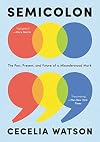
This little book is delightful. Yes, it's about the semicolon, how it was invented, how it was used, abused, changed in appreciation, scorned and celebrated. What I especially appreciated was her discussion of how various authors used the semicolon, including Raymond Chandler, Herman Melville, and Henry James. She also does a devastating takedown of David Foster Wallace concerning his teaching methods. Lots of footnotes, some of them very interesting, lots of bibliography if you like show more exploring further. It's about as un-nerdy as a book on punctuation could be, neither 'descriptive' nor 'prescriptive' in the linguistic sense, but more 'suggestive'; find out how a semicolon can serve you. show less
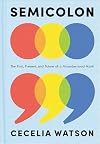
A surprisingly fun and informative little book about punctuation, specifically the semicolon, and some people's very strong feelings on the matter. Do I know when to use a semicolon now? Whenever the hell I feel like it.
Awards

You May Also Like


Associated Authors
Statistics
- Works
- 1
- Also by
- 1
- Members
- 419
- Popularity
- #58,190
- Rating
- 3.6
- Reviews
- 18
- ISBNs
- 10