
Tim Bouverie
Author of Appeasement: Chamberlain, Hitler, Churchill, and the Road to War
About the Author
Image credit: Tim Bouverie in 2019
Works by Tim Bouverie
Tagged
Common Knowledge
- Birthdate
- 1987-06-12
- Gender
- male
- Education
- Université d'Oxford (Diplôme, Histoire)
- Occupations
- Journaliste (Politique, Histoire)
- Organizations
- Channel 4 news, TV (Journaliste politique)
- Nationality
- UK
- Birthplace
- Salisbury, Wiltshire, England, UK
- Associated Place (for map)
- England, UK
Members
Reviews
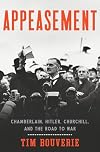
Tim Bouverie's study of the failures of the world's democratic powers to confront Fascism in general, and Hitler in particular, in a timely fashion seems to have been regarded as the new gold standard pretty much out of the gate. That it's taken me over five years to get to it is a commentary on my backlog, and the reality that I'm not exactly ignorant about the topic.
I'm therefore here to tell you that yes, this book does live up to the hype, in that Bouverie claims to have had access to show more more personal document collections than previous writers on the subjects, and is very judicious in considering the pressures on the various decision makers, the impact of the Great Depression, and the overhanging fear of the Soviet Union on the geopolitical environment.
However, Bouverie is also not buying any of the after-the-fact efforts to make Chamberlain's efforts look more respectable than they were. The raw reality is that Chamberlain was the wrong man at the wrong time, with his biggest fault being a massive failure of imagination to process that Hitler did intend to conquer an empire; though he still looks like a lion as compared to the general run of the French leadership.
Highly recommended. show less
I'm therefore here to tell you that yes, this book does live up to the hype, in that Bouverie claims to have had access to show more more personal document collections than previous writers on the subjects, and is very judicious in considering the pressures on the various decision makers, the impact of the Great Depression, and the overhanging fear of the Soviet Union on the geopolitical environment.
However, Bouverie is also not buying any of the after-the-fact efforts to make Chamberlain's efforts look more respectable than they were. The raw reality is that Chamberlain was the wrong man at the wrong time, with his biggest fault being a massive failure of imagination to process that Hitler did intend to conquer an empire; though he still looks like a lion as compared to the general run of the French leadership.
Highly recommended. show less
This might be my last review of a book received through the discontinued Penguin Books First to Read program. I requested 29 since 2015 and was selected for 19 (I might read one more that I was not selected for, thus the "might") and I appreciate the opportunities.
Bouverie has composed an incredibly thorough relation of a narrow history of a particular time for a particular country, and particular players and their particularly disastrous choices of action. His political journalist chops are show more apparent...his research is extensive. For a reader not of his country, the insights were well received, including the acerbic observations throughout (on the future Edward VIII and his hands off opinion, Bouverie said "[l]acking intelligence and a sense of constitutional propriety, the Prince made his views clear ...") There are lessons here that are not being heeded in the country of this reader. I may draw crosshairs for finding parallels in a particular political party's appeasement of the heinous actions and comportment of the current (as of this writing) elected executive. There are other observations that parallel today; one being:
There is a lot here. A lot. I'll fast forward myself... Thanks to Bouverie, one can't help but feel for the bumbling of Chamberlain. When Germany invaded Czechoslovakia in 1939, Bouverie says
Bouverie snarks politely more than once, but (mostly) maintains his journalistic professionalism (I laughed at his comment on the British representative to the Soviet talks in 1939, Admiral the Honorable Sir Reginald Aylmer Ranfurly Plunkett-Ernle-Drax, as sounding "like a character from a Gilbert and Sullivan operetta."!) But he is hard on point in his conclusion
Very good history. show less
Bouverie has composed an incredibly thorough relation of a narrow history of a particular time for a particular country, and particular players and their particularly disastrous choices of action. His political journalist chops are show more apparent...his research is extensive. For a reader not of his country, the insights were well received, including the acerbic observations throughout (on the future Edward VIII and his hands off opinion, Bouverie said "[l]acking intelligence and a sense of constitutional propriety, the Prince made his views clear ...") There are lessons here that are not being heeded in the country of this reader. I may draw crosshairs for finding parallels in a particular political party's appeasement of the heinous actions and comportment of the current (as of this writing) elected executive. There are other observations that parallel today; one being:
I have the impression that the persons directing the policy of the Hitler Government are not normal. Many of us, indeed, have a feeling that we are living in a country where fanatics, hooligans and eccentrics have got the upper hand.Hitler laid out in plain text his intentions in his manifesto Mein Kampf, yet somehow the sign were ignored. (Obviously I wasn't there...and hindsight is always clearer.) Rumbold wrote to General Sir Ian Hamilton in 1938
- British Ambassador to Berlin [Sir Horace Rumbold] to the Foreign Secretary [Sir John Simon], June 30, 1933
The continued effort to exterminate the Jews [Bouverie inserts "four years before the Wannsee Conference at which the 'Final Soultion' was agreed"] is part of their policy I cannot understand and this is turning the world opinion against them with all its dangerous repercussions...Unheeded. Rumbold makes another appearance in the epigraph to chapter VII "Hitler's Wonderland":
I have rather come to the conclusion that he average Englishman - whilst full of common sense as regards to internal affairs - is often muddle-headed, sloppy and gullible when he considers foreign affairs.Huh. Fast forward to 2016 and since...little has changed save that maybe that common sense regarding internal affairs has waned (I speculate for Great Britain, but observe in the US.)
There is a lot here. A lot. I'll fast forward myself... Thanks to Bouverie, one can't help but feel for the bumbling of Chamberlain. When Germany invaded Czechoslovakia in 1939, Bouverie says
The consensus that appeasement was now dead was instantaneous. In one swift stroke, Hitler had broken his word - repudiating the claim that Sudetenland constituted his last territorial demand - and revealed that "lust for conquest" with which his critics had always charged him. There could be no further dealings with such a man and, as one Chamberlain loyalist noted in his diary, "we" should fight him as soon as "we are strong enough."The French knew they had to prepare for war, but "Chamberlain, by contrast, did not immediately grasp the transformative nature of the event."
Bouverie snarks politely more than once, but (mostly) maintains his journalistic professionalism (I laughed at his comment on the British representative to the Soviet talks in 1939, Admiral the Honorable Sir Reginald Aylmer Ranfurly Plunkett-Ernle-Drax, as sounding "like a character from a Gilbert and Sullivan operetta."!) But he is hard on point in his conclusion
The failure to perceive the true character of the Nazi regime and Adolf Hitler stands as the single greatest failure of British policy makers during this period, since it was from this that all subsequent failures - the failure to rearm sufficiently, the failure to build alliances (not the least with the Soviet Union), the failure to project British power and the failure to educate public opinion - stemmed. For defenders of appeasement, this is an exercise in ahistoricism.We are failing today to maintain alliances, failing to measure the threats of dictatorial nations, allowing immediate twitting distractions to sway eyes from other threats such as Daesh. Those who do not study history might be doomed to repeat it, but those who do are too often forced to watch those who don't.
Very good history. show less
Appeasing Hitler – A terrific book that reminds us who the Guilty people were
When appeasement finally failed, my Grandfather and his countrymen found out what happens when politicians let the people down. He was with the 8th Engineers trying to stop the Nazi invasion of Poland alongside other soldiers, awaiting help that never came from their allies in Britain and France.
When Neville Chamberlain came back from Munich waving a piece of paper declaring ‘peace in our time,’ having already show more Czechoslovakia down river. It was stated that the disaster of Munich 1938 saved war for a year, as it meant rearmament could take place. A plausible argument if it were not for those who supported appeasement who repeated this line often and sometimes taken as a historical fact. Reading this book, you will find that in 1938, Germany also was not ready for war, and if the British and French had attacked Germany things may have been different. But we will never know.
In this excellent debut, historian Tim Bourverie, sets out his argument, in a fine and very readable book. Any student who manages to graduate with a degree in Modern History, will tell you most books on appeasement are as dry as a bone. This is one of the most engaging history books I have read in a very long time. What Bourverie has done is written a vivid, detailed and one of the most fascinating investigations on what should bring shame on all those politicians that took part in the machinations of the 1930s.
When ‘Cato’ published The Guilty Men, back in 1940 and drew up a list Guilty Men, Bourverie’s list is far longer. Showing that no stone has been left unturned, there are some surprising inclusions, and the lengths they would go to support appeasement and Germany. How the editors of both The Times and the Daily Mail were pro-Hitler and pro- appeasement. How the director-general of the BBC offered to fly the Swastika from the roof of Broadcasting House! I will also add Nancy Astor, the first female to take her seat in the House, was an avid fan of Nazi Germany along with the rest of her Cliveden Set.
Bourverie also records the heroes, and not just Churchill, and how the Foreign Office was often in despair at Lord Halifax and the cohort around Chamberlain. What this book does remind us, that it is easy to point out the guilty when we look back at distance. People have forgotten that appeasement was a popular policy in the country as a whole. People could remember the Great War and what that had delivered on many families across the country. How appeasement did not start with Chamberlain, but that he was the most intransigent supporter of the policy.
What I do like is that Bourverie puts the case clearly against those who say that Chamberlain had allowed Britain to rearm, they only real thing he had managed was to unit the country in preparation for war. By 1939, Germany was in a more powerful position than it had been the year before, and Hitler got the war he wanted. Sometimes Bouverie offers to much hindsight, but I would argue that is his journalistic tendencies breaking through, as he grows as a historian, he will offer up less of the Monday Quarterback and more analysis.
This is an exceptional debut and will be on University reading lists very shortly, and an brilliant addition to the appeasement canon. show less
When appeasement finally failed, my Grandfather and his countrymen found out what happens when politicians let the people down. He was with the 8th Engineers trying to stop the Nazi invasion of Poland alongside other soldiers, awaiting help that never came from their allies in Britain and France.
When Neville Chamberlain came back from Munich waving a piece of paper declaring ‘peace in our time,’ having already show more Czechoslovakia down river. It was stated that the disaster of Munich 1938 saved war for a year, as it meant rearmament could take place. A plausible argument if it were not for those who supported appeasement who repeated this line often and sometimes taken as a historical fact. Reading this book, you will find that in 1938, Germany also was not ready for war, and if the British and French had attacked Germany things may have been different. But we will never know.
In this excellent debut, historian Tim Bourverie, sets out his argument, in a fine and very readable book. Any student who manages to graduate with a degree in Modern History, will tell you most books on appeasement are as dry as a bone. This is one of the most engaging history books I have read in a very long time. What Bourverie has done is written a vivid, detailed and one of the most fascinating investigations on what should bring shame on all those politicians that took part in the machinations of the 1930s.
When ‘Cato’ published The Guilty Men, back in 1940 and drew up a list Guilty Men, Bourverie’s list is far longer. Showing that no stone has been left unturned, there are some surprising inclusions, and the lengths they would go to support appeasement and Germany. How the editors of both The Times and the Daily Mail were pro-Hitler and pro- appeasement. How the director-general of the BBC offered to fly the Swastika from the roof of Broadcasting House! I will also add Nancy Astor, the first female to take her seat in the House, was an avid fan of Nazi Germany along with the rest of her Cliveden Set.
Bourverie also records the heroes, and not just Churchill, and how the Foreign Office was often in despair at Lord Halifax and the cohort around Chamberlain. What this book does remind us, that it is easy to point out the guilty when we look back at distance. People have forgotten that appeasement was a popular policy in the country as a whole. People could remember the Great War and what that had delivered on many families across the country. How appeasement did not start with Chamberlain, but that he was the most intransigent supporter of the policy.
What I do like is that Bourverie puts the case clearly against those who say that Chamberlain had allowed Britain to rearm, they only real thing he had managed was to unit the country in preparation for war. By 1939, Germany was in a more powerful position than it had been the year before, and Hitler got the war he wanted. Sometimes Bouverie offers to much hindsight, but I would argue that is his journalistic tendencies breaking through, as he grows as a historian, he will offer up less of the Monday Quarterback and more analysis.
This is an exceptional debut and will be on University reading lists very shortly, and an brilliant addition to the appeasement canon. show less
I found this book to be a solid, modern contribution to understanding the policy of Appeasement. I am not as well versed on the interwar years as I might like to be, so my reading into the issues of the era is not as deep as many others people. Having said that, this book, as a piece of narrative history (as opposed to analytical history), helped to give me a firm sense of why and how the policy of Chamberlain came about. Bouverie makes to point repeatedly that many politicians of the 1930s show more were determined to avoid another war at all costs. One point I would like to have seen made more firmly was the West's willingness to tolerate the excesses of Naziism because of the feeling that the Soviet Union and Communism were far greater threats. show less
Awards


You May Also Like


Associated Authors
Statistics
- Works
- 4
- Members
- 444
- Popularity
- #55,178
- Rating
- 4.1
- Reviews
- 5
- ISBNs
- 26
- Languages
- 6
