
Kermit Pattison
Author of Fossil Men: The Quest for the Oldest Skeleton and the Origins of Humankind
About the Author
Kermit Pattison is a journalist whose work has appeared in the New York Times, GQ, Fast Company, and Inc., among many other publications. He spent a decade doing research for Fossil Men and spending time in the field with the team that discovered Ardi. He lives in St. Paul, Minnesota.
Image credit: via Amazon.com
Works by Kermit Pattison
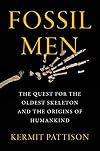
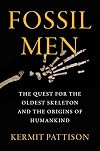
Fossil Men: The Quest for the Oldest Skeleton and the Origins of Humankind (2009) 329 copies, 10 reviews
Tagged
Common Knowledge
- Birthdate
- 20th century
- Gender
- male
- Occupations
- journalist
- Places of residence
- Saint Paul, Minnesota, USA
- Associated Place (for map)
- Minnesota, USA
Members
Reviews
This was the first book I have completed in audio format. The production was first rate. The format catered to my morning walks and morning drive to work.
The story was engrossing.
It hadn’t occurred to me before how many scientific disciplines are needed to recover, preserve, interpret, and disseminate the lessons of ancient — really ancient — remains of pre-homo sapiens species.
You need anthropologists, biologists, geologists, geneticists, experts in biomechanics to postulate the form show more of locomotion and physicists to carbon date the mineralized remains of animal bones. You need comparative biologists to analyze animal bones recovered in the same deposits as the bones of the primates recovered. And you need botanists to analyze ancient pollen and grasses to tell you something of the contemporary savanna, whether it was grassy or wooded or both. And you need anatomists to unravel whether the hominids could walk upright, climbed trees, or walked on branches. And for this you needed an understanding of modern primates.
The people who take on this work, in conditions unimaginable, are to be admired for their diligence, skill, and imagination.
These scientists had to tread carefully in the war zones of contemporary Ethiopia. And they trained local peoples to recover and interpret the antiquities themselves.
So much has changed in scholarship since Ardipithecus ramidus was discovered in 1994. I have learned so much in this book.
The hero of this saga, paleo-anthropologist Tim White, laments that fellow scientists rush to conclusions about the origins of homo sapiens long before all the evidence is in and analyzed.
Why is this, I asked myself.
Science seems determined to find the exact point where mankind diverged from animals, when we became different, when we became unique in the animal kingdom.
What if there isn’t such a point of divergence? What if we are more like animals than we like to believe? Or to turn that around: what if animals contain that grain of sentience that we prefer to believe only exists in humans?
If that were the case, we’d have to review our practice of industrialized slaughter of sentient beings like fish, fowl, sheep, pigs, and cattle. show less
The story was engrossing.
It hadn’t occurred to me before how many scientific disciplines are needed to recover, preserve, interpret, and disseminate the lessons of ancient — really ancient — remains of pre-homo sapiens species.
You need anthropologists, biologists, geologists, geneticists, experts in biomechanics to postulate the form show more of locomotion and physicists to carbon date the mineralized remains of animal bones. You need comparative biologists to analyze animal bones recovered in the same deposits as the bones of the primates recovered. And you need botanists to analyze ancient pollen and grasses to tell you something of the contemporary savanna, whether it was grassy or wooded or both. And you need anatomists to unravel whether the hominids could walk upright, climbed trees, or walked on branches. And for this you needed an understanding of modern primates.
The people who take on this work, in conditions unimaginable, are to be admired for their diligence, skill, and imagination.
These scientists had to tread carefully in the war zones of contemporary Ethiopia. And they trained local peoples to recover and interpret the antiquities themselves.
So much has changed in scholarship since Ardipithecus ramidus was discovered in 1994. I have learned so much in this book.
The hero of this saga, paleo-anthropologist Tim White, laments that fellow scientists rush to conclusions about the origins of homo sapiens long before all the evidence is in and analyzed.
Why is this, I asked myself.
Science seems determined to find the exact point where mankind diverged from animals, when we became different, when we became unique in the animal kingdom.
What if there isn’t such a point of divergence? What if we are more like animals than we like to believe? Or to turn that around: what if animals contain that grain of sentience that we prefer to believe only exists in humans?
If that were the case, we’d have to review our practice of industrialized slaughter of sentient beings like fish, fowl, sheep, pigs, and cattle. show less
This was incredible. I am not particularly interested in hominin evolution—I inevitably skip over those articles in Nature or National Geographic. But Pattison does a fantastic job explaining the science—not just telling us the results, but going over the entire process including politics and personalities. The central character, Tim White, is particularly well drawn, in a complex way. He has strengths, such as his dedication to his work and to Ethiopian colleagues. But he also has show more tragic weaknesses, such as a hardheadedness and perfectionism that leads him to keep skeletons and data away from other researchers.
The book is also very well illustrated.
> "A few people go out and risk their necks and spend the time to get the fossils," White vented in 2000. "The people who sit in the labs—they're the 95 percent—they're doing the reviewing of grants. They don't understand the field work, but they do understand one thing—the sooner they can get their hands on the fossils that are found the greater the chance there is that they will be able to extract some analytical information out of them, which they can then publish and enhance their own career. And so they dedicate themselves to trying to take fossils out of the hands of those who find them." show less
The book is also very well illustrated.
> "A few people go out and risk their necks and spend the time to get the fossils," White vented in 2000. "The people who sit in the labs—they're the 95 percent—they're doing the reviewing of grants. They don't understand the field work, but they do understand one thing—the sooner they can get their hands on the fossils that are found the greater the chance there is that they will be able to extract some analytical information out of them, which they can then publish and enhance their own career. And so they dedicate themselves to trying to take fossils out of the hands of those who find them." show less
A good account of, as sociologist Bruno Latour might say, how science gets done - at least the palaeontological science of human evolution, which has been dominated for a century by a handful of ambitious and influential scientists, some of whom seem to have had a strong sense of entitlement. Nevertheless, the personality conflicts and heavy reliance of this field on gaining access to, and interpreting, sparse examples of fossils is not typical of most modern sciences, so this book raises show more provocative questions but also tends to tarnish current practices (and reputations) in the field. Science doesn't have to be like this. show less
I got this book from my local library after reading about in The New York Times (https://www.nytimes.com/2020/12/22/books/review/fossil-men-kermit-pattison-the-sediments-of-time-maeve-leakey.html). It's really good. Some of the science was over my head, I thought about 100 pages could have been cut, and the ending was a little weak, but I'll give the book as a gift to friends and family who are into science. Fascinating that millions of years ago, only 2% of our ancestors had cavities show more (apparently the advent of cereal agriculture is what did our teeth in, and sugary drinks in the past 150 years or so didn't help).
Amazing how much academic backstabbing there is in the world of paleoanthropology. The star of this book, Tim White, is a real jerk-hole. His animosity to laypersons, in my opinion, has hurt his discoveries. Before reading this book, I never heard of our Ardi ancestor, however, I was aware of Lucy, probably because the finders of that fossil are good at public relations. show less
Amazing how much academic backstabbing there is in the world of paleoanthropology. The star of this book, Tim White, is a real jerk-hole. His animosity to laypersons, in my opinion, has hurt his discoveries. Before reading this book, I never heard of our Ardi ancestor, however, I was aware of Lucy, probably because the finders of that fossil are good at public relations. show less
Lists
Awards


You May Also Like


Statistics
- Works
- 1
- Members
- 329
- Popularity
- #72,115
- Rating
- 4.1
- Reviews
- 10
- ISBNs
- 10
- Languages
- 1