
About the Author
Disambiguation Notice:
Riley Black is trans. Please do not change gender or pronouns on this page based on older interviews and publicity materials referring to her as male.
Image credit: Riley Black
Works by Riley Black
The Last Days of the Dinosaurs: An Asteroid, Extinction, and the Beginning of Our World (2022) 337 copies, 9 reviews
My Beloved Brontosaurus: On the Road with Old Bones, New Science, and Our Favorite Dinosaurs (2013) 320 copies, 16 reviews
Written in Stone: Evolution, the Fossil Record, and Our Place in Nature (2010) 297 copies, 5 reviews
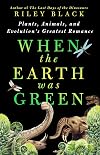
When the Earth Was Green: Plants, Animals, and Evolution's Greatest Romance (2025) 108 copies, 5 reviews
Prehistoric Predators: The Biggest Carnivores of the Prehistoric World (Discovering) (2015) 69 copies
The Shortest History of the Dinosaurs: The 230-Million-Year Story of Their Time on Earth (The Shortest History Series) (2025) 22 copies
Deep Water: From the Frilled Shark to the Dumbo Octopus and from the Continental Shelf to the Mariana Trench (2023) 10 copies, 1 review
Tyrant Lizard Queen: The Love, Life, and Terror of Earth’s Greatest Carnivore (2026) 9 copies, 2 reviews
Tagged
Common Knowledge
- Canonical name
- Black, Riley
- Legal name
- Black, Riley
- Other names
- Switek, Brian (birth name)
- Birthdate
- 1983-02-26
- Gender
- female
- Occupations
- vertebrate paleontologist
science writer - Organizations
- New Jersey State Museum
- Short biography
- Riley Black is a science writer and research associate at the New Jersey State Museum who has done fieldwork on fossils in Utah, Montana, and Wyoming. She has been a frequent guest on the BBC and has written about paleontology for the Smithsonian magazine, London Times, Wired Science, Eureka and elsewhere. She is also the author of the acclaimed science blog Laelaps and Smithsonian magazine’s Dinosaur Tracking. Written in Stone is her first book.
Riley Black's deadname is Brian Switek, under which her books have been published. - Nationality
- USA
- Map Location
- USA
- Disambiguation notice
- Riley Black is trans. Please do not change gender or pronouns on this page based on older interviews and publicity materials referring to her as male.
Members
Reviews
If you’re like me then when you think about paleontology, you think about dinosaurs. Dinosaurs have an enduring place in our collective imaginations, and dinosaur fossils are great for drawing people into museums. I remember when Sue, named after it’s discoverer Sue Henderson, first came to Chicago’s Field Museum.
Sue, if you are not familiar, is one of the best-preserved sets of fossilized Tyrannosaurus Rex bones ever found. Paleontologists set up work in labs on the Museum’s main show more floor, where visitors could watch through glass walls as they went through the painstaking work of extracting the bones from the rock they were embedded in, and had been transported to the museum still inside of. The fully assembled display resulting from their work was a huge hit when it debuted in mid-2000.
While there are plenty of dinosaurs in Riley Black’s latest book When the Earth Was Green, it’s the plants and their evolution that dominates the story she spins. Well, stories really, as the book is an episodic walk through the shared evolution of plants and animals across Earth’s history.
That sounds like an ambitious goal for a book - to tell the story of plants and animals across the whole history of the world, and it is. The remarkable thing is that Black does an admirable job of it, while still keeping to a thoroughly readable book at just over 300 pages.
It’s common now, with our modern environmentalist understanding, to speak about the interactions between the different species of plants and animals in a given environment, and the dependencies they have on one another. Coexistence Theory, as it’s called, tries to understand how competitive and cooperative traits and behaviors among various plants and animals in a given environment can result in a stable equilibrium.
But when most of us think about dinosaurs and other extinct animals like saber tooth tigers or wooly mammoths, and when we visit museums to see fossils or recreations of such animals, the animals themselves are the stars of the show, and the plants in their environment fade into the background.
Black’s book is a corrective to that. In each of her stories, spaced across time, Black shows us both the plants and the animals, and digs into how they depended on one another. The symbiosis between plants and animals in changing environments across earth’s history is the “romance” spoken of in the book’s subtitle.
I thoroughly enjoyed reading this book. While Black doesn’t shy away from formal names for species and includes some scientific detail, she also has a great knack for storytelling that makes this book perfect for the armchair scientist inside of us. Each of her stories visits a specific time and place, starting from the earliest and moving up to almost the present day. If you have an interest in the times before humans, when all the world was green and species of animals now extinct ruled, I think you’d find this to be a great read. show less
Sue, if you are not familiar, is one of the best-preserved sets of fossilized Tyrannosaurus Rex bones ever found. Paleontologists set up work in labs on the Museum’s main show more floor, where visitors could watch through glass walls as they went through the painstaking work of extracting the bones from the rock they were embedded in, and had been transported to the museum still inside of. The fully assembled display resulting from their work was a huge hit when it debuted in mid-2000.
While there are plenty of dinosaurs in Riley Black’s latest book When the Earth Was Green, it’s the plants and their evolution that dominates the story she spins. Well, stories really, as the book is an episodic walk through the shared evolution of plants and animals across Earth’s history.
That sounds like an ambitious goal for a book - to tell the story of plants and animals across the whole history of the world, and it is. The remarkable thing is that Black does an admirable job of it, while still keeping to a thoroughly readable book at just over 300 pages.
It’s common now, with our modern environmentalist understanding, to speak about the interactions between the different species of plants and animals in a given environment, and the dependencies they have on one another. Coexistence Theory, as it’s called, tries to understand how competitive and cooperative traits and behaviors among various plants and animals in a given environment can result in a stable equilibrium.
But when most of us think about dinosaurs and other extinct animals like saber tooth tigers or wooly mammoths, and when we visit museums to see fossils or recreations of such animals, the animals themselves are the stars of the show, and the plants in their environment fade into the background.
Black’s book is a corrective to that. In each of her stories, spaced across time, Black shows us both the plants and the animals, and digs into how they depended on one another. The symbiosis between plants and animals in changing environments across earth’s history is the “romance” spoken of in the book’s subtitle.
I thoroughly enjoyed reading this book. While Black doesn’t shy away from formal names for species and includes some scientific detail, she also has a great knack for storytelling that makes this book perfect for the armchair scientist inside of us. Each of her stories visits a specific time and place, starting from the earliest and moving up to almost the present day. If you have an interest in the times before humans, when all the world was green and species of animals now extinct ruled, I think you’d find this to be a great read. show less
The Last Days of the Dinosaurs: An Asteroid, Extinction, and the Beginning of Our World by Riley Black
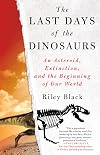
Riley Black is a science writer of the deep past who in a number of books brings alive plants and animals that no longer exist. Her technique is to zoom in on a particular individual animal, establish it's maybe tired or hungry or seeking shade, then weave in the meat, the science facts. It does work without being too juvenile or cumbersome, it keeps you interested. The focus is on the Hell Creek Formation in Montana (Fort Peck Lake) 66 million years ago and chapters are the day of impact, show more the day after, 1 year after, 100 years, 1000 years etc.. One might think there would be piles of bones fossilized from this event from billions of dead animals, but there are actually very few: acid rain for years after. She reminds that the species who survived did so because of random evolutionary chance - for example turtles who can absorb oxygen through their butt were able to stay underwater long enough to avoid being cooked on the surface. Among avian dinosaurs (birds), there were two kinds - those with hard beaks for breaking open seeds, and those with toothy beaks for eating meat. The later did not survive because large animals were wiped out and there was no meat left, but the beaked birds could peck seeds from the wasteland like chickens in the desert. Totally random adaptation allowed them to survive. So our world today reflects this randomness of a single event 66 million years ago in present-day Mexico. Nobody could have guessed how things would turn out, evolution is too indeterminate, but we could say once the dinosaurs were gone it was highly unlikely they would return, the random chances that saw their rise would not repeat the same way again. show less
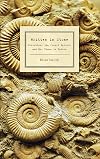
Early proponents of evolution by natural selection were hampered by their inability to provide “transitional” fossils demonstrating the stages of change from one species to another. Darwin theorized that human ancestors would be found in Africa—rightly, as it turned out—but none had yet been discovered. In many other species lineages, similar gaps in the fossil record led to misunderstandings of those species’ histories and the connections between species. Switek ably and clearly show more traces what I might call “the evolution of evolution” in this popular-science work. Each chapter focuses on a particular type of animal…horses, whales, reptiles, etc…tracing a path from scientists’ early understanding of that species and its place in nature through to our current views, explaining the importance of the transitional fossils that have been discovered while never losing sight of areas in which science’s understanding is still limited.
Written for the layperson, the book nevertheless does not “dumb down” the science, instead laying out the facts clearly and allowing the careful reader to see the connections for him or herself. Fascinating portraits of some of the early naturalists and evolutionary theorists, including Darwin; Cuvier; Lamarck; and Lyell fill out this able survey of the history of evolution and natural science. show less
Written for the layperson, the book nevertheless does not “dumb down” the science, instead laying out the facts clearly and allowing the careful reader to see the connections for him or herself. Fascinating portraits of some of the early naturalists and evolutionary theorists, including Darwin; Cuvier; Lamarck; and Lyell fill out this able survey of the history of evolution and natural science. show less

"Sometimes I like to just be still and think about my bones."
Same, Brian, same.
Knowing very little about bones, I quite enjoyed this overview of the natural history of bones, and their cultural context. It is more conversational than academic, and left me feeling like Brian Switek would be a chill dude to have a beer with.
I appreciate that he doesn't gloss over some of the more controversial ethical dilemmas that come with the study of bone: who has rights to the dead, the mistreatment of show more indigenous bodies, and the cultural assumptions we impose on remains.
Usually with these types of non-fiction books on niche subjects, I find the authors can veer off course from the subject itself and get lost in minutiae that isn't relevant to the topic, but this book is well-organized in digestible chapters and follows a progression from the more biological aspects of bones to the sociological and cultural considerations. show less
Same, Brian, same.
Knowing very little about bones, I quite enjoyed this overview of the natural history of bones, and their cultural context. It is more conversational than academic, and left me feeling like Brian Switek would be a chill dude to have a beer with.
I appreciate that he doesn't gloss over some of the more controversial ethical dilemmas that come with the study of bone: who has rights to the dead, the mistreatment of show more indigenous bodies, and the cultural assumptions we impose on remains.
Usually with these types of non-fiction books on niche subjects, I find the authors can veer off course from the subject itself and get lost in minutiae that isn't relevant to the topic, but this book is well-organized in digestible chapters and follows a progression from the more biological aspects of bones to the sociological and cultural considerations. show less
Lists
Awards


You May Also Like


Associated Authors
Statistics
- Works
- 15
- Members
- 1,382
- Popularity
- #18,610
- Rating
- 3.9
- Reviews
- 45
- ISBNs
- 55
- Languages
- 4
- Favorited
- 1
