
About the Author
Jo Boaler is the Nominelli Olivier Professor of Mathematics Education at Stanford University and the Co-Founder and Faculty Director of youcubed. She is a White House presenter on girls and STEM, was named one of eight people changing the face of education by the BBC, and she has authored eighteen show more books, including the series Mindset Mathematics for grade K-8. show less
Works by Jo Boaler
Mathematical Mindsets: Unleashing Students' Potential through Creative Math, Inspiring Messages and Innovative Teaching (2015) 286 copies, 5 reviews
What's Math Got to Do with It?: How Teachers and Parents Can Transform Mathematics Learning and Inspire Success (2008) 183 copies, 4 reviews
Connecting Mathematical Ideas: Middle School Video Cases to Support Teaching and Learning (2005) 18 copies
Tagged
Common Knowledge
- Gender
- female
- Occupations
- professor
- Organizations
- University of Sussex
- Places of residence
- Sussex, England, UK
- Associated Place (for map)
- England, UK
Members
Reviews
Mathematical Mindsets: Unleashing Students' Potential through Creative Math, Inspiring Messages and Innovative Teaching by Jo Boaler
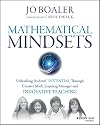
If you are someone who is dealing with teaching or learning Math, this book is for you. Traditional ways of teaching mathematics is challenged at every level. Proven techniques mentioned throughout the book are a testament that Mathematics not only requires, but also improves imagination by leaps and bounds.
I really liked the concept of 'If you want to understand it, you draw it' as one teacher taught her students. The book provides many illustrations of how this can help students imbibe the show more concepts of mathematics.
There are numerous web links in the book that are well-worth following up after reading the book. As a parent, I'd like to know how best to teach a creative subject like Math to my kid.
I have a question for the author though. In page 29, the author mentions "The high incidence of fixed mindset thinking among girls is one reason that girls opt out of STEM subjects". But it is not clear as to why girls have fixed mindset in the first place. Women opt out of STEM subjects and seem to join one of the many 'pink-collar' jobs - Nursing, Teaching, Counselors, HR Managers - does this mean these jobs don't need people with growth mindset? show less
I really liked the concept of 'If you want to understand it, you draw it' as one teacher taught her students. The book provides many illustrations of how this can help students imbibe the show more concepts of mathematics.
There are numerous web links in the book that are well-worth following up after reading the book. As a parent, I'd like to know how best to teach a creative subject like Math to my kid.
I have a question for the author though. In page 29, the author mentions "The high incidence of fixed mindset thinking among girls is one reason that girls opt out of STEM subjects". But it is not clear as to why girls have fixed mindset in the first place. Women opt out of STEM subjects and seem to join one of the many 'pink-collar' jobs - Nursing, Teaching, Counselors, HR Managers - does this mean these jobs don't need people with growth mindset? show less
Mathematical Mindsets: Unleashing Students' Potential Through Creative Math, Inspiring Messages and Innovative Teaching by Jo Boaler
It's a bit repetitive with needless feminist undertones. However, the subjects such as a growth mindset*; the ineffectiveness and harmfulness of grades and the segregation of student by performance; the uselessness of rewarding rote learning and computation; and practice examples make the book worthwhile for anyone interested in teaching, math, children, neuroscience, and psychometrics.
edit:
*The growth mindset could've been based on biased and faulty research; however, the latest study has show more some important limitations: https://educationendowmentfoundation.org.uk/public/files/Projects/Evaluation_Rep..., https://en.wikipedia.org/wiki/Carol_Dweck#Criticism show less
edit:
*The growth mindset could've been based on biased and faulty research; however, the latest study has show more some important limitations: https://educationendowmentfoundation.org.uk/public/files/Projects/Evaluation_Rep..., https://en.wikipedia.org/wiki/Carol_Dweck#Criticism show less
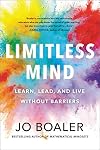
Limitless Mind by Jo Boaler presents the idea that brains are not fixed from birth. Boaler shares research and studies that back up this message as well as how this can help us move from from the fixed brain mindset to the brain growth mindset as learners.
Boaler is a professor at Stanford and backs up her book with a plethora of research. She shares this information in an accessible manner that is readable for someone who is not an academic in her fields of work. She breaks down her message show more into accessible chapters that help us better understand this newer research.
The crux of her book is the idea that when we learn and push ourselves, we develop new pathways in our brains. We are not born with brains that are made to be good (or not) at certain subjects but we actually develop them, and this ability never stops. Our brains are constantly growing and this happens by stepping outside our comfort zones.
We can do this by pushing ourselves in areas that are challenging and pushing through struggles and even mistakes. As we do this, the pathways in our brains are delicate but the more deeply we use these pathways the stronger they become. This message is the push for why struggle and mistakes are actually beneficial and allow our brains to continue to grow.
When we face challenging situations, rather than fear causing us to turn around, forge ahead, knowing these are the situations that help brain growth. Mistakes are a part of our everyday lives but many of us have grown up to think of mistakes as things are "bad" and something we should try and avoid.
Boaler encourages mistakes and strongly feels that facing obstacles is how we can learn and thrive. When we struggle, our brains are more active and are working harder than when we are just in" auto pilot" mode. When we are able to change our perspective on failure, we are able to live a more limitless life and continue on the path to improve and grow.
Life gives us endless moments where we can learn, grow and connect. Mistakes can help us be determined, proactive and move forward. Boaler shares that we are often unmotivated in areas where at one time someone or something gave us the idea that we couldn't be successful. I found this message to be so motivating and inspiring. As someone who has spent much of my academic life feeling like I wasn't "good" at certain subjects, this book is such a wonderful reminder that life long learning and growing can not only help us live fuller lives but the things we can master are, indeed, limitless.
Thank you to NetGalley, HarperCollins and Jo Boaler for an advanced copy to review. All opinions are my own. show less
Boaler is a professor at Stanford and backs up her book with a plethora of research. She shares this information in an accessible manner that is readable for someone who is not an academic in her fields of work. She breaks down her message show more into accessible chapters that help us better understand this newer research.
The crux of her book is the idea that when we learn and push ourselves, we develop new pathways in our brains. We are not born with brains that are made to be good (or not) at certain subjects but we actually develop them, and this ability never stops. Our brains are constantly growing and this happens by stepping outside our comfort zones.
We can do this by pushing ourselves in areas that are challenging and pushing through struggles and even mistakes. As we do this, the pathways in our brains are delicate but the more deeply we use these pathways the stronger they become. This message is the push for why struggle and mistakes are actually beneficial and allow our brains to continue to grow.
When we face challenging situations, rather than fear causing us to turn around, forge ahead, knowing these are the situations that help brain growth. Mistakes are a part of our everyday lives but many of us have grown up to think of mistakes as things are "bad" and something we should try and avoid.
Boaler encourages mistakes and strongly feels that facing obstacles is how we can learn and thrive. When we struggle, our brains are more active and are working harder than when we are just in" auto pilot" mode. When we are able to change our perspective on failure, we are able to live a more limitless life and continue on the path to improve and grow.
Life gives us endless moments where we can learn, grow and connect. Mistakes can help us be determined, proactive and move forward. Boaler shares that we are often unmotivated in areas where at one time someone or something gave us the idea that we couldn't be successful. I found this message to be so motivating and inspiring. As someone who has spent much of my academic life feeling like I wasn't "good" at certain subjects, this book is such a wonderful reminder that life long learning and growing can not only help us live fuller lives but the things we can master are, indeed, limitless.
Thank you to NetGalley, HarperCollins and Jo Boaler for an advanced copy to review. All opinions are my own. show less
Limitless Mind by Jo Boaler presents the idea that brains are not fixed from birth. Boaler shares research and studies that back up this message as well as how this can help us move from from the fixed brain mindset to the brain growth mindset as learners.
Boaler is a professor at Stanford and backs up her book with a plethora of research. She shares this information in an accessible manner that is readable for someone who is not an academic in her fields of work. She breaks down her message show more into accessible chapters that help us better understand this newer research.
The crux of her book is the idea that when we learn and push ourselves, we develop new pathways in our brains. We are not born with brains that are made to be good (or not) at certain subjects but we actually develop them, and this ability never stops. Our brains are constantly growing and this happens by stepping outside our comfort zones.
We can do this by pushing ourselves in areas that are challenging and pushing through struggles and even mistakes. As we do this, the pathways in our brains are delicate but the more deeply we use these pathways the stronger they become. This message is the push for why struggle and mistakes are actually beneficial and allow our brains to continue to grow.
When we face challenging situations, rather than fear causing us to turn around, forge ahead, knowing these are the situations that help brain growth. Mistakes are a part of our everyday lives but many of us have grown up to think of mistakes as things are "bad" and something we should try and avoid.
Boaler encourages mistakes and strongly feels that facing obstacles is how we can learn and thrive. When we struggle, our brains are more active and are working harder than when we are just in" auto pilot" mode. When we are able to change our perspective on failure, we are able to live a more limitless life and continue on the path to improve and grow.
Life gives us endless moments where we can learn, grow and connect. Mistakes can help us be determined, proactive and move forward. Boaler shares that we are often unmotivated in areas where at one time someone or something gave us the idea that we couldn't be successful. I found this message to be so motivating and inspiring. As someone who has spent much of my academic life feeling like I wasn't "good" at certain subjects, this book is such a wonderful reminder that life long learning and growing can not only help us live fuller lives but the things we can master are, indeed, limitless.
Thank you to NetGalley, HarperCollins and Jo Boaler for an advanced copy to review. All opinions are my own. show less
Boaler is a professor at Stanford and backs up her book with a plethora of research. She shares this information in an accessible manner that is readable for someone who is not an academic in her fields of work. She breaks down her message show more into accessible chapters that help us better understand this newer research.
The crux of her book is the idea that when we learn and push ourselves, we develop new pathways in our brains. We are not born with brains that are made to be good (or not) at certain subjects but we actually develop them, and this ability never stops. Our brains are constantly growing and this happens by stepping outside our comfort zones.
We can do this by pushing ourselves in areas that are challenging and pushing through struggles and even mistakes. As we do this, the pathways in our brains are delicate but the more deeply we use these pathways the stronger they become. This message is the push for why struggle and mistakes are actually beneficial and allow our brains to continue to grow.
When we face challenging situations, rather than fear causing us to turn around, forge ahead, knowing these are the situations that help brain growth. Mistakes are a part of our everyday lives but many of us have grown up to think of mistakes as things are "bad" and something we should try and avoid.
Boaler encourages mistakes and strongly feels that facing obstacles is how we can learn and thrive. When we struggle, our brains are more active and are working harder than when we are just in" auto pilot" mode. When we are able to change our perspective on failure, we are able to live a more limitless life and continue on the path to improve and grow.
Life gives us endless moments where we can learn, grow and connect. Mistakes can help us be determined, proactive and move forward. Boaler shares that we are often unmotivated in areas where at one time someone or something gave us the idea that we couldn't be successful. I found this message to be so motivating and inspiring. As someone who has spent much of my academic life feeling like I wasn't "good" at certain subjects, this book is such a wonderful reminder that life long learning and growing can not only help us live fuller lives but the things we can master are, indeed, limitless.
Thank you to NetGalley, HarperCollins and Jo Boaler for an advanced copy to review. All opinions are my own. show less
You May Also Like


Statistics
- Works
- 30
- Members
- 927
- Popularity
- #27,686
- Rating
- 4.3
- Reviews
- 15
- ISBNs
- 84
- Languages
- 8