
John Hattie
Author of Visible Learning for Teachers: Maximizing Impact on Learning
About the Author
John Hattie is Professor and Director of the Melbourne Education Research Institute at the University of Melbourne, Australia, and Deputy Director of the Science of Learning Research Centre. He is the author of Visible Learning and Visible Learning for Teachers, and co-editor (with Eric Anderman) show more of the International Guide to Student Achievement, all published by Routledge. Gregory C. R. Yates is a Senior Lecturer in Education at the University of South Australia. He is on the editorial board of Educational Psychology and has contributed a number of papers in the area of cognitive information processing the social learning theory. show less
Works by John Hattie
Visible Learning for Literacy, Grades K-12: Implementing the Practices That Work Best to Accelerate Student Learning (2016) 69 copies
Visible Learning for Mathematics, Grades K-12: What Works Best to Optimize Student Learning (Corwin Mathematics Series) (2016) 43 copies
Developing Assessment-Capable Visible Learners, Grades K-12: Maximizing Skill, Will, and Thrill (Corwin Literacy) (2018) 17 copies
Visible Learning for Science, Grades K-12: What Works Best to Optimize Student Learning (2018) 12 copies
International Guide to Student Achievement (Educational Psychology Handbook) (2012) — Author — 9 copies
The Illustrated Guide to Visible Learning: An Introduction to What Works Best In Schools (2024) 9 copies
Visible Learning for Social Studies, Grades K-12: Designing Student Learning for Conceptual Understanding (Corwin Teaching Essentials) (2020) 8 copies
Great Teaching by Design: From Intention to Implementation in the Visible Learning Classroom (2020) 6 copies, 1 review
Aprendizagem Vis’vel Para Professores: Como Maximizar o Impacto da Aprendizagem (2017) 5 copies, 1 review
The Purposes of Education: A Conversation Between John Hattie and Steen Nepper Larsen (2020) 5 copies
Apprendimento visibile, insegnamento efficace. Metodi e strategie di successo dalla ricerca evidence-based: 1 (2016) 3 copies
Aprendizaje visible para profesores. Colección: Didáctica y Desarrollo: Maximizando el impaco en el aprendizaje (Educación) (Spanish Edition) (2017) 2 copies
Associated Works
Wiliam & Leahy’s Five Formative Assessment Strategies in Action (2021) — Foreword, some editions — 7 copies
Tagged
Common Knowledge
- Gender
- male
- Occupations
- Director of the Melbourne Education Research Institute
- Organizations
- University of Melbourne
- Places of residence
- Melbourne, Victoria, Australia
- Associated Place (for map)
- Victoria, Australia
Members
Reviews
Great Teaching by Design: From Intention to Implementation in the Visible Learning Classroom by John Hattie
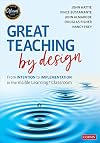
What I love about this book is that it gives a teacher a framework for thinking about how to teach students, it is a cyclic framework where we first diagnose to discover as much as we can about each unique student and then plan and try it out and evaluate the impact of our teaching on the students. I love how they share a website where we can look at which practices have large effect size and research to back up the practices (https://www.visiblelearningmetax.com/) and I also love how they show more share a table of high impact research based teaching practices such as the Jigsaw method and also stress the importance of not only knowing the high impact practice, but figuring out how to best apply that strategy in the right context is also key. From this book, I also learned about Mentimeter (https://www.mentimeter.com/) which lets the teacher create a poll to ask questions to the learners to get feedback from the students. show less
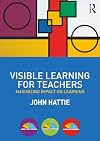
Selected e-content from Google Books: https://goo.gl/q5zStc
Review from Google Books:
In November 2008, John Hattie’s ground-breaking book Visible Learning synthesised the results of more than fifteen years research involving millions of students and represented the biggest ever collection of evidence-based research into what actually works in schools to improve learning.
Visible Learning for Teachers takes the next step and brings those ground breaking concepts to a completely new audience. show more Written for students, pre-service and in-service teachers, it explains how to apply the principles of Visible Learning to any classroom anywhere in the world. The author offers concise and user-friendly summaries of the most successful interventions and offers practical step-by-step guidance to the successful implementation of visible learning and visible teaching in the classroom. show less
Review from Google Books:
In November 2008, John Hattie’s ground-breaking book Visible Learning synthesised the results of more than fifteen years research involving millions of students and represented the biggest ever collection of evidence-based research into what actually works in schools to improve learning.
Visible Learning for Teachers takes the next step and brings those ground breaking concepts to a completely new audience. show more Written for students, pre-service and in-service teachers, it explains how to apply the principles of Visible Learning to any classroom anywhere in the world. The author offers concise and user-friendly summaries of the most successful interventions and offers practical step-by-step guidance to the successful implementation of visible learning and visible teaching in the classroom. show less
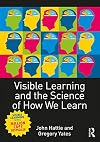
Selected e-content from Google books http://goo.gl/mFiIXe
1. Why don't students like learning at school? --
The Willingham thesis; 2. Is knowledge an obstacle to teaching?; 3. The teacher-student relationship; 4. Your personality as teacher: Can your students trust you?; 5. Time as a global indicator of classroom learning; 6. The recitation and the nature of classroom learning; 7. Teaching for automaticity in basic academic skill; 8. The role of feedback; 9. Acquiring complex skills though show more social modelling and explicit teaching; 10. Just what does expertise look like?; 11. Just how does expertise develop?; 12. Expertise in the domain of classroom teaching; 13: How knowledge is acquired; 14. How knowledge is stored in the mind;l 15. Does learning need to be conscious? --
What is the hidden role of gesture?; 16. The impact of cognitive loa; 17. Your memory and how it develops; 18. Mnemonics as sport, ar and instructional tools; 19. Analysing your students' style of learning; 20. Multitasking: A widely held fallacy; 21. Your students are digital natives --
Or are they?; 22. Is the Internet turning us into shallow thinkers?; 23. How does music affect learning?; 24. Confidence and its three hidden levels; 25. Self-enhancement and the dumb-and-dumber effect; 26. Achieving self-control; 2 Neuroscience of the smile: A fundamental tool in teaching; 28. The surprising advantages of being a social chameleon; 29. Invisible gorillas, inattentional blindness, and paying attention; 30. Thinking fast and thinking slow --
your debt to the inner robot; 31. IKEA, effort, and valuing. show less
1. Why don't students like learning at school? --
The Willingham thesis; 2. Is knowledge an obstacle to teaching?; 3. The teacher-student relationship; 4. Your personality as teacher: Can your students trust you?; 5. Time as a global indicator of classroom learning; 6. The recitation and the nature of classroom learning; 7. Teaching for automaticity in basic academic skill; 8. The role of feedback; 9. Acquiring complex skills though show more social modelling and explicit teaching; 10. Just what does expertise look like?; 11. Just how does expertise develop?; 12. Expertise in the domain of classroom teaching; 13: How knowledge is acquired; 14. How knowledge is stored in the mind;l 15. Does learning need to be conscious? --
What is the hidden role of gesture?; 16. The impact of cognitive loa; 17. Your memory and how it develops; 18. Mnemonics as sport, ar and instructional tools; 19. Analysing your students' style of learning; 20. Multitasking: A widely held fallacy; 21. Your students are digital natives --
Or are they?; 22. Is the Internet turning us into shallow thinkers?; 23. How does music affect learning?; 24. Confidence and its three hidden levels; 25. Self-enhancement and the dumb-and-dumber effect; 26. Achieving self-control; 2 Neuroscience of the smile: A fundamental tool in teaching; 28. The surprising advantages of being a social chameleon; 29. Invisible gorillas, inattentional blindness, and paying attention; 30. Thinking fast and thinking slow --
your debt to the inner robot; 31. IKEA, effort, and valuing. show less
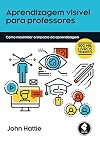
Como maximizar a aprendizagem na escola? John Hattie responde a essa e a outras questões sobre o que, de fato, funciona para aumentar o impacto da aprendizagem nas escolas. A partir de sua vasta experiência e de pesquisas que envolveram milhões de estudantes no mundo todo, o autor apresenta conceitos pioneiros e ensina como aplicar os princípios da aprendizagem visível em qualquer sala de aula.
Dec 4, 2024Portuguese (Brazil)
Lists
You May Also Like


Associated Authors
Statistics
- Works
- 42
- Also by
- 2
- Members
- 943
- Popularity
- #27,255
- Rating
- 4.2
- Reviews
- 4
- ISBNs
- 149
- Languages
- 7