
Gina Rippon
Author of The Gendered Brain: The new neuroscience that shatters the myth of the female brain
Works by Gina Rippon
The Gendered Brain: The new neuroscience that shatters the myth of the female brain (2019) 337 copies, 10 reviews
The Lost Girls of Autism: How Science Failed Autistic Women - and the New Research that's Changing the Story (2025) 46 copies, 1 review
Tagged
Common Knowledge
- Legal name
- Rippon, Georgina Mary Jane
- Birthdate
- 1950
- Gender
- female
- Occupations
- Emeritus professor of cognitive neuroimaging
- Organizations
- University of Aston
- Nationality
- UK
- Map Location
- England, UK
Members
Reviews
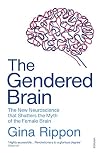
You would think that ascribing skills and preferences to people solely based on one of their protected characteristics would have been debunked outright by now and would be considered as mumbo-jumbo as craniometry or astrology. Well, think again...
When it comes to gender indeed, there is still this pervasive idea that men and women are innately different when it comes to brain wiring and cognitive skills, that such differences are inscribed into our biology ever before we are born (at the show more foetal stage, then), and that such biological determinism is so inescapable that giving Barbies to boys or Lego to girls may be laudable, but a form of social engineering going counter-nature (don't laugh: I've personally heard that argument, and more than once...).
On the fun, entertaining side of such view, of course, are all the neuro-babbles and quack drivels so popular these days, and portraying men as being from Mars and women as being from Venus. On the political, social side of such gender essentialism, though, such tenets become far less amusing, and very concerning indeed -these are the sexist and stereotyping tropes which imprison us all into very narrow gender boxes, a boxing which has nothing to do with science but, everything to do with how we culturally define what it means to be a boy/man versus what it means to be a girl/woman. Gina Rippon, a leading neuroscientist, purports here to debunk such silly nonsense.
Quite frankly: I love this book. It's entertaining enough to mock as it should such outright gibberish (what she calls 'neuro-thrash') yet, and more importantly, carefully chiselled to critically assess the science (the real one, not that of a Louann Brizendine; for whom she has no patience whatsoever and I don't blame her...).
She retraces how such gender essentialism came to prominence, and shows how such view negatively impact us all, for instance when it comes to parenting, education, and career choices and the workplace. You might, here, have read her arguments elsewhere. What makes her particularly interesting though, is, I think, how she takes her sweet time to critically review Baron Cohen's work, as much as to debunking some astounding claims, not backed up even by the experiments purporting to support them yet peddled carelessly in the mass medias (e.g. my favourite: that even monkeys show different preferences in toys depending on their gender... Euh? Nope!). As a brain scientist, of course, she also outlines the crucial importance of brain plasticity, a key feature most people either don't understand, or fail to grasp the massive contribution into defining how we identify ourselves.
Stereotypes and gender expectations are so deeply ingrained that, it's easy to fall into the trap of seeing them as being, well, nothing but 'natural'. And hop! Don't question. That's how it is, ladies and gentlemen, and questioning the status quo 'ain't natural'. And yet, questioning we must; not only because the gender essentialism underpinning such 'neuro-thrash' are harmful to us all, but, also, because it's nothing but reductionism, as reductionist as ascribing different skills and preferences to various ethnic populations once was. Gender, then, is the last bastion to shatter.
If you ever had a debate with partisans of the 'gendered brain' view, then you know how stubborn and mislead they can be. Pointing to their many fallacies can feel like being a David going against Goliath! But, then again, don't despair: David won, in the end; and so, if you ever need yet another stone into your sling, well, here's a book for you. Enjoy!
For those interested, I blogged about this whole issue some time ago. There: https://www.aurelienthomas.org/post/brains-and-b-ll-cks show less
When it comes to gender indeed, there is still this pervasive idea that men and women are innately different when it comes to brain wiring and cognitive skills, that such differences are inscribed into our biology ever before we are born (at the show more foetal stage, then), and that such biological determinism is so inescapable that giving Barbies to boys or Lego to girls may be laudable, but a form of social engineering going counter-nature (don't laugh: I've personally heard that argument, and more than once...).
On the fun, entertaining side of such view, of course, are all the neuro-babbles and quack drivels so popular these days, and portraying men as being from Mars and women as being from Venus. On the political, social side of such gender essentialism, though, such tenets become far less amusing, and very concerning indeed -these are the sexist and stereotyping tropes which imprison us all into very narrow gender boxes, a boxing which has nothing to do with science but, everything to do with how we culturally define what it means to be a boy/man versus what it means to be a girl/woman. Gina Rippon, a leading neuroscientist, purports here to debunk such silly nonsense.
Quite frankly: I love this book. It's entertaining enough to mock as it should such outright gibberish (what she calls 'neuro-thrash') yet, and more importantly, carefully chiselled to critically assess the science (the real one, not that of a Louann Brizendine; for whom she has no patience whatsoever and I don't blame her...).
She retraces how such gender essentialism came to prominence, and shows how such view negatively impact us all, for instance when it comes to parenting, education, and career choices and the workplace. You might, here, have read her arguments elsewhere. What makes her particularly interesting though, is, I think, how she takes her sweet time to critically review Baron Cohen's work, as much as to debunking some astounding claims, not backed up even by the experiments purporting to support them yet peddled carelessly in the mass medias (e.g. my favourite: that even monkeys show different preferences in toys depending on their gender... Euh? Nope!). As a brain scientist, of course, she also outlines the crucial importance of brain plasticity, a key feature most people either don't understand, or fail to grasp the massive contribution into defining how we identify ourselves.
Stereotypes and gender expectations are so deeply ingrained that, it's easy to fall into the trap of seeing them as being, well, nothing but 'natural'. And hop! Don't question. That's how it is, ladies and gentlemen, and questioning the status quo 'ain't natural'. And yet, questioning we must; not only because the gender essentialism underpinning such 'neuro-thrash' are harmful to us all, but, also, because it's nothing but reductionism, as reductionist as ascribing different skills and preferences to various ethnic populations once was. Gender, then, is the last bastion to shatter.
If you ever had a debate with partisans of the 'gendered brain' view, then you know how stubborn and mislead they can be. Pointing to their many fallacies can feel like being a David going against Goliath! But, then again, don't despair: David won, in the end; and so, if you ever need yet another stone into your sling, well, here's a book for you. Enjoy!
For those interested, I blogged about this whole issue some time ago. There: https://www.aurelienthomas.org/post/brains-and-b-ll-cks show less
Gender and Our Brains: How New Neuroscience Explodes the Myths of the Male and Female Minds by Gina Rippon

Gender and Our Brains is a book which has a very vast scope, but it's also written in a relatively simple style, easy for most people to follow. Its main topics are:
1. The ways in which scientists rationalized the supposed difference between "male brains" and "female brains" before we had the ability to observe brain activity.
2. The way in which "neurobullshit" has been used to push the supposed difference between "male brains" and "female brains."
3. What the actual research says about how show more the brain works.
4. What the actual research says about the differences between "male brains" and "female brains."
5. How the brains of babies work, and the attempts to find differences between male and female babies.
6. How responsible research into brain differences between individuals and groups may be conducted in the future.
I was already used to reading books from Cordelia Fine and other scientists talking about how science has butchered the issue. However, this book goes farther than any I've seen in how throughly it addresses the issue and how much it captures the excitement of neurological research. Rippon is a great popularizer and I look forward to reading more from her in the future. show less
1. The ways in which scientists rationalized the supposed difference between "male brains" and "female brains" before we had the ability to observe brain activity.
2. The way in which "neurobullshit" has been used to push the supposed difference between "male brains" and "female brains."
3. What the actual research says about how show more the brain works.
4. What the actual research says about the differences between "male brains" and "female brains."
5. How the brains of babies work, and the attempts to find differences between male and female babies.
6. How responsible research into brain differences between individuals and groups may be conducted in the future.
I was already used to reading books from Cordelia Fine and other scientists talking about how science has butchered the issue. However, this book goes farther than any I've seen in how throughly it addresses the issue and how much it captures the excitement of neurological research. Rippon is a great popularizer and I look forward to reading more from her in the future. show less
Gender and Our Brains: How New Neuroscience Explodes the Myths of the Male and Female Minds by Gina Rippon
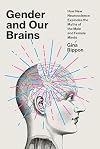
A great compendium of the state of neuroscience where the male and female brain are concerned. The author is a neuroscientist who nevertheless writes lucid, readable prose, and explains the state of the science of gender differences in the brain. She details the history of looking for those differences, and what modern techniques of brain imaging have found. It is a masterful work, and recent, so it is not dated information. She gives ample documentation, and does not put so much in show more footnotes that you constantly have to move back and forth to find out crucial information. It is laid out in a coherent manner and flows fluidly from topic to topic. She includes a long discussion on the plasticity of brains, and on the data we have obtained from extremely young infants, and walks through what that likely means, as well as how it has been interpreted (and misinterpreted) in the media and in the popular mind Highly recommended. show less
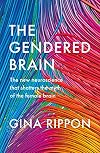
While I would not recommend this as the first book on this topic to read, it is a very wide-ranging look at the current state of understanding on brain differences between males and females. The main take home is that male and female brains are likely more alike than they are different, and many of the differences that exist in adult brains between the sexes are probably caused more by past experience (environment) than biology. The author is not attempting to show that male and female show more brains do not differ, but rather that we have not yet been able to identify significant differences, or at least not significant biologically based differences. The brain is very plastic and adaptive, so that adult male and female brains do differ, but how much of that is inborn is an open question. She also suggests that gender differences in the brain are more appropriately described as a continuum from male to female gendered, and based on current evidence I would have to agree.
Another large part of the book deals with the reasons that there are so few women in STEM professions. Although there are no comprehensive explanations the author outlines a lot of plausible reasons. Since women clearly have the same ability to perform well in STEM skills, it is not ability that is keeping them out. Rippon suggests it is a combination of "stereotype threat" and the discomfort of dealing with the chilly, misogynist environment they are presented with in higher education in STEM fields. Stereotype threat, the reduction in performance due to awareness of the stereotype that women cannot manage the tasks required in STEM fields, lowers women's performance, and when this is combined with the general tendency to require higher performance from women than men, many women simply give up. The chilly environment can also lower their self-esteem and cause them to self-silence, thus making it less likely they will succeed. Unless things change a lot in STEM higher education, women will likely continue to be underrepresented in STEM professions. show less
Another large part of the book deals with the reasons that there are so few women in STEM professions. Although there are no comprehensive explanations the author outlines a lot of plausible reasons. Since women clearly have the same ability to perform well in STEM skills, it is not ability that is keeping them out. Rippon suggests it is a combination of "stereotype threat" and the discomfort of dealing with the chilly, misogynist environment they are presented with in higher education in STEM fields. Stereotype threat, the reduction in performance due to awareness of the stereotype that women cannot manage the tasks required in STEM fields, lowers women's performance, and when this is combined with the general tendency to require higher performance from women than men, many women simply give up. The chilly environment can also lower their self-esteem and cause them to self-silence, thus making it less likely they will succeed. Unless things change a lot in STEM higher education, women will likely continue to be underrepresented in STEM professions. show less
Lists
Awards


You May Also Like


Statistics
- Works
- 2
- Members
- 383
- Popularity
- #63,100
- Rating
- 4.0
- Reviews
- 11
- ISBNs
- 20
- Languages
- 2