
Sarah M. Broom
Author of The Yellow House: A Memoir
About the Author
Sarah M. Broom received her Masters in Journalism from the University of California, Berkeley in 2004. She was awarded a Whiting Foundation Creative Nonfiction Grant in 2016 and was a finalist for the New York Foundation for the Arts Fellowship in Creative Nonfiction in 2011. She has also been show more awarded fellowships at Djerassi Resident Artists Program and The MacDowell Colony. She lives in New York state. show less
Image credit: https://news.tulane.edu/pr/2019-national-book-award-winner-sarah-m-broom-speak-t... Photo by Adam Shemper
Works by Sarah M. Broom
Associated Works
Tagged
Common Knowledge
- Birthdate
- 1979
- Gender
- female
- Education
- Texas (anthropology and journalism)
University of California, Berkeley (MA|journalism) - Organizations
- The New Yorker (contributor)
The New York Times Magazine (contributor) - Relationships
- Rees, Dee (wife)
- Nationality
- USA
- Birthplace
- New Orleans, Louisiana, USA
- Places of residence
- New Orleans East, Louisiana, USA
Harlem, New York, USA - Associated Place (for map)
- Louisiana, USA
Members
Reviews
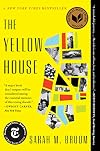
As many others have said before me, The Yellow House is a stunning, multi-layered family history and memoir. Sarah Broom grew up, for lack of a better term, living a dual existence. As the youngest of a large family whose oldest siblings are decades older than her, she is both the cherished youngest sister and youngest daughter, but also the one who does not directly share many family experiences with the oldest of her eleven siblings, often being told about events that occurred "before," show more meaning before she was born or of age to take part or remember. Only six months old when her father dies, she is the only of the twelve siblings to grow up fatherless. Named Monique at birth, Moore, at her mother's prompting, begin going by Sarah when she enters school, her mother believing this more neutral name will make teachers and even classmates take her more seriously. As time goes by, only her family members continue to call her Monique, or, more commonly, Mo. In an important way, the whole family is one of outsiders, for they live in the New Orleans East neighborhood, a failed urban project, built on paved over meadows and swampland, at onetime promised to create a working-class neighborhood of dreams, but abandoned 20 years later as hopeless, morphing from middle-class white to hard scrapple black, with houses replaced by junkyards and tire factories, a place where bodies are dumped and where policeman park at night to get oral sex in their cars from hookers. Most maps of the town do not even include New Orleans East at all. {A note that I lived in New Orleans for seven years, and in a relatively nearby neighborhood, Gentilly, but I don't think I once set foot in New Orleans East.} The area is a toxic outlier, outside the margins of what New Orleanians, and all tourists, think of the parameters of their city. And finally there is Hurricane Katrina, which turns the whole of New Orleans into a city of outsiders, with huge swaths of the the population forced to emigrate, their neighborhoods and houses gone, many never to return. Some may remember the time right after the storm when there was a serious conversation throughout the country as to whether New Orleans was worth rebuilding at all. Sarah, a college graduate, a writer, leaves for New York to live in Harlem. But the city, and especially her family's stories continually pull her back.
The book's heroine is Broom's mother, Ivory Mae, high of personal standards and a steady and loving presence for her children. The centerpiece of Broom's story is the yellow house of the title, Ivory Mae's dream of independence and well-being, shoddily built at the outset and continually undermined by half-finished repair and renovation projects undertaken by never completed by various family members and friends that leave floors incomplete and unsteady, doors and windows sitting improperly in their frames, and plumbing jury-rigged. Yet it is the family's home and center, and the place where Broom lives the entirety of her childhood and adolescence.
For the purposes of this memoir, Moore conducted many interviews with family members, and delved into newspaper and government records to recreate not only the lives of her parents and siblings, but also the lives of the generations before them. Many of these stories are, of course, in the nature of oral history, their details at the mercy of the tellers' memories, and Broom presents them as such, though sometimes augmented from fragments she's been able to find through city records. Then there is the anguish of Katrina, referred to almost exclusively in The Yellow House simply as Water, is described in deeply affecting yet matter of fact terms: The danger of the storm itself, as her brother and a friend sit on their roofs, with the floods almost up to where they perch, for a week, waiting for rescue. The ruination of their delapitated yet beloved family home and its callous demolition by the city, with nary a warning sent, some time afterward. The family's scattering, with some siblings ending up as far away as California and Arizona. Ivory Mae's years-long wait for promised government grant money so the family house can be rebuilt.
And through all this we experience Sarah's search for herself, for her own place within the family, for a deeper understanding of her place as a New Orleanian, if indeed such a place exists for her. This is a compelling, multi-layered, extremely well written memoir full of compassion and love and frustration and tragedy, all seamlessly held together by Broom's sense of narrative and talents of description. Here's just one example of Brooms writing:
"Grandmother was the kind of woman Eddie admired, hardworking and concerned with having nice things. She had two cars parked in the garage of her house on Mockingbird Lane even though she could not drive (cars for people to drive her around in). She was contained but occasionally mercurial. She could go off on you in a spoilt second. When the presentation of the body stands in for all the qualities the world claims you cannot possess, some people call you elegant. Grandmother was that, yes, but sometimes elegance is just willpower and grace, a way to keep the flailing parts of the self together." show less
The book's heroine is Broom's mother, Ivory Mae, high of personal standards and a steady and loving presence for her children. The centerpiece of Broom's story is the yellow house of the title, Ivory Mae's dream of independence and well-being, shoddily built at the outset and continually undermined by half-finished repair and renovation projects undertaken by never completed by various family members and friends that leave floors incomplete and unsteady, doors and windows sitting improperly in their frames, and plumbing jury-rigged. Yet it is the family's home and center, and the place where Broom lives the entirety of her childhood and adolescence.
For the purposes of this memoir, Moore conducted many interviews with family members, and delved into newspaper and government records to recreate not only the lives of her parents and siblings, but also the lives of the generations before them. Many of these stories are, of course, in the nature of oral history, their details at the mercy of the tellers' memories, and Broom presents them as such, though sometimes augmented from fragments she's been able to find through city records. Then there is the anguish of Katrina, referred to almost exclusively in The Yellow House simply as Water, is described in deeply affecting yet matter of fact terms: The danger of the storm itself, as her brother and a friend sit on their roofs, with the floods almost up to where they perch, for a week, waiting for rescue. The ruination of their delapitated yet beloved family home and its callous demolition by the city, with nary a warning sent, some time afterward. The family's scattering, with some siblings ending up as far away as California and Arizona. Ivory Mae's years-long wait for promised government grant money so the family house can be rebuilt.
And through all this we experience Sarah's search for herself, for her own place within the family, for a deeper understanding of her place as a New Orleanian, if indeed such a place exists for her. This is a compelling, multi-layered, extremely well written memoir full of compassion and love and frustration and tragedy, all seamlessly held together by Broom's sense of narrative and talents of description. Here's just one example of Brooms writing:
"Grandmother was the kind of woman Eddie admired, hardworking and concerned with having nice things. She had two cars parked in the garage of her house on Mockingbird Lane even though she could not drive (cars for people to drive her around in). She was contained but occasionally mercurial. She could go off on you in a spoilt second. When the presentation of the body stands in for all the qualities the world claims you cannot possess, some people call you elegant. Grandmother was that, yes, but sometimes elegance is just willpower and grace, a way to keep the flailing parts of the self together." show less

Sarah Broom grew up in New Orleans, the youngest of twelve children. She never knew her father Simon, who died six months after Sarah was born. The family lived in New Orleans East, on a short street sandwiched between a busy highway and railroad tracks. While they were far from financially secure, they were close-knit. Sarah’s mother Ivory moved heaven and earth to provide for her children, and as the children grew into adults they looked after one another, too. Their home, the Yellow show more House, was lovingly cared for by Ivory, but it was also riddled with structural issues due to its age, construction, and attempts at remodeling to meet the needs of a growing family.
Everything changed when Hurricane Katrina ripped through the city in 2005. By that time, Sarah was twenty-five and living in New York, but most of her family was still in New Orleans. Several family members evacuated to California and Texas. One brother rode out the storm and found himself living on a rooftop for a week before being rescued, The Yellow House did not survive the storm. Not surprisingly, the scope of the tragedy and her family’s long-term displacement took its toll on Sarah.
Who has the rights to the story of a place? Are these rights earned, bought, fought and died for? Or are they given? Are they automatic, like an assumption? Self-renewing? Are these rights a token of citizenship belonging to those who stay in the place or to those who leave and come back to it? Does the act of leaving relinquish one’s rights to the story of a place? Who stays gone? Who can afford to return?
Growing up, the Yellow House had been a source of embarrassment. Sarah and her siblings were actively discouraged from inviting friends to visit; on the rare occasions this occurred, it did not go well. But even as Sarah forged an identity that could never reveal where she lived, the house was still home, a foundation holding up every member of the family. With its loss, Sarah also lost the structural foundation in her life. The Yellow House is the product of Sarah’s efforts to reconstruct her family history, much of which she had not been aware of, to understand the ways in which Katrina impacted each person, and to determine what this all means for her life moving forward. show less
Everything changed when Hurricane Katrina ripped through the city in 2005. By that time, Sarah was twenty-five and living in New York, but most of her family was still in New Orleans. Several family members evacuated to California and Texas. One brother rode out the storm and found himself living on a rooftop for a week before being rescued, The Yellow House did not survive the storm. Not surprisingly, the scope of the tragedy and her family’s long-term displacement took its toll on Sarah.
Who has the rights to the story of a place? Are these rights earned, bought, fought and died for? Or are they given? Are they automatic, like an assumption? Self-renewing? Are these rights a token of citizenship belonging to those who stay in the place or to those who leave and come back to it? Does the act of leaving relinquish one’s rights to the story of a place? Who stays gone? Who can afford to return?
Growing up, the Yellow House had been a source of embarrassment. Sarah and her siblings were actively discouraged from inviting friends to visit; on the rare occasions this occurred, it did not go well. But even as Sarah forged an identity that could never reveal where she lived, the house was still home, a foundation holding up every member of the family. With its loss, Sarah also lost the structural foundation in her life. The Yellow House is the product of Sarah’s efforts to reconstruct her family history, much of which she had not been aware of, to understand the ways in which Katrina impacted each person, and to determine what this all means for her life moving forward. show less
The author of this one is the youngest in a family of eleven children and grew up in a little-known part of New Orleans that has been ignored by both city planners and tourists almost since its founding. The place was pretty desolate: in the shadow of a nearby highway, it featured worse-than-mediocre schools and a frightening amount of street crime. The house from which the book takes its name was also a pretty precarious affair, a structure than housed a whole lot of people that seemed to show more start sinking into the Louisiana swamp just about as soon as it was built. As tourism exploded in the French Quarter, the author's neighborhood slowly turned into an industrial nowhere, and that was before Katrina hit. This is a book about surviving in the face of long odds. The house referred to in the title is both a home in the conventional sense -- the author expresses real affection for it -- and an object lesson about how to carve out your own space in a time and place that seem to be less and less concerned about the survival of the people in it. I've said this about a lot of midlife memoirs, but it's a small wonder that this book exists, but I'm glad that it does.
The author also proves that she's a pretty able historical researcher, talking us through the history of her family from plantation times onward, picking up what she can about the sort of people whose forgetting sometimes seems inevitable. From one perspective, the book's central mystery might be Broom's own father, Simon Broom, who died suddenly when the author was just six months old. Living, as I do, in a era of media oversaturation, I was surprised that the author was able to locate only six photographs of her father. Both the reader and the author mostly meet him through others' stories. Whether the author's digging through country records, talking to members of the jazz band he used to play in, or describing how New Orleans' development has consistently short-changed most of its own residents, you get a sense of how consistently precarious her family's existence has been. The author was actually working for a magazine in New York City when Katrina hit, but, fittingly enough, she spends a bit of time in Burundi, a place where the coming apocalypse is taken for granted. At the end of the book, the author's big family is dispersed, and the New Orleans she once knew is being increasingly overshadowed by the tourist attractions that have made the city famous, but everyone is still, more or less, still on their feet. And now the baby of the family's gone and written a book that won the National Book Award, and, what's more, absolutely deserves it. This long, complex, and occasionally meandering story is inspiring in more ways than one. In rescuing what was almost certain to be erased by time, this book does one of the things that all good writing is supposed to do. "The Yellow House" is well worth your time. show less
The author also proves that she's a pretty able historical researcher, talking us through the history of her family from plantation times onward, picking up what she can about the sort of people whose forgetting sometimes seems inevitable. From one perspective, the book's central mystery might be Broom's own father, Simon Broom, who died suddenly when the author was just six months old. Living, as I do, in a era of media oversaturation, I was surprised that the author was able to locate only six photographs of her father. Both the reader and the author mostly meet him through others' stories. Whether the author's digging through country records, talking to members of the jazz band he used to play in, or describing how New Orleans' development has consistently short-changed most of its own residents, you get a sense of how consistently precarious her family's existence has been. The author was actually working for a magazine in New York City when Katrina hit, but, fittingly enough, she spends a bit of time in Burundi, a place where the coming apocalypse is taken for granted. At the end of the book, the author's big family is dispersed, and the New Orleans she once knew is being increasingly overshadowed by the tourist attractions that have made the city famous, but everyone is still, more or less, still on their feet. And now the baby of the family's gone and written a book that won the National Book Award, and, what's more, absolutely deserves it. This long, complex, and occasionally meandering story is inspiring in more ways than one. In rescuing what was almost certain to be erased by time, this book does one of the things that all good writing is supposed to do. "The Yellow House" is well worth your time. show less
A before and after memoir of a large family displaced from their home in East New Orleans by Hurricane Katrina. As the name suggests, this area bounded by waterways (the Industrial Canal, the Intracoastal Waterway and Lake Pontchartrain) lies east of the old City of New Orleans, its downtown, its Garden District, its French Quarter; claimed from swamp and marshland to be a "suburb within the city", planned developments and apartment complexes proliferated until the oil bust brought it all to show more a halt, leaving proposed projects half-built, with highway interchanges that led nowhere and a dwindling, increasingly poorer population. As a young widow, the author's mother, Ivory Mae Webb, bought the yellow house with insurance money; she eventually raised 12 children there. By the time Sarah was born nearly 20 years later, the house had been subject to time, weather, poverty, subsidence, neglect, remodeling projects that were never quite finished, haphazard repairs, shoddy wiring, failing plumbing and the "shifty settling in of shame". Later, Sarah's mother would discourage the children from bringing friends home, because "this house not all that comfortable for other people". But it was Home, it was filled with love, with homemade curtains and birthday cakes, with pictures taken to commemorate special occasions like graduations and weddings, with Ivory Mae's determination to keep things as decent as possible. It was New Orleans to residents of the neighborhood; when Sarah took an apartment in the French Quarter, her mother came to visit---as a tourist in her home town. Even after Hurricane Katrina inundated the neighborhood and blew the house apart, Sarah and some of her siblings remained drawn to the derelict yellow house, and later to the vacant lot where it had once stood, keeping the grass cut and trash off the lot, even though it would never be "home" to any of them again. This is a powerful, challenging book. I found the first several chapters of family history interesting, but not quite fully engaging. However, once the author began telling stories of the times she remembered herself, the pages flew. Highly recommended. show less
Lists
Which house? (1)
BLM (1)
Awards


You May Also Like


Associated Authors
Statistics
- Works
- 1
- Also by
- 1
- Members
- 1,312
- Popularity
- #19,573
- Rating
- 3.9
- Reviews
- 48
- ISBNs
- 11
- Languages
- 1
- Favorited
- 1