
Bodleian Library
Author of The Book Lovers' Anthology: A Compendium of Writing about Books, Readers and Libraries
About the Author
Image credit: Bodleian Library, Oxford. Photo by Laurent / Flickr.
Series
Works by Bodleian Library
The Book Lovers' Anthology: A Compendium of Writing about Books, Readers and Libraries (2014) 111 copies, 1 review
J.R.R. Tolkien : life and legend : an exhibition to commemorate the centenary of the birth of J.R.R. Tolkien (1892-1973) (2005) 27 copies
Wonderful things from 400 years of collecting : the Bodleian Library 1602-2002 (2002) 16 copies, 1 review
The Bodleian Library and Its Friends: Catalogue of an Exhibition held 1969-1970 (1969) 7 copies, 1 review
The Bodleian Library account book, 1613-1646 (Oxford Bibliographical Society publications) (1983) 6 copies
Town and Gown: Eight Hundred Years of Oxford Life - An Exhibition at the Bodleian Library, Oxford, 1982 (1982) 5 copies
Wycliffe and His Followers: An Exhibition to Mark the 600th Anniversary of the Death of John Wycliffe (1984) 3 copies
Duke Humfrey and English humanism in the fifteenth century : catalogue of an exhibition held in the Bodleian Library, Oxford (1970) 2 copies
Visitors' guide 2 copies
The Bodleian Library in photographs. 2 copies
Sidney, Sir Philip: Life, Death and Legend - An Exhibition to Commemorate the 400th Anniversary of the Death of Sir Philip Sidney (1986) 2 copies
The Turkish Legacy: An Exhibition of Books and Manuscripts to Mark the Fiftieth Anniversary of the Death of the Founder of the Turkish Rep (1988) 2 copies
Illuminated initials 2 copies
Flowers, trees and animals 1 copy
Catalogue of the Persian, Turkish, Hind̂ust̂an̂i and Pusht̂u manuscripts in the Bodleian Library 1 copy
Tolkien Alphabet Bookplates 1 copy
Trecentale Bodleianum. A Memorial Volume for the three hundredth anniversary of the public funeral of Sir Thomas Bodley, March 29, 1613. (1913) 1 copy, 1 review
Wilberforce : slavery, religion & politics. Series 1, The Wilberforce papers from the Bodleian Library, Oxford : a listing and guide to series one, parts 1-3 (1998) — Composer — 1 copy
Duke Humphrey's Night 1 copy
Cataloguing rules 1 copy
Printing and Publishing at Oxford: The Growth of a Learned Press 1478-1978, Catalogue of an Exhibition (1978) 1 copy
First-line index of English poetry, 1500-1800, in manuscripts of the Bodleian Library, Oxford 1 copy
Como Ser Buen Amante 1 copy
Associated Works
Instructions for British Servicemen in Germany, 1944 (Instructions for Servicemen) (1944) — Editor, some editions — 114 copies, 2 reviews
Tagged
Common Knowledge
- Canonical name
- Bodleian Library
- Gender
- n/a
- Occupations
- library
- Organizations
- University of Oxford
Oxford University Library Services - Awards and honors
- Listed building (Grade I)
- Nationality
- UK
- Places of residence
- Oxford, Oxfordshire, England, UK
- Associated Place (for map)
- England, UK
Members
Discussions
Cairo Genizah collection now online through the Bodleian in Ancient and Medieval Manuscripts (April 5)
Crowdsourced cataloging at the Bodleian in Flash-Mob Cataloging (May 2012)
Reviews
The Book Lovers' Anthology: A Compendium of Writing about Books, Readers and Libraries by Bodleian Library The
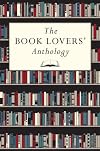
I came across a most unusual book. It had no author, editor, or translator, but it did have notes and an index of nearly 30 pages. The Book Lovers’ Anthology found its way to publication when compiled by the Bodliean Library at the University of Oxford. So we have no plot, no pictures, no characters – except for the thoughts and fancies of many noteworthy literary figures dating back to the ancient Greeks. Therefore, all I can do is offer some tempting tidbits to make you smile, laugh, show more and occasionally groan.
In a letter to Samuel Taylor Coleridge, Robert Southey wrote, “Talk of the happiness of getting a great prize in the lottery! What is that to opening a box of books! The joy upon lifting up the cover must be something like what we shall feel when Peter the Porter opens the doors upstairs, and says, ‘Please do walk in, sir.’ That I shall never be paid for my time and labour according to the current value of time and labour, is tolerably certain; but if anyone should offer me £10,000 to forgo that labour, I should bid him and his money go to the devil, for twice the sum could not purchase me half the enjoyment. It will be a great delight to me in the next world, to take a fly and visit these old worthies, who are my only society here, and to tell them what excellent company I found them here at the lakes of Cumberland, two centuries after they had been dead and turned to dust. In plain truth, I exist more among the dead than the living, and think more about them, and, perhaps, feel more about them” (4).
Not all the contributors are well-known. C.C. Colton, and English Vicar, wrote, “We should choose our books as we would our companions, for their sterling and intrinsic merit” (6). From this side of the pond, Washington Irving wrote in his Sketch Book, “The scholar only knows how dear these silent, yet eloquent, companions of pure thoughts and innocent hours become in the season of adversity” (9). Ralph Waldo Emerson notes, “It is remarkable, the character of the pleasure we derive from the best books. They impress us with the conviction that one nature wrote, and the same reads. We read the verses of one of the great English poets, of Chaucer, of Marvell, of Dryden, with the most modern joy – with a pleasure, I mean, which is in great part caused by the abstraction of all time from their verses. There is some awe mixed with the joy of our surprise, when this poet, who lived in some past world, two or three hundred years ago, says that which lies close to my own soul, that which I also had wellnigh thought and said” (26).
Robert Lowe, Lord Sherbrooke spoke at the Croyden Science and Art Schools in 1869. He exhorted the students to, “Cultivate above all things a taste for reading. There is no pleasure so cheap, so innocent, and so remunerative as the real, hearty pleasure and taste for reading. It does not come to everyone naturally. Some people take to it naturally, and others do not, but I advise you to cultivate it, and endeavor to promote it in your minds. In order to do that, you should read what amuses you and pleases you. You should not begin with difficult works, because, if you do, you find the pursuit dry and tiresome. I would even say to you, read novels, read frivolous books, read anything that will amuse you and give you a taste for reading” (35). I have given this exact same advice to my students, who – in increasing numbers – do not read.
So thank you Emerson, and Voltaire, Jane Austen, George Eliot, Samuel Johnson, Shakespeare, Dickens, Swift, Laurence Sterne, Milton, Tennyson, Thackery, and many dozens more. The Book Lovers’ Anthology: A Compendium of Writing about Books, Readers & Libraries compiled by the Bodliean Library in Oxford, England should not be read like a novel. Browse through and zero in on a favorite writer. Open the volume to random pages and find all the wonders and delights of reading and books you share with these giants of literature. 5 stars.
--Chiron, 5/10/15 show less
In a letter to Samuel Taylor Coleridge, Robert Southey wrote, “Talk of the happiness of getting a great prize in the lottery! What is that to opening a box of books! The joy upon lifting up the cover must be something like what we shall feel when Peter the Porter opens the doors upstairs, and says, ‘Please do walk in, sir.’ That I shall never be paid for my time and labour according to the current value of time and labour, is tolerably certain; but if anyone should offer me £10,000 to forgo that labour, I should bid him and his money go to the devil, for twice the sum could not purchase me half the enjoyment. It will be a great delight to me in the next world, to take a fly and visit these old worthies, who are my only society here, and to tell them what excellent company I found them here at the lakes of Cumberland, two centuries after they had been dead and turned to dust. In plain truth, I exist more among the dead than the living, and think more about them, and, perhaps, feel more about them” (4).
Not all the contributors are well-known. C.C. Colton, and English Vicar, wrote, “We should choose our books as we would our companions, for their sterling and intrinsic merit” (6). From this side of the pond, Washington Irving wrote in his Sketch Book, “The scholar only knows how dear these silent, yet eloquent, companions of pure thoughts and innocent hours become in the season of adversity” (9). Ralph Waldo Emerson notes, “It is remarkable, the character of the pleasure we derive from the best books. They impress us with the conviction that one nature wrote, and the same reads. We read the verses of one of the great English poets, of Chaucer, of Marvell, of Dryden, with the most modern joy – with a pleasure, I mean, which is in great part caused by the abstraction of all time from their verses. There is some awe mixed with the joy of our surprise, when this poet, who lived in some past world, two or three hundred years ago, says that which lies close to my own soul, that which I also had wellnigh thought and said” (26).
Robert Lowe, Lord Sherbrooke spoke at the Croyden Science and Art Schools in 1869. He exhorted the students to, “Cultivate above all things a taste for reading. There is no pleasure so cheap, so innocent, and so remunerative as the real, hearty pleasure and taste for reading. It does not come to everyone naturally. Some people take to it naturally, and others do not, but I advise you to cultivate it, and endeavor to promote it in your minds. In order to do that, you should read what amuses you and pleases you. You should not begin with difficult works, because, if you do, you find the pursuit dry and tiresome. I would even say to you, read novels, read frivolous books, read anything that will amuse you and give you a taste for reading” (35). I have given this exact same advice to my students, who – in increasing numbers – do not read.
So thank you Emerson, and Voltaire, Jane Austen, George Eliot, Samuel Johnson, Shakespeare, Dickens, Swift, Laurence Sterne, Milton, Tennyson, Thackery, and many dozens more. The Book Lovers’ Anthology: A Compendium of Writing about Books, Readers & Libraries compiled by the Bodliean Library in Oxford, England should not be read like a novel. Browse through and zero in on a favorite writer. Open the volume to random pages and find all the wonders and delights of reading and books you share with these giants of literature. 5 stars.
--Chiron, 5/10/15 show less
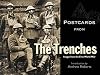
An interesting overview of the sorts of postcards available from the First World War. Some are quite brutal and graphic. I couldn't image them being sent home from the front lines. Others quite humorous. An important collection.
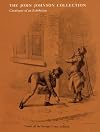
'The John Johnson Collection: catalogue of an exhibition' (Bodleian Library, 1971) is fascinating. I had forgotten that in the 1930s some ephemera was discarded by the Bodleian. On page 12 of the catalogue there is a reference to a statement in the Bodleian Library Record for October 1938. These words appear under the heading Elimination: 'When a valueless item offends in both these respects (bulk and the time taken in revising catalogue entries), it is only reasonable to grant to the show more Library authorities the power to 'liquidate' it'. The good news is that some of this ephemera came back through acquisition of the John Johnson Collection. One item I feel I must see is a Spurs v Pompey football programme for the 19th March 1928 match. I am intrigued by the tantalising caption: 'Fred Perry's cartoon on the front of this Official Programme proved a little unfortunate, for Portsmouth, in danger of relegation, beat Tottenham by three goals to nil' (page 59). show less
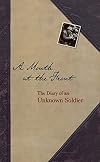
A small book, consisting of a short introduction (providing excellent context) to a short transcription of the WW1 (month long) diary of an (unnamed and, at the time of this publication, unidentified) member of the East Surrey Regiment, who fought at Flanders, before being injured and, whilst the narrative ends abruptly whilst in the hands of the Germans, is understood eventually is returned to England.
The regiment was formed in response to a suggestion that the formation of 'pal's show more battalions' (battations consisting of people from the same geographic area, who would join the same battalion and serve/fight together) would be a more successful recruitment method. The concentrated impact of casualties and injuries on the affected area must may been horrific.
The depiction of the fighting and the seemingly nonsensical movement of troops (on both sides) in the middle of hand to hand combat is realistic. There is no bombastic air displayed by the author.
A small insight into what is currently being encountered in the war between Russia and Ukraine.
The original manuscript was discovered by the Bodleian at the bottom of a box of unrelated donations in 2005. The library has done a good job in bring this piece to a wider audience.
The rating is due the fact that (as already noted) the diary is but a very small fragment.
Big Ship
30 June 2023 show less
The regiment was formed in response to a suggestion that the formation of 'pal's show more battalions' (battations consisting of people from the same geographic area, who would join the same battalion and serve/fight together) would be a more successful recruitment method. The concentrated impact of casualties and injuries on the affected area must may been horrific.
The depiction of the fighting and the seemingly nonsensical movement of troops (on both sides) in the middle of hand to hand combat is realistic. There is no bombastic air displayed by the author.
A small insight into what is currently being encountered in the war between Russia and Ukraine.
The original manuscript was discovered by the Bodleian at the bottom of a box of unrelated donations in 2005. The library has done a good job in bring this piece to a wider audience.
The rating is due the fact that (as already noted) the diary is but a very small fragment.
Big Ship
30 June 2023 show less
Lists
Awards

J.R.R. Tolkien : life and legend : an exhibition to commemorate the centenary of the birth of J.R.R. Tolkien (1892-1973) (Finalist – Inklings Studies – 1993)
You May Also Like


Associated Authors
Statistics
- Works
- 113
- Also by
- 3
- Members
- 881
- Popularity
- #29,073
- Rating
- 3.8
- Reviews
- 13
- ISBNs
- 86
- Languages
- 3