
Setor Fiadzigbey
Author of Bunheads
Works by Setor Fiadzigbey
Associated Works
Tagged
Common Knowledge
- Birthdate
- 20th century
- Occupations
- artist
illustrator - Places of residence
- Accra, Ghana
- Associated Place (for map)
- Accra, Ghana
Members
Reviews

Access a version of the below that includes illustrations on my blog.
Legends: Black Panther (this is clearly what the cover and title page call it, but everyone calls this book Black Panther Legends for some reason) was a four-issue miniseries telling key moments from the history of the Black Panther. We get the death of T'Challa's father at the hands of Klaw, T'Challa meeting Storm for the first time, T'Challa facing down his uncle to acquire the throne, and the first visit of the show more Fantastic Four to Wakanda.
To be honest, I don't really get the point of this. I think when you're retelling an origin story, you need to be able to add something new or different; this is aimed at a younger audience, judging by the art style, but is still supposed to be the mainstream Marvel Universe versions of the characters (according to the League of Comic Geeks website, anyway), not an alternate continuity (like the YA-aimed Marvel Action stories are). But in that case, we'd just gotten a new version of the Black Panther's origin just three years prior! And that version, I really liked; it effectively wove a bunch of disparate elements we'd seen over the years into a coherent whole.
This version just retells some stuff we've seen before in ways I found less effective and less interesting. In particular, I found this version of how T'Chaka died at the hands of Ulysses Klaw not as well done and emotional as the Rise of the Black Panther version, and this version of how T'Challa met and fell in love with Storm boringly simple compared to the version in Eric Jerome Dickey's Storm miniseries. And devoting a whole issue to T'Challa's battle against his uncle to regain the throne (a battle which is purely ceremonial and which his uncle wants him to win, though admittedly his uncle doesn't know it's T'Challa in disguise) seemed overly drawn out and pointless; when I got to the end of that issue, I was very surprised, because so little had happened surely twenty pages hadn't gone by! I also really did not like that it wasn't T'Challa who invited the Fantastic Four to Wakanda in this telling; I think it really undermines the character.
The one thing I did like here was the focus on T'Challa's adoptive brother, Hunter, who was a major character during Priest's run on the title. He's a character we haven't seen much of since, and it's nice to see him folded into the character's origins retroactively. (I don't remember much of Hunter in Rise.) Unfortunately, this thread kind of fizzles out because Hunter plays little role in the final issue.
So, if you're looking for a modern, accessible origin for the Black Panther, I think you're much better off sticking to the only slightly older Rise of the Black Panther version. This one has little to add. show less
Legends: Black Panther (this is clearly what the cover and title page call it, but everyone calls this book Black Panther Legends for some reason) was a four-issue miniseries telling key moments from the history of the Black Panther. We get the death of T'Challa's father at the hands of Klaw, T'Challa meeting Storm for the first time, T'Challa facing down his uncle to acquire the throne, and the first visit of the show more Fantastic Four to Wakanda.
To be honest, I don't really get the point of this. I think when you're retelling an origin story, you need to be able to add something new or different; this is aimed at a younger audience, judging by the art style, but is still supposed to be the mainstream Marvel Universe versions of the characters (according to the League of Comic Geeks website, anyway), not an alternate continuity (like the YA-aimed Marvel Action stories are). But in that case, we'd just gotten a new version of the Black Panther's origin just three years prior! And that version, I really liked; it effectively wove a bunch of disparate elements we'd seen over the years into a coherent whole.
This version just retells some stuff we've seen before in ways I found less effective and less interesting. In particular, I found this version of how T'Chaka died at the hands of Ulysses Klaw not as well done and emotional as the Rise of the Black Panther version, and this version of how T'Challa met and fell in love with Storm boringly simple compared to the version in Eric Jerome Dickey's Storm miniseries. And devoting a whole issue to T'Challa's battle against his uncle to regain the throne (a battle which is purely ceremonial and which his uncle wants him to win, though admittedly his uncle doesn't know it's T'Challa in disguise) seemed overly drawn out and pointless; when I got to the end of that issue, I was very surprised, because so little had happened surely twenty pages hadn't gone by! I also really did not like that it wasn't T'Challa who invited the Fantastic Four to Wakanda in this telling; I think it really undermines the character.
The one thing I did like here was the focus on T'Challa's adoptive brother, Hunter, who was a major character during Priest's run on the title. He's a character we haven't seen much of since, and it's nice to see him folded into the character's origins retroactively. (I don't remember much of Hunter in Rise.) Unfortunately, this thread kind of fizzles out because Hunter plays little role in the final issue.
So, if you're looking for a modern, accessible origin for the Black Panther, I think you're much better off sticking to the only slightly older Rise of the Black Panther version. This one has little to add. show less

Young Misty is a bit nervous at her first day of ballet class, but she quickly catches on and dreams of playing the role of Swanilda in the dance school's upcoming recital of Coppélia.
This is a very sweet picture book, encouraging young readers to make friends, dream big, work hard, and pursue those dreams. The illustrations fit the story well. I could easily see this book becoming a favorite of little ones who love dancing.
This is a very sweet picture book, encouraging young readers to make friends, dream big, work hard, and pursue those dreams. The illustrations fit the story well. I could easily see this book becoming a favorite of little ones who love dancing.
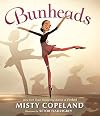
I find Misty Copeland incredibly inspiring. I loved hearing her talk....was it in a webinar? Was it an ALA video? I don't remember now. But I like what she has to share. So I did find this book fun. Now, it will not really appeal to those who don't love ballet (because that is the focus: getting ready for a ballet, ballet moves, etc.)
However, I want to mention that the illustrator, Setor Fiadzigbey, was a debut illustrator. I thought he captured the mystery of Coppelia ( the ballet being show more done) with browns and white and contrast. He captured the passion and the movement of the ballet =) I look forward to seeing what Fiadzigbey does in the future. show less
However, I want to mention that the illustrator, Setor Fiadzigbey, was a debut illustrator. I thought he captured the mystery of Coppelia ( the ballet being show more done) with browns and white and contrast. He captured the passion and the movement of the ballet =) I look forward to seeing what Fiadzigbey does in the future. show less
Good story for children studying dance or other competitive activities. I was not a fan of the illustrations. The angularity didn't seem to fit the storyline.
Lists
Awards


You May Also Like
Associated Authors
Statistics
- Works
- 3
- Also by
- 1
- Members
- 206
- Popularity
- #107,331
- Rating
- 3.7
- Reviews
- 5
- ISBNs
- 8