
Samuel Elmo Martin (1924–2009)
Author of Martin's Concise Japanese Dictionary: English-Japanese Japanese-English
About the Author
Works by Samuel Elmo Martin
Basic Japanese: Learn to Speak Everyday Japanese in 10 Carefully Structured Lessons (MP3 Audio CD Included) (2012) 58 copies, 1 review
Practical Korean: Speak Korean Quickly and Effortlessly (Revised with Audio Recordings & Dictionary) (2009) 49 copies
Korean in a Hurry a Quick Approach to Spoken Korea (Tuttle Language Library) (1954) 30 copies, 1 review
Reference Grammar of Korean: A Complete Guide to the Grammar and History of the Korean Language (1993) 27 copies, 2 reviews
Basic Japanese: Learn to Speak Japanese in 10 Easy Lessons (Fully Revised & Expanded with Manga, Audio Download & a Dictionary) (2017) 2 copies
Language study techniques 1 copy
Martin's Pocket Dictionary - English-japanese, Japanese-english - A Quick And Easy Reference To Modern Japanese (1995) 1 copy
Compact Japanese dictionary 1 copy
Korean morphophonemics 1 copy
Tagged
Common Knowledge
- Canonical name
- Martin, Samuel Elmo
- Legal name
- Martin, Samuel Elmo
- Birthdate
- 1924-01-24
- Date of death
- 2009-11-28
- Gender
- male
- Education
- University of California, Berkeley (BA|1947, MA|1949)
Yale University (PhD|1950) - Occupations
- professor of Far Eastern Languages
- Organizations
- Yale University
- Awards and honors
- Presidential Medal of Honor for Distinguished Cultural Contributions, Korea (1994)
- Short biography
- Married to Nancy Martin, with one daughter, Norah.
- Nationality
- USA
- Birthplace
- Pittsburg, Kansas, USA
- Places of residence
- Emporia, Kansas, USA
New Haven, Connecticut, USA - Place of death
- Vancouver, Washington, USA
- Associated Place (for map)
- USA
Members
Reviews
Martin's Concise Japanese Dictionary: English-Japanese Japanese-English : Fully Romanized With Complete Kanji & Kan by Samuel Elmo Martin
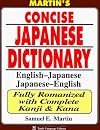
In most respects, this is just one of many compact romanized Japanese dictionaries. What sets it apart and led me to consult it more than I might have otherwise is the fact that it marks rising and falling tones (i.e. to differentiate hashi 'chopsticks' from hashi 'bridge'). It isn't the most crucial aspect of Japanese, but it's a worthwhile bit of information to have on hand and this is an inexpensive source.
(Q)
(Q)
A Reference Grammar of Korean: A Complete Guide to the Grammar and History of the Korean Language by Samuel Elmo Martin
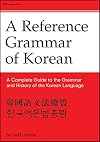
Just got this. Kind of a doorstop but appears definitive. About half the book is discussion of the language, and half is a lexicon of words and word parts. The Yale Romanization system is used—no Hangul. Some clunky ASCII-art diagrams of part-of-speech relationships belie the book's age.
[Two months later] After more looking around, I'm less impressed with this book. A better survey is The Korean Language by H.M. Sohn. Sohn's book is a clearly presented overview of Korean phonology, show more morphology, syntax and history. It makes the Martin book look like a cardboard box full of field notes. show less
[Two months later] After more looking around, I'm less impressed with this book. A better survey is The Korean Language by H.M. Sohn. Sohn's book is a clearly presented overview of Korean phonology, show more morphology, syntax and history. It makes the Martin book look like a cardboard box full of field notes. show less
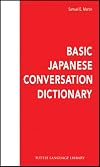
I have to give this little dictionary 5 stars because it was such a life-enhancer for me when I spent some time in Japan - (3 trips, 7 weeks in total). Almost as dangerous as my Collins Gem French dictionary but fortunately for me I came to the conclusion when I was out "in the field" [read anywhere in central Tokyo] that Japanese girls are simply too good for me. Oh.... (and I still think about this after 15 years).
Basic Japanese Learn to Speak Japanese in 10 Easy Lessons (Includes Manga Illustrations, Free MP3 Audio Recordings and a Dictionary) by Samuel Elmo Martin
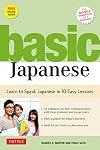
An introduction to Japanese through authentic, commonly-used sentences.This best-selling Japanese textbook is a user-friendly guide for beginners designed for use in a classroom or self-study. It adopts a very different approach from other Japanese language books—teaching you the underlying sentence structures and patterns of Japanese along with essential vocabulary and phrases so you can attain basic fluency quickly. The emphasis is on acquiring a working knowledge of simple, everyday show more Japanese sentences. This new edition has been thoroughly updated and expanded to reflect the way Japanese is spoken in Japan today. Manga illustrations have been added to each dialogue along with the latest jargon for the internet, social media, cellphones, and IT, and a bidirectional dictionary is included at the back. Each self-contained lesson presents a simple four-step method:Step 1: Basic Sentences: Each lesson begins with a few simple sentences. Essential vocabulary and phrases are learned within the context of these sentences. Audio recordings by native speakers are in the free CD-ROM in the book. Step 2: Communication Notes: A detailed discussion of each sentence follows to assist you in understanding the underlying structure and how to form new sentences based on the same pattern. Step 3: Everyday Conversations: Authentic dialogues with manga illustrations and native-speaker recordings show you how people communicate naturally in Japan today through simple, everyday interactions. Step 4: Exercises: Several sets of easy exercises help reinforce your understanding of the key points presented in the lesson and review what you have learned so you can move on to the next lesson. show less
You May Also Like


Associated Authors
Statistics
- Works
- 33
- Members
- 630
- Popularity
- #39,983
- Rating
- 3.5
- Reviews
- 6
- ISBNs
- 53
- Languages
- 1