
Binyamin Appelbaum
Author of The Economists' Hour: False Prophets, Free Markets, and the Fracture of Society
Works by Binyamin Appelbaum
Tagged
Common Knowledge
Members
Reviews
The Economists' Hour: False Prophets, Free Markets, and the Fracture of Society by Binyamin Appelbaum
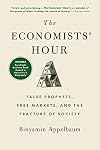
Binyamin Appelbaum produces a stunning overview of the changes in the role and prestige of economists from the 1960s to the present. I majored in economics and think myself fairly conversant, but I was not fully aware of the extent to which economic language and methods are relatively new to society; a shift amounting to nothing less than a revolution. Appelbaum describes how in the 1950s, there were no economists working in the Federal Reserve's leadership, instead being treated there and show more elsewhere as primarily data analysts. Over the course of the book, he looks at how in fields from taxation and currency valuation, to antitrust and corporate regulation, economists propounded a particular laissez-faire approach to policymaking with often devastating consequences.
What particularly struck me is the naked ideology described in the narrative. Milton Friedman shows up repeatedly, bringing a libertarian approach to topics from the draft to tax cuts but his motivation is not evidence, but belief in "freedom". Alan Greenspan is the chief proponent of zero regulation in the financial sector, despite mounting abuses and failures. The narrative highlights the extent to which economists were declaring truths that they did not have evidence for; an unearned confidence that remains today. I don't think Appelbaum believes, nor do I, that the pre-economic ways of thinking were ideal. Tools such as cost-benefit analysis or principles of quantifying problems are clearly beneficial. But for all the economic discussion of positive vs. normative analysis, the ideology clearly shaped (and shapes) the kinds of analyses being proposed, and excludes factors that a society might wish to include. It's particularly shocking when confronted with the human costs of this thinking; in the gutted Rust Belt, in Pinochet's Chile. Even more so when you recognize how deep this neoliberal ideology rooted itself, since most of the relevant actors knew these costs and forged ahead anyway.
I strongly recommend this book; it's an invaluable reminder of the relative newness of certain "facts" that neoliberalism has tended to portray as such. For economists, lauded by society, it's a suggestion to preserve some humility. In an era of rising populism and criticisms of capitalism it remains to be seen whether we can build something better, but I hope this book will give us some of the context to get us there. show less
What particularly struck me is the naked ideology described in the narrative. Milton Friedman shows up repeatedly, bringing a libertarian approach to topics from the draft to tax cuts but his motivation is not evidence, but belief in "freedom". Alan Greenspan is the chief proponent of zero regulation in the financial sector, despite mounting abuses and failures. The narrative highlights the extent to which economists were declaring truths that they did not have evidence for; an unearned confidence that remains today. I don't think Appelbaum believes, nor do I, that the pre-economic ways of thinking were ideal. Tools such as cost-benefit analysis or principles of quantifying problems are clearly beneficial. But for all the economic discussion of positive vs. normative analysis, the ideology clearly shaped (and shapes) the kinds of analyses being proposed, and excludes factors that a society might wish to include. It's particularly shocking when confronted with the human costs of this thinking; in the gutted Rust Belt, in Pinochet's Chile. Even more so when you recognize how deep this neoliberal ideology rooted itself, since most of the relevant actors knew these costs and forged ahead anyway.
I strongly recommend this book; it's an invaluable reminder of the relative newness of certain "facts" that neoliberalism has tended to portray as such. For economists, lauded by society, it's a suggestion to preserve some humility. In an era of rising populism and criticisms of capitalism it remains to be seen whether we can build something better, but I hope this book will give us some of the context to get us there. show less
The Economists' Hour: False Prophets, Free Markets, and the Fracture of Society by Binyamin Appelbaum
The Economists' Hour is a history of how economists have gained primacy in policy-making in all three branches of government. From big business paying judges $1000 to go on a one-week Florida junket where they were taught regulations are bad and anti-trust laws are bad to the takeover of administrative positions, economic ideology has replaced political ideology. Of course, economists insist they are dealing in facts which is laughable when we learn such lovely things such as Milton Friedman show more announcing the results of his research before he began collecting data.
Since World War Two, economists associated with the University of Chicago, most notably Milton Friedman, have waged war on Keynes advocacy of government intervention. They have encouraged the business consolidation and the elimination of regulations, insisting the market will fix everything but stupidity. When their ideas result in disasters like the should-be-criminal predation that led to the crash in 2008, they say it’s stupidity, but now everyone has learned better and it won’t happen again, so regulation is not necessary. Yeah, right.
I learned a lot from this history. We all know the conventional narrative of how America lost manufacturing jobs to other countries. Big business loves to blame labor unions demands for wages and benefits, though they never note the growth in productivity of American workers outpaced their wages. Sometimes we are told that automation destroyed the jobs, however, in this book, we learn how anti-trust, monetary policy, and currency trading played significant roles as well
The Economists’ Hour is an excellent history. It has enough of the gossipy kind of details and snarky quotes from people who knew the people he is writing about to be fun while doing a great job of explaining and presenting economic history. I struggled at first because it seemed like such a huge book. I read and read and read and was only 10% of the way through. Finally, I checked and discovered about 40% of the book is footnotes. Then it seemed less daunting. I was making progress.
This is the most holistic and credible history of how we got here from there in terms of growing inequality. It is nonpartisan and I get the impression that Appelbaum is not a pure advocate for either Friedman or Keynesian theories of economic policy. Instead, he seems to believe that what we really need is pragmatists, not ideologues, who can shift strategies depending on the current situation and reality. He notes the times that Friedman has been right and when the absolutists have been wrong.
If you don’t like where we are, it is smart to learn how we got here so we make the right choices in trying to change it. The Economists’ Hour will be invaluable in that pursuit.
I received an e-galley of The Economists’ Hour from the publisher through NetGalley.
The Economists’ Hour at Little, Brown and Company
Binyamin Appelbaum author site show less
Since World War Two, economists associated with the University of Chicago, most notably Milton Friedman, have waged war on Keynes advocacy of government intervention. They have encouraged the business consolidation and the elimination of regulations, insisting the market will fix everything but stupidity. When their ideas result in disasters like the should-be-criminal predation that led to the crash in 2008, they say it’s stupidity, but now everyone has learned better and it won’t happen again, so regulation is not necessary. Yeah, right.
I learned a lot from this history. We all know the conventional narrative of how America lost manufacturing jobs to other countries. Big business loves to blame labor unions demands for wages and benefits, though they never note the growth in productivity of American workers outpaced their wages. Sometimes we are told that automation destroyed the jobs, however, in this book, we learn how anti-trust, monetary policy, and currency trading played significant roles as well
The Economists’ Hour is an excellent history. It has enough of the gossipy kind of details and snarky quotes from people who knew the people he is writing about to be fun while doing a great job of explaining and presenting economic history. I struggled at first because it seemed like such a huge book. I read and read and read and was only 10% of the way through. Finally, I checked and discovered about 40% of the book is footnotes. Then it seemed less daunting. I was making progress.
This is the most holistic and credible history of how we got here from there in terms of growing inequality. It is nonpartisan and I get the impression that Appelbaum is not a pure advocate for either Friedman or Keynesian theories of economic policy. Instead, he seems to believe that what we really need is pragmatists, not ideologues, who can shift strategies depending on the current situation and reality. He notes the times that Friedman has been right and when the absolutists have been wrong.
If you don’t like where we are, it is smart to learn how we got here so we make the right choices in trying to change it. The Economists’ Hour will be invaluable in that pursuit.
I received an e-galley of The Economists’ Hour from the publisher through NetGalley.
The Economists’ Hour at Little, Brown and Company
Binyamin Appelbaum author site show less
The Economists' Hour: False Prophets, Free Markets, and the Fracture of Society by Binyamin Appelbaum
This is an excellent economic history of the last 40 years, during which the role of the market -- as opposed to the management of governments -- has moved to the fore. It is readable, carefully researched, and a fine summary of how we got where we are today.
So why only four stars? Because I think the book overstates the role of economists, and understates the role of the people who paid them. Since the middle of the last century, when the economic role of governments reached an peak, and show more income inequality reached a trough, conservative forces have been trying to push things in the opposite direction. They have succeeded brilliantly: the regulatory apparatus has been largely captured, income redistribution has collapsed, and the virtues of the free market have assumed an almost religious role in the decisions of policy makers. This is not accidental, and I wish this book had said more about the linkages between big money and free market economics. For further reading, try Jane Mayer's "Dark Money" and "13 Bankers", by Johnson and Kwak.
This doesn't mean that economists - and economics - haven't mattered. They have, and those who are interested in the topic may want to read Jonathan Aldren's excellent "Licence to be Bad". But it's imp show less
So why only four stars? Because I think the book overstates the role of economists, and understates the role of the people who paid them. Since the middle of the last century, when the economic role of governments reached an peak, and show more income inequality reached a trough, conservative forces have been trying to push things in the opposite direction. They have succeeded brilliantly: the regulatory apparatus has been largely captured, income redistribution has collapsed, and the virtues of the free market have assumed an almost religious role in the decisions of policy makers. This is not accidental, and I wish this book had said more about the linkages between big money and free market economics. For further reading, try Jane Mayer's "Dark Money" and "13 Bankers", by Johnson and Kwak.
This doesn't mean that economists - and economics - haven't mattered. They have, and those who are interested in the topic may want to read Jonathan Aldren's excellent "Licence to be Bad". But it's imp show less
The Economists' Hour: How the False Prophets of Free Markets Fractured Our Society (English Edition) by Binyamin Appelbaum
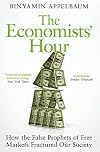
This well-written and entertaining book covers the key economic ideas and public policies since WW II. It is a valuable and essential look at our history. I would love to take a seminar using this book as a text.
Lists
You May Also Like


Statistics
- Works
- 2
- Members
- 267
- Popularity
- #86,453
- Rating
- 4.0
- Reviews
- 8
- ISBNs
- 15
- Languages
- 2