
Alina Bronsky
Author of The Hottest Dishes of the Tartar Cuisine
Series
Works by Alina Bronsky
Tagged
Common Knowledge
- Canonical name
- Bronsky, Alina
- Other names
- Bronsky, Alina (Pseudonym)
- Birthdate
- 1978
- Gender
- female
- Occupations
- advertising copywriter
newspaper editing - Agent
- Regal Literary, Inc.
- Relationships
- Noethen, Ulrich (partner)
- Short biography
- Alina Bronsky was born in Yekaterinburg, an industrial town at the foot of the Ural Mountains in central Russia. She moved to Germany when she was thirteen. Her debut novel Broken Glass Park was nominated for one of Europe's most important literary awards, the Ingeborg Bachmann Prize, and was published by Europa Editions in 2010.
- Nationality
- Russia (birth)
Germany - Birthplace
- Yekaterinburg, Russia
- Places of residence
- Yekaterinburg, Russia
Berlin, Germany - Map Location
- Germany
Members
Reviews

Rosa knows everything. She knows that her daughter is stupid and ugly and only has a husband thanks to her. She knows that her granddaughter is smart and pretty, thanks to her care. And she knows that without her, her family would be nothing. It′s hard being the only intelligent, beautiful person around, but Rosa bears the burden.
One day her daughter, Sulfia, tells her that she dreamt about a man and is now pregnant. Rosa believes her immediately, for what man would be attracted to her show more ugly, dim-witted daughter? But for as much as she derides her daughter, Rosa loves her granddaughter and takes over raising her. Aminat is not as easily cowed as her mother, however, and the three are entwined in a destructive, subversive embrace.
Rosa is one of the most detestable characters I′ve encountered in literature. She is self-aggrandizing, delusional, and cruel. She has perfected the use of emotional abuse to inflict pain while professing love. Yet despite this, the book is funny at times, and I found myself admiring Rosa′s spirit, almost, even as I deplored her actions. Like Baba Dunja′s Last Love, Bronsky′s writing is crisp and acerbic with a strong female protagonist. But whereas Baba Dunja′s love for her granddaughter is self-effacing and supportive, Rosa′s is greedy and domineering. Baba Dunja sacrifices herself for others; Rosa sacrifices others for herself. I don't know how to rate Hottest Dishes, because it is well-written, but repelling. show less
One day her daughter, Sulfia, tells her that she dreamt about a man and is now pregnant. Rosa believes her immediately, for what man would be attracted to her show more ugly, dim-witted daughter? But for as much as she derides her daughter, Rosa loves her granddaughter and takes over raising her. Aminat is not as easily cowed as her mother, however, and the three are entwined in a destructive, subversive embrace.
Rosa is one of the most detestable characters I′ve encountered in literature. She is self-aggrandizing, delusional, and cruel. She has perfected the use of emotional abuse to inflict pain while professing love. Yet despite this, the book is funny at times, and I found myself admiring Rosa′s spirit, almost, even as I deplored her actions. Like Baba Dunja′s Last Love, Bronsky′s writing is crisp and acerbic with a strong female protagonist. But whereas Baba Dunja′s love for her granddaughter is self-effacing and supportive, Rosa′s is greedy and domineering. Baba Dunja sacrifices herself for others; Rosa sacrifices others for herself. I don't know how to rate Hottest Dishes, because it is well-written, but repelling. show less
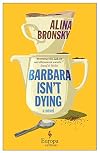
Walter Schmidt is used to things being a certain way, and his life running smoothly because his wife does all the things she is supposed to do. Imagine his frustration when he wakes one morning and does not smell coffee brewing. What can Barbara be thinking? Then he discovers Barbara lying on the floor in the bathroom. He has to make his own coffee, something that surely can't be that difficult, because Barbara can do it. From feeding the dog to cooking meals, Walter begins to realize that show more things aren't as easy as he thought and that his wife means more to him than even his reliance on her might suggest.
Like most of Bronsky's protagonists, Walter is not a sympathetic character, in fact he can be downright horrid. And yet, I find myself sympathizing with these characters, and Walter is no exception. Empathy is facilitated in this case because Walter does change over the course of the book. I would start to cheer for him a little, then he would open his mouth, stick his foot in, and alienate me again. But Walter is a product of 1950s expectations, and when I cut him a little slack, he does his best to reel me in again. Another solid read from one of my favorite authors. show less
Like most of Bronsky's protagonists, Walter is not a sympathetic character, in fact he can be downright horrid. And yet, I find myself sympathizing with these characters, and Walter is no exception. Empathy is facilitated in this case because Walter does change over the course of the book. I would start to cheer for him a little, then he would open his mouth, stick his foot in, and alienate me again. But Walter is a product of 1950s expectations, and when I cut him a little slack, he does his best to reel me in again. Another solid read from one of my favorite authors. show less

Mit knapp sechs Jahren kommen der kleine Max und seine Grosseltern als Kontingentflüchtlinge aus der Sowjetunion in Deutschland an, wo sie in einem Auffanglager untergebracht werden. Von seiner Grossmutter ständig als Idiot tituliert, umsorgt und umhegt sie ihn dennoch (oder gerade deshalb) wie ein blindes Katzenjunges. Laut ihrer Meinung leidet er an chronischer Bronchitis, chronischer Sinusitis, chronischer Gastritis, mittelgradige Myopie, Allergien und noch vielem mehr. Und show more ausschliesslich ihrer aufopferungsvollen Pflege ist es zu verdanken, dass er heute noch lebt. Nur schweren Herzens lässt sie ihn in der Schule allein; sicher, dass er dort stets knapp am Rande des Todes steht. Aber wider Erwarten überlebt er diese Herausforderungen und registriert statt dessen immer öfter, dass seine Grossmutter doch nicht stets recht hat. Und dass sein Grossvater beginnt, noch ein anderes Leben zu führen.
Mäxchens Grossmutter ist die eigentliche 'Heldin' der Geschichte, auch wenn ihr Enkel hier als Ich-Erzähler fungiert und von seiner Kindheit berichtet. Seine Oma ist das Grauen in Person, drangsaliert ihr gesamtes Umfeld mit ihrem Rassismus, ihrer Rechthaberei, Unverschämtheit und Tyrannei, ihrem Reinlichkeitsfimmel und der ständigen Angst, ihrem Enkel könne etwas zustossen. weshalb sie ihn kaum aus den Augen lässt. Und trotzdem war ich ständig am Lächeln beim Lesen dieses Buches, denn Alina Bronsky gelingt das Wunder, diese eigentlich schreckliche Frau sowie die entsetzliche Atmosphäre trotz aller Widerwärtigkeiten in einen Hort des Mitgefühls und der Liebe zu verwandeln. Denn man mag es kaum glauben, auch die Grosseltern haben Gefühle. Während der Grossvater sie jedoch in sich verschliesst und nur sehr selten nach aussen dringen lässt, verwandelt die Grossmutter sie in lautstarkes Misstrauen und Beleidigungen. Man ahnt schnell, dass da mehr dahintersteckt als der Frust und die Trauer um die verlorene Heimat, doch erst am Ende offenbart sich in gerade einmal drei kurzen Sätzen das Drama, dass der Grund für die Reise nach Deutschland war.
Eine herrliche Lektüre, die nur einen Nachteil hat: Sie ist viel zu kurz ;-) show less
Mäxchens Grossmutter ist die eigentliche 'Heldin' der Geschichte, auch wenn ihr Enkel hier als Ich-Erzähler fungiert und von seiner Kindheit berichtet. Seine Oma ist das Grauen in Person, drangsaliert ihr gesamtes Umfeld mit ihrem Rassismus, ihrer Rechthaberei, Unverschämtheit und Tyrannei, ihrem Reinlichkeitsfimmel und der ständigen Angst, ihrem Enkel könne etwas zustossen. weshalb sie ihn kaum aus den Augen lässt. Und trotzdem war ich ständig am Lächeln beim Lesen dieses Buches, denn Alina Bronsky gelingt das Wunder, diese eigentlich schreckliche Frau sowie die entsetzliche Atmosphäre trotz aller Widerwärtigkeiten in einen Hort des Mitgefühls und der Liebe zu verwandeln. Denn man mag es kaum glauben, auch die Grosseltern haben Gefühle. Während der Grossvater sie jedoch in sich verschliesst und nur sehr selten nach aussen dringen lässt, verwandelt die Grossmutter sie in lautstarkes Misstrauen und Beleidigungen. Man ahnt schnell, dass da mehr dahintersteckt als der Frust und die Trauer um die verlorene Heimat, doch erst am Ende offenbart sich in gerade einmal drei kurzen Sätzen das Drama, dass der Grund für die Reise nach Deutschland war.
Eine herrliche Lektüre, die nur einen Nachteil hat: Sie ist viel zu kurz ;-) show less

Are Bronsky's babushkas getting less monstrous as she gets older? Well, maybe the former dancer Margarita Ivanovna in this book is not quite as destructive in her passage through the world as Rosalita in The sharpest dishes, but by most sane standards she still scores somewhere around eleven out of ten on the overprotective grandmother scale. The unfortunate grandson Maxim has spent his early years being protected from all sorts of largely imaginary dangers and treated for entirely imaginary show more illnesses and disabilities, as he gradually starts to realise when the family moves from Russia to Germany.
It's a darkly comic story — of course, there's a hidden tragedy that explains at least some of his grandmother's strange behaviour — and there's a lot that will bring up cringe-making memories for anyone who as a small child had to act as interpreter for embarrassing foreign relatives who just didn't "get" the culture they were living in. My own grandmother was from the overall-generation where Margarita Ivanovna is a track-suit-wearer, but otherwise they had a lot in common, especially when it came to fighting draughts, mulching food, and disinfecting any surface a child was likely to touch... show less
It's a darkly comic story — of course, there's a hidden tragedy that explains at least some of his grandmother's strange behaviour — and there's a lot that will bring up cringe-making memories for anyone who as a small child had to act as interpreter for embarrassing foreign relatives who just didn't "get" the culture they were living in. My own grandmother was from the overall-generation where Margarita Ivanovna is a track-suit-wearer, but otherwise they had a lot in common, especially when it came to fighting draughts, mulching food, and disinfecting any surface a child was likely to touch... show less
Lists
Europa, Europa! (2)
Translingualism (1)
Awards


You May Also Like


Associated Authors
Statistics
- Works
- 17
- Members
- 1,273
- Popularity
- #20,146
- Rating
- 3.8
- Reviews
- 101
- ISBNs
- 108
- Languages
- 10
- Favorited
- 1
