
Amara Lakhous
Author of Clash of Civilizations Over an Elevator in Piazza Vittorio
About the Author
Works by Amara Lakhous
Tagged
Common Knowledge
- Birthdate
- 1970
- Gender
- male
- Occupations
- journalist
- Nationality
- Algeria
- Places of residence
- Rome, Italy
- Associated Place (for map)
- Rome, Italy
Members
Reviews

This is an odd little book but one I really enjoyed. Europa Editions rarely steers me wrong.
The novella is a series of monologues from various residents and neighbors of a building in Rome, telling of their experiences and relationship with one character, Amedeo, who has disappeared after another resident is found murdered. The murder is not really the point; rather, Lakhous is painting a portrait of a multinational community, one in conflict with itself between Italians (and even they are show more not a unified lot) and immigrants. Sly humor is woven throughout the book, which helps to balance the more serious themes of racism, xenophonia, and Islamaphobia. As an Algerian-born writer now living in Italy, he knows of what he speaks.
4 stars show less
The novella is a series of monologues from various residents and neighbors of a building in Rome, telling of their experiences and relationship with one character, Amedeo, who has disappeared after another resident is found murdered. The murder is not really the point; rather, Lakhous is painting a portrait of a multinational community, one in conflict with itself between Italians (and even they are show more not a unified lot) and immigrants. Sly humor is woven throughout the book, which helps to balance the more serious themes of racism, xenophonia, and Islamaphobia. As an Algerian-born writer now living in Italy, he knows of what he speaks.
4 stars show less
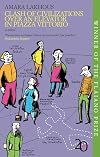
Written as a series of interviews with people living in Piazza Vittorio, the mystery of who killed Lorenzo Manfredini, the Gladiator, unfolds piece by piece. Each character is speaking to an unknown interviewer evoking the feeling that they are talking to the reader directly. They each relate stories from their own lives as well as stories about their missing neighbor, Amedeo. They describe him as polite, helpful, inspiring, and a true Italian. When each discovers that Amedeo is an immigrant show more and not Italian, it is met with disbelief and surprise.
After each neighbor’s vignette, there is a wailing section in which Amedeo himself is the speaker. He relates stories about each of his neighbors and his own past. Again, the story of Amedeo is revealed in pieces. Each chapter builds upon the events and themes of the previous chapter.
Loss, grief, loneliness and disconnection recur throughout. These are stories told mainly by immigrants who feel unwanted and detested, and they, in turn, denigrate those from Italy and from countries other than their homeland. Likewise, Italians from the north and south make equally bitter comments about each other. Lakhous has created a very clever novel that peels back layer by layer until it reveals fundamental aspects of the human condition as a stranger in a strange land. show less
After each neighbor’s vignette, there is a wailing section in which Amedeo himself is the speaker. He relates stories about each of his neighbors and his own past. Again, the story of Amedeo is revealed in pieces. Each chapter builds upon the events and themes of the previous chapter.
Loss, grief, loneliness and disconnection recur throughout. These are stories told mainly by immigrants who feel unwanted and detested, and they, in turn, denigrate those from Italy and from countries other than their homeland. Likewise, Italians from the north and south make equally bitter comments about each other. Lakhous has created a very clever novel that peels back layer by layer until it reveals fundamental aspects of the human condition as a stranger in a strange land. show less
Rating: 3.75* of five
The Book Description: A compelling mix of social satire and murder mystery.
A small culturally mixed community living in an apartment building in the center of Rome is thrown into disarray when one of the neighbors is murdered. An investigation ensues and as each of the victim's neighbors is questioned, the reader is offered an all-access pass into the most colorful neighborhood in contemporary Rome. Each character takes his or her turn center-stage, giving evidence, show more recounting his or her story--the dramas of racial identity, the anxieties and misunderstandings born of a life spent on society's margins, the daily humiliations provoked by mainstream culture's fears and indifference, preconceptions and insensitivity. What emerges is a moving story that is common to us all, whether we live in Italy or Los Angeles.
This novel is animated by a style that is as colorful as the neighborhood it describes and is characterized by seemingly effortless equipoise that borrows from the cinematic tradition of the Commedia all'Italiana as exemplified by directors such as Federico Fellini.
At the heart of this bittersweet comedy told with affection and sensitivity is a social reality that we often tend to ignore and an anthropological analysis, refreshing in its generosity, that cannot fail to fascinate.
My Review: Reading that book description isn't necessarily helpful. Social satire plus murder mystery, to most book-readin' Murrikins, is gonna call forth the specter of Murder by Death. You are not in for a satire like that. You are in for a very sophisticated and layered short novel in which a murder is committed, but frankly no one really cares who did it because it needed doing, and the perp the police have identified is a community pillar. No one believes Amedeo committed this murder, which no one calls a crime.
Amedeo steps out of the stories of ten people who all live in a small apartment building on Rome's tatty side, on the Piazza Vittorio. All ten people are displaced, not Roman, and all are made to feel more alien than guest by Rome and its Romans. Amedeo comes to the rescue of each person here, in ways practical and spiritual. He's a fixer, a born organizer, he spends his time on this earth open to and listening for the truths under the stories his neighbors tell, the truths under the facts of Rome and Italian society, the truths that not very many people will bother to learn or, quite possibly, ever realize are there.
So how can the police suspect this wonderful, soothing, special man of MURDER?! Because he, like everyone else, fought with the shit who got murdered? No...because he has disappeared. Not for the first time in his life. He has vanished, and in police work, that's as good as a confession. The novel is told in the interviews the police take with all the residents of Amedeo's building.
Interspersed with these interviews are wails, the first-person accounts of Amedeo himself. They're called wails because Amedeo, né Ahmed Salmi in Algiers, spends a lot of time locked in his wife's bathroom with a tape recorder, setting down his impressions of the people around him, and vocalizing in that uniquely Arab way...the ululating wail, used for joy, for mourning, for any access of emotion that words can't encompass. It's a wonderful way to let us into the experience of being alive in the skin of a force of nature. We're inside Amedeo, Ahmed, we're privileged to be the unseen auditors of the story of his world.
His private world. We have no sense whatever of his work, his living...he remains in a tight little box, as do all the characters, one that focuses on someone we don't meet or hear from or, frankly, care about. The victim is not the point. The murderer didn't commit a crime so much as perform clean-up on aisle two. The more we hear about him, the less we care that he's dead. It works well as a narrative technique to emphasize the almost miraculous nature of listening, and its almost total lack in the modern world.
So why 3.75 stars, when all of the above sounds like such praise? Because the Italian reviews mention an exuberance of language, a gonzo balls-out feeling that the text gives. In Italian. The translation is like the book description above, not uninteresting but nobody's idea of gonzo or balls-out writing. It's a translation. It feels like a translation. It's never going to convey the sense that the original can, of different regional voices, of different classes and different kind of Italian, because American English isn't that kind of language and American culture doesn't, at least at the level of culture where one finds readers of translated novels, like “dialect writing” because it's not Nice.
We lose. I want to read this book in Italian now. It's bound to be more fun. The translation is a good book. The original, I will bet, is a fantastic one.
*sigh* show less
The Book Description: A compelling mix of social satire and murder mystery.
A small culturally mixed community living in an apartment building in the center of Rome is thrown into disarray when one of the neighbors is murdered. An investigation ensues and as each of the victim's neighbors is questioned, the reader is offered an all-access pass into the most colorful neighborhood in contemporary Rome. Each character takes his or her turn center-stage, giving evidence, show more recounting his or her story--the dramas of racial identity, the anxieties and misunderstandings born of a life spent on society's margins, the daily humiliations provoked by mainstream culture's fears and indifference, preconceptions and insensitivity. What emerges is a moving story that is common to us all, whether we live in Italy or Los Angeles.
This novel is animated by a style that is as colorful as the neighborhood it describes and is characterized by seemingly effortless equipoise that borrows from the cinematic tradition of the Commedia all'Italiana as exemplified by directors such as Federico Fellini.
At the heart of this bittersweet comedy told with affection and sensitivity is a social reality that we often tend to ignore and an anthropological analysis, refreshing in its generosity, that cannot fail to fascinate.
My Review: Reading that book description isn't necessarily helpful. Social satire plus murder mystery, to most book-readin' Murrikins, is gonna call forth the specter of Murder by Death. You are not in for a satire like that. You are in for a very sophisticated and layered short novel in which a murder is committed, but frankly no one really cares who did it because it needed doing, and the perp the police have identified is a community pillar. No one believes Amedeo committed this murder, which no one calls a crime.
Amedeo steps out of the stories of ten people who all live in a small apartment building on Rome's tatty side, on the Piazza Vittorio. All ten people are displaced, not Roman, and all are made to feel more alien than guest by Rome and its Romans. Amedeo comes to the rescue of each person here, in ways practical and spiritual. He's a fixer, a born organizer, he spends his time on this earth open to and listening for the truths under the stories his neighbors tell, the truths under the facts of Rome and Italian society, the truths that not very many people will bother to learn or, quite possibly, ever realize are there.
So how can the police suspect this wonderful, soothing, special man of MURDER?! Because he, like everyone else, fought with the shit who got murdered? No...because he has disappeared. Not for the first time in his life. He has vanished, and in police work, that's as good as a confession. The novel is told in the interviews the police take with all the residents of Amedeo's building.
Interspersed with these interviews are wails, the first-person accounts of Amedeo himself. They're called wails because Amedeo, né Ahmed Salmi in Algiers, spends a lot of time locked in his wife's bathroom with a tape recorder, setting down his impressions of the people around him, and vocalizing in that uniquely Arab way...the ululating wail, used for joy, for mourning, for any access of emotion that words can't encompass. It's a wonderful way to let us into the experience of being alive in the skin of a force of nature. We're inside Amedeo, Ahmed, we're privileged to be the unseen auditors of the story of his world.
His private world. We have no sense whatever of his work, his living...he remains in a tight little box, as do all the characters, one that focuses on someone we don't meet or hear from or, frankly, care about. The victim is not the point. The murderer didn't commit a crime so much as perform clean-up on aisle two. The more we hear about him, the less we care that he's dead. It works well as a narrative technique to emphasize the almost miraculous nature of listening, and its almost total lack in the modern world.
So why 3.75 stars, when all of the above sounds like such praise? Because the Italian reviews mention an exuberance of language, a gonzo balls-out feeling that the text gives. In Italian. The translation is like the book description above, not uninteresting but nobody's idea of gonzo or balls-out writing. It's a translation. It feels like a translation. It's never going to convey the sense that the original can, of different regional voices, of different classes and different kind of Italian, because American English isn't that kind of language and American culture doesn't, at least at the level of culture where one finds readers of translated novels, like “dialect writing” because it's not Nice.
We lose. I want to read this book in Italian now. It's bound to be more fun. The translation is a good book. The original, I will bet, is a fantastic one.
*sigh* show less
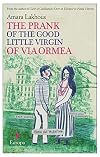
This short novel is about social bubbles colliding. Most of it is told from the viewpoint of journalist Enzo Lagana, but it's occasionally told by a cryptic woman who floats between bubbles in modern-day Turin, including the Roma community. The catalyst here is the reported rape of a young Italian girl by Roma twins. Fueled by xenophobia, the media's story spirals out of control. The journalist Enzo, who is from Southern Italy, soon learns that things are not as reported and there are forces show more preventing him from telling the truth. And it turns out that many of this Roma community have lived in this area of Italy for hundreds of years, and while many say they must leave, no one cares about immigrants like Lagana's Finnish girlfriend.
A sharp look at prejudice and corrupt media. I will reread this. show less
A sharp look at prejudice and corrupt media. I will reread this. show less
Lists
Awards


You May Also Like


Statistics
- Works
- 7
- Members
- 697
- Popularity
- #36,316
- Rating
- 3.6
- Reviews
- 48
- ISBNs
- 43
- Languages
- 6
- Favorited
- 1