
Laurence Cossé
Author of A Novel Bookstore
About the Author
Works by Laurence Cossé
Tagged
Common Knowledge
- Canonical name
- Cossé, Laurence
- Legal name
- Cossé, Laurence Marie Sylvie
- Other names
- Bodman, Laurence de (Nom d'alliance)
- Birthdate
- 1950
- Gender
- female
- Education
- Institut d'études politiques, Paris
- Occupations
- journalist
President (ECC) - Organizations
- Radio-France
Le Quotidien de Paris
European Community Commission - Awards and honors
- Grand Prix de Littérature de l'Académie française (2015)
- Relationships
- Bodman, Jean de (Epoux)
- Nationality
- France
- Birthplace
- Boulogne-Billancourt, Hauts-de-Seine, Île-de-France, France
- Places of residence
- Boulogne-Billancourt, Hauts-de-Seine, Île-de-France, France (birth)
Paris, France - Map Location
- France
- Associated Place (for map)
- France
Members
Reviews

Fadila Amrani is someone whom it's easy to overlook, or perhaps, look through. She is one of the numerous immigrant women making their living as housekeepers, laundresses, and cooks in middle class households around the world. It is usually only when there is a problem--a misunderstanding due to "broken" language, being late due to a difference in the conception and importance of being prompt, or the inability to read instructions, a receipt, a phone number--that the employer sees the show more worker, usually to fire them. Like so many of these women, Fadila is illiterate, not only in her new language (Parisian French), but in her old (Berber Arabic) as well.
Fadilla's new employer, Édith, is more attuned to language and literacy than most because she is a translator. She also taught her precocious son to read. Surely it wouldn't be too difficult or time-consuming to teach Fadila? But from the beginning, things do not go as Édith expects. Despite her earnest desire to help Fadila learn to read, all her research, and her attempts to cajole Fadila into a regular habit of lessons and homework, Fadila doesn't make progress. Why?
The story of Édith and Fadila is one of unlikely friendship, the day to day realities of cultural differences, and the struggles of students trying to learn a new language and their teachers. There is no sweeping plot line, rather the slow character development that comes from the accumulation of the intimate details of life. I enjoyed Bitter Almonds, not least because I, like Édith, have experienced the breakthroughs and disappointments of teaching an older woman my language. In the end, it's the relationship, not the progress, that defines the experience. show less
Fadilla's new employer, Édith, is more attuned to language and literacy than most because she is a translator. She also taught her precocious son to read. Surely it wouldn't be too difficult or time-consuming to teach Fadila? But from the beginning, things do not go as Édith expects. Despite her earnest desire to help Fadila learn to read, all her research, and her attempts to cajole Fadila into a regular habit of lessons and homework, Fadila doesn't make progress. Why?
The story of Édith and Fadila is one of unlikely friendship, the day to day realities of cultural differences, and the struggles of students trying to learn a new language and their teachers. There is no sweeping plot line, rather the slow character development that comes from the accumulation of the intimate details of life. I enjoyed Bitter Almonds, not least because I, like Édith, have experienced the breakthroughs and disappointments of teaching an older woman my language. In the end, it's the relationship, not the progress, that defines the experience. show less

Do you stand reading in bookstores until you realize you are now late, and the book is half done? Do you find yourself scanning friends' bookshelves surreptitiously, while nodding at small talk? Do you think some books are better than others? If so, you will probably enjoy this book as much as I did. However, if you think there is no such thing as a "great book" or are a publisher or mega-chain bookstore owner, you probably won't.
Although this book contains within it a mystery, a couple of show more love stories, and a bit of otherworldly Chagallishness, mostly it is about people who love books. The catch is that these people don't love just any books, they love good books. Often today's culture celebrates diversity by saying everything is equally good. The consumer should decide for his or her self. Differences in quality or ability are minimized, hidden, or ignored for fear of the e-word: elitism.
A Novel Bookstore explores this concept in the world of book publishing, selling, and reviewing. Fed up with the mediocrity and sameness of the mega-bookstores, and even many smaller ones, Ivan and Francesca decide to open the ideal bookstore: one which carries only “good” novels. We are led through their entire planning process. Novels or all fiction? Just classics or also newly released? Only new copies or also used? And above all, who will decide? The bookstore opens with a flourish and attracts both serious readers and the attention of those who stand to lose if some books are deemed better than others.
I found the beginning of the book delightful: a celebration of literature wrapped in a fun mystery-love story. But somewhere in the last third, I began to feel as though the author had lost her way. A narrative voice appears from nowhere and is a distraction, the mystery comes bogged down and is never resolved, and the theme of discernment in literature turns to an inditement of large publishers, booksellers, critics, and book prize judges in general. But despite a less than optimal ending, I found the book fun to read and a reminder that it is okay to say, “This is a good book, and this one is not.” show less
Although this book contains within it a mystery, a couple of show more love stories, and a bit of otherworldly Chagallishness, mostly it is about people who love books. The catch is that these people don't love just any books, they love good books. Often today's culture celebrates diversity by saying everything is equally good. The consumer should decide for his or her self. Differences in quality or ability are minimized, hidden, or ignored for fear of the e-word: elitism.
A Novel Bookstore explores this concept in the world of book publishing, selling, and reviewing. Fed up with the mediocrity and sameness of the mega-bookstores, and even many smaller ones, Ivan and Francesca decide to open the ideal bookstore: one which carries only “good” novels. We are led through their entire planning process. Novels or all fiction? Just classics or also newly released? Only new copies or also used? And above all, who will decide? The bookstore opens with a flourish and attracts both serious readers and the attention of those who stand to lose if some books are deemed better than others.
I found the beginning of the book delightful: a celebration of literature wrapped in a fun mystery-love story. But somewhere in the last third, I began to feel as though the author had lost her way. A narrative voice appears from nowhere and is a distraction, the mystery comes bogged down and is never resolved, and the theme of discernment in literature turns to an inditement of large publishers, booksellers, critics, and book prize judges in general. But despite a less than optimal ending, I found the book fun to read and a reminder that it is okay to say, “This is a good book, and this one is not.” show less

The publicity quotes on the back of this thoroughly enjoyable novel will so mislead.
"a thriller, a romance, and a fairytale," says Le Figaro. "commentary on the world of contemporary publishing," cries La Croix. "An Agatha Christie-style mystery bolstered by a love story," chimes in Madame Figaro.
With the possible exception of "fairytale," all these miss the point. Is there a mystery? Well, yes, but it's a plot vehicle rather than the plot and (quite frankly) never does get resolved all show more that satisfactorily...certainly not to the standards of M. Poirot or Miss Marple. Is there a romance? Yes, more than one, in fact, and quite well done...but these are really minor threads rounding out the characters rather than defining them. Commentary?...hmm, that's a bit like saying Goodbye, Mr. Chips is a commentary on British public boarding schools—it's there, you can form opinions, but it's not the point.
The essence of this story is a paean to the love of reading good books. Ivan and Francesca decide to open a book store, The Good Novel, where you won't find Twilight, anything by Tom Clancy, nor the latest million-selling chick lit. Instead you'll find only great novels, chosen for them by an anonymous panel of some of the best living authors, without regard to publication dates, best seller lists, literary prizes or any criterion beyond the opinion that it is great literature.
And therein hangs the tale. The publishers who see 99% of their books rejected and the authors who realize none of their books are represented on the shelves are not happy and a campaign against the store is begun. There is something almost Ayn Rand-ish (without the strong sense of elitism!) about the whole thing except that the reader can discern that it is bruised egos and wallets firing the opposition, not mediocrity.
At the beginning, I said that "fairytale" might not quite miss the mark. When I think about the amazing success of the store or about the severity of the reaction, there is more than a bit unreal about it all. However, I don't think it detracts unless you go in looking for a mystery or a commentary. Instead, look for colorful and lovable characters, the author's deep and obvious love for reading, and opportunities to think about a "literary heritage, which is being threatened by forgetfulness and indifference."
I'm not sure if A Novel Bookstore would actually make it onto The Good Novel's shelves but I think it would be hard to read this book and not walk away a bit excited and eager for your next good novel. show less
"a thriller, a romance, and a fairytale," says Le Figaro. "commentary on the world of contemporary publishing," cries La Croix. "An Agatha Christie-style mystery bolstered by a love story," chimes in Madame Figaro.
With the possible exception of "fairytale," all these miss the point. Is there a mystery? Well, yes, but it's a plot vehicle rather than the plot and (quite frankly) never does get resolved all show more that satisfactorily...certainly not to the standards of M. Poirot or Miss Marple. Is there a romance? Yes, more than one, in fact, and quite well done...but these are really minor threads rounding out the characters rather than defining them. Commentary?...hmm, that's a bit like saying Goodbye, Mr. Chips is a commentary on British public boarding schools—it's there, you can form opinions, but it's not the point.
The essence of this story is a paean to the love of reading good books. Ivan and Francesca decide to open a book store, The Good Novel, where you won't find Twilight, anything by Tom Clancy, nor the latest million-selling chick lit. Instead you'll find only great novels, chosen for them by an anonymous panel of some of the best living authors, without regard to publication dates, best seller lists, literary prizes or any criterion beyond the opinion that it is great literature.
And therein hangs the tale. The publishers who see 99% of their books rejected and the authors who realize none of their books are represented on the shelves are not happy and a campaign against the store is begun. There is something almost Ayn Rand-ish (without the strong sense of elitism!) about the whole thing except that the reader can discern that it is bruised egos and wallets firing the opposition, not mediocrity.
At the beginning, I said that "fairytale" might not quite miss the mark. When I think about the amazing success of the store or about the severity of the reaction, there is more than a bit unreal about it all. However, I don't think it detracts unless you go in looking for a mystery or a commentary. Instead, look for colorful and lovable characters, the author's deep and obvious love for reading, and opportunities to think about a "literary heritage, which is being threatened by forgetfulness and indifference."
I'm not sure if A Novel Bookstore would actually make it onto The Good Novel's shelves but I think it would be hard to read this book and not walk away a bit excited and eager for your next good novel. show less
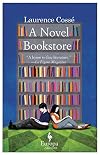
A beautifully written book by an author who clearly loves words, literature and bookstores. One of those books that I wanted to quote incessantly at people. One of those books that made me want to read every book mentioned within it.
Why not five stars?
Well, that's all tied up with the ending. So, spoilers ahead.
I feel as though I ought to be bothered that the mystery hook which lured me into the novel is solved but unresolved, or perhaps resolved but unsolved. Though to tell the truth, by show more the time I reached the resolution of the mystery portion of the plot, I was much more concerned with the survival of the bookstore than with the identity of the attackers from the initial chapters.
No, the aspects that left me unsatisfied werethe increasing centrality of Ivan's love story -- I could not understand his fascination with Anis especially in the face of her seeming indifference -- and the final revelation of the narrator. Most of the book seems to be in third person, but there are tantalizing glimpses of a first-person narrator running throughout. Given who "I" was when the narrator's identity was finally revealed, I would have liked to have closed the book with some understanding of the narrator and the narrator's motives throughout the novel.
Still, I very much enjoyed the journey. show less
Why not five stars?
Well, that's all tied up with the ending. So, spoilers ahead.
I feel as though I ought to be bothered that the mystery hook which lured me into the novel is solved but unresolved, or perhaps resolved but unsolved. Though to tell the truth, by show more the time I reached the resolution of the mystery portion of the plot, I was much more concerned with the survival of the bookstore than with the identity of the attackers from the initial chapters.
No, the aspects that left me unsatisfied were
Still, I very much enjoyed the journey. show less
Lists
Awards


You May Also Like


Associated Authors
Statistics
- Works
- 16
- Members
- 1,603
- Popularity
- #16,080
- Rating
- 3.5
- Reviews
- 77
- ISBNs
- 65
- Languages
- 6


