
Emma Mitchell (1)
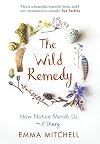
Author of The Wild Remedy: How Nature Mends Us - A Diary
For other authors named Emma Mitchell, see the disambiguation page.
About the Author
Image credit: Emma Mitchell (1)
Works by Emma Mitchell
Associated Works
Tagged
Common Knowledge
Members
Reviews
ROOT #18
This book is completely gorgeous. The author details, month by month, her walks in the countryside (mainly local to her, in the Cambridgeshire Fens, but occasionally further afield), and the impact that it has on her mental health (she lives with severe depression). During the year that she was writing this she had a particularly prolonged and serious depressive episode, which she doesn't shy away from, but her writing is exquisite, and the importance of the outdoors for her show more wellbeing is made clear (whilst being very emphatic that she is not saying ditch the meds and hug a tree). Illustrated throughout with the author's photos, paintings and sketches, it is a simply beautiful book. show less
This book is completely gorgeous. The author details, month by month, her walks in the countryside (mainly local to her, in the Cambridgeshire Fens, but occasionally further afield), and the impact that it has on her mental health (she lives with severe depression). During the year that she was writing this she had a particularly prolonged and serious depressive episode, which she doesn't shy away from, but her writing is exquisite, and the importance of the outdoors for her show more wellbeing is made clear (whilst being very emphatic that she is not saying ditch the meds and hug a tree). Illustrated throughout with the author's photos, paintings and sketches, it is a simply beautiful book. show less
This book offers a peek into the mind of a woman who, on the outside, looks to have everything she needs to be happy; yet she suffers from a debilitating depression that peaks in the darker months. She uses her connection to nature as a lifeline. It is not prescriptive nor does the author attempt to minimize the importance of medical support for mental health. Instead, it is an invitation to reconnect with nature as sympathetic medicine for body and mind. If nothing else, her sketches and show more drawings may inspire you to observe the way the natural world cycles through the seasons. show less
Lavishly illustrated in colour with both drawing and photographs and with thick tactile paper, this book is a beautiful read. With one chapter for every month, the author takes us through the wildlife of Britain – woodland and meadows, with occasional trips to the sea as well. At the same time she chronicles her mood throughout the year as she struggles with SAD, cumulating in severe suicide ideation in March. Her message is that nature is a remedy, not to be used instead of modern show more medicine, but in parallel with it.
The prose is as lush as the publication standards. Emma Mitchell has a love of language and words, and a delight in knowing the names of things. She never sees ‘trees’, but willows, hawthorns, spindles, sycamores, and never ‘flowers’ but knapweed, anemones, hawkbit, fleabane, fairy flax and milkwort. No gaps in hedges for her, she sees smeuses. It’s beautiful, if a little overwhelming.
There isn’t a sense that the author has to do very much, other than draw pictures, look at nature, and wrestle introspectively with her depression. This is probably unfair, and may be more to do with her keeping the troubles of her life out of the book rather than not having any, but if you are likely to be annoyed at a book with passages like ‘keeping depression at bay requires constant vigilance, it’s a daily battle requiring the benign artillery of nature walks and time spent as creatively as possible’ this book might not be for you. Also, while it’s an inspirational book about how nature can lift our mood, the takehome is slightly depressing, in that she starts to struggle with her mood from the drawing in of the nights in October, finally has her crisis moment in March, and has a slow painful recovery over the summer, just about feeling well again by September at the end of the book. Which is, err, the month before October.
I loved the local feeling to the book. The author lives near Cambridge, and many of the places she visits are near to me. I also loved the ability of her rich descriptions to remind me of things I’ve seen. Mumerations of starlings, spring bluebells, orchid spikes, hunting owls… the book is full of quiet, intense moments.
She has a delight in collecting things – a drive to gather, harvest, horde and store. There aren’t many modern nature books that talk about pressing flowers, but you find that here, although with a quick ‘only the common ones!’ caveat. She will also go off on quests seeking an illusive ‘special’ nature moment – driving a couple of hours to the coast, or up to Derbyshire. A delightfully honest number of these trips result in disappointment, at least as far as the main quest object is concerned, but all contain some incidental positive finding that make her feel they were worthwhile. Looking at an absence of starlings in the rain in January and managing to find joy in it is a good talent (although seeing egrets is always nice.)
The book is a quick read and the author has a keen eye for nature. show less
The prose is as lush as the publication standards. Emma Mitchell has a love of language and words, and a delight in knowing the names of things. She never sees ‘trees’, but willows, hawthorns, spindles, sycamores, and never ‘flowers’ but knapweed, anemones, hawkbit, fleabane, fairy flax and milkwort. No gaps in hedges for her, she sees smeuses. It’s beautiful, if a little overwhelming.
There isn’t a sense that the author has to do very much, other than draw pictures, look at nature, and wrestle introspectively with her depression. This is probably unfair, and may be more to do with her keeping the troubles of her life out of the book rather than not having any, but if you are likely to be annoyed at a book with passages like ‘keeping depression at bay requires constant vigilance, it’s a daily battle requiring the benign artillery of nature walks and time spent as creatively as possible’ this book might not be for you. Also, while it’s an inspirational book about how nature can lift our mood, the takehome is slightly depressing, in that she starts to struggle with her mood from the drawing in of the nights in October, finally has her crisis moment in March, and has a slow painful recovery over the summer, just about feeling well again by September at the end of the book. Which is, err, the month before October.
I loved the local feeling to the book. The author lives near Cambridge, and many of the places she visits are near to me. I also loved the ability of her rich descriptions to remind me of things I’ve seen. Mumerations of starlings, spring bluebells, orchid spikes, hunting owls… the book is full of quiet, intense moments.
She has a delight in collecting things – a drive to gather, harvest, horde and store. There aren’t many modern nature books that talk about pressing flowers, but you find that here, although with a quick ‘only the common ones!’ caveat. She will also go off on quests seeking an illusive ‘special’ nature moment – driving a couple of hours to the coast, or up to Derbyshire. A delightfully honest number of these trips result in disappointment, at least as far as the main quest object is concerned, but all contain some incidental positive finding that make her feel they were worthwhile. Looking at an absence of starlings in the rain in January and managing to find joy in it is a good talent (although seeing egrets is always nice.)
The book is a quick read and the author has a keen eye for nature. show less
Depression is a horrid illness that can thrive unseen in the people around us. Unless they are a very close friend or family member, it is only as the person suffering reaches the very limit of what they can tolerate that most of us come aware of their suffering. Emma Mitchell is one of those who has suffered from depression for over two decades. Sixteen years ago she moved from the city to the edge of the fens with the hope of overcoming 'the grey slug' as she has named her depression in show more her new environment. However, just over a year ago, it was back with a vengeance and it took her to one of her lowest points ever, right to the edge of the abyss.
This is her story of how she came back from that place with the help of her family and friends, her dog, Annie and most of all, the natural world. She is searingly honest in her account of the lowest points in her battle with the illness as she almost became a hermit. As she gains the courage to head outside once again, the healing power of nature combined with the medicine that she was taking begun to lift her out of her gloom.
Her journey back to better health was not without struggle, some days were much better and other days were bleak. As the days lengthen she begins to take longer walks with Annie, heads out with a friend to attempt to find glow worms or out to try and see a murmuration at dusk one night. Each sighting of one of the local flora and fauna such as an owl or butterfly raises her spirits little by little.
She has an eye for the inherent beauty in nature and this is what makes this an utterly glorious book. It is full of her own art sketches and photographs of the beautiful things that she has discovered as she goes out and about around her local area. But there is much more to it than this, through her recovery she is proving what science is confirming now, that we need exposure to the natural world for our essential and deep-rooted well being. show less
This is her story of how she came back from that place with the help of her family and friends, her dog, Annie and most of all, the natural world. She is searingly honest in her account of the lowest points in her battle with the illness as she almost became a hermit. As she gains the courage to head outside once again, the healing power of nature combined with the medicine that she was taking begun to lift her out of her gloom.
Her journey back to better health was not without struggle, some days were much better and other days were bleak. As the days lengthen she begins to take longer walks with Annie, heads out with a friend to attempt to find glow worms or out to try and see a murmuration at dusk one night. Each sighting of one of the local flora and fauna such as an owl or butterfly raises her spirits little by little.
She has an eye for the inherent beauty in nature and this is what makes this an utterly glorious book. It is full of her own art sketches and photographs of the beautiful things that she has discovered as she goes out and about around her local area. But there is much more to it than this, through her recovery she is proving what science is confirming now, that we need exposure to the natural world for our essential and deep-rooted well being. show less
Lists
You May Also Like


Associated Authors
Statistics
- Works
- 8
- Also by
- 1
- Members
- 267
- Popularity
- #86,453
- Rating
- 3.6
- Reviews
- 13
- ISBNs
- 34
- Languages
- 9
- Favorited
- 1