
Christopher L. Webber
Author of Welcome to the Episcopal Church: An Introduction to Its History, Faith, and Worship
About the Author
Christopher L. Webber is an Episcopal priest and a graduate of Princeton University and General Theological Seminary. He is the author of many books and several hymns. He lives in San Francisco and gives workshops and lectures on his writings.
Series
Works by Christopher L. Webber
Welcome to the Episcopal Church: An Introduction to Its History, Faith, and Worship (1999) 337 copies, 4 reviews
American to the Backbone: The Life of James W. C. Pennington, the Fugitive Slave Who Became One of the First Black Abolitionists (2011) 32 copies, 1 review
Associated Works
Tagged
Common Knowledge
- Birthdate
- 1932-01-01
- Gender
- male
- Occupations
- priest
hymnodist - Organizations
- Episcopal Church
- Nationality
- USA
- Associated Place (for map)
- USA
Members
Reviews
Welcome to the Episcopal Church: An Introduction to Its History, Faith, and Worship by Christopher L. Webber
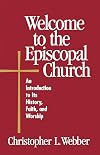
"Welcome to the Episcopal Church: An Introduction to Its History, Faith, and Worship" provides a good, broad overview of what the Episcopal Church is. Even though the book was published in 1999, it is still highly relevant in 2021.
Christopher Webber approaches his introduction to the Episcopal Church with chapters that look at the church's history, its worship, the Bible and the church, and the church's teachings. He goes on to cover spirituality, the church's ministry and organization, and show more its mission. Webber's approach covers in less than 140 pages what could have numerous tomes written and still not cover everything, and so he has provided an introduction.
I commend this book to anyone, whether a lifelong Episcopalian or just someone who wants to know a bit about the Episcopal Church. Christopher Webber has done a wonderful job of presenting a thorough synopsis. show less
Christopher Webber approaches his introduction to the Episcopal Church with chapters that look at the church's history, its worship, the Bible and the church, and the church's teachings. He goes on to cover spirituality, the church's ministry and organization, and show more its mission. Webber's approach covers in less than 140 pages what could have numerous tomes written and still not cover everything, and so he has provided an introduction.
I commend this book to anyone, whether a lifelong Episcopalian or just someone who wants to know a bit about the Episcopal Church. Christopher Webber has done a wonderful job of presenting a thorough synopsis. show less
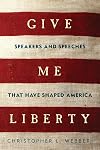
I won this book in a Goodreads First Reads giveaway.
The book features a spectacular choice of American figures, including Patrick Henry, Abraham Lincoln, Martin Luther King, Jr., and others that I'll embarassedly admit that I hadn't heard of, including Adlai Stevenson and Angelina Grimké. The sections on William Jennings Bryan, Grimké, and Stevenson were particularly educational for me. My one complaint is that I was expecting more speech content than commentary on them. I definitely show more recommend this to those interested in American History and oratory. show less
The book features a spectacular choice of American figures, including Patrick Henry, Abraham Lincoln, Martin Luther King, Jr., and others that I'll embarassedly admit that I hadn't heard of, including Adlai Stevenson and Angelina Grimké. The sections on William Jennings Bryan, Grimké, and Stevenson were particularly educational for me. My one complaint is that I was expecting more speech content than commentary on them. I definitely show more recommend this to those interested in American History and oratory. show less
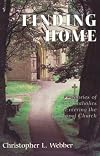
This book profiles a number of people who left the Roman church for the Episcopal Church. The rationale behind their transitions to Anglicanism resonate with me rather strongly. The Episcopal tradition has a similar liturgy but also encourages reason and questioning and values the human experience. Disaffected Catholics who know that church and Christianity do not have to be sexist, homophobic, and anti-abortion-obsessed can indeed find a home in the Episcopal Church.
American to the Backbone: The Life of James W. C. Pennington, the Fugitive Slave Who Became One of the First Black Abolitionists by Christopher L. Webber
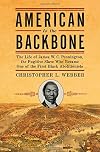
True, this is a biography of Pennington; however, it is also a history of the anti-slavery movement in the USA in the first half of the 19th century. We learn about some of the biggest names in the movement such as William Lloyd Garrison, Lewis Tappan and Frederick Douglas and their views on how to end slavery. They frequently did not agree on how to eliminate slavery from America.
Pennington was an illiterate slave in Maryland who fled north and in the short period of 5 years was writing show more columns for anti-slavery newspapers and teaching school. Eventually he became a pastor and anti-slavery speaker traveling to England and Europe to raise money and support for the fight to eliminate slavery in the world and specifically the USA. He was the first Black man to receive an honorary degree from a university when the University of Heidelberg bestow one on him.
This is a well documented volume on this volatile period in American history. The emancipation movement was not always supported in the north and in fact some of the most supportive white men were often racist in their own actions and speech.
The title, American to the Backbone, is a quote from Pennington's writings and indicates his view that he and most African Americans had been born in America, were Americans and any movement to send them back to Africa was wrong.
The bibliography is voluminous and would be a good place to start one's own research into the abolitionist movement. show less
Pennington was an illiterate slave in Maryland who fled north and in the short period of 5 years was writing show more columns for anti-slavery newspapers and teaching school. Eventually he became a pastor and anti-slavery speaker traveling to England and Europe to raise money and support for the fight to eliminate slavery in the world and specifically the USA. He was the first Black man to receive an honorary degree from a university when the University of Heidelberg bestow one on him.
This is a well documented volume on this volatile period in American history. The emancipation movement was not always supported in the north and in fact some of the most supportive white men were often racist in their own actions and speech.
The title, American to the Backbone, is a quote from Pennington's writings and indicates his view that he and most African Americans had been born in America, were Americans and any movement to send them back to Africa was wrong.
The bibliography is voluminous and would be a good place to start one's own research into the abolitionist movement. show less
Awards

You May Also Like


Associated Authors
Statistics
- Works
- 36
- Also by
- 1
- Members
- 1,395
- Popularity
- #18,426
- Rating
- 3.8
- Reviews
- 13
- ISBNs
- 64