
Joseph Wambaugh (1937–2025)
Author of The Onion Field
About the Author
Writer Joseph Wambaugh was born in East Pittsburgh, Pennsylvania on January 22, 1937. He joined the Marines right out of high school, but later earned both a B. A. and M. A. from California State College in Los Angeles. He worked for the Los Angeles Police Department from 1960 to 1974. His first show more novel was The New Centurions (1971) and several subsequent novels have been award winners. The Onion Field won an Edgar Award (1984), and Lines and Shadows won the Rodolfo Walsh Prize from the International Association of Crime Writers (1989). He has worked creatively on several film and television projects, including Police Story, The Black Marble, The Choirboys and The Blue Knight. (Bowker Author Biography) show less
Series
Works by Joseph Wambaugh
Joseph Wambaugh: 4 Complete Novels Includes Blue Knight, Black Marble, New Centurions and Choirboys (1988) 33 copies
The onion field : screenplay 2 copies
The Choirboys, Part 2 of 2 1 copy
The Smoke Jumpers 1 copy
Associated Works
In the Shadow of the Master: Classic Tales by Edgar Allan Poe (2009) — Contributor — 205 copies, 3 reviews
Tagged
Common Knowledge
- Legal name
- Wambaugh, Joseph Aloysius, Jr.
- Birthdate
- 1937-01-22
- Date of death
- 2025-02-28
- Gender
- male
- Education
- Chaffey High School, Ontario, California
Chaffey College
California State University, Los Angeles (BA, MA|English) - Occupations
- soldier
steelworker
police officer
novelist
non-fiction writer
screenwriter - Organizations
- US Marine Corps
Los Angeles Police Department - Awards and honors
- MWA Grand Master (2004)
- Relationships
- Wambaugh, David (offspring)
- Cause of death
- oesophageal cancer
- Nationality
- USA
- Birthplace
- East Pittsburgh, Pennsylvania, USA
- Places of residence
- East Pittsburgh, Pennsylvania, USA (birth)
Los Angeles, California, USA - Associated Place (for map)
- USA
Members
Reviews
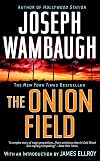
Riveting. Even though it was written in 1973, it remains relevant to issues facing us today, including PTSD, the legal system and capital punishment.
This is the true story of two robbers, Gregory Powell and Jimmy Smith, who kidnap policemen Karl Hettinger and Ian Campbell and subsequently kill Officer Campbell. Officer Hettinger goes through a harrowing escape. The killers are quickly arrested and the book details their journey through the court system. It also deals with the lasting impact show more of that terrible night on Karl Hettinger.
What struck me most powerfully was the total lack of support Officer Hettinger received from the police force. He got no counselling and was even openly blamed for the death of his partner. We watch him go through what we now know as PTSD with no support and with devastating consequences for his mental health.
Contrast that with the way Messrs Powell and Smith were given multiple opportunities to assert their innocence and/or reduce their initial sentences of death. While they were arrested pre-Miranda, the new standard was applied to their cases on appeal. The death penalty was abolished in California while Mr. Powell was on death row, so he avoided that verdict. While they were not coddled by the system. it nonetheless paid much more attention to their rights than to the needs of Karl Hettinger.
Joseph Wambaugh was a cop before he was an author and it shows in his treatment of this story, and in the way he helped develop the then-new genre of true crime. Still a worthwhile read after all this time.
P.S. Don't skip the introduction by James Ellroy. Probably the best introduction to a book I've even read. show less
This is the true story of two robbers, Gregory Powell and Jimmy Smith, who kidnap policemen Karl Hettinger and Ian Campbell and subsequently kill Officer Campbell. Officer Hettinger goes through a harrowing escape. The killers are quickly arrested and the book details their journey through the court system. It also deals with the lasting impact show more of that terrible night on Karl Hettinger.
What struck me most powerfully was the total lack of support Officer Hettinger received from the police force. He got no counselling and was even openly blamed for the death of his partner. We watch him go through what we now know as PTSD with no support and with devastating consequences for his mental health.
Contrast that with the way Messrs Powell and Smith were given multiple opportunities to assert their innocence and/or reduce their initial sentences of death. While they were arrested pre-Miranda, the new standard was applied to their cases on appeal. The death penalty was abolished in California while Mr. Powell was on death row, so he avoided that verdict. While they were not coddled by the system. it nonetheless paid much more attention to their rights than to the needs of Karl Hettinger.
Joseph Wambaugh was a cop before he was an author and it shows in his treatment of this story, and in the way he helped develop the then-new genre of true crime. Still a worthwhile read after all this time.
P.S. Don't skip the introduction by James Ellroy. Probably the best introduction to a book I've even read. show less

An author friend of mine who knows what I’ve been working on suggested that I should read Joseph Wambaugh’s [The Onion Field]. He said that few writers these days are focusing on the real lives of policemen, detectives. Sure, procedurals and thrillers strain the shelves at your local bookstores, but few, if any, give you a look at a cop as he truly is – his life beyond the work, the problems and joys of real life. Most crime books focus on how the work invades and crowds life, until show more there really isn’t any life at all, and what existed before the work is tossed a quick nostalgic line or two. But Wambaugh, he said, went deeply into the psyche of the two policemen at [The Onion Field]’s center, letting them exhibit their full personalities and struggles so that the consequences of what happened to them is that much more troubling.
Ian Campbell and Karl Hettinger, former Marines, made a car stop in an unmarked squad car while on patrol in Los Angeles in 1963. During the stop, the two crooks disarmed them and kidnapped them, taking them to a remote agricultural area near Bakersfield. There, Campbell was shot and killed. Hettinger escaped serious physical injury, but was never the same. Their actions that night, especially Hettinger’s as the survivor, were heavily scrutinized. A policy was enacted by the Los Angeles Police Department stating that officers were never to surrender their firearms, under any circumstances; that if they were confronted with such a situation, they were to fight at all costs. The killers were convicted after several trials that took up many years, but at a mammoth cost in resources and personal sacrifice.
One terribly interesting section features a “young red-faced vice officer at Wilshire station [who] had been a policeman less than three years.” Through his eyes, we see the debate about whether Hettinger sealed his partner’s fate or did the best thing by surrendering his firearm. The young officer lays out several other instances where cops were disarmed and kidnapped but survived. He chastises the departmental policy enacted after Campbell’s murder, laying it at the feet of administrators who don’t understand the street and the street cop’s mentality. He speaks up at roll-call in defense of Hettinger, criticizing the policy. I don’t know for certain, but I think this young cop is Wambaugh in anonymity, sending the message he wants the book to carry. Indeed, I’m told that this book helped to end Wambaugh’s law enforcement career with LAPD.
The thread running through the entire book is the fallout in Hettinger’s life over the event. At a time before post-traumatic stress was recognized, and in a field where any weakness signals the sharks, Hettinger is a sad case. He devolves into alcoholism and shoplifting, eschewing anyone who would try to talk to him about what he felt, what he was experiencing. If you didn’t have Wambaugh’s name on the front cover, you might be drawn to a conclusion that Hettinger himself wrote the book, given how deeply Hettinger’s inner life is on display. It’s the reason this book is so provocative. To be able to see a cop as something less than a superhero, something more than a broken-down bulldog, is a revelation.
Bottom Line: Brilliant, insightful glimpse into the mind of policemen – policemen as real people, with real lives, as we rarely think of them.
4 ½ bones!!!!! show less
Ian Campbell and Karl Hettinger, former Marines, made a car stop in an unmarked squad car while on patrol in Los Angeles in 1963. During the stop, the two crooks disarmed them and kidnapped them, taking them to a remote agricultural area near Bakersfield. There, Campbell was shot and killed. Hettinger escaped serious physical injury, but was never the same. Their actions that night, especially Hettinger’s as the survivor, were heavily scrutinized. A policy was enacted by the Los Angeles Police Department stating that officers were never to surrender their firearms, under any circumstances; that if they were confronted with such a situation, they were to fight at all costs. The killers were convicted after several trials that took up many years, but at a mammoth cost in resources and personal sacrifice.
One terribly interesting section features a “young red-faced vice officer at Wilshire station [who] had been a policeman less than three years.” Through his eyes, we see the debate about whether Hettinger sealed his partner’s fate or did the best thing by surrendering his firearm. The young officer lays out several other instances where cops were disarmed and kidnapped but survived. He chastises the departmental policy enacted after Campbell’s murder, laying it at the feet of administrators who don’t understand the street and the street cop’s mentality. He speaks up at roll-call in defense of Hettinger, criticizing the policy. I don’t know for certain, but I think this young cop is Wambaugh in anonymity, sending the message he wants the book to carry. Indeed, I’m told that this book helped to end Wambaugh’s law enforcement career with LAPD.
The thread running through the entire book is the fallout in Hettinger’s life over the event. At a time before post-traumatic stress was recognized, and in a field where any weakness signals the sharks, Hettinger is a sad case. He devolves into alcoholism and shoplifting, eschewing anyone who would try to talk to him about what he felt, what he was experiencing. If you didn’t have Wambaugh’s name on the front cover, you might be drawn to a conclusion that Hettinger himself wrote the book, given how deeply Hettinger’s inner life is on display. It’s the reason this book is so provocative. To be able to see a cop as something less than a superhero, something more than a broken-down bulldog, is a revelation.
Bottom Line: Brilliant, insightful glimpse into the mind of policemen – policemen as real people, with real lives, as we rarely think of them.
4 ½ bones!!!!! show less
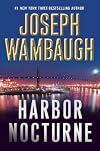
I think anyone who likes Wambaugh's early works should stay away from Harbor Nocturne. In my opinion the Hollywood cycle was a wind-down from the heights his work reached before. Nocturne reads like rhetorical Seconal.
But that may be intentional: after all, the book is about a cast of has-beens who are trying not to let go of their salad days. It doesn't work for them just as it doesn't work for anybody else who has crossed over the hill. What it does do is make the elder unhappy in his/her show more "golden years".
Considering the life Wambaugh led, he may have been writing unconsciously about himself. Who knows? I didn't like the book much. show less
But that may be intentional: after all, the book is about a cast of has-beens who are trying not to let go of their salad days. It doesn't work for them just as it doesn't work for anybody else who has crossed over the hill. What it does do is make the elder unhappy in his/her show more "golden years".
Considering the life Wambaugh led, he may have been writing unconsciously about himself. Who knows? I didn't like the book much. show less
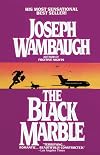
After a slow start, Wambaugh gets really fun with his usual cynicism mixed with humor style. Sgt. Valnikov, a world weary cop, has been paired with Natalie in the burglary squad and they wind up investigating the theft of a potential Westminster Show winner. (If you haven’t seen Best in Show, you must.)
The interchanges between Natalie, who thinks Valnikov is just some dope addled cop, and Valnikov, who has his own worries, are priceless, not to mention the often quite funny, yet cynical show more stories embedded in the larger tale.
For example, there’s the thief who decides to take down a floating crap game and rip off the players. He charges in with a double-barreled shotgun and immediately scares the crap out of everyone by shooting a round into the ceiling. That’s so exciting, he decide to fire off another round in the ceiling. Shortly thereafter, just after the crowd realizes what he’s done, he does too, i.e. that he just fired two rounds from a double-barreled shotgun. Just before they all beat the crap out of him. Or the Good Humor man breaking speed limits to get to the site of a jumper off a building so he can make a fortune selling ice cream to sooth the throats of all the bystanders yelling, “Jump, you chickenshit.” Or the time when eighteen cops in a barricade situation with a crazy guy behind the door realize they need to dowse the lights in the hallway. Unlike in the movies, when one shot would do, in real life, “adrenaline turns the arms to licorice” and the fusillade from all the cops completely missed the lights. Only a lampshade had a bullet hole. Valnikov suggests an alternate route. Sneaking along the wall, he unscrewed the light bulbs. Instant darkness.
In spite of all the fun and love story, there’s an undercurrent of cynicism and horror, represented by Charlie Lightfoot and the rabbit nightmares. Not a great Wambaugh, but certainly a good read. show less
The interchanges between Natalie, who thinks Valnikov is just some dope addled cop, and Valnikov, who has his own worries, are priceless, not to mention the often quite funny, yet cynical show more stories embedded in the larger tale.
For example, there’s the thief who decides to take down a floating crap game and rip off the players. He charges in with a double-barreled shotgun and immediately scares the crap out of everyone by shooting a round into the ceiling. That’s so exciting, he decide to fire off another round in the ceiling. Shortly thereafter, just after the crowd realizes what he’s done, he does too, i.e. that he just fired two rounds from a double-barreled shotgun. Just before they all beat the crap out of him. Or the Good Humor man breaking speed limits to get to the site of a jumper off a building so he can make a fortune selling ice cream to sooth the throats of all the bystanders yelling, “Jump, you chickenshit.” Or the time when eighteen cops in a barricade situation with a crazy guy behind the door realize they need to dowse the lights in the hallway. Unlike in the movies, when one shot would do, in real life, “adrenaline turns the arms to licorice” and the fusillade from all the cops completely missed the lights. Only a lampshade had a bullet hole. Valnikov suggests an alternate route. Sneaking along the wall, he unscrewed the light bulbs. Instant darkness.
In spite of all the fun and love story, there’s an undercurrent of cynicism and horror, represented by Charlie Lightfoot and the rabbit nightmares. Not a great Wambaugh, but certainly a good read. show less
Lists
England (1)
True Crime (1)
Page Turners (1)
True Crime Books (3)
Edgar Award (1)
Five star books (1)
Fires (1)
Awards


You May Also Like


Associated Authors
Statistics
- Works
- 28
- Also by
- 3
- Members
- 10,831
- Popularity
- #2,191
- Rating
- 3.7
- Reviews
- 178
- ISBNs
- 469
- Languages
- 13
- Favorited
- 16
