
James McIntosh (1) (1934–)
Author of Nathaniel Hawthorne's Tales [Norton Critical Edition]
For other authors named James McIntosh, see the disambiguation page.
About the Author
James McIntosh is Professor of English and American Culture, University of Michigan.
Works by James McIntosh
Associated Works
The Blithedale Romance [Norton Critical Edition, 2nd ed.] (2010) — Contributor — 62 copies, 2 reviews
Tagged
Common Knowledge
- Birthdate
- 1934
Members
Reviews
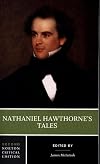
After reading this collection of short stories, which is supplemented with letters and diary entries among other material, I believe that Hawthorne and I are a bit of kindred spirits. Perhaps an odd statement to make about the author of The Scarlet Letter, but if people only remember him as the author of a book they were forced to read in high school, they are doing him an injustice. Hawthorne's prose is lovely, frequently Gothic in its romance, and original. I enjoyed some of his short show more stories better than others, and recognize that having most of them revolve around his Puritan heritage is limiting, but they are a fascinating read that deserves the attention of readers who appreciate literature.
Why kindred spirits, though? Reading his stories, I discovered a lot of sentiments that echo my own. Primarily, I was caught by Hawthorne's stance towards his faith. He disdained extremism and faith-led hatred and judgment. Yet he seemed to endorse a purer kind of belief that accepted God, and also the beauty of redemption and forgiveness and this world and its people. Likewise, he was repulsed by some of the Puritan's harsh practices, but proud of their hardiness and strength. Other themes that he explored also eerily matched my own thoughts on the subjects. For example, his musings on mortality, his fluctuating representations of the artistic personality, and his many ideas connected to books and reading.
This collection includes stories from a variety of sources, primarily from Twice Told Tales and Mosses from an Old Manse. His most anthologized short stories are included, such as "Young Goodman Brown" and "Rappaccini's Daughter", and other stories that are lesser known, for example "The Wives of the Dead". Since this is a Norton edition, the stories are followed by supplementary material. In this case, the book has copies of some of Hawthorne's letters and diary entries, several contemporary reviews of his work, and many modern critical pieces from a wide range of years. A lot of the tales have their themes explored in one of the critical essays in the latter half of the book, so even if some of the stories didn't grab my attention when I first read them, I found them much more compelling after I explored the thought-provoking analyses that other minds built around them.
In my experience, people consider Hawthorne a musty, old-fashioned writer. I disagree. True, his writing does reflect the style of older times and can be a bit wordy, but his ideas are as fresh today as they were when he wrote them, and he had a distinct voice and intelligent mind. I think his reputation suffers from being introduced to young high school students as required reading (I reread Scarlet Letter in college and found it far more impressive than when I read it in high school). This book is a great way to experience his shorter fiction, with the quality supplementary material to support it. show less
Why kindred spirits, though? Reading his stories, I discovered a lot of sentiments that echo my own. Primarily, I was caught by Hawthorne's stance towards his faith. He disdained extremism and faith-led hatred and judgment. Yet he seemed to endorse a purer kind of belief that accepted God, and also the beauty of redemption and forgiveness and this world and its people. Likewise, he was repulsed by some of the Puritan's harsh practices, but proud of their hardiness and strength. Other themes that he explored also eerily matched my own thoughts on the subjects. For example, his musings on mortality, his fluctuating representations of the artistic personality, and his many ideas connected to books and reading.
This collection includes stories from a variety of sources, primarily from Twice Told Tales and Mosses from an Old Manse. His most anthologized short stories are included, such as "Young Goodman Brown" and "Rappaccini's Daughter", and other stories that are lesser known, for example "The Wives of the Dead". Since this is a Norton edition, the stories are followed by supplementary material. In this case, the book has copies of some of Hawthorne's letters and diary entries, several contemporary reviews of his work, and many modern critical pieces from a wide range of years. A lot of the tales have their themes explored in one of the critical essays in the latter half of the book, so even if some of the stories didn't grab my attention when I first read them, I found them much more compelling after I explored the thought-provoking analyses that other minds built around them.
In my experience, people consider Hawthorne a musty, old-fashioned writer. I disagree. True, his writing does reflect the style of older times and can be a bit wordy, but his ideas are as fresh today as they were when he wrote them, and he had a distinct voice and intelligent mind. I think his reputation suffers from being introduced to young high school students as required reading (I reread Scarlet Letter in college and found it far more impressive than when I read it in high school). This book is a great way to experience his shorter fiction, with the quality supplementary material to support it. show less
Specter and Science:
The tales in this collection include the best written by Hawthorne. Among them it is hard to rate one over another, however Rappaccini's Daughter is near the top. A tale of the natural versus the supernatural with overtones of professional jealousy, first love, and the desire for perfection. Perfection as desiderata, but unwillingness to pay the price. There are two scientists in Baglioni and Rappaccini himself. The latter seems to have created a new Eden with his garden show more that is lovingly overseen by his daughter, Beatrice, who is even more lovely than the flowers that surround her. Enter the young student, Giovanni, who is in Padua to study but is distracted by the view from his window: first, by the beautiful purple blossoms of a shrub in the center of the garden that illuminated it with a light that rivaled the sun; and second, by the entrance of Beatrice who made such an impression on the young student that it was as if "here were another flower . . . more beautiful than the richest of them,". The story develops into a question of whether the poison in the flowers (yes, they are poisonous plants) has overtaken Beatrice as well making her dangerous to other plants, animals, and even Giovanni. The question of whether she is a supernatural being or mere mortal is answered by the end of the story, but Giovanni's life is forever changed - how we may only speculate.
This story only hints at some of the myriad emotions and strange occurrences in these stories of men and women in settings as disparate as Salem Massachusetts and Padua Italy. show less
The tales in this collection include the best written by Hawthorne. Among them it is hard to rate one over another, however Rappaccini's Daughter is near the top. A tale of the natural versus the supernatural with overtones of professional jealousy, first love, and the desire for perfection. Perfection as desiderata, but unwillingness to pay the price. There are two scientists in Baglioni and Rappaccini himself. The latter seems to have created a new Eden with his garden show more that is lovingly overseen by his daughter, Beatrice, who is even more lovely than the flowers that surround her. Enter the young student, Giovanni, who is in Padua to study but is distracted by the view from his window: first, by the beautiful purple blossoms of a shrub in the center of the garden that illuminated it with a light that rivaled the sun; and second, by the entrance of Beatrice who made such an impression on the young student that it was as if "here were another flower . . . more beautiful than the richest of them,". The story develops into a question of whether the poison in the flowers (yes, they are poisonous plants) has overtaken Beatrice as well making her dangerous to other plants, animals, and even Giovanni. The question of whether she is a supernatural being or mere mortal is answered by the end of the story, but Giovanni's life is forever changed - how we may only speculate.
This story only hints at some of the myriad emotions and strange occurrences in these stories of men and women in settings as disparate as Salem Massachusetts and Padua Italy. show less
A much better storyteller than a novelist, this has all of his best work. Hawthorne is particularly interesting when read from a Jungian perspective, as his symbols and archetypes line up nicely with Jung's later work.
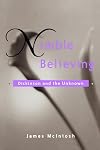
I started this book twice and found myself struggling through it. I gave up after 13 pages the first time and 20 the second. I might return to it later, but for now I'm letting it go.
I enjoyed Roger Lundin's The Art of Belief, which covers the same topic, so I'm not sure why I didn't like this one. I think it might be because I'm reading a ton of academic stuff for grad school and I want to read books for pleasure that don't require that much thinking. This one requires a lot of thinking.
I enjoyed Roger Lundin's The Art of Belief, which covers the same topic, so I'm not sure why I didn't like this one. I think it might be because I'm reading a ton of academic stuff for grad school and I want to read books for pleasure that don't require that much thinking. This one requires a lot of thinking.
Lists
You May Also Like
Associated Authors
Statistics
- Works
- 3
- Also by
- 1
- Members
- 325
- Popularity
- #72,883
- Rating
- 4.1
- Reviews
- 4
- ISBNs
- 14