
Hilary Leichter
Author of Temporary
Works by Hilary Leichter
Tagged
Common Knowledge
- Birthdate
- 1985
- Gender
- female
- Agent
- Monika Woods [literary]
Dana Spector [film/TV] - Nationality
- USA
- Places of residence
- Brooklyn, New York, USA
- Associated Place (for map)
- New York, USA
Members
Reviews
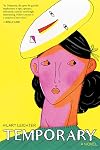
This is about a woman who works as a temp, except that's not just what she does for work: her whole life and identity are temporary, and this is a common situation in the world of the book. She has temp jobs as a ghost, a pirate, an endangered barnacle, a hit man, and a mother, to name a few. She not only takes on the job, but also the personality of the person she is replacing.
The writing and humor are absurd, like a mix between Lemony Snicket and Douglas Adams. There is a lot of show more silliness, but also a deep poignancy beneath the silliness.
Unfortunately, this seemed like it ought to be an allegory or metaphor for something, but I have no idea what. I don't know what point the author was trying to make. It seems to be a critique of the capitalist gig economy, but it is so ungrounded that it fails to actually say anything. show less
The writing and humor are absurd, like a mix between Lemony Snicket and Douglas Adams. There is a lot of show more silliness, but also a deep poignancy beneath the silliness.
Unfortunately, this seemed like it ought to be an allegory or metaphor for something, but I have no idea what. I don't know what point the author was trying to make. It seems to be a critique of the capitalist gig economy, but it is so ungrounded that it fails to actually say anything. show less
★★★★☆ (4/5)
Oh Man, how do I review this book? This speaks so much to surrealism and loss, and what comes in between.
This book is great for those who like puzzles out of their stories, that aren’t straight up mysteries to solve, and anyone with unsorted grief.
𝐓/𝐖: Death
𝐖𝐡𝐚𝐭 𝐈 𝐥𝐢𝐤𝐞𝐝:
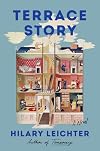
• The build up and shock of the first story actually felt horrific. I went into this assuming, because of the cover, it would be a cozier read. That first story show more set the tone very clearly and dashed those assumptions.
• The characters. I didn’t love them by any means, but I loved that they were incredibly flawed. Both Annie and Stephanie seemed awful in their own ways, but their situations made them more empathetic. They are all unique, each story is told in a slightly different way that emphasizes each of the characters and their tone.
• Personally I liked the prose. That looks to be a divisive topic, but it felt easy to read. Maybe a little more dreamlike than a book that focuses on the events in order, but I still found it enjoyable.
• I clenched my book, waiting and hoping for two characters to meet again at the end. I wanted her to know she’d never been replaced like she was so afraid of. I think that’s part of grief too though, you never get all the answers you want.
𝐖𝐡𝐚𝐭 𝐈 𝐝𝐢𝐝𝐧'𝐭 𝐥𝐢𝐤𝐞:
• The second story just doesn’t hit like the other three. Perhaps it’s there to humanize Annie even more. Perhaps to confuse the reader a bit more because of multiple characters with the same name. But it felt out of place compared to the other three that felt somewhat fairytale-esque, despite having a literal fairytale inside it.
I don’t think this is as confusing a story as a lot of the reviews make it out to be. The way it is told is surreal, and feels somewhat dreamlike. The events are told out of order. But the basic things that happen to the characters, and how that’s meant to make you feel, are understandable. Perhaps it’s my own grief that drives the understanding forward, or that I tend to over empathize. Either way, I definitely think this is worth a read. show less
Oh Man, how do I review this book? This speaks so much to surrealism and loss, and what comes in between.
This book is great for those who like puzzles out of their stories, that aren’t straight up mysteries to solve, and anyone with unsorted grief.
𝐓/𝐖: Death
𝐖𝐡𝐚𝐭 𝐈 𝐥𝐢𝐤𝐞𝐝:
• The build up and shock of the first story actually felt horrific. I went into this assuming, because of the cover, it would be a cozier read. That first story show more set the tone very clearly and dashed those assumptions.
• The characters. I didn’t love them by any means, but I loved that they were incredibly flawed. Both Annie and Stephanie seemed awful in their own ways, but their situations made them more empathetic. They are all unique, each story is told in a slightly different way that emphasizes each of the characters and their tone.
• Personally I liked the prose. That looks to be a divisive topic, but it felt easy to read. Maybe a little more dreamlike than a book that focuses on the events in order, but I still found it enjoyable.
• I clenched my book, waiting and hoping for two characters to meet again at the end. I wanted her to know she’d never been replaced like she was so afraid of. I think that’s part of grief too though, you never get all the answers you want.
𝐖𝐡𝐚𝐭 𝐈 𝐝𝐢𝐝𝐧'𝐭 𝐥𝐢𝐤𝐞:
• The second story just doesn’t hit like the other three. Perhaps it’s there to humanize Annie even more. Perhaps to confuse the reader a bit more because of multiple characters with the same name. But it felt out of place compared to the other three that felt somewhat fairytale-esque, despite having a literal fairytale inside it.
I don’t think this is as confusing a story as a lot of the reviews make it out to be. The way it is told is surreal, and feels somewhat dreamlike. The events are told out of order. But the basic things that happen to the characters, and how that’s meant to make you feel, are understandable. Perhaps it’s my own grief that drives the understanding forward, or that I tend to over empathize. Either way, I definitely think this is worth a read. show less
This is about as perfect as a book can get. It breaks the format, it delivers and then keeps delivering, it seems to pronounce a very definite meaning and yet is open to multiple interpretations and meanings. This is not a novel? Maybe it is. I think it is poetry, disguised as satire, disguised as a novel. But this is what I think now, being who I am now. Tomorrow I might think differently—because I am temporary.
This reads like a Phantom Tollbooth for adults. It is clever beyond description, in a fable/fairytale telling of the world of temp work. Lots of wordplay and imaginative genre-bending - it includes an origin myth of how the temp came to be (the gods wanted a day off and relinquished their key cards, pass codes, etc) and then a very non-linear narrative, with some flashbacks of a single, nameless temporary worker who embarks on water work, blood work, sky work, home work, memory work (all show more chapter titles) all in pursuit of the "steadiness" or permanence, not only in employment but in the world. My favorite was the stint with pirates (Adventure Capitalists) and all the hilarious puns and satire that went with it (the motivational kitten poster: there is no purr in pirate). But under all the whimsical, fantastical scenarios there is a deeper meaning about putting down roots and investing in one place or one person (she also has an accordion-pleated picture string of anonymous boyfriends, identified only by their dominant trait: the culinary one, the tall one, the pacifist, etc) and how that investment (another play on words) is a two-way street, here, with actual traffic. The book also gives a really interesting, fresh perspective on the nature of gig work and the effect on the psyche of being labeled "temporary." The epigraph sets this out: "It seemed to me that if she could remain transient here, she would not have to leave." (Marilynne Robinson, Housekeeping) If you like a traditional story, this book is not for you and you will be frustrated and disappointed. If you like to grapple with ideas, play with language, and abandon yourself to imagination for a short read, you will be completely delighted. Published by Coffee House Press under an Emily Books imprint (promoting women writers). show less
Lists
Awards


You May Also Like


Associated Authors
Statistics
- Works
- 2
- Members
- 564
- Popularity
- #44,321
- Rating
- 3.5
- Reviews
- 35
- ISBNs
- 15
- Languages
- 2