
Daniel Draper
Author of Bog People: A Working-Class Anthology of Folk Horror
Works by Daniel Draper
Tagged
Common Knowledge
There is no Common Knowledge data for this author yet. You can help.
Members
Reviews
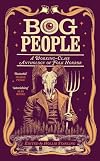
I had high hopes for this anthology based on the first three excellent stories but it rather drifts down hill after that. The premise is a good one - that folk horror has looked at the working class as the 'other', often in negative terms, and that a correction is worth making.
The introduction is a solid and thoughtful explanation of where the book is coming although it presages the book by declining into a bit of a rant towards the end. Is this a book about the working class or about the show more frustrated outrage of would-be escapees from that class with literary aspirations?
Over half the authors are women which should be a fair and good thing but some of them have confused feminist politics with working class politics. The portrayal of men in these pieces is certainly not providing much in the way of solidarity.
The Editor, Hollie Starling, provides a well written story but it is of this type. Its link to folk horror is tenuous to say the least. It is an aggressive and murderous piece of science fiction horror masquerading as folk in which ball-cutting revenge by a sex bot is riddled with hatred.
Most of the stories are fine if not inspiring, although the last two are literary to the point of self-indulgence (witchery in Hastings) or obscurity. This last - 'It Fair Give Me The Spikes' by Tom Benn - is a linguistically accomplished ghost story marred by its sustained incomprehensibility.
Earlier than this, there is a weird fantasy response to 'The Wicker Man' from a quasi-class angle (Cornish fisher folk in this case) that actually ends up with something that might be classed as a 'happy ending'. Happy endings are not part of the genre description.
So, let us praise the first three stories as well above the average, worth considering for future anthologies. In these stories, the authors maintain both the horror and the ordinariness of existence and some decent relation to the genre they are supposed to be emulating.
The first is the best - 'The Ossuary' by A. K Blakemore - which is rather subversive of the Editor's avowed intent. The publisher might have hoped (from the blurb) that we would despise the aged prejudiced guardian of bones but Blakemore presents her with real sympathy.
It is a subtle story in which the pricks are the liberal leftie children who are pompous and callous while two urban Asians behave unpleasantly amongst her bones. She is a cultural dinosaur doomed to extinction but she is also a person. Blakemore treats her as such.
Daniel Draper's 'Perpetual Stew' could so easily have gone wrong with its outrageous premise of a mining village held together by grand guignol petty cannibalism but he pulls it off because of his close observation of working class life and his allegiance to the tropes of folk horror.
Finally, Emma Glass' fantasy of grief over the death of a child that leads to the willing immersion of a mother in the ancient earth works because the fantasy is embedded in absolute fidelity to the powerful emotions involved. It is quietly devastating as it turns from realism into folk tale.
These three stories make an otherwise very uneven collection well worth owning. It is certainly not that there is anything truly bad in it (though one or two come close) but that the 'working class' writers were perhaps not pushed hard enough to meet the brief by the editorial team.
As to its working class authenticity, I find it hard to judge - the idea of the working class has transformed from the idea of a class defined by its relationship to the means of production to something more amorphous as those left behind by neo-liberal economics.
The purpose of the book (a worthy one) was ostensibly to reverse the patronising assumptions of 'The Wicker Man' and of urban horror writers who positioned rural and other working class communities as containing some threat to 'nice' educated middle class people. Grammar school patrony!
The much-appreciated Nigel Kneale was always a bourgeois at heart who feared the mob whether urban or rural as becomes clear from any sensible reading of 'Quatermass and the Pit' and 'Quatermass IV' (both the epitome of intelligent science fiction-based folk horror).
Similarly most of the neo-pagans who swear by 'The Wicker Man' seem deliberately forgetful that the film was an attack on irrationality, paganism and the suggestibility and weakness of ordinary folk. A literary challenge to all this was long overdue.
Unfortunately, the challenge is not coming from 'authentic' communities but from individuals who are part of or aspirant to becoming part of a particular and increasingly proletarianised artistic and creative community that is threatened with extinction in economically troubled times.
The working class communities here are largely being 'imagined' in no less a manner than they were 'imagined' negatively by their 'bourgeois' predecessors. Nothing wrong with that - Irvine Welsh 'imagines' his amoral thugs in much the same way and creates great literature.
However, the atomisation and fragmentation of the working class and the replacement of positive 'socialist' or 'labour' politics with the politics of identity and 'ressentiment' creates something that is more petit-bourgeois than proletarian.
This creates uneasiness as to authentic appropriation of working class tropes precisely because the appropriation is for a politics as unrecognisable to most traditional working people as would be the top-down social democratic and patronising politics of past denizens of Hampstead.
Still, I wish all the authors well. Most of them have huge potential to refine their art. It is good that the anthology was attempted. If only the rather vicious man-hating (which is anti-working class) aspects could be removed and the final step taken from the identity politics of the liberal Left! show less
The introduction is a solid and thoughtful explanation of where the book is coming although it presages the book by declining into a bit of a rant towards the end. Is this a book about the working class or about the show more frustrated outrage of would-be escapees from that class with literary aspirations?
Over half the authors are women which should be a fair and good thing but some of them have confused feminist politics with working class politics. The portrayal of men in these pieces is certainly not providing much in the way of solidarity.
The Editor, Hollie Starling, provides a well written story but it is of this type. Its link to folk horror is tenuous to say the least. It is an aggressive and murderous piece of science fiction horror masquerading as folk in which ball-cutting revenge by a sex bot is riddled with hatred.
Most of the stories are fine if not inspiring, although the last two are literary to the point of self-indulgence (witchery in Hastings) or obscurity. This last - 'It Fair Give Me The Spikes' by Tom Benn - is a linguistically accomplished ghost story marred by its sustained incomprehensibility.
Earlier than this, there is a weird fantasy response to 'The Wicker Man' from a quasi-class angle (Cornish fisher folk in this case) that actually ends up with something that might be classed as a 'happy ending'. Happy endings are not part of the genre description.
So, let us praise the first three stories as well above the average, worth considering for future anthologies. In these stories, the authors maintain both the horror and the ordinariness of existence and some decent relation to the genre they are supposed to be emulating.
The first is the best - 'The Ossuary' by A. K Blakemore - which is rather subversive of the Editor's avowed intent. The publisher might have hoped (from the blurb) that we would despise the aged prejudiced guardian of bones but Blakemore presents her with real sympathy.
It is a subtle story in which the pricks are the liberal leftie children who are pompous and callous while two urban Asians behave unpleasantly amongst her bones. She is a cultural dinosaur doomed to extinction but she is also a person. Blakemore treats her as such.
Daniel Draper's 'Perpetual Stew' could so easily have gone wrong with its outrageous premise of a mining village held together by grand guignol petty cannibalism but he pulls it off because of his close observation of working class life and his allegiance to the tropes of folk horror.
Finally, Emma Glass' fantasy of grief over the death of a child that leads to the willing immersion of a mother in the ancient earth works because the fantasy is embedded in absolute fidelity to the powerful emotions involved. It is quietly devastating as it turns from realism into folk tale.
These three stories make an otherwise very uneven collection well worth owning. It is certainly not that there is anything truly bad in it (though one or two come close) but that the 'working class' writers were perhaps not pushed hard enough to meet the brief by the editorial team.
As to its working class authenticity, I find it hard to judge - the idea of the working class has transformed from the idea of a class defined by its relationship to the means of production to something more amorphous as those left behind by neo-liberal economics.
The purpose of the book (a worthy one) was ostensibly to reverse the patronising assumptions of 'The Wicker Man' and of urban horror writers who positioned rural and other working class communities as containing some threat to 'nice' educated middle class people. Grammar school patrony!
The much-appreciated Nigel Kneale was always a bourgeois at heart who feared the mob whether urban or rural as becomes clear from any sensible reading of 'Quatermass and the Pit' and 'Quatermass IV' (both the epitome of intelligent science fiction-based folk horror).
Similarly most of the neo-pagans who swear by 'The Wicker Man' seem deliberately forgetful that the film was an attack on irrationality, paganism and the suggestibility and weakness of ordinary folk. A literary challenge to all this was long overdue.
Unfortunately, the challenge is not coming from 'authentic' communities but from individuals who are part of or aspirant to becoming part of a particular and increasingly proletarianised artistic and creative community that is threatened with extinction in economically troubled times.
The working class communities here are largely being 'imagined' in no less a manner than they were 'imagined' negatively by their 'bourgeois' predecessors. Nothing wrong with that - Irvine Welsh 'imagines' his amoral thugs in much the same way and creates great literature.
However, the atomisation and fragmentation of the working class and the replacement of positive 'socialist' or 'labour' politics with the politics of identity and 'ressentiment' creates something that is more petit-bourgeois than proletarian.
This creates uneasiness as to authentic appropriation of working class tropes precisely because the appropriation is for a politics as unrecognisable to most traditional working people as would be the top-down social democratic and patronising politics of past denizens of Hampstead.
Still, I wish all the authors well. Most of them have huge potential to refine their art. It is good that the anthology was attempted. If only the rather vicious man-hating (which is anti-working class) aspects could be removed and the final step taken from the identity politics of the liberal Left! show less
Awards

You May Also Like
Associated Authors
Statistics
- Works
- 2
- Members
- 30
- Popularity
- #449,941
- Rating
- 4.0
- Reviews
- 1
- ISBNs
- 2