
Carmen Agra Deedy
Author of 14 Cows for America
About the Author
Award-winning children's book author and storyteller Carmen Agra Deedy was born in Havana, Cuba in 1960. She immigrated to the United States with her family in 1963 and grew up in Decatur, Georgia. Deedy has written Agatha's Feather Bed: Not Just Another Wild Goose Story, Tree Man, The Library show more Dragon, The Last Dance, The Secret of Old Zeb, The Yellow Star, and Fourteen Cows for America. She has also contributed to National Public Radio's Weekend All Things Considered and Latino USA. Deedy has performed as a storyteller at venues including the Disney Institute, the New Victory Theater, the Folger Shakespeare Library, and the Kennedy Center and also at the St. Louis Storytelling Festival, the Timpanogos Storytelling Festival, the National Storytelling Festival, the Beyond the Border International Storytelling Festival, the National Book Festival, schools, conferences, and museums. (Bowker Author Biography) show less
Image credit: Library of Congress
Series
Works by Carmen Agra Deedy
Associated Works
Tagged
Common Knowledge
- Other names
- Deedy, Carmen
- Birthdate
- 1960-09-11
- Gender
- female
- Occupations
- children's book author
storyteller - Nationality
- Cuba
- Birthplace
- Havana, Cuba
- Places of residence
- Decatur, Georgia, USA
- Associated Place (for map)
- Cuba
Members
Reviews
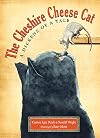
Bravo to the trio of Deedy, Wright and Moser for a fine tale and tribute to Charles Dickens - and to cats, mice and ravens! Skilley the street cat, Pip the public house mouse and the raven, Maldwyn, all have secrets. Their lives intertwine at Ye Olde Cheshire Cheese Inn in London, famous for its remarkable cheese. An unusual friendship evolves between the three, observed by that "writer of some distinction" Mr. Charles Dickens as he wrestles with finding the perfect opening for his newest show more novel, A Tale of Two Cities. The animals are hindered by Adele, a barmaid who hates mice and Pinch, the bully of all cats and aided by sweet Nell, the innkeeper's daughter. Maldwyn's secret threatens the peace of the realm, a mystery that is artfully revealed over the course of the novel.
I loved so many things about this novel: the British flavor, the tongue-in-cheek humor, the pencil illustrations and most of all, the friendships between animals and between animals and people. Mr. Dickens is a keen observer - as most writers are - and he quite quickly discovers the secret of Pip and Skilley's friendship. Pip is an "educated" mouse, having been taught to read, quite incidentally, by Nell. His erudition often confuses Skilley, but Pip is always gentle in his explanations. (The authors provide a glossary of "words that may be new" to the reader, particularly British and Victorian era slang and oddities. One of my faovrites is "chummery" or 'time spent chumming about with one's chums") The wee mouse "Too" (("too loud, too curious, too impulsive") is most endearing and brave, reminding me of "Tiny Tim." It is she who accepts Skilley most quicky. Characters and plot were well-developed and the climax arrived in due time - not too quickly and not too slowly. I was reluctant to see the story end and would love to read further installments of "Dickens Tales." (I wonder if the pages from "Mr. Dickens' notebooks are real.) More Skilley and Pip, please! show less
I loved so many things about this novel: the British flavor, the tongue-in-cheek humor, the pencil illustrations and most of all, the friendships between animals and between animals and people. Mr. Dickens is a keen observer - as most writers are - and he quite quickly discovers the secret of Pip and Skilley's friendship. Pip is an "educated" mouse, having been taught to read, quite incidentally, by Nell. His erudition often confuses Skilley, but Pip is always gentle in his explanations. (The authors provide a glossary of "words that may be new" to the reader, particularly British and Victorian era slang and oddities. One of my faovrites is "chummery" or 'time spent chumming about with one's chums") The wee mouse "Too" (("too loud, too curious, too impulsive") is most endearing and brave, reminding me of "Tiny Tim." It is she who accepts Skilley most quicky. Characters and plot were well-developed and the climax arrived in due time - not too quickly and not too slowly. I was reluctant to see the story end and would love to read further installments of "Dickens Tales." (I wonder if the pages from "Mr. Dickens' notebooks are real.) More Skilley and Pip, please! show less
https://www.hbook.com/?detailStory=carmen-agra-deedy-talks-with-roger
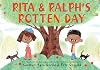
"...down the hill, and up the hill, and down the hill, and up the hill" run Rita and Ralph to each other's houses. But when the best friends' game goes awry, who will be first to apologize?
This story uses repetition and pattern in the best way; a great read-aloud. Rita and Ralph are both brown-skinned and fantastically grump-faced; their houses have as much personality as they do.
"...down the hill, and up the hill, and down the hill, and up the hill" run Rita and Ralph to each other's houses. But when the best friends' game goes awry, who will be first to apologize?
This story uses repetition and pattern in the best way; a great read-aloud. Rita and Ralph are both brown-skinned and fantastically grump-faced; their houses have as much personality as they do.
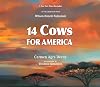
As Wilson Kimeli Naiyomah is studying medicine in America, he finds himself in New York City on September 11, 2001, far from his native Kenyan village of Massai. He returns home to tell a story, one that has “burned a hole in his heart.” The light of his mother’s smile shines off the page as she welcomes home her son, a son who will tell the story of those who will never again see such a mother’s smile or welcome home a son. The close-ups of the dark gazes of his people show both the show more legendary warrior and the wounded as they listen in silence. In the tradition of his tribe, the cow is the symbol of life and Kimeli has returned to ask the elders for their blessing as he prepares to offer it to the broken hearts of America. But can one sacred cow heal the hearts of thousands? Instead, the elders bless 14 cows in all, presenting them to the U.S. Ambassador with a ceremony of scared ritual. The response is overwhelming. Warm Kenyan tones of sunset reds, cobalt blues and fiery oranges in colored pencil and airbrush blow from one end of the pages to the other. Carmen Agra Deedy’s lyrical prose present this powerful story of compassion in a way that will reach students both young and older. The only challenge will be holding back the tears as you read it aloud. Inspired by New York Times’ reporter Marc Lacey’s article in June 2002 documenting this charitable event that helped to heal a nation. Great for social and cultural awareness studies or as an alternative perspective on recognizing September 11. Informative afterword, highly recommended. Grades 2-6. show less

It's difficult to think of a topic more widely canvassed, in recent years, than the events of September 11, 2001, and the causes, meanings, and ramifications thereof. Everyone - from the "pride goeth before a fall" lot, who blame U.S. foreign policy for the attacks, to the "clash of civilizations" crowd, who look to the inherent evil of the cultures and religion which produced the terrorists for a cause - has an opinion. It may sound odd, given the current omnipresence of this event in our show more public discourse, but I rarely hear anyone speaking - save in a bombastic way - about what actually happened that day: about the more than three thousand human beings who were brutally murdered in the span of a few short hours.
It may very well be that this is a necessity, if one is to engage in a rational political discussion of the matter, without being swallowed whole by emotional distress. I have this particularly vivid memory of a panel discussion held shortly after 9/11 at my college, in which hot debate about what would and should happen next was interrupted by a quiet young Indian student, who stood up and wondered aloud how the participants could already be haggling about who was to blame, reducing a terrible tragedy to little more than a talking point in their own ongoing political narratives. "Thousands of people have died!" he exclaimed, and the hall fell silent. No one knew what to say - partly I suspect, because they recognized the truth of his accusation. But also because, what could they say? What, save our fumbling attempt to make meaning, can be done in the face of such an atrocity?
Wilson Kimeli Naiyomah - a young Maasai man studying medicine in the United States, who found himself in New York City on that fateful day, and was haunted afterword by the terrible loss suffered by his host nation - discovered the answer to that question in the traditions of his people, and in his own "childhood heart." Returning to his village, it was Kimeli who brought the news of that day to the Maasai, who told them the terrible story, and who asked the elders' blessing for his symbolic gift of Enkarûs - his only cow - to America. Moved by his story, and mindful of the fact that "there is no nation so powerful it cannot be wounded, nor a people so small they cannot offer mighty comfort," the elders agreed. They, and the people, did something more: they added their own cows to Kimeli's gift. Fourteen cows for America, from a pastoral people for whom "the cow is life."
Written by Carmen Agra Deedy, in collaboration with Wilson Kimeli Naiyomah, whose story it is, 14 Cows for America is an immensely moving little book, a reminder that, while there is malice and cruelty in the world, there is also great generosity and compassion. It isn't a book to explain the events of 9/11, so much as a tale of how one person responded to those events: how he carried the story around with him, until it "burned a hole in his heart;" how he shared the burden of that story with his loved ones and community; and how he found, in the teachings of his childhood, in the idea that "To heal a sorrowing heart, give something that is dear to your own," a way to express his compassion, his fellow-feeling.
Thomas Gonzalez' illustrations - done in pastel and colored pencil - are beautiful, subtly capturing both the light-filled land of the Maasai, and (in the storytelling scenes) the smoky terror of 9/11. But the true strength here is the narrative, which, in its very simplicity, paints the best picture I have yet seen of that terrible day in New York: "Buildings so tall they can touch the sky... Fires so hot they can melt iron... Smoke and dust so thick they can block out the sun... More than three thousand souls are lost." I wept. Isn't that what one does, in the face of such terrible wrong? Isn't that what one does, in the face of such love? show less
It may very well be that this is a necessity, if one is to engage in a rational political discussion of the matter, without being swallowed whole by emotional distress. I have this particularly vivid memory of a panel discussion held shortly after 9/11 at my college, in which hot debate about what would and should happen next was interrupted by a quiet young Indian student, who stood up and wondered aloud how the participants could already be haggling about who was to blame, reducing a terrible tragedy to little more than a talking point in their own ongoing political narratives. "Thousands of people have died!" he exclaimed, and the hall fell silent. No one knew what to say - partly I suspect, because they recognized the truth of his accusation. But also because, what could they say? What, save our fumbling attempt to make meaning, can be done in the face of such an atrocity?
Wilson Kimeli Naiyomah - a young Maasai man studying medicine in the United States, who found himself in New York City on that fateful day, and was haunted afterword by the terrible loss suffered by his host nation - discovered the answer to that question in the traditions of his people, and in his own "childhood heart." Returning to his village, it was Kimeli who brought the news of that day to the Maasai, who told them the terrible story, and who asked the elders' blessing for his symbolic gift of Enkarûs - his only cow - to America. Moved by his story, and mindful of the fact that "there is no nation so powerful it cannot be wounded, nor a people so small they cannot offer mighty comfort," the elders agreed. They, and the people, did something more: they added their own cows to Kimeli's gift. Fourteen cows for America, from a pastoral people for whom "the cow is life."
Written by Carmen Agra Deedy, in collaboration with Wilson Kimeli Naiyomah, whose story it is, 14 Cows for America is an immensely moving little book, a reminder that, while there is malice and cruelty in the world, there is also great generosity and compassion. It isn't a book to explain the events of 9/11, so much as a tale of how one person responded to those events: how he carried the story around with him, until it "burned a hole in his heart;" how he shared the burden of that story with his loved ones and community; and how he found, in the teachings of his childhood, in the idea that "To heal a sorrowing heart, give something that is dear to your own," a way to express his compassion, his fellow-feeling.
Thomas Gonzalez' illustrations - done in pastel and colored pencil - are beautiful, subtly capturing both the light-filled land of the Maasai, and (in the storytelling scenes) the smoky terror of 9/11. But the true strength here is the narrative, which, in its very simplicity, paints the best picture I have yet seen of that terrible day in New York: "Buildings so tall they can touch the sky... Fires so hot they can melt iron... Smoke and dust so thick they can block out the sun... More than three thousand souls are lost." I wept. Isn't that what one does, in the face of such terrible wrong? Isn't that what one does, in the face of such love? show less
Lists
Youth: DEI (1)
Awards


You May Also Like


Associated Authors
Statistics
- Works
- 25
- Also by
- 2
- Members
- 5,866
- Popularity
- #4,207
- Rating
- 4.2
- Reviews
- 342
- ISBNs
- 138
- Languages
- 5
- Favorited
- 2