
Karla Cornejo Villavicencio
Author of The Undocumented Americans
About the Author
Works by Karla Cornejo Villavicencio
Associated Works
Daughters of Latin America: An International Anthology of Writing by Latine Women (2023) — Contributor — 38 copies, 1 review
Tagged
Common Knowledge
- Canonical name
- Cornejo Villavicencio, Karla
- Birthdate
- 1989
- Gender
- female
- Education
- Harvard University
Yale University - Occupations
- writer
translator - Agent
- Peter Steinberg (Foundry Media)
- Nationality
- Ecuador (birth)
- Places of residence
- New York, New York, USA
Cambridge, Massachusetts, USA
New Haven, Connecticut, USA - Associated Place (for map)
- USA
Members
Reviews
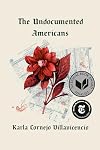
Portraits of the thousands of people who deliver our sustenance (waiters, delivery people, day laborers, farmworkers) and pay into the American Social Security System but realize nothing from it as they age and must keep working at bottom-rung wages. The author focused on people like her family (she's a DACA participant who graduated from Harvard), visiting key cities in the U.S. and giving voices to those who were not afraid to talk with her about their journey. The book is a well written show more and documented justification for her righteous anger. It is a slim, compelling volume which puts faces to headlines. Read it. show less
Achingly poignant vignettes from the author's work and family life. This is the best window into the world of the undocumented Americans that I have looked through. The nearly invisible workers who take the worst jobs and live in constant fear of being caught and deported populate Villavicencio's world. I felt forlorn at the lives lost, the families separated, and the degree to which people take advantage of and/or mistreat these fellow human beings. Isabel Wilkerson's book, "Caste" comes to show more mind. I think the undocumented have been relegated to the equivalent of India's untouchables. Once again, this is a book which documents the undocumented and the shameful behavior of Americans. An important book! show less
There's something about the faces of everyone in my family and in mine. I think you can see in our eyes the kind of sadness, which is in two places at once--mourning the past, grieving the future. Sad in a historically significant and visually satisfying way. Looking sad like it's your job.
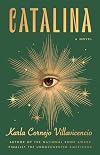
In 2010, Karla Cornejo Villavicencio was attending Harvard when she wrote about her experiences being undocumented. Later, she would be on the shortlist for the National Book Award for her non-fiction show more book, The Undocumented Americans. Now she has written a novel about a young woman in her last year at Harvard who is undocumented and dealing with all the uncertainties people do when they are about to be launched into the world and dealing with the constant stress of being undocumented and worrying about her grandparents who are also undocumented and also getting older, so the kinds of jobs that are open to them are becoming more difficult. Catalina also wants to have fun, have sex, fall in love, like any other girl her age. She's also an over-thinker and very, very smart.
Catalina begins as a campus novel and ends as something else. For the first half of the book, it felt like a riff on Elif Batuman's Selin novels, with an uncertain but bright and engaging heroine navigating Harvard social life, trying her hand at flirtation and finding out more about herself.
I too could quote Charles Bukowski. I could wear headbands. Learn to drink port. You can be whoever you want in America.
But when the winter break sends her back to sit in her grandparents's tiny apartment while her boyfriend tours South America, an activity she can't share as she lacks the money and, as an undocumented American, lacks a passport. And once back in Queens, she is back in her grandparents's precarious world, where a toothache is a financial emergency and a surprise visit by the ICE puts her grandfather at risk of deportation. This second part of the book is both the strongest and the most scattershot part of the novel, with so many elements crammed into a single space that most get a quick, intriguing mention only to be overtaken by the next six things Catalina does or thinks or reacts to. The flaws of this novel are all those common in debut novels and there are far more elements to be impressed by. This is definitely an author to watch. show less
In 2010, Karla Cornejo Villavicencio was attending Harvard when she wrote about her experiences being undocumented. Later, she would be on the shortlist for the National Book Award for her non-fiction show more book, The Undocumented Americans. Now she has written a novel about a young woman in her last year at Harvard who is undocumented and dealing with all the uncertainties people do when they are about to be launched into the world and dealing with the constant stress of being undocumented and worrying about her grandparents who are also undocumented and also getting older, so the kinds of jobs that are open to them are becoming more difficult. Catalina also wants to have fun, have sex, fall in love, like any other girl her age. She's also an over-thinker and very, very smart.
Catalina begins as a campus novel and ends as something else. For the first half of the book, it felt like a riff on Elif Batuman's Selin novels, with an uncertain but bright and engaging heroine navigating Harvard social life, trying her hand at flirtation and finding out more about herself.
I too could quote Charles Bukowski. I could wear headbands. Learn to drink port. You can be whoever you want in America.
But when the winter break sends her back to sit in her grandparents's tiny apartment while her boyfriend tours South America, an activity she can't share as she lacks the money and, as an undocumented American, lacks a passport. And once back in Queens, she is back in her grandparents's precarious world, where a toothache is a financial emergency and a surprise visit by the ICE puts her grandfather at risk of deportation. This second part of the book is both the strongest and the most scattershot part of the novel, with so many elements crammed into a single space that most get a quick, intriguing mention only to be overtaken by the next six things Catalina does or thinks or reacts to. The flaws of this novel are all those common in debut novels and there are far more elements to be impressed by. This is definitely an author to watch. show less

whew. this is amazing. her writing, her reporting, her connections, her honesty. this is incredible. this is so raw and full of hard stories, but also so full of love and even some humor. everything about this is brilliant.
i wanted to mark just about everything but in the end just:
"I respect the role of god in the lives of people who suffer but basically only in the lives of people who suffer."
"I think about the work of Roberto Gonzales, a Harvard scholar who has conducted longitudinal show more studies on the effects of undocumented life on young people. As a result of all the stressors of migrant life, he found his subjects suffered chronic headaches, toothaches, ulcers, sleep problems, and eating issues. Which is funny to find in research because I'm twenty-nine and I have this ulcer my doctors can't seem to soothe or diagnose the cause of. It feels like I have an open wound right beneath my breasts in the center of my abdomen and I can feel it spasm and bleed and it never goes away. Sometimes I have to go to Urgent Care, and I drink concoctions and take pills and drink teas and I just keep bleeding, and it hurts the most when, after a long day of reading about people forming human chains to block ICE officers from arresting a man and his child, I sit down to write about my parents.
Now, imagine that thirty, forty, fifty years in. Of course Octavio is sick. We're all fucking sick. It's a public health crisis and it's hard to know how to talk about it without feeding into the right-wing propaganda machine that already paints immigrants as charges to the healthcare system and carriers of disease. The trick to doing it is asking Americans to pity us while reassuring them with a myth as old as the country's justifications for slavery - that is, reassuring Americans with the myth that people of color are long-suffering marvels, built to do hard work, built to last longer and handle more, reminding them what America already believes in its soul, which is that we are 'impervious to pain,' as scholar Robin Bernstein has put it. We can only tell them we're sick if we remind them that sick or not, we are able to still be high-functioning machines."
"Ivy’s baby has regained her vision, but nobody knows what the long-term effects of the water poisoning will be in her little body. The wait is torturous for Ivy. It is torturous for her mom. It is torturous for the community. It is not torturous for the government. They want us all dead, Latinxs, black people, they want us dead, and sometimes they’ll slip something into our bloodstreams to kill us slowly and sometimes they’ll shoot and shoot and shoot and shoot and shoot shoot and shoot and shoot and shoot and shoot shoot and shoot and shoot and shoot and shoot shoot and shoot and shoot and shoot and shoot shoot and shoot and shoot and shoot and shoot shoot and shoot and shoot and shoot and shoot shoot and shoot and shoot and shoot and shoot shoot and shoot and shoot and shoot and shoot shoot and shoot until their bloodlust is satisfied and it’s all the same, our pastors will say god has a plan for us and our parents will plead with the Lord until the end to give them an answer." show less
i wanted to mark just about everything but in the end just:
"I respect the role of god in the lives of people who suffer but basically only in the lives of people who suffer."
"I think about the work of Roberto Gonzales, a Harvard scholar who has conducted longitudinal show more studies on the effects of undocumented life on young people. As a result of all the stressors of migrant life, he found his subjects suffered chronic headaches, toothaches, ulcers, sleep problems, and eating issues. Which is funny to find in research because I'm twenty-nine and I have this ulcer my doctors can't seem to soothe or diagnose the cause of. It feels like I have an open wound right beneath my breasts in the center of my abdomen and I can feel it spasm and bleed and it never goes away. Sometimes I have to go to Urgent Care, and I drink concoctions and take pills and drink teas and I just keep bleeding, and it hurts the most when, after a long day of reading about people forming human chains to block ICE officers from arresting a man and his child, I sit down to write about my parents.
Now, imagine that thirty, forty, fifty years in. Of course Octavio is sick. We're all fucking sick. It's a public health crisis and it's hard to know how to talk about it without feeding into the right-wing propaganda machine that already paints immigrants as charges to the healthcare system and carriers of disease. The trick to doing it is asking Americans to pity us while reassuring them with a myth as old as the country's justifications for slavery - that is, reassuring Americans with the myth that people of color are long-suffering marvels, built to do hard work, built to last longer and handle more, reminding them what America already believes in its soul, which is that we are 'impervious to pain,' as scholar Robin Bernstein has put it. We can only tell them we're sick if we remind them that sick or not, we are able to still be high-functioning machines."
"Ivy’s baby has regained her vision, but nobody knows what the long-term effects of the water poisoning will be in her little body. The wait is torturous for Ivy. It is torturous for her mom. It is torturous for the community. It is not torturous for the government. They want us all dead, Latinxs, black people, they want us dead, and sometimes they’ll slip something into our bloodstreams to kill us slowly and sometimes they’ll shoot and shoot and shoot and shoot and shoot shoot and shoot and shoot and shoot and shoot shoot and shoot and shoot and shoot and shoot shoot and shoot and shoot and shoot and shoot shoot and shoot and shoot and shoot and shoot shoot and shoot and shoot and shoot and shoot shoot and shoot and shoot and shoot and shoot shoot and shoot and shoot and shoot and shoot shoot and shoot until their bloodlust is satisfied and it’s all the same, our pastors will say god has a plan for us and our parents will plead with the Lord until the end to give them an answer." show less
Lists
Awards


You May Also Like


Associated Authors
Statistics
- Works
- 2
- Also by
- 2
- Members
- 1,046
- Popularity
- #24,627
- Rating
- 4.0
- Reviews
- 33
- ISBNs
- 16
- Languages
- 1