
Kate McGovern
Author of Lola, the Muddy Dog
About the Author
Works by Kate McGovern
Associated Works
Tagged
Common Knowledge
There is no Common Knowledge data for this author yet. You can help.
Members
Reviews
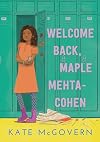
Thanks to LibraryThing & Candlewick Press for an advance reader's copy. All comments and opinions are my own.
I love middle grade fiction, maybe because it reminds me of the stories I wrote for myself when I was in middle grade. It's a time of innocence, learning, building relationships, and discovery. And all those words describe "Welcome Back, Maple Mehta-Cohen" - a heartwarming story of acceptance and friendship.
Maple is being welcomed back to the fifth grade, which she is repeating due to show more her inability to read. Even with her clever tricks and strategies, she's no longer able to hide her dyslexia. More than anything Maple worries about what her friends will think, and she soon finds out. Although she makes some new fifth grade friends, it's her two BFFs who have moved up to sixth grade who are now either ignoring her or taunting her.
While Maple has reading challenges, she is an expert at storytelling, and dictates stories into her recorder, especially adventures of a young amateur detective who's half Indian and half Jewish, just like Maple. These adventures, which the author skillfully inserts into Maple's narrative, add another dimension to the novel. Maple also tells her new fifth grade friends some stories which are untruths about herself. What will happen when Maple implements a reckless plan to win back her old friends, and her new friends learn she isn't really a special teacher's assistant?
This is a book for middle grade readers, or anyone who enjoys middle grade novels. Maple is a realistic, likeable character who is easy to identify with, and readers who have faced their own trials with school and friendships will savor this satisfying story of challenges and acceptance. show less
I love middle grade fiction, maybe because it reminds me of the stories I wrote for myself when I was in middle grade. It's a time of innocence, learning, building relationships, and discovery. And all those words describe "Welcome Back, Maple Mehta-Cohen" - a heartwarming story of acceptance and friendship.
Maple is being welcomed back to the fifth grade, which she is repeating due to show more her inability to read. Even with her clever tricks and strategies, she's no longer able to hide her dyslexia. More than anything Maple worries about what her friends will think, and she soon finds out. Although she makes some new fifth grade friends, it's her two BFFs who have moved up to sixth grade who are now either ignoring her or taunting her.
While Maple has reading challenges, she is an expert at storytelling, and dictates stories into her recorder, especially adventures of a young amateur detective who's half Indian and half Jewish, just like Maple. These adventures, which the author skillfully inserts into Maple's narrative, add another dimension to the novel. Maple also tells her new fifth grade friends some stories which are untruths about herself. What will happen when Maple implements a reckless plan to win back her old friends, and her new friends learn she isn't really a special teacher's assistant?
This is a book for middle grade readers, or anyone who enjoys middle grade novels. Maple is a realistic, likeable character who is easy to identify with, and readers who have faced their own trials with school and friendships will savor this satisfying story of challenges and acceptance. show less
 This review was written for LibraryThing Early Reviewers.
This book is a delight, and focuses on a character not often discussed in middle grade novels: the struggling reader. Kate McGovern does an excellent job of sharing Mehta's frustrations and her masking - her tricks for coping and making teachers think she is a competent reader are impressive. Add in the friendship dramas Mehta is experiencing (compounded by her repeating a grade), a family struggling to juggle full-time jobs and give their attention to their small children, and Mehta's show more desire to share her stories, and this is a great middle-grade read which all readers will enjoy! show less
This review was written for LibraryThing Early Reviewers.Maple Mehta-Cohen has tried all the clever tricks to keep her big secret, a secret. She has an impressive vocabulary, loves telling stories into her recorder - especially the adventures of a daring young detective who is half Indian and half Jewish like herself, and she uses pictures to figure out context. But words on the page just don't seem to make sense to her... and her teacher is on to her.
Now, Maple has to repeat fifth grade again, and she is devastated! What will her friends think? show more Will they forget about her and leave her in the dust? She tells her new classmates she got held back as a special teacher's assistant, but how long with her storytelling skills carry her before she must face the truth - that she has her own strengths and she needs to love herself, including her brain, just the way she is.
This book is super adorable and I really enjoyed Maple as the voice of the main character. She is bright and brilliant, creative, and strong. It's been quite a few years, but I believe Kate McGovern did a wonderful job at capturing what it's like to be a fifth grader.
The family dynamic of the Mehta-Cohen household is nice to see as well. Both of Maple's parents are artists of sorts and she's got a baby brother she is still kind of getting used to. Her parents are both super supportive of who Maple is and what she is interested in - they even got her a tape recorder to tell her stories into!
McGovern tackles some difficult issues: dyslexia, bullying, repeating a grade, and loving oneself. She even gives examples of empathy, respect, and patience as well. McGovern does a fine job at depicting young children with reading challenges and really captures the stigma attached to struggling readers.
This book will appeal to young readers who have faced their own trials with school and friendships, show empathy for peers who may or may not be struggling with a learning disability, and show those who do, that they're not alone.
*Thank you LibraryThing and Candlewick Press for the ARC of this book in exchange for an honest review show less
Now, Maple has to repeat fifth grade again, and she is devastated! What will her friends think? show more Will they forget about her and leave her in the dust? She tells her new classmates she got held back as a special teacher's assistant, but how long with her storytelling skills carry her before she must face the truth - that she has her own strengths and she needs to love herself, including her brain, just the way she is.
This book is super adorable and I really enjoyed Maple as the voice of the main character. She is bright and brilliant, creative, and strong. It's been quite a few years, but I believe Kate McGovern did a wonderful job at capturing what it's like to be a fifth grader.
The family dynamic of the Mehta-Cohen household is nice to see as well. Both of Maple's parents are artists of sorts and she's got a baby brother she is still kind of getting used to. Her parents are both super supportive of who Maple is and what she is interested in - they even got her a tape recorder to tell her stories into!
McGovern tackles some difficult issues: dyslexia, bullying, repeating a grade, and loving oneself. She even gives examples of empathy, respect, and patience as well. McGovern does a fine job at depicting young children with reading challenges and really captures the stigma attached to struggling readers.
This book will appeal to young readers who have faced their own trials with school and friendships, show empathy for peers who may or may not be struggling with a learning disability, and show those who do, that they're not alone.
*Thank you LibraryThing and Candlewick Press for the ARC of this book in exchange for an honest review show less
This review was written for LibraryThing Early Reviewers.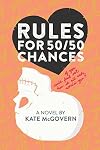
Rose Levenson lives by four rules:
1. Don't make plans you can't keep.
The Huntington's disease gene she has a 50% chance of having inherited from her progressively ailing mother is set in stone. Her mother will die from it, and Rose can see every day her condition getting worse—as for herself, she either has it, or she doesn't. Regardless, it seems like her fate is already written in the stars; what's the point of planning out a future, if by adulthood, she may not even be healthy enough show more to enjoy it?
2. Falling in love confuses everything (so don't do it).
Enter Caleb Franklin, a boy who understands what it's like to suffer under the weight of a genetic disorder, a boy from a completely different background, the first boy she's ever felt worthy enough of breaking her second rule.
While Rose and Caleb's budding relationship is nowhere near consuming or romantic—it just fell a little flat for me—I found Caleb to be a fascinating choice of love interest. McGovern intelligently explores race and class differences in a mature way, rather than solely throwing them in as character devices (aka "that one black friend") as I've seen other YA novels do. I totally appreciate how she doesn't gloss over Caleb's African-American background; she incorporates its relevance into his relationship with Rose, while carefully avoiding anything too political or current to make everything COMPLETELY about race. Because that's really not the point; the point is that race isn't something that can be ignored or glossed over, because it does make a different in real life, despite what white privilege will insist. White privilege isn't just about white people having it better than black people, etc., but the inability for non-minorities to recognize that this sort of stratification exists. McGovern handles this so gracefully and naturally, without being preachy; I've never seen it done in YA (that isn't primarily about race) before.
What's so conflicting about my opinions overall is that I found Rules for 50/50 Chances to be stunningly realistic and layered, but just couldn't stand Rose, our protagonist. For me to grow attached to a story relies heavily on a likable—if not relatable—narrator, and unfortunately Rose is my biggest quip about this entire book. I understand that her characterization was fully intentional on McGovern's part, especially since Rose's main flaws are pointed out by many of the secondary characters and eventually self-realized, but sludging through her narrow-minded first-person narrative was a little too irritating for me.
It isn't that she's particularly bratty or stupid or mean, but she's one of those types who wallows in her own pity—in this case, due to her genetic "curse" as she calls it, completely pulling the "you just don't know how I feel!" card at every instance, without leaving much room to understand that other people, in fact, also have issues, even if not the exact same as her own. There's one scene where Caleb, the love interest, calls Rose "exhausting," and that's exactly how I feel about her: tiring, drawn-out, worthy of eye rolls. It takes her a long, long time to figure this out, but when she finally does, I felt like the book finally redeemed itself.
3. Knowledge is power.
The novelty of the book's plot is something to praise, for sure. I wasn't even certain what Huntington's disease was before I read this book, so it was both an educational, and emotionally charged account on how it could affect a teenager's life, even before symptoms show.
The difficulty of living with a 50/50 chance for inheriting a degenerative disease is expertly illustrated from Rose's point of view. It isn't so much the misfortune of the disease itself, but rather a matter of knowing and not-knowing: a lifetime of uncertainty. This is mainly the reason why Rose is convinced that she needs to take the test to find out whether she carries the gene or not as soon as she turns eighteen. It's not HD she's concerned over, because she knows well too much about it already, watching it eat away at her mother every day. Rather, being kept in the dark is what she can't stand.
Rules for 50/50 Chances won't sugar-coat anything. From the frankness of dialogue between family members and friends, and the way Huntington's manifests uglily in her own mother, it gives you an honest, oftentimes abrasive account of Rose's life, which is already hard considering she's a senior in high school. To me, the plot about her ballet career and college decisions fell to the backdrop because the primary issues with Caleb and with her taking the genetic test took center stage. While not always pretty, teenage relationships and degenerative diseases are portrayed with extraordinary authenticity here.
4. Rules are meant to be broken.
As Rose slowly tests herself through the hardships of competing for a ballet scholarship, the acknowledgment of her genetic results, and through the turmoil of working out her first love—and heartbreak—she learns that everyone has their own problems, not exclusively herself. Soon, she finds herself breaking all her previous, pristinely set rules, and in this way, she discovers that everyone's human and that pain is not measurable on a spectrum; no one has it more or less "worse" than anyone else just because of superficial reasons.
It definitely took Rose a long time to come to this conclusion, but when she finally did, I felt triumphant. I honestly didn't enjoy this book to this extent until the last few chapters because it seemed to drag on and on with Rose complaining about this and that, but the ending was definitely worth it.
Amazingly, while the main characters are hard to relate to, the book itself isn't. Rose isn't the most sympathetic or level-headed character, but McGovern approaches this complex dilemma richly and with emotional resonance.
I learned a lot from this book, not only about race and difficult relationships and difficult genes, but also general astute observations from Rose's everyday life, from the lessons she learns during auditioning for her ballet scholarship, to her mom's passion for trains, which she also shares. I feel like this is the kind of book I would have loved to have read in middle school—and I don't say that to lower the audience age or cheapen its poignance; I only mean that it's an incredibly eye-opening and grounded account that has the power to vastly change the way most people think.
Pros: Plot, characters, and relationships are very lifelike and well-written // McGovern's prose flows naturally and swiftly; she is obviously a talented storyteller // I learned a lot about Huntington's disease and trains (look up the California Zephyr if you don't already know what it is) // Overall narrative contains sophistication and self-awareness, despite Rose's lack thereof // Rose's family dynamic is beautiful and diverse; we experience the touching highs and all the dysfunctional lows // Ending ties everything together beautifully, and actually is the saving grace considering how prolonged Rose's petty narrative is, prior
Cons: Rose is not the easiest character to like and relate to (condescending towards her friends, short-sighted, self-pitying) // There isn't anything romantic or clever about Rose and Caleb's relationship; it kind of just happens
Verdict: Kate McGovern tackles tough topics like genetic diseases, race and class issues, the ugliness of growing up, and the uncertainty—and blessing—of not knowing, with poise, wisdom, and cultural sensitivity in her debut novel. This is the kind of YA book I would like to turn back time and give to my adolescent self: fairly clean, but far from naïve; never happy-go-lucky, but still optimistic. It taught me a lot, and made me reflect a lot, and I think teenagers of all ages and reading levels will feel the same way. Rules of 50/50 Chances challenges perceptions and preconceptions, depicts a genetic disease that is as rarely informed on as it is hideous, and demonstrates that love, whether romantic or familial, is never as tidy or as faultless as it seems—even in a young adult novel. While I did find Rose's character to be a headache as a whole, the uncommon yet well-executed plot will stick with me forever. Mindful, mature, and genuine to its core, 50/50 Chances is a book you should 100% take a chance on.
Rating: 7 out of 10 hearts (3.5 stars): Not perfect, but overall enjoyable; would recommend, but borrow a copy before you buy!
Source: Complimentary copy provided by publicist in exchange for an honest and unbiased review (thank you, Goldberg McDuffie Communications!). show less
1. Don't make plans you can't keep.
The Huntington's disease gene she has a 50% chance of having inherited from her progressively ailing mother is set in stone. Her mother will die from it, and Rose can see every day her condition getting worse—as for herself, she either has it, or she doesn't. Regardless, it seems like her fate is already written in the stars; what's the point of planning out a future, if by adulthood, she may not even be healthy enough show more to enjoy it?
2. Falling in love confuses everything (so don't do it).
Enter Caleb Franklin, a boy who understands what it's like to suffer under the weight of a genetic disorder, a boy from a completely different background, the first boy she's ever felt worthy enough of breaking her second rule.
While Rose and Caleb's budding relationship is nowhere near consuming or romantic—it just fell a little flat for me—I found Caleb to be a fascinating choice of love interest. McGovern intelligently explores race and class differences in a mature way, rather than solely throwing them in as character devices (aka "that one black friend") as I've seen other YA novels do. I totally appreciate how she doesn't gloss over Caleb's African-American background; she incorporates its relevance into his relationship with Rose, while carefully avoiding anything too political or current to make everything COMPLETELY about race. Because that's really not the point; the point is that race isn't something that can be ignored or glossed over, because it does make a different in real life, despite what white privilege will insist. White privilege isn't just about white people having it better than black people, etc., but the inability for non-minorities to recognize that this sort of stratification exists. McGovern handles this so gracefully and naturally, without being preachy; I've never seen it done in YA (that isn't primarily about race) before.
What's so conflicting about my opinions overall is that I found Rules for 50/50 Chances to be stunningly realistic and layered, but just couldn't stand Rose, our protagonist. For me to grow attached to a story relies heavily on a likable—if not relatable—narrator, and unfortunately Rose is my biggest quip about this entire book. I understand that her characterization was fully intentional on McGovern's part, especially since Rose's main flaws are pointed out by many of the secondary characters and eventually self-realized, but sludging through her narrow-minded first-person narrative was a little too irritating for me.
It isn't that she's particularly bratty or stupid or mean, but she's one of those types who wallows in her own pity—in this case, due to her genetic "curse" as she calls it, completely pulling the "you just don't know how I feel!" card at every instance, without leaving much room to understand that other people, in fact, also have issues, even if not the exact same as her own. There's one scene where Caleb, the love interest, calls Rose "exhausting," and that's exactly how I feel about her: tiring, drawn-out, worthy of eye rolls. It takes her a long, long time to figure this out, but when she finally does, I felt like the book finally redeemed itself.
3. Knowledge is power.
The novelty of the book's plot is something to praise, for sure. I wasn't even certain what Huntington's disease was before I read this book, so it was both an educational, and emotionally charged account on how it could affect a teenager's life, even before symptoms show.
The difficulty of living with a 50/50 chance for inheriting a degenerative disease is expertly illustrated from Rose's point of view. It isn't so much the misfortune of the disease itself, but rather a matter of knowing and not-knowing: a lifetime of uncertainty. This is mainly the reason why Rose is convinced that she needs to take the test to find out whether she carries the gene or not as soon as she turns eighteen. It's not HD she's concerned over, because she knows well too much about it already, watching it eat away at her mother every day. Rather, being kept in the dark is what she can't stand.
Rules for 50/50 Chances won't sugar-coat anything. From the frankness of dialogue between family members and friends, and the way Huntington's manifests uglily in her own mother, it gives you an honest, oftentimes abrasive account of Rose's life, which is already hard considering she's a senior in high school. To me, the plot about her ballet career and college decisions fell to the backdrop because the primary issues with Caleb and with her taking the genetic test took center stage. While not always pretty, teenage relationships and degenerative diseases are portrayed with extraordinary authenticity here.
4. Rules are meant to be broken.
As Rose slowly tests herself through the hardships of competing for a ballet scholarship, the acknowledgment of her genetic results, and through the turmoil of working out her first love—and heartbreak—she learns that everyone has their own problems, not exclusively herself. Soon, she finds herself breaking all her previous, pristinely set rules, and in this way, she discovers that everyone's human and that pain is not measurable on a spectrum; no one has it more or less "worse" than anyone else just because of superficial reasons.
It definitely took Rose a long time to come to this conclusion, but when she finally did, I felt triumphant. I honestly didn't enjoy this book to this extent until the last few chapters because it seemed to drag on and on with Rose complaining about this and that, but the ending was definitely worth it.
Amazingly, while the main characters are hard to relate to, the book itself isn't. Rose isn't the most sympathetic or level-headed character, but McGovern approaches this complex dilemma richly and with emotional resonance.
I learned a lot from this book, not only about race and difficult relationships and difficult genes, but also general astute observations from Rose's everyday life, from the lessons she learns during auditioning for her ballet scholarship, to her mom's passion for trains, which she also shares. I feel like this is the kind of book I would have loved to have read in middle school—and I don't say that to lower the audience age or cheapen its poignance; I only mean that it's an incredibly eye-opening and grounded account that has the power to vastly change the way most people think.
Pros: Plot, characters, and relationships are very lifelike and well-written // McGovern's prose flows naturally and swiftly; she is obviously a talented storyteller // I learned a lot about Huntington's disease and trains (look up the California Zephyr if you don't already know what it is) // Overall narrative contains sophistication and self-awareness, despite Rose's lack thereof // Rose's family dynamic is beautiful and diverse; we experience the touching highs and all the dysfunctional lows // Ending ties everything together beautifully, and actually is the saving grace considering how prolonged Rose's petty narrative is, prior
Cons: Rose is not the easiest character to like and relate to (condescending towards her friends, short-sighted, self-pitying) // There isn't anything romantic or clever about Rose and Caleb's relationship; it kind of just happens
Verdict: Kate McGovern tackles tough topics like genetic diseases, race and class issues, the ugliness of growing up, and the uncertainty—and blessing—of not knowing, with poise, wisdom, and cultural sensitivity in her debut novel. This is the kind of YA book I would like to turn back time and give to my adolescent self: fairly clean, but far from naïve; never happy-go-lucky, but still optimistic. It taught me a lot, and made me reflect a lot, and I think teenagers of all ages and reading levels will feel the same way. Rules of 50/50 Chances challenges perceptions and preconceptions, depicts a genetic disease that is as rarely informed on as it is hideous, and demonstrates that love, whether romantic or familial, is never as tidy or as faultless as it seems—even in a young adult novel. While I did find Rose's character to be a headache as a whole, the uncommon yet well-executed plot will stick with me forever. Mindful, mature, and genuine to its core, 50/50 Chances is a book you should 100% take a chance on.
Rating: 7 out of 10 hearts (3.5 stars): Not perfect, but overall enjoyable; would recommend, but borrow a copy before you buy!
Source: Complimentary copy provided by publicist in exchange for an honest and unbiased review (thank you, Goldberg McDuffie Communications!). show less
Lists
Awards


You May Also Like


Associated Authors
Statistics
- Works
- 18
- Also by
- 1
- Members
- 808
- Popularity
- #31,570
- Rating
- 3.8
- Reviews
- 20
- ISBNs
- 32
- Languages
- 1
