
Elizabeth St.John (1)
Author of The Lady of the Tower
For other authors named Elizabeth St.John, see the disambiguation page.
About the Author
Image credit: via goodreads
Series
Works by Elizabeth St.John
Tagged
Common Knowledge
There is no Common Knowledge data for this author yet. You can help.
Members
Reviews
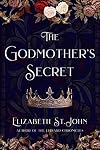
THE GODMOTHER’S SECRET offers a fresh (as far as I know) explanation for what happened to the two princes in the Tower of London near the end of the Wars of the Roses. Author Elizabeth St. John’s story definitely seems plausible to me but I had many moments where the pace felt slow and the political machinations tedious. Awarded three stars on Goodreads, though I would give four for originality. Don’t worry; there are no spoilers ahead.
Having read much (over decades) about the fates of show more King Edward V and his younger brother, Richard Duke of York — in both fiction and non-fiction — I was eager to tackle THE GODMOTHER’S SECRET. I was excited because it came from a new perspective. Instead of looking at the mystery from either an exclusively York or Lancaster viewpoint, I thought, this one MIGHT be more objective because the protagonist of this novel is Elysabeth St.John, Lady Scrope, wife to the 5th Baron Scrope of Bolton, who was the actual godmother to King Edward V, with connections to both competing houses.
As the author explains in her Author’s Note, she took the limited but known facts surrounding the princes and built an imaginative (convoluted at times) story about the role this godmother might have played in the fate of the boys.
To counter confusion, please note that the author’s name (Elizabeth St. John) is the same as the godmother’s (Elysabeth St.John). They are distantly related.
Being a godmother was a big deal in the Middle Ages. Lady Scrope had to witness Edward's birth and swear an oath before God to protect young Edward against all enemies. And as the boy was heir to his father, King Edward IV, that’s a heavy responsibility.
Of course, when the boy’s father dies unexpectedly, political intrigue ramps up in a huge way:
• The late king’s brother, Richard of Gloucester, has been named Lord Protector to the new but still underage king.
• The boy’s mother, Elizabeth Woodville, and her relations are desperate to hold onto power.
• Margaret Beaufort (who happens to be Elysabeth St. John’s sister) is maneuvering to get her son Henry Tudor (Elysabeth’s nephew) closer to the throne.
• The Duke of Buckingham thinks his royal blood entitles him to greater prominence.
• And, if you know your history, you know the names of Eleanor Talbot and Bishop Stillington are about to surface.
And indeed, much of the Elysabeth's story is about her internal conflict around competing loyalties -- to her godson, her husband (a Yorkist), and her sister, Margaret (a Lancastrian).
In an age where even the most important messages traveled over days by men on horseback, what I liked best about the novel was understanding how slowly information spread and how feasible it was to hide, rescue, or kill two young boys without anyone knowing. What I didn’t fully buy was the power exercised by Lady Scrope at a time when even high-born women were essentially powerless. And I had a problem with how the author initially introduces Lady Scrope as having her own children but then drops any mention of them while she devotes years to ensuring the wellbeing of her godson. Granted this godson was heir to the throne, which makes him important. But generally so are children to their mother.
If you, like me, are fascinated with the fate of the princes in the tower, you should definitely read this novel. If you don’t already know the story or players well, you may find the plot a little hard to follow at times. Luckily a list of characters is provided at the start of the book, which might help. Enjoy! show less
Having read much (over decades) about the fates of show more King Edward V and his younger brother, Richard Duke of York — in both fiction and non-fiction — I was eager to tackle THE GODMOTHER’S SECRET. I was excited because it came from a new perspective. Instead of looking at the mystery from either an exclusively York or Lancaster viewpoint, I thought, this one MIGHT be more objective because the protagonist of this novel is Elysabeth St.John, Lady Scrope, wife to the 5th Baron Scrope of Bolton, who was the actual godmother to King Edward V, with connections to both competing houses.
As the author explains in her Author’s Note, she took the limited but known facts surrounding the princes and built an imaginative (convoluted at times) story about the role this godmother might have played in the fate of the boys.
To counter confusion, please note that the author’s name (Elizabeth St. John) is the same as the godmother’s (Elysabeth St.John). They are distantly related.
Being a godmother was a big deal in the Middle Ages. Lady Scrope had to witness Edward's birth and swear an oath before God to protect young Edward against all enemies. And as the boy was heir to his father, King Edward IV, that’s a heavy responsibility.
Of course, when the boy’s father dies unexpectedly, political intrigue ramps up in a huge way:
• The late king’s brother, Richard of Gloucester, has been named Lord Protector to the new but still underage king.
• The boy’s mother, Elizabeth Woodville, and her relations are desperate to hold onto power.
• Margaret Beaufort (who happens to be Elysabeth St. John’s sister) is maneuvering to get her son Henry Tudor (Elysabeth’s nephew) closer to the throne.
• The Duke of Buckingham thinks his royal blood entitles him to greater prominence.
• And, if you know your history, you know the names of Eleanor Talbot and Bishop Stillington are about to surface.
And indeed, much of the Elysabeth's story is about her internal conflict around competing loyalties -- to her godson, her husband (a Yorkist), and her sister, Margaret (a Lancastrian).
In an age where even the most important messages traveled over days by men on horseback, what I liked best about the novel was understanding how slowly information spread and how feasible it was to hide, rescue, or kill two young boys without anyone knowing. What I didn’t fully buy was the power exercised by Lady Scrope at a time when even high-born women were essentially powerless. And I had a problem with how the author initially introduces Lady Scrope as having her own children but then drops any mention of them while she devotes years to ensuring the wellbeing of her godson. Granted this godson was heir to the throne, which makes him important. But generally so are children to their mother.
If you, like me, are fascinated with the fate of the princes in the tower, you should definitely read this novel. If you don’t already know the story or players well, you may find the plot a little hard to follow at times. Luckily a list of characters is provided at the start of the book, which might help. Enjoy! show less
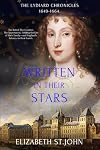
I found it particulary interesting that the story told in Written in Their Stars was based on the author’s family history. Just imagine writing a book to begin with and here you are putting words in your ancestor’s mouths. Can you imagine? Ms. St. John does a very compelling job of doing just that. She did have an exciting story to tell as her relatives were knee deep in the regicide of Charles I and the Restoration of Charles II.
The reader jumps into this third volume of the Lydiard show more Chronicles as the leaders of Parliament are voting whether to kill Charles I. You are introduced to the first members of the extended family whose exploits will keep you turning the pages until the monarchy is restored to England. But for now Luce and John Hutchinson are celebrating the King’s death warrant and the rise of the Republic. On the other side, Luce’s brother Allan and his wife Frances along with a cousin Nan, the Countess of Wilmot mourn all that is lost while trying to save their lands for when the King is returned.
What follows is a rich retelling of a very devisive time in British history. Oliver Cromwell’s ideals might have been laudable but his methods and means were far from humane or effective. Not to mention the fact that Mr. Cromwell soon effected the trappings of the very same monarchy he so detested. When he passed his son did not have the same strength of will as his father and when the factions started fighting it cleared the way for Charles II. Ms. St. John’s characters were very involved in the efforts to get the young King back to England and her descriptions of his life in exile were such that I could smell the stink of the streets and feel the cold as everyone suffered with too little to eat and no wood for the fires.
My only complaint about the book is that coming in to the third volume of a trilogy it was at times a little confusing understanding who was who and who was who to whom. References were made here and there to past happenings from the previous novels but not enough information was given to fully satisfy my need for knowledge. I think a brief biography at the start of the book would have helped me tremendously. But this was minor all things considered and the book as a whole was an intelligent, thought provoking read about the ties that bind even when faced with the worst a person can do. Family is family. show less
The reader jumps into this third volume of the Lydiard show more Chronicles as the leaders of Parliament are voting whether to kill Charles I. You are introduced to the first members of the extended family whose exploits will keep you turning the pages until the monarchy is restored to England. But for now Luce and John Hutchinson are celebrating the King’s death warrant and the rise of the Republic. On the other side, Luce’s brother Allan and his wife Frances along with a cousin Nan, the Countess of Wilmot mourn all that is lost while trying to save their lands for when the King is returned.
What follows is a rich retelling of a very devisive time in British history. Oliver Cromwell’s ideals might have been laudable but his methods and means were far from humane or effective. Not to mention the fact that Mr. Cromwell soon effected the trappings of the very same monarchy he so detested. When he passed his son did not have the same strength of will as his father and when the factions started fighting it cleared the way for Charles II. Ms. St. John’s characters were very involved in the efforts to get the young King back to England and her descriptions of his life in exile were such that I could smell the stink of the streets and feel the cold as everyone suffered with too little to eat and no wood for the fires.
My only complaint about the book is that coming in to the third volume of a trilogy it was at times a little confusing understanding who was who and who was who to whom. References were made here and there to past happenings from the previous novels but not enough information was given to fully satisfy my need for knowledge. I think a brief biography at the start of the book would have helped me tremendously. But this was minor all things considered and the book as a whole was an intelligent, thought provoking read about the ties that bind even when faced with the worst a person can do. Family is family. show less
I relished reading this story. I knew that I would love it so I read slowly to savor each paragraph. There was alot of plot movement in each paragraph which made the book a fast read. The Afterward explains how the author decided to write about these characters. Our Elysabeth Scope is one of the author's ancestors. Elysabeth's maiden name was St. John and our author performed extensive research not only genealogical but also historical about her ancestors. She gives the reader an alternative show more interpretation as to what happened to those two princes. No one really knows what happened to them so the ideas presented in the novel are plausible.
Because of her family connection to the characters, Elizabeth St. John presented them in a personal way. Family drama is exposed up front and close, especially with Elysabeth Scope's half-sister Margaret Beaufort. If you know Margaret's history, you know that she lived every day maneuvering around the changing politics of her day so that she and her son, Henry Tudor, come out on top. I see this novel not as historical fiction, which it is, but more so with family drama as the genre. I don't know if family drama can be a genre but the novel shows us one big dysfunctional family where every family member has their own desires and will manipulate every other family member for supremacy.
So what is the godmother's secret? Read the book and find out. show less
Because of her family connection to the characters, Elizabeth St. John presented them in a personal way. Family drama is exposed up front and close, especially with Elysabeth Scope's half-sister Margaret Beaufort. If you know Margaret's history, you know that she lived every day maneuvering around the changing politics of her day so that she and her son, Henry Tudor, come out on top. I see this novel not as historical fiction, which it is, but more so with family drama as the genre. I don't know if family drama can be a genre but the novel shows us one big dysfunctional family where every family member has their own desires and will manipulate every other family member for supremacy.
So what is the godmother's secret? Read the book and find out. show less
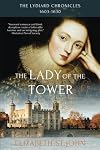
Lucy St.John is an orphan in English at the pivotal time of the rise of James I. Throughout her youth, she has been raised by her Aunt Joan and with her sister Barbara. Joan and Barbara seem to have found a common alliance against Lucy and only care about their own rise within English Society. As the women grow, Barbara finds a way to friendship with the influential and corrupt Frances Howard and Lucy find a courtly romance with Frances' brother, Theo. However, Barbara ensures that Lucy will show more not find happiness there and poisons their relationship. Lucy moves on with her life, travels and takes in knowledge of medicinal plants and when all seems lost, she meets Sir Allen Apsley. They marry and Allen takes a position at the Tower of London, leaving Lucy as Mistress of the Tower.
As someone who loves reading about Tudor England, I was excited to read about the time period directly after but that took place within one of the most iconic settings of the Tudor reign, the Tower of London. Lucy was a character that I automatically connected with, she was incredibly strong in spirit, refusing to be beat down by her aunt and sister; I also loved that she found solace and purpose within plants and medicine. Barbara was one of the most entertaining characters, with her scheming and backstabbing, she reminded me of the ultimate Mean Girl. In addition, the settings were all tremendously described. From the court of James I, with it's corruption and festivities to the bustling Naval yards to the rooms and grounds of the Tower itself, I felt immersed in the time. As a bonus, the book is authored by Elizabeth St. John, a descendant of the St. John family, and has taken extra care to write stories of her family.
This book was received for free in return for an honest review. show less
As someone who loves reading about Tudor England, I was excited to read about the time period directly after but that took place within one of the most iconic settings of the Tudor reign, the Tower of London. Lucy was a character that I automatically connected with, she was incredibly strong in spirit, refusing to be beat down by her aunt and sister; I also loved that she found solace and purpose within plants and medicine. Barbara was one of the most entertaining characters, with her scheming and backstabbing, she reminded me of the ultimate Mean Girl. In addition, the settings were all tremendously described. From the court of James I, with it's corruption and festivities to the bustling Naval yards to the rooms and grounds of the Tower itself, I felt immersed in the time. As a bonus, the book is authored by Elizabeth St. John, a descendant of the St. John family, and has taken extra care to write stories of her family.
This book was received for free in return for an honest review. show less
Awards


You May Also Like
Associated Authors
Statistics
- Works
- 9
- Members
- 153
- Popularity
- #136,479
- Rating
- 4.2
- Reviews
- 12
- ISBNs
- 17