
Burleigh Muten
Author of Goddesses: A World of Myth and Magic
About the Author
Works by Burleigh Muten
Ο σοφός παραμυθάς 1 copy
Associated Works
Tagged
Common Knowledge
- Canonical name
- Muten, Burleigh
- Other names
- Mutén, Burleigh
- Birthdate
- 20th CE
- Gender
- female
- Nationality
- USA
- Places of residence
- Massachusetts, USA
- Associated Place (for map)
- Massachusetts, USA
Members
Reviews

Burleigh Mutén profiles one hundred and seven goddesses in this lovely encyclopedia of female divinities. Beginning with Aataentsic, the Iroquois creation goddess who fell to earth and created the world on the back of a turtle, to the Zorya, the three Slavic goddesses of destiny, each figure is given a brief blurb describing their cultural origin, their role in their respective cultures, and any sacred animals or objects associated with them. Each page contains one or two entries, one of show more which includes a small illustration. Full page illustrations are also included, and there are decorative borders on each page. An index of cultural/geographic origin is included at the rear, as is a list of sources...
I initially tracked down Goddesses: A World of Myth and Magic because I was interested in seeing more of the artwork of Rebecca Guay, after loving her illustrations in Louise Hawes' Muti's Necklace: The Oldest Story in the World. I was not disappointed on that score, finding the visuals here absolutely gorgeous. The text itself was informative, presenting a wealth of figures with which I was already familiar, and some with which I was not. Unfortunately, there were a number of entries where Mutén got things wrong, either by conflating related figures, or by separating figures that should have been discussed together. She profiles Babd and Macha, but does not mention that they are part of the tripartite Irish goddess, the Morrígan. In her entry on Macha, she uses the stories of Macha, wife of Cruinniuc, and Macha Mong Ruad, and treats them as if they are the same figure. Many scholars believe that they are related, but in medieval Irish literature they are presented as separate people. A similar conflation occurs in the entry on Cailleach Beara, as the 'Hag of Beara,' most strongly associated with the Beara Peninsula in southwestern Ireland, is confused with the Scottish Cailleach Bheur, sometimes known by scholars as Beira, Queen of Winter. Again, these figures are believed by scholars to be related, but they are not synonymous, and should not be treated as if they were the same figure.
Another area of concern was the entry on Shekinah, which I have always understood to be a mystical concept within Judaism (and to a lesser extent, Christianity and Islam), and which signifies the feminine side of the divine. In none of these traditions, all of which are monotheistic, is Shekinah a goddess. I understand that some anthropologists have argued that she is, but if one is going to use a figure that comes from a specific tradition, and not discuss what it means in that tradition, focusing rather on an outlier theory, it begins to feel selective to the point of misinformation. I had the same feeling about Mutén's entry on the Virgin of Guadalupe, whom she describes as an Aztec goddess of mercy and compassion. While she does discuss the visions of this figure that appeared in Mexico in 1531, she never once mentions the words Christianity or Catholicism, nor does she make it clear that this figure is considered a manifestation of the Virgin Mary.
Such an extraordinary omission can only result from a deliberate attempt to edit out any information that doesn't support the idea that the figure under discussion is a goddess. Which brings me to my final criticism: to wit, that a number of figures included here are not goddesses in the traditional sense. A number of the Greek figures, although part of the mythology of that culture, are not divine. The human Pandora, for instance, or the nymph Echo. I noticed a similar trend with some of the Native American entries, where figures like Wild Pony, the first woman in Apache tradition, who is instructed by a spirit-being, but is herself human, is treated as a goddess.
Mythology and folklore are complicated and intertwined subjects, and I understand that in an encyclopedia of this nature, not every detail can be included. That said, some of the entries here were so simplified and/or incorrect, that I deducted a star from my rating. I enjoyed it - particularly for the artwork! - and I think it presents some interesting information, but I also think it is flawed. I couldn't help feeling, as I finished the book, that those flaws were the result of an editorial stance that wanted to fit the existing lore into a ready-made goddess-positive worldview. How else to explain the almost universally positive description of figures, some of whom ruled over such terrible domains as warfare and death? Recommended primarily to Rebecca Guay fans, although readers interested in an introduction to world goddesses might also benefit from it, provided they research the figures in question themselves, to get the fuller, more accurate picture. show less
I initially tracked down Goddesses: A World of Myth and Magic because I was interested in seeing more of the artwork of Rebecca Guay, after loving her illustrations in Louise Hawes' Muti's Necklace: The Oldest Story in the World. I was not disappointed on that score, finding the visuals here absolutely gorgeous. The text itself was informative, presenting a wealth of figures with which I was already familiar, and some with which I was not. Unfortunately, there were a number of entries where Mutén got things wrong, either by conflating related figures, or by separating figures that should have been discussed together. She profiles Babd and Macha, but does not mention that they are part of the tripartite Irish goddess, the Morrígan. In her entry on Macha, she uses the stories of Macha, wife of Cruinniuc, and Macha Mong Ruad, and treats them as if they are the same figure. Many scholars believe that they are related, but in medieval Irish literature they are presented as separate people. A similar conflation occurs in the entry on Cailleach Beara, as the 'Hag of Beara,' most strongly associated with the Beara Peninsula in southwestern Ireland, is confused with the Scottish Cailleach Bheur, sometimes known by scholars as Beira, Queen of Winter. Again, these figures are believed by scholars to be related, but they are not synonymous, and should not be treated as if they were the same figure.
Another area of concern was the entry on Shekinah, which I have always understood to be a mystical concept within Judaism (and to a lesser extent, Christianity and Islam), and which signifies the feminine side of the divine. In none of these traditions, all of which are monotheistic, is Shekinah a goddess. I understand that some anthropologists have argued that she is, but if one is going to use a figure that comes from a specific tradition, and not discuss what it means in that tradition, focusing rather on an outlier theory, it begins to feel selective to the point of misinformation. I had the same feeling about Mutén's entry on the Virgin of Guadalupe, whom she describes as an Aztec goddess of mercy and compassion. While she does discuss the visions of this figure that appeared in Mexico in 1531, she never once mentions the words Christianity or Catholicism, nor does she make it clear that this figure is considered a manifestation of the Virgin Mary.
Such an extraordinary omission can only result from a deliberate attempt to edit out any information that doesn't support the idea that the figure under discussion is a goddess. Which brings me to my final criticism: to wit, that a number of figures included here are not goddesses in the traditional sense. A number of the Greek figures, although part of the mythology of that culture, are not divine. The human Pandora, for instance, or the nymph Echo. I noticed a similar trend with some of the Native American entries, where figures like Wild Pony, the first woman in Apache tradition, who is instructed by a spirit-being, but is herself human, is treated as a goddess.
Mythology and folklore are complicated and intertwined subjects, and I understand that in an encyclopedia of this nature, not every detail can be included. That said, some of the entries here were so simplified and/or incorrect, that I deducted a star from my rating. I enjoyed it - particularly for the artwork! - and I think it presents some interesting information, but I also think it is flawed. I couldn't help feeling, as I finished the book, that those flaws were the result of an editorial stance that wanted to fit the existing lore into a ready-made goddess-positive worldview. How else to explain the almost universally positive description of figures, some of whom ruled over such terrible domains as warfare and death? Recommended primarily to Rebecca Guay fans, although readers interested in an introduction to world goddesses might also benefit from it, provided they research the figures in question themselves, to get the fuller, more accurate picture. show less

American author Burleigh Mutén and British illustrator Helen Cann join forces in this lovely collection of goddess stories from around the world. The eight selections here include:
The Lady of Ten Thousand Names, which details the ancient Egyptian story of Isis, who rescued her brother/husband Osirus, when the god Set murdered him and set him afloat in a sarcophagus on the Nile...
The Princess Who Became a Goddess, in which a mortal Chinese princess named Maio Shan, being too kind and good show more for the world, became Kuan Yin, the goddess of compassion, going on to aid the father who had had her executed...
We Are All One Family, which sets out the story of White Buffalo Woman, a sacred spirit who came to the Lakota people of North America's great plains, bringing them the sacred pipe, and teaching them sacred rituals...
Mother of Magic, which relates the tale of the Welsh sorceress Cerridwen, whose attempt to use magic to aid her son, Great Crow, didn't go quite as she planned, leading to an unexpected second child...
The Blessing Necklace, in which the Norse goddess Freya gains a necklace of unearthly beauty from four dwarfs, thanks to her charm, only to find her new treasure stolen by Odin...
Ama-Terasu's Mirror, in which the Japanese Shinto sun goddess Ama-Terasu hides from her reckless, destructive brother in a cave, until the other deities find a way to convince her to emerge, bringing light back to the world...
The Great Mother, which tells of how the Nigerian Yoruba mother goddess, Oshun, participates in the creation of humanity...
And finally, Persephone, Demeter and Hekate, which tells the classical Greek myth concerning the kidnapping of Persephone by Hades, and the compromise which brought about the changing seasons...
The Lady of Ten Thousand Names: Goddess Stories from Many Cultures is the second goddess-centered collection I have read from Burleigh Mutén, following upon her Goddesses: A World of Myth and Magic. That other title was an encyclopedia of 107 deities, whereas this is an actual story collection. On the whole, I enjoyed Mutén's retelling of the tales here, all of which were already known to me. That said, the real star of this collection, for me, was the lovely artwork from Helen Cann, which captures the beauty and mystery of these stories. By itself, the text probably would have gotten a three-star rating, but such was my enjoyment of the visuals, that I added an extra star. Recommended to young folklore and mythology lovers, and to readers seeking goddess stories from around the world. show less
The Lady of Ten Thousand Names, which details the ancient Egyptian story of Isis, who rescued her brother/husband Osirus, when the god Set murdered him and set him afloat in a sarcophagus on the Nile...
The Princess Who Became a Goddess, in which a mortal Chinese princess named Maio Shan, being too kind and good show more for the world, became Kuan Yin, the goddess of compassion, going on to aid the father who had had her executed...
We Are All One Family, which sets out the story of White Buffalo Woman, a sacred spirit who came to the Lakota people of North America's great plains, bringing them the sacred pipe, and teaching them sacred rituals...
Mother of Magic, which relates the tale of the Welsh sorceress Cerridwen, whose attempt to use magic to aid her son, Great Crow, didn't go quite as she planned, leading to an unexpected second child...
The Blessing Necklace, in which the Norse goddess Freya gains a necklace of unearthly beauty from four dwarfs, thanks to her charm, only to find her new treasure stolen by Odin...
Ama-Terasu's Mirror, in which the Japanese Shinto sun goddess Ama-Terasu hides from her reckless, destructive brother in a cave, until the other deities find a way to convince her to emerge, bringing light back to the world...
The Great Mother, which tells of how the Nigerian Yoruba mother goddess, Oshun, participates in the creation of humanity...
And finally, Persephone, Demeter and Hekate, which tells the classical Greek myth concerning the kidnapping of Persephone by Hades, and the compromise which brought about the changing seasons...
The Lady of Ten Thousand Names: Goddess Stories from Many Cultures is the second goddess-centered collection I have read from Burleigh Mutén, following upon her Goddesses: A World of Myth and Magic. That other title was an encyclopedia of 107 deities, whereas this is an actual story collection. On the whole, I enjoyed Mutén's retelling of the tales here, all of which were already known to me. That said, the real star of this collection, for me, was the lovely artwork from Helen Cann, which captures the beauty and mystery of these stories. By itself, the text probably would have gotten a three-star rating, but such was my enjoyment of the visuals, that I added an extra star. Recommended to young folklore and mythology lovers, and to readers seeking goddess stories from around the world. show less
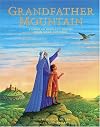
Grandfather Mountain takes ancient stories and brings them to life in a style that is both accessible to modern readers and respectful of their origins. The book contains tales from the Seneca, Yoruba, Maori, Aztec, Greek, English, Shinto, and Celtic traditions. These are stories of men and boys, both human and magical, and of their heroic journeys and adventures. Readers will learn of Crow and the stories he brought down from Grandfather Mountain, of how Quetzalcoatl created the first show more humans, and of the wars between Ireland's fairy folk before the advent of humans.
Stories are powerful, and the value of a multi-cultural anthology such as this is that it introduces ideas and archetypes that are not always prominent in modern western culture. This book is aimed towards boys, and gives them colorful examples of boys and men who are powerful not only as warriors, but also as storytellers, healers, and even tricksters. Such images and characters are vital for boys in a modern world often lacking in appropriate role models. This is especially true when the cultural expectations of manhood that boys encounter may be out of joint with what they truly feel with their own hearts and souls.
In addition, these stories teach the value of qualities such as fidelity, bravery, and kindness. In this way, such mythological stories serve the same function as the religious teaching stories that are ubiquitous in the world's religions. Even if you are one of the increasing numbers of parents who are raising their children in the Freethinker or New Atheist traditions, it is important for them to be literate in the religious stories and symbolism that have become part of modern culture, and a familiarity with world mythologies can provide a solid foundation for understanding religious symbolism. One caution for parents: These are ancient stories and many were composed in violent times; they do contain scenes of killing and death that, while not graphic, may be inappropriate for very young children. Review by Book Dads show less
Stories are powerful, and the value of a multi-cultural anthology such as this is that it introduces ideas and archetypes that are not always prominent in modern western culture. This book is aimed towards boys, and gives them colorful examples of boys and men who are powerful not only as warriors, but also as storytellers, healers, and even tricksters. Such images and characters are vital for boys in a modern world often lacking in appropriate role models. This is especially true when the cultural expectations of manhood that boys encounter may be out of joint with what they truly feel with their own hearts and souls.
In addition, these stories teach the value of qualities such as fidelity, bravery, and kindness. In this way, such mythological stories serve the same function as the religious teaching stories that are ubiquitous in the world's religions. Even if you are one of the increasing numbers of parents who are raising their children in the Freethinker or New Atheist traditions, it is important for them to be literate in the religious stories and symbolism that have become part of modern culture, and a familiarity with world mythologies can provide a solid foundation for understanding religious symbolism. One caution for parents: These are ancient stories and many were composed in violent times; they do contain scenes of killing and death that, while not graphic, may be inappropriate for very young children. Review by Book Dads show less
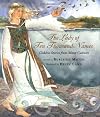
Ages 7 and Up. 'The Lady of Ten Thousand Names' is a compilation of eight goddess stories from varying cultures, including the Lakota, Nordic, and Chinese. The book begins with an introduction from the author explaining - to an adult - why she wrote the book. Each story is told in the traditional fairy tale/mythology style with beautiful illustrations, including borders, which draw on symbols in each culture. Though Muten includes source material in the end pages, the accuracy of each story show more is slightly dubious, and a reader familiar with the Greek myth of Persephone will notice this in her story. There are likely better goddess story books for young audiences than this one.
Recommended for medium and large public library youth mythology collections. show less
Recommended for medium and large public library youth mythology collections. show less
Awards


You May Also Like


Associated Authors
Statistics
- Works
- 10
- Also by
- 1
- Members
- 701
- Popularity
- #36,119
- Rating
- 3.9
- Reviews
- 35
- ISBNs
- 23
- Languages
- 2
