
Kris Waldherr
Author of Doomed Queens: Royal Women Who Met Bad Ends, From Cleopatra to Princess Di
About the Author
Image credit: http://kriswaldherr.com/
Works by Kris Waldherr
Doomed Queens: Royal Women Who Met Bad Ends, From Cleopatra to Princess Di (2008) 376 copies, 22 reviews
In Her Image 1 copy
Associated Works
Tagged
Common Knowledge
- Gender
- female
- Education
- School of Visual Arts
- Occupations
- illustrator
designer - Nationality
- USA
- Places of residence
- Brooklyn, New York, USA
- Associated Place (for map)
- New York, USA
Members
Reviews

Famed poet Hugh de Bonne is dead following his wife, Ada sixteen years earlier. From this, Hugh was thrown into a melancholy that produced some of his most famed works published in The Lost History of Dreams as well as a stained glass chapel where he buried his wife. With Hugh's death, distant cousin Robert Hightstead is charged with carrying out Hugh's last wishes- to be buried next to his wife and have a daguerreotype taken with his corpse in the chapel next to Ada's niece, Isabelle show more Lowell. Robert is the perfect person for the job since he is currently a post-mortem photographer. However, Robert is dealing with a ghost of his own and doesn't want to leave London for long. Upon arriving to Hugh's home in Shropshire, Robert finds that his task is made much harder by Isabelle who will not let anyone open the glass chapel. Robert and Isabelle finally make a deal where Isabelle will open the glass chapel if Robert will record Ada's story over the course of five nights.
The Lost History of Dreams creates a haunting by hopeful story and a mystery that patiently waits to be unfolded and solved. Every character, object and place has been created with a story and a secret that made we want to keep digging in deeper and deeper. From meeting Robert at the beginning of the story I was very curious about and his past and how that led him to be a post-mortem photographer. As the setting moves to Shropshire in Victorian England, a weight settles upon everything that gives the book a distinctive Gothic, atmospheric feeling. The ghosts in the story are created as characters just as much as Isabelle and Robert. I loved the device of a story within a story as Isabelle tells Robert of Ada and Hugh; through the story some mysteries are solved and others arise. The romance entangles not just the dead, but the living as well as two lost souls untangle death to learn how to live.
This book was received for free in return for an honest review. show less
The Lost History of Dreams creates a haunting by hopeful story and a mystery that patiently waits to be unfolded and solved. Every character, object and place has been created with a story and a secret that made we want to keep digging in deeper and deeper. From meeting Robert at the beginning of the story I was very curious about and his past and how that led him to be a post-mortem photographer. As the setting moves to Shropshire in Victorian England, a weight settles upon everything that gives the book a distinctive Gothic, atmospheric feeling. The ghosts in the story are created as characters just as much as Isabelle and Robert. I loved the device of a story within a story as Isabelle tells Robert of Ada and Hugh; through the story some mysteries are solved and others arise. The romance entangles not just the dead, but the living as well as two lost souls untangle death to learn how to live.
This book was received for free in return for an honest review. show less
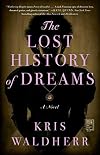
Any novel described as “in the gothic tradition of Wuthering Heights” is a must-read for me. So many elements of THE LOST HISTORY OF DREAMS grabbed me from the beginning. Set in Victorian England, this is a book within a book, that tells of two tragic love stories and the mystery surrounding a glass chapel hidden in the eerie woods.
Robert Highstead, a widowed post-mortem photographer, is called upon to photograph his deceased cousin, the poet Hugh de Bonne. The glass chapel holds the show more remains of Hugh’s long-dead wife Ada, and in order for their niece Isabelle to receive her inheritance, she must unlock the chapel and allow Hugh to be laid to rest beside Ada. However, when Robert arrives, Isabelle refuses to do so, unless Robert listens to the story of Aunt Ada’s life over the course of five nights.
I enjoyed the beginning of this book very much, but the middle part was a struggle to get through. The pacing was slow, and there was a lot there that wasn’t moving the story forward. I was still very curious about the mystery of why Isabelle refused to unlock the chapel, and what Ada’s life story would reveal. The writing was beautiful and atmospheric, and it was easy for me to slip into the time and place. In true gothic tradition, THE LOST HISTORY OF DREAMS is a haunting tale of ghosts, grief, and buried family secrets on the moors.
Disclosure: I received a copy of this book from the publisher through NetGalley in exchange for an honest review. show less
Robert Highstead, a widowed post-mortem photographer, is called upon to photograph his deceased cousin, the poet Hugh de Bonne. The glass chapel holds the show more remains of Hugh’s long-dead wife Ada, and in order for their niece Isabelle to receive her inheritance, she must unlock the chapel and allow Hugh to be laid to rest beside Ada. However, when Robert arrives, Isabelle refuses to do so, unless Robert listens to the story of Aunt Ada’s life over the course of five nights.
I enjoyed the beginning of this book very much, but the middle part was a struggle to get through. The pacing was slow, and there was a lot there that wasn’t moving the story forward. I was still very curious about the mystery of why Isabelle refused to unlock the chapel, and what Ada’s life story would reveal. The writing was beautiful and atmospheric, and it was easy for me to slip into the time and place. In true gothic tradition, THE LOST HISTORY OF DREAMS is a haunting tale of ghosts, grief, and buried family secrets on the moors.
Disclosure: I received a copy of this book from the publisher through NetGalley in exchange for an honest review. show less
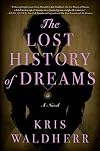
The History of Lost Dreams is a book about love, loss, mourning, madness and ghosts. As one of the main characters states, “all love stories are ghost stories in disguise.” There are several ghosts running through the pages of this book but the reader has to decide which ones are real.
Robert Highstead is making his living by taking daguerreotypes of the dead. He feels he is helping people by leaving them with a last image of their loved ones. He came to this job in an unconventional way, show more but he found he had a talent for it.
Robert receives notice from his brother that his skills are needed in the service of a long lost family member. A cousin that neither one of them really knew has died and his last bequest is that he be laid to rest in a stained glass folly on his lands. Hugh de Bonne was a poet of some renown and when his wife died he built the beautiful glass chapel for her and he wants to be laid to rest next to her. He also requested a daguerreotype of himself in his coffin with his wife’s niece standing beside.
There is only one problem – the niece, Isabelle has sworn to never open the chapel. She is living on the estate of her Aunt who was Hugh’s wife and it’s become a place of pilgrimage for the readers of his poetry, in particular his last work – The History of Lost Dreams. They come wanting to know Hugh and wallow in his love for Ada and their lost child.
But all love stories are ghost stories.
Robert has come to try and convince Isabelle to open the folly so he can photograph his cousin and get back to London. He does not find her amenable to Hugh’s last request. What he finds is a woman who intrigues him, fascinates him and scares him. For he fears if he thinks too much about her he will lose his connection with his wife.
Isabelle offers him a deal – listen to her tell her Aunt’s story of 5 nights and transcribe it so it can be told and then she will open the folly. What follows is a ghost’s story of love and obsession that Robert feels all too closely.
I found myself drawn in from the first page. The History of Lost Dreams is a little bit creepy as a gothic novel should be. The skill in writing a good gothic novel is knowing when to be creepy and how creepy to be. Ms. Waldherr does it well. She also hides her character’s secrets under layers and layers so that you end up wondering what is real and what is not. I believe it’s a book that will be even better upon a second reading. There is just so much here; from the characters themselves to the overall atmosphere pervading the telling of their sad tales.
It’s a great book for a rainy afternoon, with a cat (or bunny) in your lap. Add a hot cup of tea or cocoa and you will be set for an experience. show less
Robert Highstead is making his living by taking daguerreotypes of the dead. He feels he is helping people by leaving them with a last image of their loved ones. He came to this job in an unconventional way, show more but he found he had a talent for it.
Robert receives notice from his brother that his skills are needed in the service of a long lost family member. A cousin that neither one of them really knew has died and his last bequest is that he be laid to rest in a stained glass folly on his lands. Hugh de Bonne was a poet of some renown and when his wife died he built the beautiful glass chapel for her and he wants to be laid to rest next to her. He also requested a daguerreotype of himself in his coffin with his wife’s niece standing beside.
There is only one problem – the niece, Isabelle has sworn to never open the chapel. She is living on the estate of her Aunt who was Hugh’s wife and it’s become a place of pilgrimage for the readers of his poetry, in particular his last work – The History of Lost Dreams. They come wanting to know Hugh and wallow in his love for Ada and their lost child.
But all love stories are ghost stories.
Robert has come to try and convince Isabelle to open the folly so he can photograph his cousin and get back to London. He does not find her amenable to Hugh’s last request. What he finds is a woman who intrigues him, fascinates him and scares him. For he fears if he thinks too much about her he will lose his connection with his wife.
Isabelle offers him a deal – listen to her tell her Aunt’s story of 5 nights and transcribe it so it can be told and then she will open the folly. What follows is a ghost’s story of love and obsession that Robert feels all too closely.
I found myself drawn in from the first page. The History of Lost Dreams is a little bit creepy as a gothic novel should be. The skill in writing a good gothic novel is knowing when to be creepy and how creepy to be. Ms. Waldherr does it well. She also hides her character’s secrets under layers and layers so that you end up wondering what is real and what is not. I believe it’s a book that will be even better upon a second reading. There is just so much here; from the characters themselves to the overall atmosphere pervading the telling of their sad tales.
It’s a great book for a rainy afternoon, with a cat (or bunny) in your lap. Add a hot cup of tea or cocoa and you will be set for an experience. show less
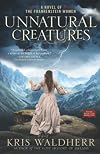
This Frankenstein retelling reads like historical fiction shoehorning itself into an existing plot line. While the original sets the date as sometime during the seventeen hundreds, this book sets exact years, with the French Revolution occurring in the background. It also goes into detail about clothing and servants and houses in a way tailored for a modern reader wanting to explore the world of the time period.
But at the same time, it simply erases many of the sexist attitudes that show more existed... while still having the female characters face limitations caused by sexist attitudes? Elizabeth, for example, is seemingly able to travel freely and even has no qualms about walking alone in unfamiliar streets at nighttime (nor did any other characters scold her for it), but she still lives with the Frankensteins and takes care of their youngest son instead of getting an education like Victor. In the original text, Elizabeth expressed frustration that she was not allowed to do what Victor could, which in my opinion showed her to be a strong character in a society that kept her down. In this book, the author seems to be erasing or toning down attitudes a modern audience would rightly be uncomfortable with, but because the characters are required to do what they did in the original, their characters are changed or their actions no longer make as much sense.
This was a common frustration for me throughout the book, as the more the author changed, the more it seemed that events shouldn't have played out in the same way. I couldn't understand why Victor wanted to marry Elizabeth or why the monster responded the way he did to certain events that I won't spoil. There are some notable twists, but otherwise there were too many plot points that just seemed like a stretch.
This odd mix of old and new was also reflected in the text itself, which made liberal use of quotes from the original, even though the majority of the book was not written in Mary Shelley's style. This resulted in characters suddenly having a bit of dialogue with a strangely antiquated voice to it or narration that expressed the thoughts and feelings of a character from the original rather than meshing with what the character in the new version would be thinking and feeling at that point.
There was also more romance in the plot than I was expecting, including scenes of physical intimacy, which may appeal to other readers but didn't suit my personal taste. The writing quality didn't hit the mark for me, either, which was a disappointment.
In the end, I think this book may appeal more to fans of dark historical romance than to fans of the original classic. If you want to see some female characters engaging in the action, it'll give you that. If you're grossed out by Elizabeth being Victor's biological cousin, that part is also changed. But if you love the writing of the original or have a deep appreciation for its full historical context, this might not be the one for you. show less
But at the same time, it simply erases many of the sexist attitudes that show more existed... while still having the female characters face limitations caused by sexist attitudes? Elizabeth, for example, is seemingly able to travel freely and even has no qualms about walking alone in unfamiliar streets at nighttime (nor did any other characters scold her for it), but she still lives with the Frankensteins and takes care of their youngest son instead of getting an education like Victor. In the original text, Elizabeth expressed frustration that she was not allowed to do what Victor could, which in my opinion showed her to be a strong character in a society that kept her down. In this book, the author seems to be erasing or toning down attitudes a modern audience would rightly be uncomfortable with, but because the characters are required to do what they did in the original, their characters are changed or their actions no longer make as much sense.
This was a common frustration for me throughout the book, as the more the author changed, the more it seemed that events shouldn't have played out in the same way. I couldn't understand why Victor wanted to marry Elizabeth or why the monster responded the way he did to certain events that I won't spoil. There are some notable twists, but otherwise there were too many plot points that just seemed like a stretch.
This odd mix of old and new was also reflected in the text itself, which made liberal use of quotes from the original, even though the majority of the book was not written in Mary Shelley's style. This resulted in characters suddenly having a bit of dialogue with a strangely antiquated voice to it or narration that expressed the thoughts and feelings of a character from the original rather than meshing with what the character in the new version would be thinking and feeling at that point.
There was also more romance in the plot than I was expecting, including scenes of physical intimacy, which may appeal to other readers but didn't suit my personal taste. The writing quality didn't hit the mark for me, either, which was a disappointment.
In the end, I think this book may appeal more to fans of dark historical romance than to fans of the original classic. If you want to see some female characters engaging in the action, it'll give you that. If you're grossed out by Elizabeth being Victor's biological cousin, that part is also changed. But if you love the writing of the original or have a deep appreciation for its full historical context, this might not be the one for you. show less
Lists
Awards

You May Also Like


Associated Authors
Statistics
- Works
- 33
- Also by
- 2
- Members
- 1,523
- Popularity
- #16,883
- Rating
- 3.9
- Reviews
- 66
- ISBNs
- 54
- Languages
- 2
- Favorited
- 1