
Allison Saft
Author of A Fragile Enchantment
Series
Works by Allison Saft
Disney. Alas de estrella: Narrativa 2 copies
À l'ombre des eaux troubles 1 copy
Associated Works
Tagged
Common Knowledge
- Birthdate
- 1993-12-29
- Gender
- female
- Education
- Tulane University
- Nationality
- USA
- Associated Place (for map)
- USA
Members
Reviews
I received an advance copy from NetGalley.
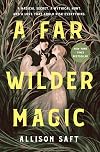
A Far Wilder Magic is a fantasy YA book with a central romance and dark themes. That's not uncommon in the genre, but this book feels fresh, innovative, and realistic.
Against a secondary-world setting that is reminiscent of early 20th century Earth, Margaret lives in isolation with her dog. Her alchemist mother has abandoned her, gone traveling in her obsessive pursuits, and Margaret gets little help in town, where she's sneered at by bigots. When show more Wes shows up, determined to be her mother's new apprentice, Margaret is ready to leave him locked outside. But she doesn't. Instead, they strike an uneasy alliance to hunt a holy creature that has made a rare appearance in the nearby woods. If they can nab it, it could secure both their futures--if they survive.
The book alternates between Margaret and Wes, and this is done with incredible effectiveness. There is no insta-love here. The two are greatly annoyed by each other in realistic ways--neither is a jerk or terrible--and while in their point of view, the reader really gets why they act the way they do. The relationship builds over time.
There are some trigger warnings to mention. Both Margaret and Wes are from minorities, and the harassment that Margaret in particular endures is heartbreaking. Margaret's mother is toxic in her parenting, and the book doesn't shy away from the effects that kind of manipulation can have on a person. Without delving into spoilers, I'll say that the book addresses these heady issues but overall is positive and empowering. show less
A Far Wilder Magic is a fantasy YA book with a central romance and dark themes. That's not uncommon in the genre, but this book feels fresh, innovative, and realistic.
Against a secondary-world setting that is reminiscent of early 20th century Earth, Margaret lives in isolation with her dog. Her alchemist mother has abandoned her, gone traveling in her obsessive pursuits, and Margaret gets little help in town, where she's sneered at by bigots. When show more Wes shows up, determined to be her mother's new apprentice, Margaret is ready to leave him locked outside. But she doesn't. Instead, they strike an uneasy alliance to hunt a holy creature that has made a rare appearance in the nearby woods. If they can nab it, it could secure both their futures--if they survive.
The book alternates between Margaret and Wes, and this is done with incredible effectiveness. There is no insta-love here. The two are greatly annoyed by each other in realistic ways--neither is a jerk or terrible--and while in their point of view, the reader really gets why they act the way they do. The relationship builds over time.
There are some trigger warnings to mention. Both Margaret and Wes are from minorities, and the harassment that Margaret in particular endures is heartbreaking. Margaret's mother is toxic in her parenting, and the book doesn't shy away from the effects that kind of manipulation can have on a person. Without delving into spoilers, I'll say that the book addresses these heady issues but overall is positive and empowering. show less
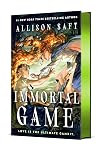
This book said chess, trauma, and enemies-to-lovers… and I said checkmate!
Okay but Immortal Game?? This was STRESSFUL in the best way.
We’re following Shea.... a literal chess prodigy who has spent YEARS destroying her competition for one goal: win this deadly fae tournament and save her sister from the King of the Otherworld. And when I say she’s driven?? I mean everything about her .....her anger, her pain, her identity ....... is tied to this one moment. Because she’s played him show more before… and she lost something she never got back.
So now it’s redemption. Or nothing. But of course… it’s never that simple.
Enter Ciara....her rival. A fae princess. Beautiful, chaotic, a little unpredictable… and VERY distracting when you’re supposed to be focused on survival. What starts as rivalry?? Slowly turns into this tension-filled, vulnerable, “oh no I understand you” connection that had me INVESTED.
The slow burn..... emotional walls..... peeling back layers as the stakes get higher......I was sat.
But what really got me was the sister relationship because everything Shea does is for her sister ..... the love, the anger, the grief.... and by the end.... I was emotional. Like truly… it HITS.
Add in deadly games, fae politics, found connections, and a heroine who is not always easy to like but SO real…
And yeah. This one stayed with me.
Thanks to St, MArtin's Press, Wedenesday Books, and NetGalley for this gifted ARC in exchange for my honest review.
Confession: emotionally unavailable but secretly soft characters own me. show less
Okay but Immortal Game?? This was STRESSFUL in the best way.
We’re following Shea.... a literal chess prodigy who has spent YEARS destroying her competition for one goal: win this deadly fae tournament and save her sister from the King of the Otherworld. And when I say she’s driven?? I mean everything about her .....her anger, her pain, her identity ....... is tied to this one moment. Because she’s played him show more before… and she lost something she never got back.
So now it’s redemption. Or nothing. But of course… it’s never that simple.
Enter Ciara....her rival. A fae princess. Beautiful, chaotic, a little unpredictable… and VERY distracting when you’re supposed to be focused on survival. What starts as rivalry?? Slowly turns into this tension-filled, vulnerable, “oh no I understand you” connection that had me INVESTED.
The slow burn..... emotional walls..... peeling back layers as the stakes get higher......I was sat.
But what really got me was the sister relationship because everything Shea does is for her sister ..... the love, the anger, the grief.... and by the end.... I was emotional. Like truly… it HITS.
Add in deadly games, fae politics, found connections, and a heroine who is not always easy to like but SO real…
And yeah. This one stayed with me.
Thanks to St, MArtin's Press, Wedenesday Books, and NetGalley for this gifted ARC in exchange for my honest review.
Confession: emotionally unavailable but secretly soft characters own me. show less

Niamh Ó Conchobhair has the rare magical ability to stitch emotions and memories into clothing. To her amazement, word has gotten out about her abilities, and she is summoned to the neighboring kingdom of Avaland to sew the wardrobe for the upcoming royal wedding of the prince.
The groom-to-be, Christopher (Kit) Carmine, is clearly unhappy about the political match made for him by his brother Jack, the Regent. He is surly and abrasive and takes it out on Niamh. But they also have an show more immediate attraction (opposed by each of them of course), and become friends (with a simmering chemistry) as Niamh’s wardrobe work continues.
Niamh discovers to her surprise that there is a great deal of unrest in Avaland, especially about the status of the people from her own country, who are looked down upon and poorly used in Avaland. An anonymous columnist with the pseudonym Lovelace (Ala Lady Whistledown in Bridgerton) is fanning the flames amid details of gossip about the elites.
Rosa, the intended bride, arrives and also is fitted by Niamh, who becomes privy to Rosa’s secrets as well.
And there are a few more stories of love and heartbreak, involving Kit’s brother Jack and his arranged-marriage wife, and Kit’s best friend Sinclair, shunned for being gay. Moreover, Niamh is not the only one who has a bit of magic, and it gets employed in ways both destructive and enchanting.
In the end, all the intrigue, romance, and magic resolve in satisfying and not entirely expected ways, while also addressing important issues of identify, fairness, and justice.
An entertaining young adult read. show less
The groom-to-be, Christopher (Kit) Carmine, is clearly unhappy about the political match made for him by his brother Jack, the Regent. He is surly and abrasive and takes it out on Niamh. But they also have an show more immediate attraction (opposed by each of them of course), and become friends (with a simmering chemistry) as Niamh’s wardrobe work continues.
Niamh discovers to her surprise that there is a great deal of unrest in Avaland, especially about the status of the people from her own country, who are looked down upon and poorly used in Avaland. An anonymous columnist with the pseudonym Lovelace (Ala Lady Whistledown in Bridgerton) is fanning the flames amid details of gossip about the elites.
Rosa, the intended bride, arrives and also is fitted by Niamh, who becomes privy to Rosa’s secrets as well.
And there are a few more stories of love and heartbreak, involving Kit’s brother Jack and his arranged-marriage wife, and Kit’s best friend Sinclair, shunned for being gay. Moreover, Niamh is not the only one who has a bit of magic, and it gets employed in ways both destructive and enchanting.
In the end, all the intrigue, romance, and magic resolve in satisfying and not entirely expected ways, while also addressing important issues of identify, fairness, and justice.
An entertaining young adult read. show less
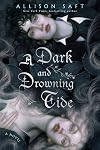
Rating: Loved it
Spice Level: 0.5🌶️/4
(Mainly for language, this is I think billed as YA?)
🖤 Academic rivals (interesting mix of science and research with magic)
🤍 Sapphic romance
🖤 Enemies to Lovers
🤍 Grumpy x Sunshine
🖤 On an academic expedition / magical quest for the king
🤍 Murder Mystery
🖤 Jewish history powerfully told through a fantasy world lens
This one will keep you on your toes as we follow FMCs Lorelei and Sylvia on a journey to avenge their mentor, and save the show more kingdom from a war.
This was a great recommendation from my friend Erin!
I have to steal a quote from Erin because she captured our mutual thoughts on how well and how powerfully the author was able to include Jewish history in a fantasy world, and in doing so brought historical facts and concepts to a new and younger audience:
“What was so impressive to me is how she represented the Jewish history - the german 19th century experience, the new nationalist german unification stuff that led to the holocaust, ghettos, curfews, etc. It was all done so well.”
One content / reader level note: I think this is billed as YA (I saw the author at Yallfest!) but the characters are all in their mid 20s. So if you want a low-spice sapphic academia / fantasy, but also want characters that are over 18 for once, this is for you! show less
Spice Level: 0.5🌶️/4
(Mainly for language, this is I think billed as YA?)
🖤 Academic rivals (interesting mix of science and research with magic)
🤍 Sapphic romance
🖤 Enemies to Lovers
🤍 Grumpy x Sunshine
🖤 On an academic expedition / magical quest for the king
🤍 Murder Mystery
🖤 Jewish history powerfully told through a fantasy world lens
This one will keep you on your toes as we follow FMCs Lorelei and Sylvia on a journey to avenge their mentor, and save the show more kingdom from a war.
This was a great recommendation from my friend Erin!
I have to steal a quote from Erin because she captured our mutual thoughts on how well and how powerfully the author was able to include Jewish history in a fantasy world, and in doing so brought historical facts and concepts to a new and younger audience:
“What was so impressive to me is how she represented the Jewish history - the german 19th century experience, the new nationalist german unification stuff that led to the holocaust, ghettos, curfews, etc. It was all done so well.”
One content / reader level note: I think this is billed as YA (I saw the author at Yallfest!) but the characters are all in their mid 20s. So if you want a low-spice sapphic academia / fantasy, but also want characters that are over 18 for once, this is for you! show less
Lists
Awards


You May Also Like


Associated Authors
Statistics
- Works
- 12
- Also by
- 1
- Members
- 3,378
- Popularity
- #7,544
- Rating
- 3.7
- Reviews
- 75
- ISBNs
- 52
- Languages
- 7