
Elizabeth Cady Stanton (1815–1902)
Author of The Woman's Bible
About the Author
Image credit: Elizabeth Cady Stanton (1815-1902), Buffalo Electrotype and Engraving Co., Buffalo, N.Y.
Works by Elizabeth Cady Stanton
The Elizabeth Cady Stanton-Susan B. Anthony Reader: Correspondence, Writings, Speeches (1992) 118 copies, 2 reviews
The Woman's Bible, Part I, The Pentateuch & Part II, Judges, Kings, Prophets and Apostles (Seattle Coalition Task Force on Women and Religion) (2007) 15 copies
Selected Papers of Elizabeth Cady Stanton & Susan B. Anthony: When Clowns Make Laws for Queens, 1880 to 1887 (Selected P (2006) 4 copies
It is so unlady-like 2 copies
Address of Mrs. Elizabeth Cady Stanton: Delivered at Seneca Falls and Rochester, N.Y., July 19th and August 2D, 1848. (2012) 2 copies
The slaves's appeal 1 copy
Suffrage, a natural right 1 copy
Free Speech 1 copy
Associated Works
Cries of the Spirit: A Celebration of Women's Spirituality (2000) — Contributor — 404 copies, 2 reviews
The Heath Anthology of American Literature, Volume 1 (1990) — Contributor, some editions — 252 copies, 1 review
Wise Women: Over Two Thousand Years of Spiritual Writing by Women (1996) — Contributor — 230 copies, 1 review
American Antislavery Writings: Colonial Beginnings to Emancipation (2012) — Contributor — 147 copies
Reconstruction: Voices from America's First Great Struggle for Racial Equality (2018) — Contributor — 125 copies, 1 review
The Glorious American Essay: One Hundred Essays from Colonial Times to the Present (2020) — Contributor — 118 copies
Women's Rights Emerges within the Anti-Slavery Movement, 1830-1870 (2000) — Contributor — 108 copies, 2 reviews
The Heath Anthology of American Literature, Concise Edition (2003) — Contributor — 73 copies, 1 review
Tagged
Common Knowledge
- Birthdate
- 1815-11-12
- Date of death
- 1902-10-26
- Gender
- female
- Education
- Johnstown Academy (1830)
Emma Willard School (Troy Female Academy, 1832) - Occupations
- women's rights activist
writer
feminist
abolitionist
historian
suffragist (show all 7)
autobiographer - Organizations
- Women's Loyal National League
National American Woman Suffrage Association (president) - Relationships
- Blatch, Harriot Stanton (daughter)
Mott, Lucretia Coffin (colleague)
Anthony, Susan B. (colleague)
Bullard, Laura Curtis (colleague)
Hooker, Isabella Beecher (colleague) - Short biography
- Elizabeth Cady Stanton was a pivotal figure in the USA abolition and women's rights movements. She campaigned for many broader issues important to women beyond the right to vote, including parental and custody rights, divorce, property rights, employment, role in society, health, and and birth control. With Lucretia Coffin Mott, she organized the first Women’s Rights Convention held in Seneca Falls, New York, in 1848. Her published works include The History of Woman Suffrage (6 volumes, 1881-1922), written with Susan B. Anthony and Matilda Joslyn Gage, and her daughter Harriot Stanton Blatch working on the second volume; The Solitude of Self (1892); The Woman's Bible (1895-1898); and her autobiography, Eighty Years & More (1898).
- Nationality
- USA
- Birthplace
- Johnstown, New York, USA
- Places of residence
- Johnstown, New York, USA (birth)
Seneca Falls, New York, USA
Boston, Massachusetts, USA
New York, New York, USA (Death) - Place of death
- New York, New York, USA
- Burial location
- Woodlawn Cemetery, Bronx, New York, USA
- Associated Place (for map)
- New York, USA
Members
Reviews
Eighty Years and More: Reminiscences, 1815-1897 (Studies in the Life of Women Series) by Elizabeth Cady Stanton

In "Eighty Years and More," Elizabeth Cady Stanton chronicles her extraordinary life as a pioneering advocate for women's rights. The narrative unfolds with a blend of poignant personal anecdotes and broader reflections on the sociopolitical landscape of the 19th century, marked by a judicious mix of feminist ideology and cultural critique. This autobiography is not merely a recounting of her life but a significant contribution to the period's burgeoning feminist discourse, characterized by show more eloquent prose and a courageous voice that championed equality and social justice. show less
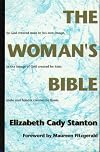
Published in the late nineteenth century, THE WOMEN'S BIBLE was an unbelievably progressive book for its time, and is still progressive for modern times. Abrahamic religious denominations often purport patriarchal values, and base those principles on their religious texts. In this work, Elizabeth Cady Stanton presents a critical, radical feminist critique of the books of the Christian Bible. She was knowledgeable in Greek, and in history, and was able to offer viewpoints and rationale that show more were considered too far-reaching for most suffragettes and other supporters of women's rights.
Her goal was that, through reading and considering THE WOMAN'S BIBLE, females would not again allow an external source to dictate the ways in which they lived. Women's lives are as equally valid, valuable, and necessary as those of men. Absolute equality was innate, and the enforced inferiority of religions on the female congregation were false.
At almost 500 pages, the text is a bit of a slog to get through, but it is worth the effort. The author does not suggest that women should divorce themselves from religious beliefs and practices, only that women should understand that most of the dogma and patriarchal traditions were not part of the religions as they were initially conceived. It was through men's adaptation of the religious texts, through translation and teaching, skewed towards a male-dominated scheme. But it doesn't have to be this way. show less
Her goal was that, through reading and considering THE WOMAN'S BIBLE, females would not again allow an external source to dictate the ways in which they lived. Women's lives are as equally valid, valuable, and necessary as those of men. Absolute equality was innate, and the enforced inferiority of religions on the female congregation were false.
At almost 500 pages, the text is a bit of a slog to get through, but it is worth the effort. The author does not suggest that women should divorce themselves from religious beliefs and practices, only that women should understand that most of the dogma and patriarchal traditions were not part of the religions as they were initially conceived. It was through men's adaptation of the religious texts, through translation and teaching, skewed towards a male-dominated scheme. But it doesn't have to be this way. show less
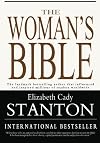
Published in the late nineteenth century, THE WOMEN'S BIBLE was an unbelievably progressive book for its time, and is still progressive for modern times. Abrahamic religious denominations often purport patriarchal values, and base those principles on their religious texts. In this work, Elizabeth Cady Stanton presents a critical, radical feminist critique of the books of the Christian Bible. She was knowledgeable in Greek, and in history, and was able to offer viewpoints and rationale that show more were considered too far-reaching for most suffragettes and other supporters of women's rights.
Her goal was that, through reading and considering THE WOMAN'S BIBLE, females would not again allow an external source to dictate the ways in which they lived. Women's lives are as equally valid, valuable, and necessary as those of men. Absolute equality was innate, and the enforced inferiority of religions on the female congregation were false.
At almost 500 pages, the text is a bit of a slog to get through, but it is worth the effort. The author does not suggest that women should divorce themselves from religious beliefs and practices, only that women should understand that most of the dogma and patriarchal traditions were not part of the religions as they were initially conceived. It was through men's adaptation of the religious texts, through translation and teaching, skewed towards a male-dominated scheme. But it doesn't have to be this way. show less
Her goal was that, through reading and considering THE WOMAN'S BIBLE, females would not again allow an external source to dictate the ways in which they lived. Women's lives are as equally valid, valuable, and necessary as those of men. Absolute equality was innate, and the enforced inferiority of religions on the female congregation were false.
At almost 500 pages, the text is a bit of a slog to get through, but it is worth the effort. The author does not suggest that women should divorce themselves from religious beliefs and practices, only that women should understand that most of the dogma and patriarchal traditions were not part of the religions as they were initially conceived. It was through men's adaptation of the religious texts, through translation and teaching, skewed towards a male-dominated scheme. But it doesn't have to be this way. show less
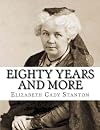
This remarkable autobiography of the "Reminiscences" of Elizabeth Cody Stanton shines in so many directions on the early, too many early,
years of fighting for Women to have the Right to Vote.
From defending babies and children's freedoms, she advocates against slavery, then moves strongly - in writings and speeches around the country
and across the Atlantic. She counted Susan B. Anthony and Lucretia Mott among her many, many friends working together to change male
dictatorship and ruling over show more women after marriage.
While raising SEVEN children and managing big households, she joined with William Lloyd Garrison and Frederick Douglas to change the world.
Sure wish that more had been included about her husband, Henry Stanton
and that Susan B. Anthony and Elizabeth's writings had been included - now inspired to order [THE WOMAN'S BIBLE]! show less
years of fighting for Women to have the Right to Vote.
From defending babies and children's freedoms, she advocates against slavery, then moves strongly - in writings and speeches around the country
and across the Atlantic. She counted Susan B. Anthony and Lucretia Mott among her many, many friends working together to change male
dictatorship and ruling over show more women after marriage.
While raising SEVEN children and managing big households, she joined with William Lloyd Garrison and Frederick Douglas to change the world.
Sure wish that more had been included about her husband, Henry Stanton
and that Susan B. Anthony and Elizabeth's writings had been included - now inspired to order [THE WOMAN'S BIBLE]! show less
Lists
Awards


You May Also Like


Associated Authors
Statistics
- Works
- 51
- Also by
- 16
- Members
- 1,012
- Popularity
- #25,473
- Rating
- 3.9
- Reviews
- 14
- ISBNs
- 105
- Languages
- 4
- Favorited
- 3


