
Samuel E. Waldron
Author of A Modern Exposition of the 1689 Baptist Confession of Faith
About the Author
Dr. Samuel E. Waldron is a noted pastor, author and teacher. He holds a TH.M from grand rapids Baptist Seminary and a Ph.D from southern seminary in Louis-Ville, Kentucky. Among his many other books are the end times made simple and to be continued: Are the miraculous gifts for today?
Works by Samuel E. Waldron
The End Times Made Simple: How Could Everybody Be So Wrong about Biblical Prophecy (2007) 210 copies
In defense of parity: A presentation of the parity or equality of elders in the New Testament (1997) 34 copies
The Crux of the Free Offer: A Biblical, Confessional, and Theological Explanation and Defense of the Well-Meant Offer of the Gospel (2019) 25 copies
We Must Obey God: The Biblical Doctrine of Conscientious Disobedience to Human Authority With Special Reference to Operation Rescue (1992) 17 copies
Un Manifiesto Bautista Reformado: El Nuevo Pacto como la Constitución De la Iglesia (Spanish Edition) (2020) 4 copies
Lectures on the Lord's Day 3 copies
The Canon of Scripture 3 copies
El día del Señor: Sus presuposiciones, pruebas, precedentes y práctica (Spanish Edition) (2022) 2 copies
Endzeit? Eigentlich ganz einfach!: Verständliche biblische Lehre statt komplizierter Systeme (2013) 2 copies
A Man as Priest in His Home 2 copies
Cristianismo fácil 1 copy
The Christian Sabbath 1 copy
Reformed Baptist Manifesto 1 copy
La fe, la obediencia y la justificación: Las desviaciones evangélicas contemporáneas de la sola fide (Spanish Edition) (2023) 1 copy
¿Continuarán?: Una crítica bíblica a la continuación de los dones milagrosos (Spanish Edition) (2021) 1 copy
Um Manifesto Batista Reformado: A Nova Aliança como Constituição da Igreja (Portuguese Edition) (2021) 1 copy
La revolución política en la tradición reformada: Una crítica histórica y bíblica (Spanish Edition) (2023) 1 copy
Associated Works
Tagged
Common Knowledge
- Birthdate
- 1951-07-09
- Gender
- male
- Education
- Southern Baptist Theological Seminary (Ph.D)
Grand Rapids Theological Seminary (Th.M) - Organizations
- Heritage Baptist Church of Owensboro, Kentucky, USA (Pastor)
- Places of residence
- Owensboro, Kentucky, USA
- Associated Place (for map)
- Kentucky, USA
Members
Reviews
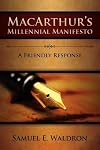
At the 2007 Shepherd’s Conference, John MacArthur preached a message titled “Why Every Self-respecting Calvinist is a Premillennialist.” While the title may have been tongue-in-cheek, the sermon itself was not. It was a serious call for pastors to look at how the doctrine of election should contribute to our understanding of God’s plan for Israel. This sermon was a bit of a shot heard around the blogishphere, and Samuel Waldron, a noted Amillinialist, wrote a response: MacArthur’s show more Millennial Manifesto.
This book may be a lot of things, but one thing it is not: it is in no way a real rebuttal to MacArthur’s message. John’s message had four points to it:
1. The OT, and specifically Gen 12, 15, and Ezk 16, 36, and Jer 31, all demand a future of ethnic Israel and a premillennial interpretation.
2. The Jews in Jesus’ day saw a Messiah coming and ushering in a restoration of ethnic Israel.
3. Jesus’ last earthly words in Acts 1 were a reference to a future kingdom for ethnic Israel, one that only fits with a premillennial understanding.
4. The Apostles, as seen in Acts 3 and 15, Heb 6, and Romans 3, all saw a future restoration of ethnic Israel that can only makes sense from a premillennial perspective.
For Waldron’s book to be considered a serious response to MacArthur’s message, he would have had to interact with those four points. Instead he responds to exactly zero of them. Rather, he develops arguments in favor of amillennialism from Gal 6, Rom 9, 1 Cor 10 and 12, and Eph 2. This is more or less tantamount to the kind of response that says, “You have your verses, and I won’t respond to those, but I have these verses over here…” In a book explaining Amillennialism, that would be one thing. But for a book alleging to be a response to a particular message, it is disappointing that it does not interact with the substance of the actual message.
This error is seen most glaringly by his repeated quotation of Michael Vlach, a Master’s Seminary theology professor. To set up dispensationalist points that Waldron disagrees with, he quotes Vlach. In fact, Vlach is quoted more than any other source or author in the entire book. This is surprising for two this reason: MacArthur has written a commentary on every New Testament book (except Luke and Mark), has written a study Bible which explains his take on practically every verse in the Bible, and has written two full-length books on eschatology. It is not as if his views on theology are hidden. Yet these sources are never quoted. Rather, a professor who was hired at TMS less than a year before the sermon is used in what is allegedly a “response” to MacArthur’s views.
The substance Waldron’s book is this: MacArthur is wrong to say that Amillennialists believe in replacement theology because they don’t believe the church replaces Israel, they believe that Israel becomes the church. This is an expansion, not a replacement. In the same way a tree does not replace a seed, or a caterpillar is not replaced by a butter-fly (Waldron’s actual examples), the church does not replace Israel. Ever since Abraham God has a remnant of his elect people inside of Israel, and now that remnant is the church. In that sense the remnant can be called Israel, because in the past it existed inside Israel.
While I understand the butterfly analogy, it must be said that it misses MacArthur’s point entirely. The land promises, the kingdom promises, the promises of a return, these were all given to ethnic, disbelieving Israel. To say that they will not be fulfilled by ethnic Israel because Israel disobeyed, and that instead they are fulfilled by the church is exactly what MacArthur called replacement theology. To point out that inside of ethnic Israel was a remnant, and inside of the world today there is still a remnant, and that today’s remnant is now the church, but that it can trace its spiritual lineage back to Abraham, our father in the faith, is more-or-less common ground with premillennialism. That is not the point. The point is that the land and kingdom promises were given to disobedient ethnic Israel—not the remnant—and God will bring those promises to pass.
It is fair to say that about one-third of Waldron’s book is an effort to explain and elaborate the butter-fly analogy. Another third of the book was spent on material that MacArthur would probably agree with—why eschatology matters, why it does not matter in the same way the trinity matters, why full-preterism is heresy, and an explanation of how today’s Amillennialism is substantially different than the Amillennialism of fifty years ago. The middle third of the book is essentially an argument for Amillennialism that has very little to do with MacArthur’s message.
Waldron does make some admissions that should be noted. For example, in arguing that in Gal 6:16 the phrase “Israel of God” should be understood as the church, Waldron says that this makes sense when you “read backward through the letter” or when you adopt a “strategy of reading the epistle backward” (41, 42). This is exactly the kind of hermeneutic that makes a premillennialst squirm. Elsewhere Waldron writes that there are kingdom promises in the Bible that can only be fulfilled in a future age. In fact, he writes that “a glorious kingdom awaits [believing] Jews in the age to come.” This is precisely what premillennialists believe. He admits that the previous generation of Amillennialists (he calls them “your father’s Amillennialists”) may have said that the church replaces Israel, and that all of the kingdom promises are fulfilled in the church age. But this generation of Amillennialists is different, and they see an already/not yet tension in these promises. In chiding MacArthur for quoting Amillennialsts who wrote 100 years ago, he points out that Amillennialism has changed substantially over the last generation. This is a welcome admission, and one that not many other Amillennialists are willing to make.
The tone of MacArthur’s Millennial Manifesto is summed up by the title. Waldron is generally gracious, and to his credit he goes out of his way to be civil. But the weakness of the book still stands: it does not respond to the main points of MacArthur’s message, nor does it interact with the verses that he used. It is simply, but graciously, an argument for Amillennialism, and an explanation of why Amillennialists do not like the term “replacement theology.” Unfortunately, he does not explain how promises given to ethnic Israel can be fulfilled by a group other than ethnic Israel, and not be deserving of the label, butterflies not withstanding. show less
This book may be a lot of things, but one thing it is not: it is in no way a real rebuttal to MacArthur’s message. John’s message had four points to it:
1. The OT, and specifically Gen 12, 15, and Ezk 16, 36, and Jer 31, all demand a future of ethnic Israel and a premillennial interpretation.
2. The Jews in Jesus’ day saw a Messiah coming and ushering in a restoration of ethnic Israel.
3. Jesus’ last earthly words in Acts 1 were a reference to a future kingdom for ethnic Israel, one that only fits with a premillennial understanding.
4. The Apostles, as seen in Acts 3 and 15, Heb 6, and Romans 3, all saw a future restoration of ethnic Israel that can only makes sense from a premillennial perspective.
For Waldron’s book to be considered a serious response to MacArthur’s message, he would have had to interact with those four points. Instead he responds to exactly zero of them. Rather, he develops arguments in favor of amillennialism from Gal 6, Rom 9, 1 Cor 10 and 12, and Eph 2. This is more or less tantamount to the kind of response that says, “You have your verses, and I won’t respond to those, but I have these verses over here…” In a book explaining Amillennialism, that would be one thing. But for a book alleging to be a response to a particular message, it is disappointing that it does not interact with the substance of the actual message.
This error is seen most glaringly by his repeated quotation of Michael Vlach, a Master’s Seminary theology professor. To set up dispensationalist points that Waldron disagrees with, he quotes Vlach. In fact, Vlach is quoted more than any other source or author in the entire book. This is surprising for two this reason: MacArthur has written a commentary on every New Testament book (except Luke and Mark), has written a study Bible which explains his take on practically every verse in the Bible, and has written two full-length books on eschatology. It is not as if his views on theology are hidden. Yet these sources are never quoted. Rather, a professor who was hired at TMS less than a year before the sermon is used in what is allegedly a “response” to MacArthur’s views.
The substance Waldron’s book is this: MacArthur is wrong to say that Amillennialists believe in replacement theology because they don’t believe the church replaces Israel, they believe that Israel becomes the church. This is an expansion, not a replacement. In the same way a tree does not replace a seed, or a caterpillar is not replaced by a butter-fly (Waldron’s actual examples), the church does not replace Israel. Ever since Abraham God has a remnant of his elect people inside of Israel, and now that remnant is the church. In that sense the remnant can be called Israel, because in the past it existed inside Israel.
While I understand the butterfly analogy, it must be said that it misses MacArthur’s point entirely. The land promises, the kingdom promises, the promises of a return, these were all given to ethnic, disbelieving Israel. To say that they will not be fulfilled by ethnic Israel because Israel disobeyed, and that instead they are fulfilled by the church is exactly what MacArthur called replacement theology. To point out that inside of ethnic Israel was a remnant, and inside of the world today there is still a remnant, and that today’s remnant is now the church, but that it can trace its spiritual lineage back to Abraham, our father in the faith, is more-or-less common ground with premillennialism. That is not the point. The point is that the land and kingdom promises were given to disobedient ethnic Israel—not the remnant—and God will bring those promises to pass.
It is fair to say that about one-third of Waldron’s book is an effort to explain and elaborate the butter-fly analogy. Another third of the book was spent on material that MacArthur would probably agree with—why eschatology matters, why it does not matter in the same way the trinity matters, why full-preterism is heresy, and an explanation of how today’s Amillennialism is substantially different than the Amillennialism of fifty years ago. The middle third of the book is essentially an argument for Amillennialism that has very little to do with MacArthur’s message.
Waldron does make some admissions that should be noted. For example, in arguing that in Gal 6:16 the phrase “Israel of God” should be understood as the church, Waldron says that this makes sense when you “read backward through the letter” or when you adopt a “strategy of reading the epistle backward” (41, 42). This is exactly the kind of hermeneutic that makes a premillennialst squirm. Elsewhere Waldron writes that there are kingdom promises in the Bible that can only be fulfilled in a future age. In fact, he writes that “a glorious kingdom awaits [believing] Jews in the age to come.” This is precisely what premillennialists believe. He admits that the previous generation of Amillennialists (he calls them “your father’s Amillennialists”) may have said that the church replaces Israel, and that all of the kingdom promises are fulfilled in the church age. But this generation of Amillennialists is different, and they see an already/not yet tension in these promises. In chiding MacArthur for quoting Amillennialsts who wrote 100 years ago, he points out that Amillennialism has changed substantially over the last generation. This is a welcome admission, and one that not many other Amillennialists are willing to make.
The tone of MacArthur’s Millennial Manifesto is summed up by the title. Waldron is generally gracious, and to his credit he goes out of his way to be civil. But the weakness of the book still stands: it does not respond to the main points of MacArthur’s message, nor does it interact with the verses that he used. It is simply, but graciously, an argument for Amillennialism, and an explanation of why Amillennialists do not like the term “replacement theology.” Unfortunately, he does not explain how promises given to ethnic Israel can be fulfilled by a group other than ethnic Israel, and not be deserving of the label, butterflies not withstanding. show less
20% towards my goal!
3 stars out of 5
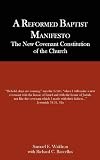
“A Reformed Baptist Manifesto: The New Covenant Constitution of the Church” by Samuel E. Waldron with Richard C. Barcellos
This was a helpful, brief book in understanding how Reformed Baptists are distinct in four particular areas.
Though I am Baptist by belief and conviction and reformed in my soteriology, I couldn’t say I was a Reformed Baptist. The perpetuity of the Sabbath is enough for me to disagree.
On a positive note, Waldron & Barcellos show more demonstrate a charitable example of interaction with differing views and that is definitely commendable. show less
3 stars out of 5
“A Reformed Baptist Manifesto: The New Covenant Constitution of the Church” by Samuel E. Waldron with Richard C. Barcellos
This was a helpful, brief book in understanding how Reformed Baptists are distinct in four particular areas.
Though I am Baptist by belief and conviction and reformed in my soteriology, I couldn’t say I was a Reformed Baptist. The perpetuity of the Sabbath is enough for me to disagree.
On a positive note, Waldron & Barcellos show more demonstrate a charitable example of interaction with differing views and that is definitely commendable. show less
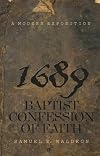
Modern Christianity is awash in a flood of doctrinal relativity. Satan and his forces love the imprecision and ambiguity which are rampant in our day. As C.H. Spurgeon observed, 'The arch-enemy of truth has invited us to level our walls and take away our fenced cities'.
This exposition was originally published in 1989 to mark the 300th anniversary of the publication of the Second London Confession, which also became known as the 1689 Baptist Confession of Faith. Today, reformed Baptists show more world-wide hold this Confession in high esteem and many churches continue to regard it as their official statement of faith. In this extensive exposition, the author Sam Waldron shows that the 1689 Confession is a masterly statement of the historic Christian faith. He writes in a direct and lucid style that will help ministers, students and laymen alike to a clear understanding of this Confession and to its relevance and application to our modern age.
Included in this publication is a helpful introduction on the legitimacy and use of confessions by Dr R. P. Martin, currently Pastor of Emmanuel Reformed Baptist Church in Seattle, Washington.,In this extensive exposition of the 1689 Baptist Confession of Faith, Sam Waldron shows that this work is a masterly statement of the historic Christian faith. His direct and lucid style will help ministers, students and laymen alike to a clear understanding of the Confession and to see its relevance and application to our modern age.Modern Christianity is awash in a flood of doctrinal relativity. Satan and his forces love the imprecision and ambiguity which are rampant in our day. As C. H. Spurgeon observed, ‘The arch-enemy of truth has invited us to level our walls and take away our fenced citiesÂ.This exposition was originally published in 1989 to mark the 300th anniversary of the publication of the Second London Confession, which also became known as the 1689 Baptist Confession of Faith. Today, reformed Baptists world-wide hold this Confession in high esteem and many churches continue to regard it as their official statement of faith.Included in this publication is a helpful introduction on the legitimacy and use of confessions by Dr R. P. Martin, currently Pastor of Emmanuel Reformed Baptist Church in Seattle, Washington. show less
This exposition was originally published in 1989 to mark the 300th anniversary of the publication of the Second London Confession, which also became known as the 1689 Baptist Confession of Faith. Today, reformed Baptists show more world-wide hold this Confession in high esteem and many churches continue to regard it as their official statement of faith. In this extensive exposition, the author Sam Waldron shows that the 1689 Confession is a masterly statement of the historic Christian faith. He writes in a direct and lucid style that will help ministers, students and laymen alike to a clear understanding of this Confession and to its relevance and application to our modern age.
Included in this publication is a helpful introduction on the legitimacy and use of confessions by Dr R. P. Martin, currently Pastor of Emmanuel Reformed Baptist Church in Seattle, Washington.,In this extensive exposition of the 1689 Baptist Confession of Faith, Sam Waldron shows that this work is a masterly statement of the historic Christian faith. His direct and lucid style will help ministers, students and laymen alike to a clear understanding of the Confession and to see its relevance and application to our modern age.Modern Christianity is awash in a flood of doctrinal relativity. Satan and his forces love the imprecision and ambiguity which are rampant in our day. As C. H. Spurgeon observed, ‘The arch-enemy of truth has invited us to level our walls and take away our fenced citiesÂ.This exposition was originally published in 1989 to mark the 300th anniversary of the publication of the Second London Confession, which also became known as the 1689 Baptist Confession of Faith. Today, reformed Baptists world-wide hold this Confession in high esteem and many churches continue to regard it as their official statement of faith.Included in this publication is a helpful introduction on the legitimacy and use of confessions by Dr R. P. Martin, currently Pastor of Emmanuel Reformed Baptist Church in Seattle, Washington. show less
As currently the only commentary work that I know of on the 1689 Baptist Confession Of Faith, it is hard to compare it to another. But considering that the only other works available are papers and websites, this work is a warm welcome that goes indepth into each area of the confession. At times, however, the author appears to overemphasize certain areas and either glance over or skip other areas I wished he could have covered deeper.
You May Also Like


Associated Authors
Statistics
- Works
- 62
- Also by
- 1
- Members
- 1,552
- Popularity
- #16,595
- Rating
- 4.0
- Reviews
- 8
- ISBNs
- 50
- Languages
- 3
- Favorited
- 2